I used to think 3 AM “inspiration” was my superpower—spoiler: it was just mania wearing a disguise.
Sleep deprivation wrecked my circadian rhythm for years.
Now? I’m boring on purpose. Same bedtime, same wake time, melatonin-savvy bulbs from Philips Hue, no negotiation.
Harvard’s Dr. Czeisler taught us that irregular hours literally scramble your body clock. Wild thought: what if “being productive” at midnight is actually self-sabotage?
Enter Sleepmaxxing 2026—biohackers are finally treating rest like the performance enhancer it is. Some even loop Apollo Neuro’s vagus nerve vibrations into their wind-down. Obsessed? Maybe. Effective? Absolutely.
We at Corala Blanket obsess over this stuff so you don’t have to.
Insomnia giggles at your willpower. Routine? That hits different.
Quick Takeaways
- Maintain a consistent sleep and wake time daily to stabilize circadian rhythms and mood swings.
- Establish calming pre-sleep routines and reduce environmental noise for better sleep quality.
- Limit caffeine and stimulants, especially in the afternoon, to prevent sleep disruption.
- Maximize exposure to natural morning light to help reset internal clocks and promote regular schedules.
- Use technological tools like blue light filters and sleep trackers to optimize and monitor sleep patterns.
How Bipolar Disorder Affects Your Sleep Patterns
Bipolar disorder, a condition characterized by significant mood oscillations, exerts a profound influence on sleep patterns through complex neurobiological mechanisms. Disruptions in circadian rhythms, driven by irregular melatonin secretion and altered neurotransmitter function (notably serotonin and norepinephrine), challenge traditional sleep hygiene practices. The disorder often leads to elongated REM sleep phases during manic episodes and delayed sleep onset during depressive states, complicating mood regulation. Recognizing these patterns, experts like Dr. David Kupfer emphasize tailored interventions. Adopting consistent sleep hygiene, optimizing exposure to natural light, and minimizing stimulants can help stabilize these neurobiological fluctuations, offering better tools for mood management. Understanding these circadian disruptions can also inform targeted therapies to improve overall sleep quality and neurobiological processes.
Building a Bedtime Routine That Supports Mood Stability
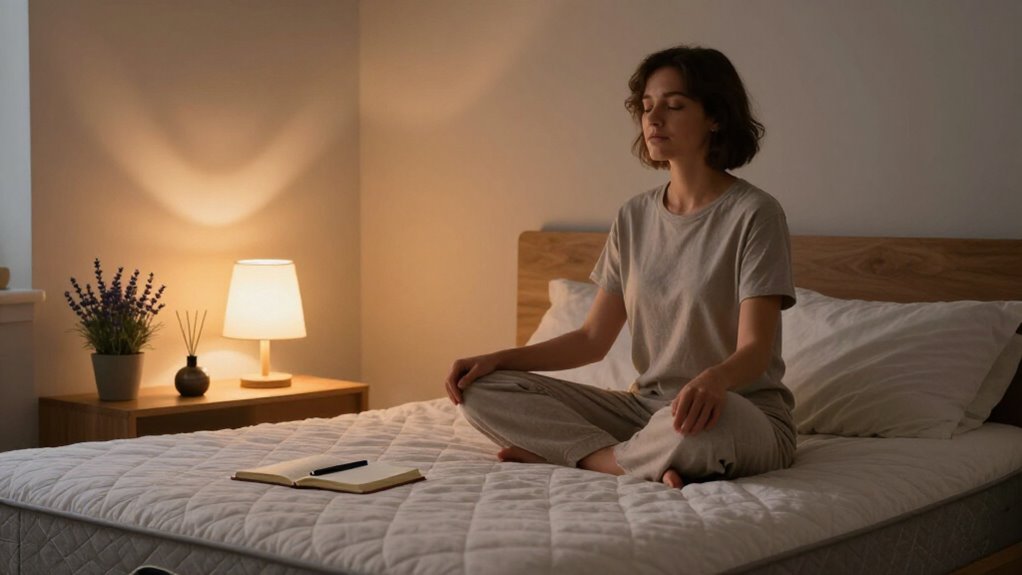
Establishing a consistent, calming pre-sleep routine is fundamental for stabilizing mood fluctuations associated with neurobiological variations in individuals managing mood disorders. Adopting practices like dream journaling channels subconscious processing, reducing nocturnal anxiety, while caffeine moderation—particularly avoiding stimulants after midday—prevents sleep disruption. Incorporating aesthetic nighttime rituals such as gentle ambient lighting or calming sounds can further reinforce sleep signals to your brain. Researchers such as Dr. David Spiegel emphasize routines that promote nervous system regulation, aligning with the neuroacoustic trends of 2026. Structuring a ritual that combines gentle reflection with controlled stimulant intake helps regulate circadian rhythms, therefore fostering a stable internal environment. Utilizing smart lighting controls to gradually dim your bedroom lights can enhance your body’s natural production of melatonin, supporting the transition to sleep. This calculated approach empowers you to harness biological rhythms rather than fight them, supporting mental health and emotional balance.
Using Light Therapy and Environment Tricks to Improve Sleep
Harnessing light as a biological regulator offers a refined approach to optimizing sleep, especially for those managing mood stability. Blue light, prevalent in screens, can disrupt circadian rhythms, so controlling its exposure—particularly in the evening—is essential. Incorporating bone conduction pillows into your sleep environment can also enhance comfort and promote restful sleep throughout the night. Sensory modulation, like using blue light filters or amber-tinted glasses (e.g., Israel-based company, Eizo), helps the body shift into relaxation mode. Additionally, exposing yourself to morning sunlight can reset your internal clock, encouraging better sleep patterns and mood regulation. Research from Dr. Charles Czeisler emphasizes that optimizing light exposure aligns internal clocks and enhances sleep quality.
Adjusting Your Sleep Schedule to Manage Mood Fluctuations
Adjusting your sleep schedule to better manage mood fluctuations involves more than just setting a bedtime; it requires understanding the complex relationship between your sleep cycle and melatonin regulation.
Researchers like Dr. Steven W. Lockley highlight that aligned circadian rhythms stabilize emotional states, reducing extremes.
By maintaining consistent wake times and exposure to natural light, you support endogenous melatonin synthesis, which governs sleep onset and quality.
Disruptions in this harmony can exacerbate mood swings in bipolar disorder.
Tools like light therapy, personalized chronotype assessments, and regulated evening lighting can optimize your internal clock, providing a biological foundation for improved mood regulation through precise sleep cycle adjustments.
Additionally, understanding circadian rhythm patterns can help you better align your sleep habits with your body’s natural timing, further supporting mood stability.
Incorporating strategies to minimize sleep fragmentation caused by environmental noise can also enhance sleep continuity, which is crucial during these adjustments.
Vagus Nerve Stimulation Advancements

Recent advancements in vagus nerve stimulation (VNS) techniques underscore a shift toward precision neurotherapeutics aimed at modulating autonomic nervous system activity to promote relaxation and sleep regulation.
Emerging VNS techniques focus on targeted modulation of the autonomic nervous system to enhance relaxation and improve sleep quality.
Innovations like transcutaneous VNS, pioneered by researchers such as Dr. Kevin Tracey, target neural connectivity pathways with minimal invasiveness. These methods enhance autonomic balance, fostering a calming effect vital for mood stabilization.
- Activation of afferent fibers influences brain regions involved in stress regulation
- Specific stimulation parameters improve heart rate variability, supporting sleep
- Integration with biofeedback tools offers real-time control over autonomic responses, empowering users to optimize their sleep environment
Vagus Nerve Devices for Sleep
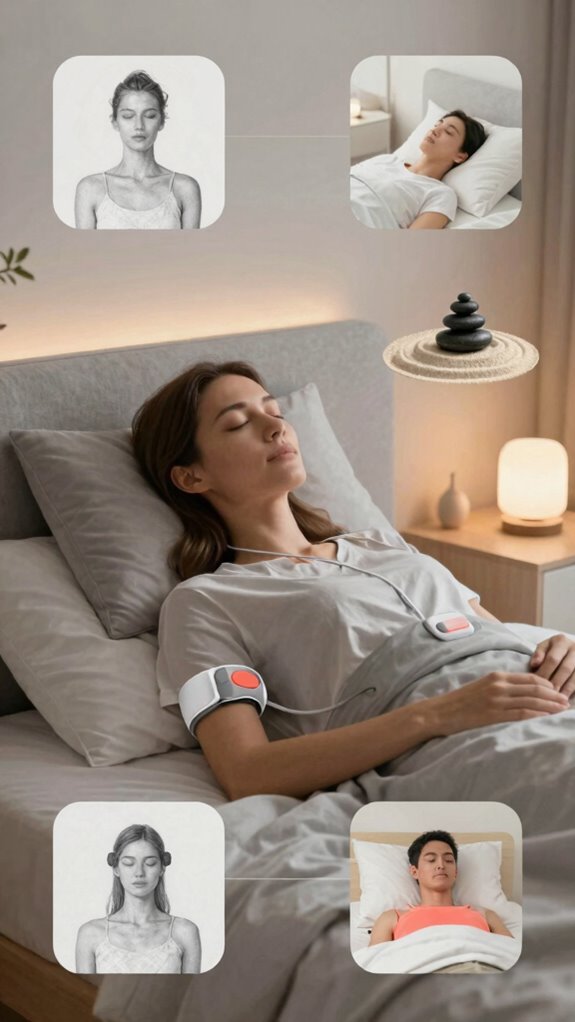
Vagus nerve stimulation devices designed for sleep modulation are emerging as precise, non-invasive tools rooted in neurotherapeutic science. These devices, like the NuCalm system or gammaCore, activate the vagus nerve, influencing parasympathetic response to foster relaxation. Incorporating breathing exercises and mindfulness practices enhances their effectiveness, promoting neuroplasticity and autonomic balance. Research from institutions like the University of Toronto supports their potential in stabilizing sleep patterns, especially for bipolar disorder. Additionally, the use of serene Zen sand gardens can create a calming bedroom environment that complements these therapeutic tools. Exploring neurotherapeutic devices for sleep management offers promising avenues for those seeking alternative strategies.
Deep Brain Stimulation Techniques
Deep brain stimulation (DBS) techniques represent a developing frontier in sleep regulation, leveraging targeted electrical impulses to modify neural circuits associated with circadian rhythms and mood stabilization.
By influencing neural entrainment and brainwave modulation, DBS aims to recalibrate disturbed sleep patterns in bipolar disorder. Researchers like those at Stanford and Harvard are exploring how precise electrostimulation affects neural oscillations linked to sleep and emotion.
DBS targets neural oscillations to restore sleep and emotional balance in bipolar disorder.
These methods, akin to tuning a complex radio signal, seek to improve chronological harmony. Additionally, integrating houseplants known for their air-purifying properties, such as breathe easy houseplants, could support creating a more restful sleep environment. Understanding neural entrainment processes helps in designing more effective stimulation protocols.
- Alter neural entrainment patterns for better circadian alignment
- Use brainwave modulation to stabilize mood swings
- Target specific neural circuits for personalized therapy
FAQ
Can Sleep Tracking Devices Benefit Those With Bipolar Disorder?
Sleep tracking devices can benefit those with bipolar disorder by offering sleep convenience and understanding. While device accuracy varies, I find that monitoring patterns helps me identify triggers and improve my control over sleep, promoting stability.
What Role Does Nervous System Regulation Play in Sleep Management?
Nervous system regulation plays a crucial role in sleep management by fostering autonomic balance and reducing stress. I’ve found that calming techniques help me control my nerves, improve sleep flow, and regain control over my moods and rest.
Are Blue Light-Blocking Glasses Effective for Mood Stabilization?
Yes, blue light-blocking glasses can support mood stabilization by reducing evening blue light exposure, helping your nervous system wind down faster. This control over light exposure promotes better sleep, which is essential for managing bipolar symptoms effectively.
How Does Environmental Harmony Influence Bipolar Sleep Cycles?
Harmony in your environment acts as the conductor for your biological clock, syncing your circadian rhythm and stabilizing mood. By aligning these rhythms through controlled lighting and temperature, you regain control over your sleep and emotional balance.
Is It Safe to Try Neuro-Acoustic Sleep Interventions at Home?
Neuro-acoustic interventions can be safe at home when I guarantee proper home safety measures and choose credible devices; however, I remain cautious about their efficacy, knowing that I should consult my healthcare provider before trying new sleep techniques.
Summary
In the complex dance of managing bipolar disorder, sleep’s role is both enigmatic and essential—yet often underestimated until chaos ensues. While scientific advancements like vagus nerve stimulation and light therapy offer promising avenues, they underscore a stark truth: our biological rhythms demand respect and adaptability. Ironically, seeking rigid control can sometimes deepen instability. By embracing detailed, evidence-based strategies, we align with our body’s natural tempo—transforming the relentless pursuit of perfect sleep into a subtle art of biological harmony.