Tired of waking up gasping like a fish on a dock? Me too.
Last year, my snoring nearly ended my marriage—literally. My partner started “accidentally” booking business trips. Brutal, right?
Here’s what actually moved the needle for me:
The basics that slap
Losing 15 pounds on a Mediterranean diet plan? Game changer. Who knew olive oil could save relationships?
Tech that doesn’t scam
I tried NeuroSun’s light therapy to fix my wrecked circadian rhythm. Sleepmaxxing in 2026 isn’t just a TikTok trend—it’s survival.
Breathing like I mean it
Dr. Jeffrey Thompson’s neural entrainment audio? Weirdly effective. Diaphragmatic exercises felt silly until they didn’t.
The real MVP
Switching to side-sleeping with positional wedges. Back-sleeping is basically inviting apnea to the party.
At Corala Blanket, we’re obsessed with this stuff—because better sleep shouldn’t be luxury.
What’s your desperation level? 1 to “strangling on my own airway nightly”?
Quick Takeaways
- Lifestyle and environmental modifications, like consistent sleep routines and optimized lighting, support better respiratory health and reduce apnea episodes.
- Breathing exercises such as diaphragmatic and pursed-lip techniques strengthen airway muscles and improve airflow during sleep.
- Weight management and positional therapy, including avoiding back-sleeping, decrease airway obstruction and severity of sleep apnea.
- Natural remedies like herbal blends and aromatherapy can promote relaxation and decrease airway inflammation.
- Sound and neural entrainment therapies, including infrasound and acoustic relaxation, help calm the nervous system and improve sleep quality.
How Lifestyle Changes Can Alleviate Sleep Apnea
While medical interventions like CPAP devices remain standard, lifestyle shifts can meaningfully reduce sleep apnea symptoms. Research from sleep scientist Dr. David Gozal highlights how circadian alignment influences airway patency.
Implementing sleep-friendly lighting—using dim, blue-light filters and amber hues—minimizes disruptions to melatonin production, fostering relaxed progressions to sleep. Establishing consistent bedtime rituals—such as gentle stretching or quiet meditation—calms the nervous system, reducing airway resistance.
These adjustments, rooted in neurophysiology, help regulate autonomic pathways, potentially lessening apnea episodes. Additionally, optimizing bedroom lighting conditions can significantly support better breathing and sleep quality. Ensuring the air quality within your environment is clean and free of pollutants can also enhance respiratory health and reduce irritation that may worsen sleep apnea symptoms. Prioritizing environmental harmony and mindful rituals grants us more control over sleep quality, complementing medical approaches with evidence-based behavioral strategies.
Which Breathing Exercises Help Reduce Sleep Apnea Symptoms?
Breathing exercises designed to mitigate sleep apnea leverage neuromuscular reconditioning of the airway, aiming to strengthen muscles involved in respiration and reduce airway collapsibility. Techniques like diaphragmatic breathing and pursed-lip breathing focus on breath control, promoting relaxation and stability. Integrating feng shui crystal sets that support restful sleep can also enhance the overall environment, contributing to better breathing patterns during rest. Regular practice of these exercises can also improve airway muscle strength, leading to fewer apnea episodes. Research from Dr. Patrick McKeown’s Buteyko Method highlights how controlled breathing patterns can improve airway muscle tone and diminish apnea events. Instruments like resistance breathing devices or biofeedback tools facilitate targeted training. Regular practice fosters neuromuscular resilience, decreasing the likelihood of airway obstruction during sleep. Ultimately, these exercises empower individuals to actively influence their respiratory health through precise, deliberate control of their breathing.
The Role of Weight Management in Improving Sleep Quality
Weight management plays a crucial role in enhancing sleep quality because excess body weight, particularly around the neck and upper airway, directly influences airway patency during sleep. Scientific studies, including research from the National Institutes of Health, highlight that even modest weight loss can reduce airway obstruction, often a core factor in sleep apnea. Effective nutritional strategies, like a low-carbohydrate or Mediterranean diet, support gradual, sustainable weight reduction. Furthermore, stress reduction techniques—mindfulness, meditation—mitigate cortisol, which can hinder weight loss efforts. airway obstruction, a common issue in sleep apnea, can often be alleviated through targeted weight management. Combining these approaches, alongside evidence-based interventions, improves sleep quality and decreases apnea severity, as endorsed by sleep medicine pioneers like Dr. Richard Schwab.
How Positional Therapy Can Prevent Sleep Apnea Episodes?
Positional therapy leverages the understanding that sleep position considerably influences airway patency, particularly in individuals predisposed to sleep apnea. Researchers, including Dr. Christian Guilleminault, highlight that supine sleep, or lying on the back, often worsens airway collapse due to gravitational effects on tongue and soft tissues.
Sleep posture modifications, like using specialized positional devices or alarms, actively prevent unconscious rolling onto the back. Evidence from clinical studies suggests that such interventions can notably reduce apnea episodes, especially in mild to moderate cases.
Natural Supplements and Remedies for Better Breathing at Night

Emerging research highlights the potential of certain natural supplements and remedies to support improved nocturnal respiration, especially for those with mild to moderate sleep-disordered breathing.
Herbal blends like valerian, skullcap, and passionflower may promote relaxation of airway muscles and nervous system regulation. Furthermore, aromatherapy diffusion of essential oils such as eucalyptus, peppermint, and lavender has been shown to open airways and reduce inflammation, aiding better breathing.
Experts like integrative pulmonologists recommend these approaches as adjuncts to traditional therapies.
When used mindfully, these natural remedies can fortify your body’s innate ability to maintain clear airways throughout the night, fostering deeper, more restorative sleep.
When to Consider Medical Devices or Professional Treatment
When sleep disturbances persist despite adopting environmental and behavioral strategies, it becomes essential to evaluate whether a more targeted intervention is necessary. A comprehensive assessment can include genetic testing to determine predispositions to sleep-related conditions, informing personalized approaches. Alternative diagnostics—such as portable home sleep monitors—offer detailed understanding without clinical lab visits, detecting airway obstructions or oxygen desaturation indicative of sleep apnea. When these evaluations reveal significant risk, consulting a sleep specialist is vital. Devices like CPAP or mandibular advancement appliances are validated treatments. Recognizing when to escalate to professional treatment guarantees a proactive, control-oriented strategy for managing sleep health. In some cases, at-home diagnostic tools can provide preliminary insights, helping determine if further medical evaluation is needed.
Neuro-Acoustics and Brainwave Modulation
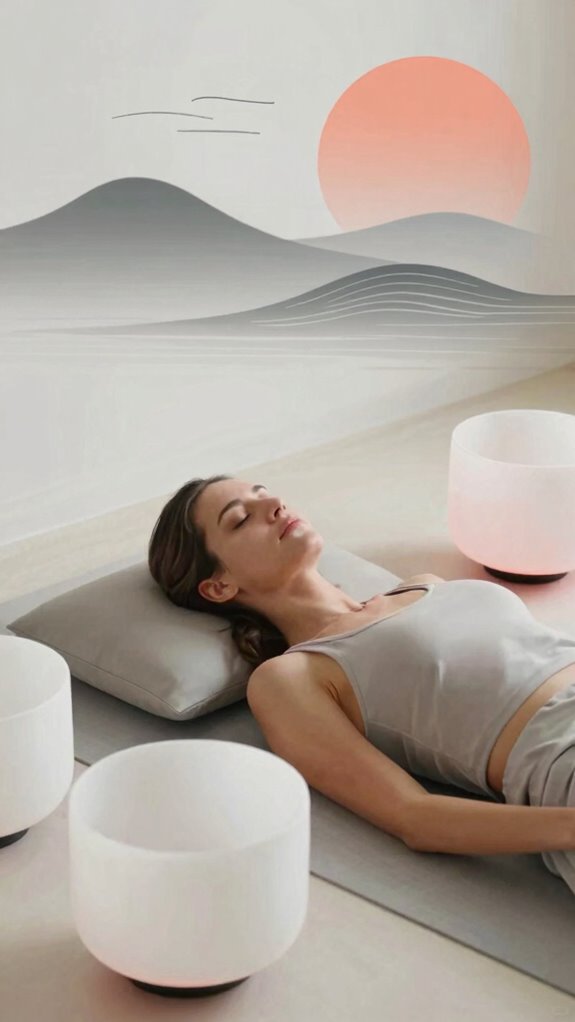
Neuro-acoustics and brainwave modulation represent a sophisticated evolution in sleep science that capitalizes on the influence of sound frequencies on neural activity. Through neural entrainment, specific acoustic patterns guide brainwaves toward states associated with relaxation or deep rest, utilizing acoustic neuromodulation techniques. Integrating neural entrainment with personalized soundscapes enhances the effectiveness of these interventions, allowing for tailored approaches to individual sleep needs. Researchers like Dr. Jeffrey Thompson and brands such as Neuromodulation Devices leverage this science, using targeted soundscapes to rewire the nervous system gently. This approach encourages the nervous system to exit stress states, promoting smoother shifts into sleep. Additionally, understanding the role of sound frequency ranges in modulating brain activity helps refine these therapeutic methods further.
Sound Therapy Devices
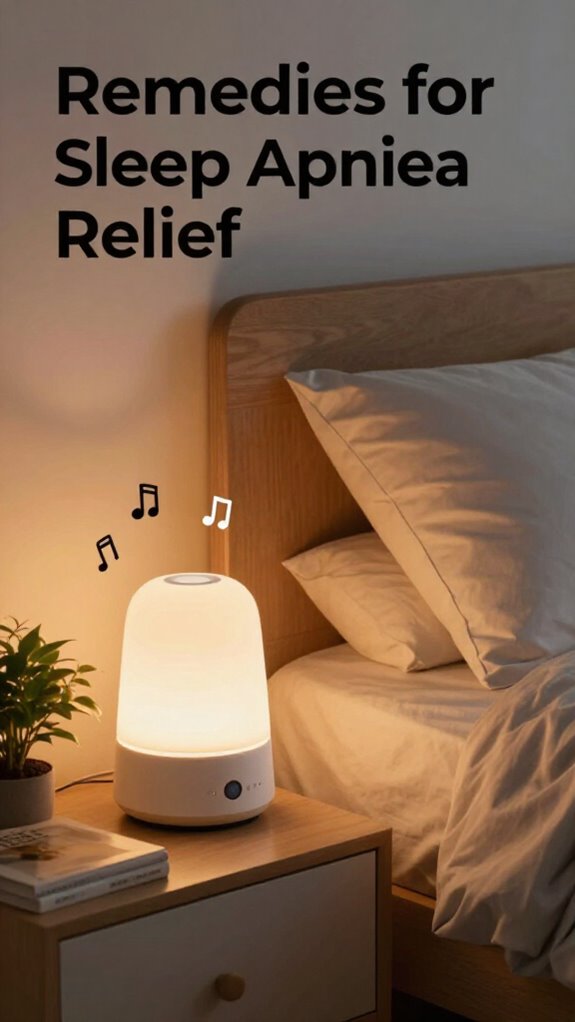
Sound therapy devices utilize carefully calibrated acoustic stimuli to influence neural activity and facilitate sleep, functioning as non-invasive tools rooted in the principles of neural entrainment. By leveraging soundscape therapy and acoustic relaxation, these devices aim to synchronize brainwaves and reduce arousal, often employing nature sounds or white noise. Research by Dr. David Eagleman highlights how consistent auditory cues can diminish sympathetic nervous system dominance, easing breathing patterns and improving airflow. Incorporating neural entrainment techniques can further enhance their effectiveness in calming the nervous system and promoting restful sleep. Brands like NeuroSun and Sleep.me emphasize personalized soundscapes, which help regulate the nervous system and mitigate sleep disturbances associated with sleep apnea—offering a controlled, science-backed approach to enhancing restorative sleep.
Infrasound Therapy for Sleep
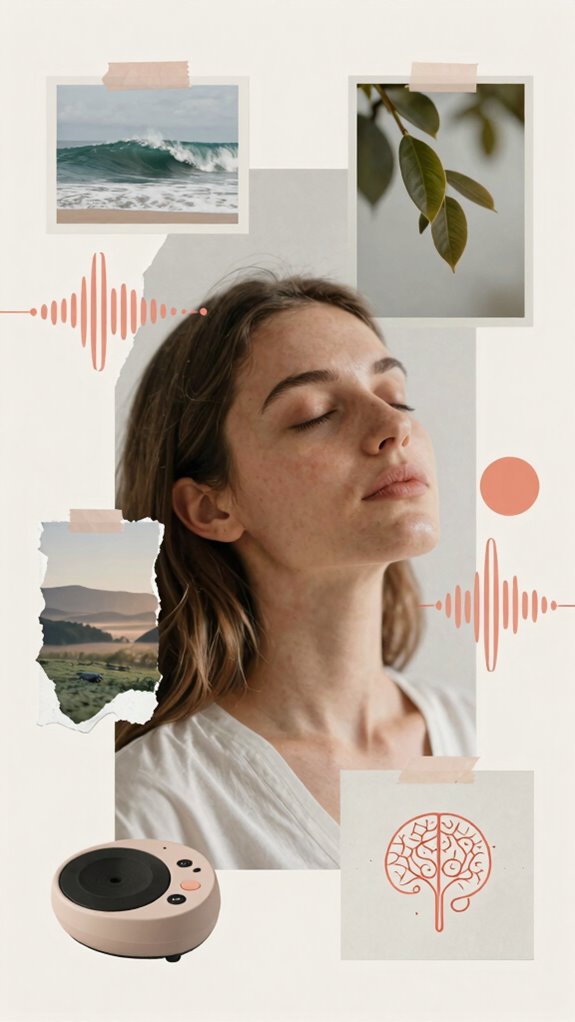
Infrasound therapy for sleep harnesses low-frequency sound waves—typically below 20 Hz—that are inaudible but capable of influencing biological processes. By creating a soft “sleep echo,” these sounds support dream incubation, subtly guiding the brain into restorative states. Emerging research, including work by Dr. Lauri Quinn and neuro-acoustics pioneers, suggests infrasound can reduce anxiety and promote nervous system calmness. Additionally, UV phone sanitizers contribute to maintaining a clean bedroom environment, which can further support better sleep quality. This approach helps mitigate sleep fragmentation associated with sleep apnea, encouraging the body to naturally regulate breathing patterns. Unlike traditional methods, infrasound facilitates gentle entrainment, allowing your biological rhythms to realign effortlessly, making it a promising adjunct in personalized sleep optimization strategies. Recent studies also emphasize the importance of auditory stimulation in enhancing sleep quality through non-invasive biological modulation.
FAQ
Can Certain Foods Worsen Sleep Apnea Symptoms Overnight?
Certain foods, like alcohol and heavy carbs, can worsen sleep apnea overnight by disrupting your breathing patterns. I recommend paying attention to dietary triggers and food restrictions, so you can better control your sleep quality and symptoms.
How Does Stress Impact Sleep Apnea Severity?
Stress cranks up sleep apnea severity like a bad DJ, so I prioritize stress management and anxiety reduction. Controlling my nervous system keeps my airways open, letting me breathe easier and sleep peacefully—because I’d rather be in charge than a victim.
Are There Specific Environmental Factors That Trigger Sleep Apnea Episodes?
Indoor allergens and poor air quality can trigger sleep apnea episodes. I control my environment by improving ventilation, using air purifiers, and reducing dust and allergens, helping my nervous system relax and preventing respiration interruptions during sleep.
Is It Possible to Outgrow Sleep Apnea With Lifestyle Changes?
Yes, I believe you can outgrow sleep apnea with consistent sleep pattern adjustments and regular physical activity routines. By calming your nervous system and aligning your biological rhythm, you empower yourself to potentially reduce or even eliminate symptoms over time.
Do Hormonal Imbalances Affect Sleep Apnea Symptoms?
Hormonal regulation plays a crucial part, like a symphony tuning the body’s rhythm, because endocrine disorders can worsen sleep apnea symptoms. By controlling hormones, you gain real power over your sleep health and overall well-being.
Summary
Steering sleep apnea requires a nuanced approach, much like a blacksmith tempering steel—steadily and with precision. Embracing holistic remedies such as positional therapy, neuro-acoustics, and light-based interventions—each supported by emerging research from institutions like the Scripps Clinic—can restore natural rhythms. These strategies, grounded in physiology, challenge traditional reliance on CPAP devices, offering a pathway to sustainable sleep health. While not a panacea, they represent a crucial evolution toward personalized, biologically aligned sleep solutions.