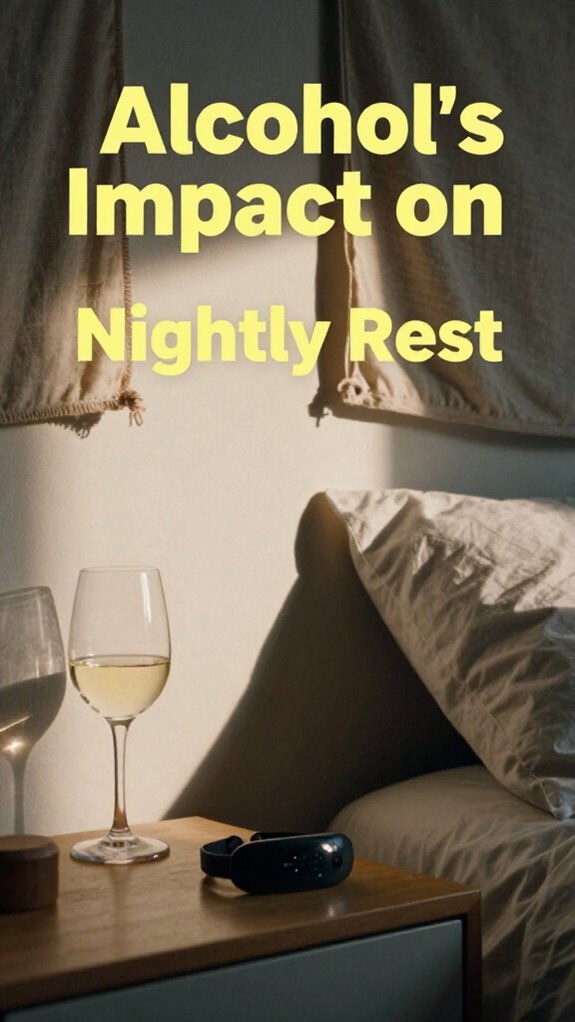
Ever wonder why that “nightcap” turns into a 3am staring contest with your ceiling? Yeah, me too.
Last Tuesday, I polished off two glasses of Pinot thinking I’d sleep like a baby. Spoiler: I woke up at 2:47am drenched, heart pounding, googling “why does my body hate me.” Classic.
Here’s the dirty truth—alcohol wrecks your REM sleep like a bull in a china shop. Your liver churns out acetaldehyde (basically poison, no cap), which jolts you awake. Then comes the cortisol spike, the blood sugar crash, the whole miserable parade.
Research from the Sleep Research Society backs this up, and Dr. Matthew Walker’s studies at UC Berkeley show even “moderate” drinking fragments deep sleep by 20%. Brutal.
At Corala Blanket, we’re obsessed with fixing this mess. Our temperature-regulating fabrics—think Outlast technology meets 2026’s Sleepmaxxing trend—work with brands like Eight Sleep to keep your body in the zone. No more sweaty 3am regrets.
Ready to stop sabotaging your shut-eye?
Quick Takeaways
- Alcohol disrupts sleep architecture, causing more frequent transitions to lighter sleep stages, leading to night awakenings.
- During alcohol metabolism, byproducts like acetaldehyde cause physiological arousals that fragment sleep.
- Alcohol suppresses REM sleep, resulting in less restorative sleep and increased chances of waking up.
- Blood sugar fluctuations and dehydration from alcohol intake can trigger cortisol release and awakenings.
- Active metabolism and liver processing interfere with sleep stages, especially during alcohol clearance, causing disturbances.
How Does Alcohol Interfere With Your Sleep Cycle?
When you consume alcohol before bed, it’s not just your social plans that can be affected; your sleep architecture undergoes significant disruption. Alcohol causes sleep disruption primarily through neural interference.
It initially promotes drowsiness by enhancing GABA activity but soon suppresses REM sleep and fragments deep sleep stages. Research from Dr. Matthew Walker’s lab highlights how alcohol alters neural pathways, impairing brainwave synchronization needed for restorative sleep. This disruption impacts your sleep quality and overall restfulness.
The result is a destabilized sleep cycle, where you cycle through lighter stages more frequently, reducing both sleep quality and physical downtime. This neural interference ultimately hampers your body’s ability to properly regulate essential processes during the night, especially as brain wave activity becomes less aligned with natural sleep rhythms brain wave synchronization.
Why Does Drinking Alcohol Cause Middle-Of-The-Night Wake-Ups?
Alcohol’s influence on middle-of-the-night wake-ups derives primarily from its complex interaction with neural and physiological processes during sleep. Its impact on sleep architecture involves initially promoting deep NREM sleep, then provoking fragmented cycles as alcohol metabolism advances. As the liver processes alcohol—primarily via alcohol dehydrogenase—the resulting byproducts, such as acetaldehyde, contribute to physiological arousals. These can disrupt the parasympathetic dominance needed for sustained sleep, prompting wakefulness. Researchers like Dr. Matthew Walker emphasize that metabolic shifts and alterations in sleep stages, especially during alcohol clearance, are key factors behind night awakenings. Additionally, alcohol metabolism actively influences sleep patterns by generating byproducts that interfere with sleep stability. The varying effects of alcohol on sleep stages further explain why many people experience disrupted sleep after drinking. Understanding this interplay can help improve sleep control and consistency.
How Dehydration and Blood Sugar Swings After Drinking Mess With Your Sleep
Dehydration and blood sugar swings orchestrate a subtle but disruptive choreography in the sleep cycle following alcohol consumption, often undermining restorative rest.
During alcohol metabolism, your body prioritizes processing ethanol, which acts as a diuretic, depleting hydration reserves and upsetting hydration balance.
Alcohol metabolism depletes hydration reserves, disrupting the body’s delicate balance and impacting restful sleep.
Simultaneously, alcohol causes blood sugar fluctuations—initial spikes followed by hypoglycemia—triggering cortisol surges that fragment sleep.
Studies, like those from researchers at Scripps Research Institute, show how these interconnected processes impair REM sleep and promote awakenings.
Maintaining proper hydration and stable blood sugar levels through mindful intake can help preserve the delicate equilibrium necessary for deep, restorative sleep. Circadian rhythm disruptions further compound these effects, making it harder to achieve consistent, restful sleep. Additionally, understanding how metabolic processes influence sleep quality can help in developing strategies to mitigate alcohol’s disruptive effects.
Simple Strategies to Reduce Alcohol’s Impact on Your Sleep Quality
Implementing straightforward, evidence-based strategies can markedly mitigate the adverse effects of alcohol on sleep quality.
Enhancing alcohol metabolism by spacing out drinks and opting for lower alcohol percentages slows the rate at which toxins affect your nervous system, reducing sleep disruption. Consuming water alongside alcohol supports faster clearance, minimizing residual metabolic interference.
Research from Dr. Matthew Walker highlights that smoother alcohol processing curtails its interference with REM sleep and circadian rhythms.
Establishing a three-hour buffer between drinking and bedtime allows your liver to metabolize alcohol more completely, decreasing the likelihood of wakefulness caused by alcohol’s lingering effects on your nervous system and sleep architecture.
Smart Fabric Sleep Suits

As advancements in textile technology continue to evolve, smart fabric sleep suits are emerging as a sophisticated approach to maximizing nocturnal rest. These suits embed conductive fibers with sensors that monitor temperature, humidity, and movement, promoting ideal sleep hygiene. They adapt dynamically to your body’s needs, regulating heat to minimize thermal disruptions—factors known to affect circadian alignment. The use of smart textiles in sleepwear has shown promising results in maintaining optimal body temperature and moisture levels. Brands like BedGear and researchers such as Dr. Craig Hopp emphasize how such textiles support biological synchronization, reducing wakefulness caused by thermal spikes or moisture accumulation. Incorporating high-tech materials into sleepwear can further enhance comfort and stability throughout the night.
Innovative Sleep Wearable Technology
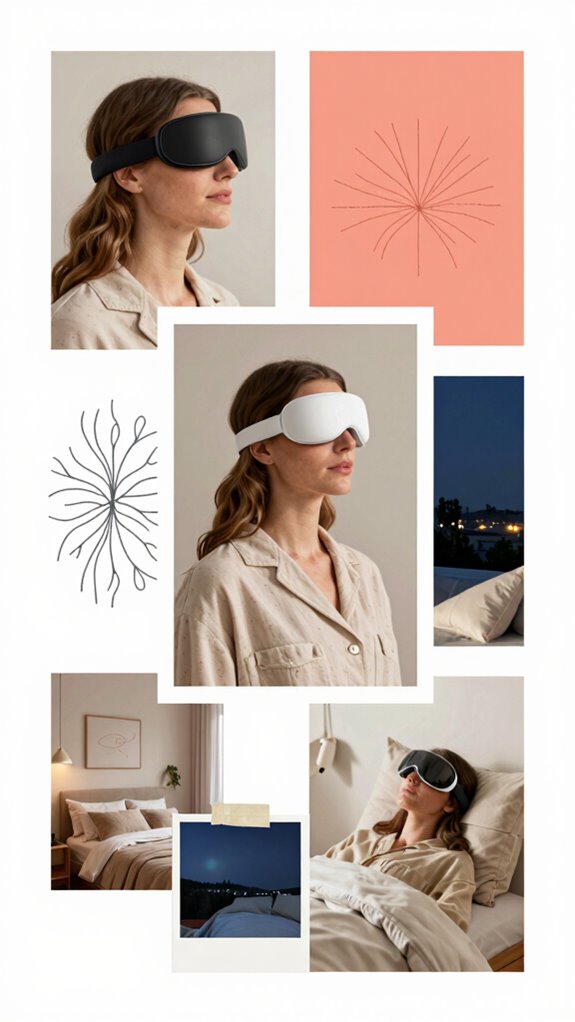
Innovative sleep wearable technology has progressed beyond simple activity trackers, now integrating advanced biosensors capable of detecting subtle physiological changes during rest. These devices monitor neural activity, heart rate variability, and skin conductance, providing perceptions grounded in sleep psychology that go beyond mere data collection. A cozy fabric wall hanging can also influence sleep ambiance, complementing the technological approach to creating a restful environment. With features like dream enhancement and nervous system regulation, brands such as Oura Ring and Dreem are empowering users to proactively optimize sleep architecture. *Imagine understanding your body’s signals with precision, refining your sleep environment, and influencing dream patterns.* These innovations not only foster control over sleep quality but deepen your awareness of biological rhythms, steadily guiding you toward restorative, intentional rest. Additionally, awareness of sleep-disrupting factors like alcohol can help users align their habits with these advanced technologies to improve overall sleep quality.
Embedded Temperature Regulation Fibers
Embedded temperature regulation fibers represent a cutting-edge evolution in sleep technology, integrating bio-responsive textiles directly into sleepwear fabrics to maintain an ideal thermal microenvironment throughout the night. These textiles, developed by brands like ThermoSmart, adjust their insulation based on your body’s heat, preventing temperature fluctuations that can cause sleep disruptions or dream interference. Additionally, incorporating smart fabric technology can enhance the responsiveness and effectiveness of these fibers, further supporting restful sleep. The integration of temperature-sensitive materials allows for more precise control of thermal comfort, adapting dynamically to your body’s needs.
FAQ
Can Alcohol Affect My Nervous System Regulation During Sleep?
Alcohol affects my nervous system regulation during sleep because its metabolism can disrupt calming mechanisms, leading to increased sympathetic activity. I’ve learned that managing alcohol intake helps preserve nervous system balance, making my sleep more restorative and aligned with biological harmony.
How Does Alcohol Impact Neuro-Acoustic Sleep Pacing Techniques?
Alcohol disrupts neuro-acoustic sleep pacing by interfering with your nervous system’s calming signals, causing sleep disruption. Since alcohol metabolism can prolong this effect, it hampers your ability to entrain sleep patterns naturally and maintain deep relaxation.
Does Alcohol Increase the Likelihood of Circadian Rhythm Disruption?
Alcohol metabolism disrupts sleep architecture, throwing your circadian rhythm off balance. Even if it helps you unwind briefly, it ultimately hampers your body’s natural timing, making controlled, harmony-based sleep harder to achieve and maintain.
Is There a Way to Minimize Dehydration Caused by Alcohol Before Sleep?
To minimize dehydration from alcohol, I focus on hydration strategies like drinking plenty of water before and after alcohol consumption, and I time alcohol intake earlier in the evening to allow proper hydration and digestion before sleep.
Can Smart Temperature-Regulating Fabrics Counteract Alcohol-Induced Thermal Spikes Overnight?
Envision controlling your night like a sleep superhero—smart temperature-regulating fabrics are transformative. They harness fabric technology for precision temperature regulation, helping you combat alcohol-induced thermal spikes, giving you full control over your sleep environment and performance.
Summary
Adjusting our approach to alcohol before bed can subtly recalibrate our sleep architecture, much like tuning an instrument for peak harmony. Recognizing its influence on circadian rhythms and neural pathways—highlighted by researchers at Harvard Medical School—enables us to make informed choices that support restorative rest. Embracing innovative sleep technologies, such as temperature-regulating fabrics and advanced wearable devices, offers tangible pathways to enhance sleep quality. Ultimately, understanding these biological nuances empowers us to foster deeper, more rejuvenating sleep cycles.