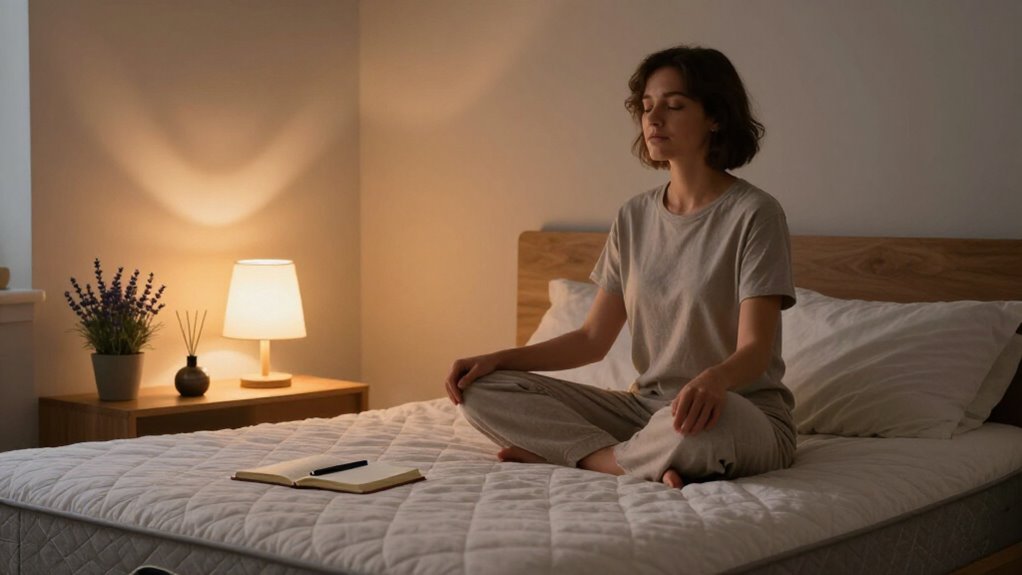
I used to think midnight ice cream was self-care until I found myself wired at 3 AM, staring at my ceiling like it owed me money.
Here’s the deal: that sugar crash? Fake news. Your cortisol spikes instead, leaving you buzzed and miserable. I learned this the hard way after demolishing a pint of Ben & Jerry’s Half Baked—then wondering why I couldn’t sleep.
Carbs late-night? RIP your melatonin. Dr. Andrew Huberman’s research shows it nukes your circadian rhythm. Caffeine blocks adenosine for *hours*—that 4 PM Starbucks habit haunts you. And alcohol? Sure, you’re out cold, but your REM sleep gets shredded.
We at Corala Blanket see this daily. People think “sleepmaxxing” 2026 trends will save them, but fancy tech can’t outrun garbage inputs. The Oura Ring data doesn’t lie—your “restful” night after wine is actually trash.
Want real rest? Cut the crap. Your pillow’s waiting.
Quick Takeaways
- High-sugar and processed foods activate the HPA axis, increasing cortisol and delaying sleep onset.
- Caffeine blocks adenosine receptors, disrupting sleep regulation and melatonin production.
- Alcohol causes fragmented sleep despite initial sedative effects, impairing restorative sleep stages.
- Refined sugars and artificial additives disturb hormonal balance, leading to increased alertness at night.
- Evening exposure to blue light suppresses melatonin, further impairing sleep quality.
Which Foods Raise Cortisol and Keep You Awake?
Certain foods can inadvertently activate the hypothalamic-pituitary-adrenal (HPA) axis, raising cortisol levels that hinder sleep onset and quality. High-sugar snacks, caffeine-laden drinks, and processed meals provoke this stress response, mimicking the body’s fight-or-flight signaling. Fermentation techniques, like consuming probiotic-rich yogurt or kefir, may help modulate cortisol by supporting gut-brain axis health. Furthermore, herbal sleep aids—such as valerian root or chamomile—can dampen stress hormones without disrupting biological harmony. Natural circadian alignment benefits from mindful dietary choices, reducing cortisol spikes. Understanding the impact of blue light on melatonin production can also inform bedtime routines, as exposure to blue light in the evening may further suppress melatonin levels. Incorporating toxin-free bedding solutions can further promote a restful environment that supports overall relaxation and sleep quality. Brands like Gaia Herbs and researchers like Dr. Steven Miller emphasize these approaches for sustainably improving sleep through neuroregulation.
How High-Sugar and Processed Foods Disrupt Your Sleep
Over time, they desynchronize sleep hygiene, making it harder for the body to *shift* smoothly into rest. Studies, including those by Dr. Steven W. Lockley at Harvard, reveal that high glycemic foods consumed late in the day disrupt the body’s internal clock. Disrupting melatonin production**** can impair not only sleep quality but also overall mood and mental health, especially in individuals prone to depression.
How Caffeine and Alcohol Mess With Your Sleep Cycles
Caffeine and alcohol are two pervasive substances that, while often consumed for their short-term effects, can profoundly undermine your sleep cycles.
Caffeine blocks adenosine receptors, disrupting nervous system regulation and delaying melatonin production, which hampers your sleep environment’s harmony.
Alcohol, initially sedative, prompts fragmented sleep as it metabolizes, impairing REM stages critical for restoration.
Both shift internal clocks unpredictably, leading to circadian misalignment.
Researchers like Dr. Christopher Barnes emphasize that these substances interfere with the nervous system’s ability to progress smoothly into restful states.
Understanding these mechanisms, including the circadian rhythm, and how external factors like light exposure, empowers you to refine your evening routines, optimizing sleep quality through better nervous system regulation.
Hidden Food Triggers That Can Sabotage Your Sleep Quality
While it’s tempting to believe that what we eat has little impact on sleep quality, emerging research from institutions like the Sleep & Wellness Institute reveals how hidden food triggers can quietly sabotage rest.
Substances like refined sugars and artificial additives can cause metabolic disruption, impairing how our bodies process energy overnight.
They also disturb hormonal balance—particularly cortisol and insulin—leading to heightened alertness when we should be winding down.
These subtle disruptions can prolong sleep latency and fragment rest, making it harder to reach restorative state. Recognizing and controlling these less obvious culprits empowers you to optimize sleep—relying on scientific evidence rather than guesswork.
Furthermore, understanding metabolic disruption can help you identify foods that interfere with your natural sleep cycle more effectively. Dietary influences play a crucial role in sleep quality and, by managing them, you can support healthier sleep patterns.
Vagus Nerve Stimulation Techniques

Recent advances in neurotechnology have brought Vagus Nerve Stimulation (VNS) to the forefront as a promising method for enhancing sleep by actively modulating the nervous system.
VNS promotes neural entrainment, aligning brainwaves with calming frequencies, and notably boosts parasympathetic activation, shifting the body into relaxation mode.
Devices like the α-Stim or gammaCore harness these principles, stimulating the vagus nerve to reduce stress responses and improve recovery.
Research from institutions such as the University of Toronto validates the connection between vagal activity and sleep quality.
Developments in neurostimulation devices continue to enhance our ability to target specific neural pathways for better sleep health. For example, designing targeted neural stimulation approaches allows for more precise modulation of the nervous system, increasing the effectiveness of these therapies.
Smart Sleep Tracker Options

Smart sleep trackers have evolved into sophisticated tools that transcend basic activity monitoring, integrating advanced sensors and algorithms to provide in-depth understanding into sleep architecture. They now facilitate nervous system calibration by detecting subtle changes in heart rate variability and autonomic activity. Additionally, some models incorporate acoustic environment analysis to further refine sleep quality. They promote environmental harmony—adjusting variables like room temperature and light exposure. Leading brands like WHOOP and Oura utilize machine learning models to optimize individual sleep patterns. These devices enable targeted interventions, empowering users to enhance autonomic balance and establish states conducive to restorative sleep, aligning biological rhythms without overload or obsession. Furthermore, these devices often analyze sleep stages through sophisticated algorithms, offering a comprehensive view of sleep quality.
Ancient Sound Healing Practices
Ancient sound healing practices, rooted in diverse cultural traditions such as Tibetan singing bowls, Indian sitars, and Native American flutes, leverage the profound influence of acoustic vibrations on the human nervous system.
Sacred chants, combined with herbal infusions, can enhance this effect by grounding the mind and calming physiological responses, supported by research from sound therapy pioneers like Dr. Jeffrey Thompson. The specific tonal patterns used in these practices can induce a deeply meditative state, which has been shown to improve sleep quality.
These vibrations stimulate the vagus nerve, promoting parasympathetic activation, which facilitates relaxation. Additionally, high-end linens can complement this calming environment by providing a luxurious and comfortable sleep setting.
FAQ
Can Meal Timing Influence Sleep Quality Without Us Realizing?
Meal timing definitely influences sleep quality, and I’ve found that managing meal composition, especially incorporating dietary antioxidants, helps regulate my sleep-wake cycle. Eating thoughtfully closer to bedtime supports nervous system calming and overall restful, biological sleep.
Are Certain Foods Linked to Chronic Sleep Issues Over Time?
Certain foods, especially if you have sensitivities or nutrient imbalances, can cause chronic sleep issues over time. I suggest paying attention to your body’s reactions and adjusting your diet to regain control and support better, consistent sleep.
How Does Hydration Level Affect Sleep Disturbance?
Ever wonder how hydration impacts sleep? Proper hydration supports digestion and maintains electrolyte balance, which prevents nighttime disruptions. Staying tuned into your body’s hydration needs helps regulate your nervous system, fostering a calmer, more restorative sleep cycle.
Are There Specific Dietary Patterns That Promote Better Sleep?
Adopting dietary sleep patterns rich in sleep promoting nutrients like magnesium, tryptophan, and melatonin support better rest. I prioritize whole foods, balanced carbs, and healthy fats, knowing these patterns empower me to sync my body naturally with sleep.
Can Eating Late at Night Impact Nervous System Regulation During Sleep?
Eating late totally wrecks nervous system regulation, cranking stress hormones and messing with gut bacteria—all sabotaging your sleep. Take control now, avoid late meals, and let your biology naturally ease into restorative rest effortlessly and deeply.
Summary
By understanding how specific foods influence cortisol levels, nervous system activity, and sleep architecture, we can make informed choices that foster restorative rest. Recognizing the subtle yet impactful ways sugar, caffeine, and processed foods disrupt circadian rhythms allows us to implement targeted strategies—like Vibrational Medicine techniques endorsed by neuroscientists such as Dr. David Eagleman—and optimize our sleep environment. Informed dietary decisions and mindful practices can transform restless nights into peaceful, rejuvenating sleep cycles.