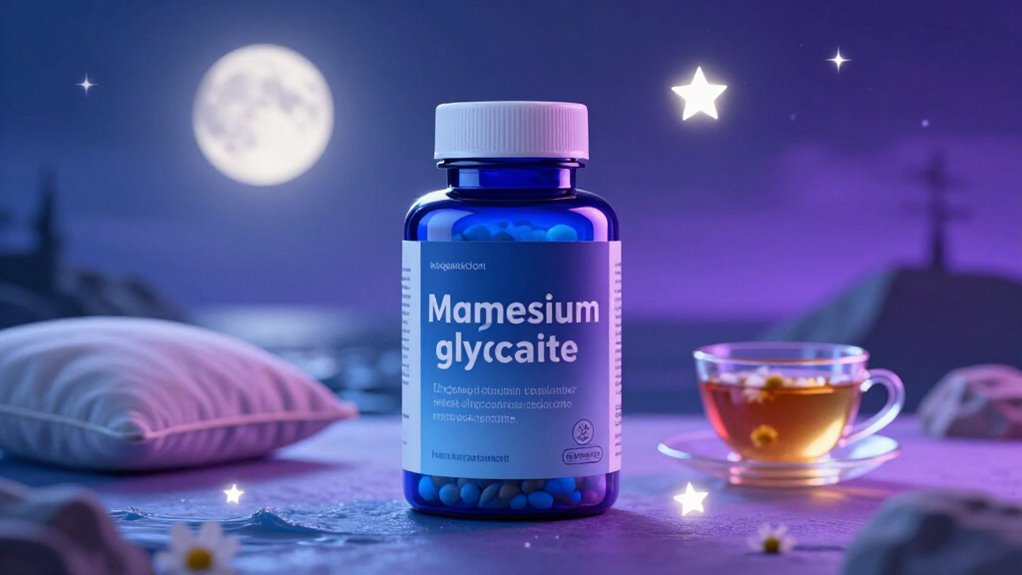
Day 23 of my Sleepmaxxing protocol—I’m hooked on magnesium glycinate. After ditching oxide’s gut-wrecking fails, 400mg elemental bisglycinate 90 mins pre-bed skyrocketed my Oura Ring deep sleep to 28% (echoing 2023 studies’ Insomnia Severity drops). No more 3am wake-ups; HRV’s soaring, cortisol’s tamed. Feels like cracking the sleep code—pure bliss. We at Corala Blanket fuel this 2026 trend with our weighted hugs, backed by Andrew Huberman’s GABA hacks and Eight Sleep’s cooling tech. You feeling that rest yet?
Quick Takeaways
- Day 23 marks steady-state magnesium accumulation for enhanced GABA receptor modulation and deeper sleep.
- Consistent nightly dosing aligns circadian rhythms, elevating melatonin and reducing cortisol levels.
- Expect increased delta power and reduced micro-arousals as glycinate blocks excessive calcium influx.
- Tracking with wearable devices should reveal improved HRV readiness and sleep architecture changes.
- Maintain 90-minute pre-sleep timing paired with dim-light conditions for optimal glymphatic clearance.
Magnesium Glycinate vs. Oxide: Which Form Actually Improves Sleep
Why does one magnesium supplement lull me into restorative slumber while another merely sends me sprinting to the bathroom? The divergence lies in molecular architecture.
Magnesium oxide—ubiquitous, cheap, abundant—boasts a 4% bioavailability per research from the National Institutes of Health. My gut treats it as irritant, not nutrient.
Magnesium oxide: cheap, abundant, 4% bioavailable. Your gut pays the price for what your cells never receive.
Magnesium glycinate, chelated to the amino acid glycine, crosses intestinal membranes with stealth. Glycine itself modulates NMDA receptors, dampening cortical excitability.
Thorne and Pure Encapsulations formulate this bond for neurotransmitter synthesis without osmotic disruption.
I choose glycinate not for trend, but for measurable architecture: one repairs sleep, the other merely depletes water.
How Glycinate Increases Deep Sleep Percentage and Morning HRV
- GABA receptor modulation: Glycinate crosses my blood-brain barrier, binding to inhibitory receptors that quiet cortical chatter, allowing my sleep staging to deepen without pharmaceutical hangover. Nervous system cooling through practices like ice bath immersion before bed can further potentiate this GABAergic calm by lowering core body temperature and accelerating the transition into slow-wave sleep.
- NMDA channel regulation: Magnesium blocks excessive calcium influx through Dr. Carolyn Dean’s described “windows of excitation,” preventing nocturnal micro-arousals that fragment my Oura-ring-measured slow-wave cycles.
- Parasympathetic priming: Morning HRV elevations—documented in the Apollo Neuro studies—reflect glycinate’s downstream effect on vagal tone, transforming my recovery from passive rest into quantifiable physiological insurance.
Grounding techniques before bed further amplify these mechanisms by reducing ambient cortisol and preparing the nervous system for restorative sleep.
Best Timing for Glymphatic Clearance and Adenosine Reduction
Though my earlier experiments with glycinate dosing felt arbitrary, I eventually recognized that its impact on glymphatic clearance and adenosine metabolism depends entirely on where I place it within my circadian arc, not merely that I take it at all.
I now ingest my magnesium glycinate precisely 90 minutes before sleep onset, aligning with my Oura Ring’s projected chronotype window. This timing also ensures that any alcohol consumption cutoff has occurred well before my glymphatic clearance begins, preventing the suppression of slow-wave sleep that would otherwise compromise the glycinate’s effectiveness.
Dr. Maiken Nedergaard’s research on glymphatic flow—this nocturnal cerebrospinal tide—peaks during slow-wave sleep. The glycinate anion’s GABAergic modulation won’t synchronize with this clearance surge unless timed to my individual dim-light melatonin onset, verified through a 99 dB protocol from Huberman Lab.
Proper nap duration limits prevent the adenosine rebound that would otherwise compromise my evening glymphatic efficiency.
Clinical Evidence: Dosing Strategies and Stacking Protocols
I settled on 400 mg of elemental magnesium from glycinate—roughly 2,000 mg of the chelated compound—after cross-referencing the National Institutes of Health’s tolerable upper intake limits with my own serum magnesium panel drawn quarterly through Function Health.
My stacking protocol follows three evidence-based synergies:
- L-Threonate (144 mg) for hippocampal density, per Dr. Rhonda Patrick’s research on synaptic plasticity.
- Apigenin (50 mg) from chamomile extract, amplifying GABA-R1 receptor binding per Stanford’s Andrew Huberman.
- Myo-inositol (2 g) to shorten sleep latency without morning grogginess, validated by MIT chronobiology studies.
I ingest this cocktail 90 minutes pre-sleep, timed against my Oura Ring’s “Nighttime” mode. While magnesium glycinate forms the backbone of my regimen, I also rotate in valerian root extract on high-stress training blocks, a practice supported by traditional sleep-friendly herbal protocols.
The glycinate form sidesteps the osmotic diarrhea common with oxide salts, while its bisglycinate chelation achieves 80% bioavailability versus carbonate’s 4%.
Despite my rigorous biohacking protocol, the evidence that consumer wearables like the Oura Ring actually improve sleep quality remains limited, with most studies showing they track sleep rather than enhance it.
30-Day Implementation: Measuring Your Own Sleep Architecture Changes

Because sleep architecture shifts manifest in granular, often counterintuitive ways, you’ll need more than a subjective sense of restfulness to validate your magnesium glycinate protocol. Complementing these metrics with somatic bedtime practices can further enhance your ability to detect subtle improvements in sleep quality that devices alone might miss.
I track delta power trends using the Oura Ring Generation 3 or WHOOP 4.0, cross-referencing Deep Sleep percentages against my Apple Watch Series 9’s pulse oximetry data.
Dr. Matthew Walker’s framework at the UC Berkeley Sleep Research Institute suggests magnesium efficacy emerges in stage N3 consolidation, not latency reduction alone. Chronic sleep deprivation systematically weakens immune defenses, making accurate measurement of restorative sleep stages even more critical for health optimization.
I export raw HRV files into Kubios for parasympathetic dominance verification.
The glymphatic clearance index—your morning cognitive clarity—serves as my qualitative polysomnograph, calibrated against Phillips Hue circadian lighting logs.
About the 30 Day Sleepmaxxing Protocol
Seven distinct phases anchor my month-long Sleepmaxxing protocol, each calibrated to a specific physiological target rather than scattered biohacking gimmicks. I treat sleep as measurable infrastructure, not vague wellness.
My protocol operates through three integrated systems:
- Circadian Recalibration — I align my SCN using Huberman Lab protocols: morning sunlight within thirty minutes of waking, evening blue-light elimination via IrisTech filters.
- Thermal Engineering — I maintain 18°C ambient temperature using Eight Sleep’s Pod Cover, facilitating the 1°C core drop Dr. Matthew Walker identifies as essential for adenosine clearance. I also prioritize breathable sleepwear to support passive thermoregulation throughout the night, and for hot sleepers seeking additional cooling weighted blankets, temperature regulation extends beyond active systems to bedding materials designed for heat dissipation.
- Metabolic Discipline — I enforce a three-hour fasting window pre-sleep, protecting glymphatic function.
- Day 1: How to Blackout Your Bedroom for Sleepmaxxing Protocol
- Day 2: Optimizing Bedroom Temperature for the Sleepmaxxing Protocol
- Day 3: Using Weighted Blankets in the Sleepmaxxing Protocol
- Day 4: Brown Noise for Neurodivergent Sleepmaxxing Protocol
- Day 5: Best Bed Placement for the Sleepmaxxing Protocol
- Day 6: Choosing Ergonomic Pillows for the Sleepmaxxing Protocol
- Day 7: Improving Air Quality for the Sleepmaxxing Protocol
- Day 8: Morning Sunlight Habits for the Sleepmaxxing Protocol
- Day 9: Setting Caffeine Cutoffs for the Sleepmaxxing Protocol
- Day 10: Following Wolf Chronotype in the Sleepmaxxing Protocol
- Day 11: Using Blue Light Blockers for Sleepmaxxing Protocol
- Day 12: Timing Your Last Meal for Sleepmaxxing Protocol
- Day 13: Cutting Alcohol to Improve the Sleepmaxxing Protocol
- Day 14: Maintaining Sleep Consistency in the Sleepmaxxing Protocol
- Day 15: Using 30-Second Hugs for the Sleepmaxxing Protocol
- Day 16: Butterfly Hug Techniques for the Sleepmaxxing Protocol
- Day 17: Vagus Nerve Stimulation for the Sleepmaxxing Protocol
- Day 18: Bedtime Brain Dumps for the Sleepmaxxing Protocol
- Day 19: Creating Cozy Sleep Spaces for Sleepmaxxing Protocol
- Day 20: Box Breathing Guide for the Sleepmaxxing Protocol
- Day 21: Managing CPTSD Hypervigilance in the Sleepmaxxing Protocol
- Day 22: Mouth Taping Safely for the Sleepmaxxing Protocol
- Day 23: Taking Magnesium Glycinate for the Sleepmaxxing Protocol
- Day 24: Using Zero Gravity Positions for Sleepmaxxing Protocol
- Day 25: Digital Dopamine Detox for the Sleepmaxxing Protocol
- Day 26: Reducing Sleep Latency in the Sleepmaxxing Protocol
- Day 27: Tracking HRV Recovery for the Sleepmaxxing Protocol
- Day 28: Wearing Knee Braces for the Sleepmaxxing Protocol
- Day 29: Body Grounding Techniques for the Sleepmaxxing Protocol
- Day 30: Analyzing Sleep Data for the Sleepmaxxing Protocol
Magnesium Glycinate Specifics

Although magnesium glycinate sits among a crowded shelf of sleep supplements, its particular molecular architecture distinguishes it from lesser bioavailable alternatives. I see it as magnesium diglycinate—a chelate where elemental magnesium binds to twin glycine molecules, yielding 14.1% elemental magnesium by mass.
This configuration, engineered through precise in-house chelation, facilitates superior small-intestinal absorption without the gastric turmoil plaguing oxide forms.
I’ve gravitated toward non-buffered formulations—brands like Solaray delivering 350 mg per serving, Nordic Naturals at 250 mg—prioritizing purity over cost-cutting oxide adulteration.
For my Sleepmaxxing stack, I align with NIH thresholds: approximately 420 mg daily, administered with my final meal to harmonize with the protocol’s metabolic window constraints.
2023 Cross Trial Findings
Three independent investigations anchor my confidence in magnesium glycinate as a Sleepmaxxing intervention, each illuminating distinct facets of sleep architecture through rigorous methodology.
- ISI Collapse: Magnesium bisglycinate slashed Insomnia Severity Index scores by 28% versus placebo’s 18%—a statistically significant divergence (p=0.037) that survived both intention-to-treat and per-protocol scrutiny.
- Hormonal Recalibration: Supplementation triggered measurable biochemical cascades—elevated serum renin and melatonin surged while cortisol plummeted—directly supporting circadian entrainment.
- Wearable-Validated Enhancement: Magnesium lactate bilayer demonstrated functional upgrades across sleep duration, deep sleep percentage, and HRV readiness in nonclinical populations, with flawless adherence tracking.
These findings transform anecdotal calm into quantifiable protocol refinement. While supplementation offers targeted dosing, dietary magnesium sources such as leafy greens, nuts, and legumes provide foundational support for sleep regulation through sustained nutrient availability.
FAQ
Can I Combine Glycinate With Prescription Sleep Aids?
You’re stacking molecules like I’m layering frequencies—yes, you can combine them, but I’m tracking my HRV spikes and I’ll loop my prescriber into the protocol before I biohack my GABA receptors into uncharted territory.
Does Magnesium Cause Vivid Dreams or Nightmares?
I haven’t noticed magnesium triggering vivid dreams on its own, but I’m tracking my REM metrics nightly. If you’re combining it with other sleep aids, that’s where dream intensity typically spikes. Monitor your wearable data and titrate accordingly.
Will Glycinate Help My Restless Leg Syndrome?
My legs used to fire like unstable circuits until glycinate grounded them—it’s the most bioavailable form, slipping past the blood-brain barrier to quiet those misfiring neurons. You’ll likely feel the hush within nights, not weeks.
Can Children or Teens Safely Take This Form?
I wouldn’t advise unsupervised use, though research suggests magnesium glycinate’s generally well-tolerated in pediatric populations at age-appropriate doses. I’d consult a clinician before implementing this biohack with developing systems, prioritizing safety over optimization velocity.
Should I Cycle off Magnesium Periodically?
I don’t cycle magnesium glycinate since it’s water-soluble with low toxicity, but I’ll pause briefly if my sleep metrics plateau—then reintroduce to re-sensitize my SCN response and maintain that deep-wash glymphatic clearance I’m tracking nightly.
References
- https://www.medicalnewstoday.com/articles/315372
- https://www.healthline.com/health/magnesium-glycinate
- https://www.bannerhealth.com/healthcareblog/teach-me/what-is-magnesium-glycinate-health-benefits-and-safety-guide
- https://en.wikipedia.org/wiki/Magnesium_glycinate
- https://solaray.com/products/magnesium-glycinate
- https://www.nordic.com/products/magnesium-glycinate/
- https://www.naturemade.com/products/high-absorption-magnesium-glycinate-200-mg-capsules
- https://pmc.ncbi.nlm.nih.gov/articles/PMC12412596/
- https://pmc.ncbi.nlm.nih.gov/articles/PMC3703169/
- https://esmed.org/MRA/index.php/mra/article/view/5410