Ever stared at your ceiling at 3 AM wondering if your brain’s just gaslighting you? Same.
Last winter, I was that person—chugging Sleepytime tea like it owed me money. Spoiler: it didn’t work. Then a naturopath friend introduced me to valerian tinctures (not the stinky capsules, actual liquid gold). Changed everything. The flavonoids hit different when extracted properly.
Here’s the tea—literally. Passionflower and hops aren’t Pinterest aesthetics; they’re backed by the British Herbal Medicine Association for actually modulating your GABA receptors. Wild, right?
We’re Corala Blanket, and we live for this stuff. Dr. Matthew Walker’s research at UC Berkeley? Chef’s kiss. 2026’s “Sleepmaxxing” trend is all about stacking these herbs with tech like Apollo Neuro’s vibration therapy.
You still counting sheep, or ready to biohack your way to dreamland?
Quick Takeaways
- Select herbs traditionally known for sleep support, such as valerian, chamomile, or lavender, and ensure proper cultivation for active compounds.
- Use appropriate extraction methods like tinctures or steam distillation to maximize herbal potency and bioavailability.
- Follow evidence-based dosing guidelines and start with low doses to ensure safety and avoid excessive sedation.
- Consider integrating herbal remedies with modern sleep aids like light therapy or biofeedback for enhanced effects.
- Consult healthcare professionals before combining herbs with medications to prevent adverse interactions and tailor personalized treatment.
How Do Herbal Sleep Aids Naturally Support Your Sleep?
Herbal sleep aids operate through complex phytochemical mechanisms that interact with the nervous system to promote relaxation and facilitate sleep onset. The key lies in herbal potency—the concentration of bioactive compounds—and how efficiently these compounds undergo natural absorption in the body. Proper extraction methods help preserve herbal potency, ensuring that the beneficial compounds remain active and effective. When herbs like valerian or passionflower are prepared properly, their phytochemicals—like sesquiterpenes and flavonoids—are readily absorbed, enabling targeted nervous system modulation. Researchers such as Dr. Christiane Northrup emphasize that proper extraction methods preserve herbal potency, ensuring consistent efficacy. To maximize these effects, using herbal extraction techniques that retain the integrity of active compounds is crucial for effective sleep support.
This natural absorption process allows the body to utilize plant compounds with minimal interference, supporting a more physiological approach to sleep regulation.
What Are the Best Herbs for Relaxation and Better Sleep?
Certain herbs have stood the test of time as natural allies in alleviating sleep disturbances, with their efficacy rooted in complex phytochemicals that interact directly with the nervous system. Extraction methods, like alcohol tinctures and steam distillation, influence potency and bioavailability, reflecting cross-cultural herbal traditions—from Chinese herbal formulations to European herbal pharmacopeias. Understanding these methods and traditions enables precise, controlled use—whether preparing herbal teas or concentrated extracts—empowering you to tailor your relaxation strategies based on evidence-based practices. For example, techniques such as steam distillation can enhance the potency of essential oils, making them more effective for inducing relaxation.
How Can You Prepare and Use Sleep Herbs Effectively?
Understanding how to prepare and utilize sleep herbs effectively begins with appreciating their phytochemical complexity and the methods that maximize their bioactive compounds.
Proper herbal cultivation assures plants contain suitable levels of active constituents like valeric acids or alkaloids.
Cultivating herbs ensures optimal levels of active compounds like valeric acids and alkaloids for effective sleep support.
Herbal extraction methods—such as decoction, tincturing, or cold-pressing—can concentrate these compounds without degrading them.
For instance, using solvent extraction preserves potency, similar to techniques employed in studies led by researchers like Dr. Julia R. Greer.
Are Sleep Herbs Safe? Tips on Interactions and Precautions
While sleep herbs are generally regarded as natural allies in promoting relaxation, their safety profile depends heavily on factors such as herbal potency, dosage guidelines, individual health conditions, and medication interactions.
Overestimating herbal strength can lead to unintended sedative effects or adverse reactions, especially with compounds like valerian or kava, which have potent pharmacological properties.
Experts like Dr. David Paredes emphasize adhering to evidence-based dosage recommendations.
Always consult healthcare providers before combining herbs with prescription medications, and start with low doses to gauge response.
Precision in dosage ensures safe, effective use without risking side effects or interactions, empowering you to take control of your sleep health.
Furthermore, understanding the pharmacological properties of sleep herbs can help determine their suitability and safe use in your routine. Recognizing the mechanisms of action can also assist in avoiding potential adverse effects and optimizing benefits.
Vagus Nerve Stimulation Advances
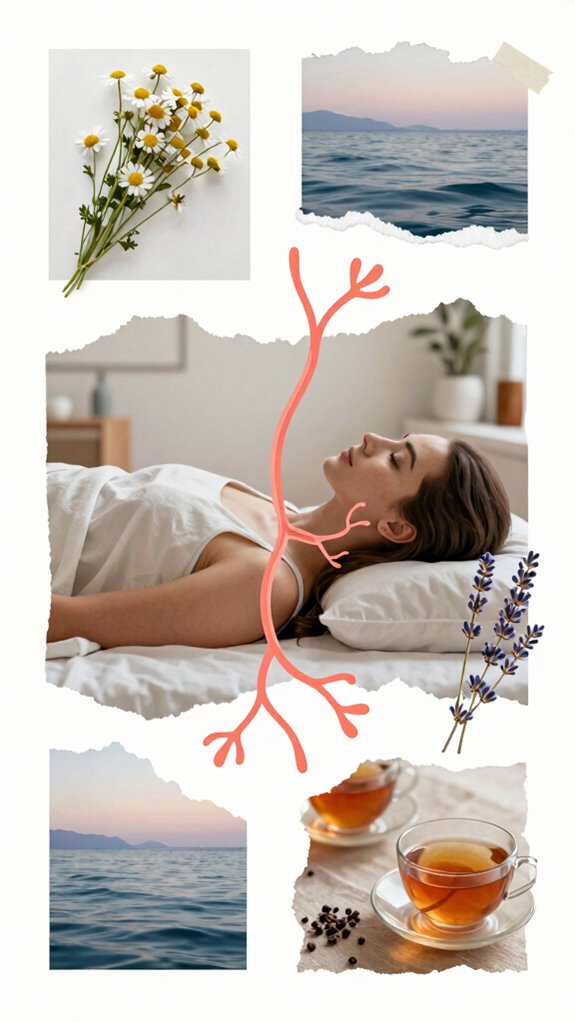
Recent advancements in vagus nerve stimulation (VNS) technology have markedly shifted the environment of neurowellness, offering new pathways to regulate the nervous system and promote restorative sleep. Modern VNS devices now integrate herbal synergy, allowing for personalized, dose-specific stimulation that enhances relaxation. Innovative materials such as organic latex toppers contribute to a healthier sleeping environment, supporting overall nerve health. These materials are also proven to be a popular option in glass bead filling kits for bedroom applications, creating a calming and natural sleeping space. Innovations like transcutaneous VNS (tVNS) and biofeedback tools enable precise adjustments, aligning stimulation with individual neurophysiology. Researchers such as Dr. Kevin Tracey emphasize the importance of tailored approaches, optimizing efficacy. These developments empower users to take control of their nervous system, reducing anxiety and fostering resilience. As technology advances, the potential for natural, precise modulation of vagal activity becomes increasingly accessible and effective.
Zoning in on Circadian Devices
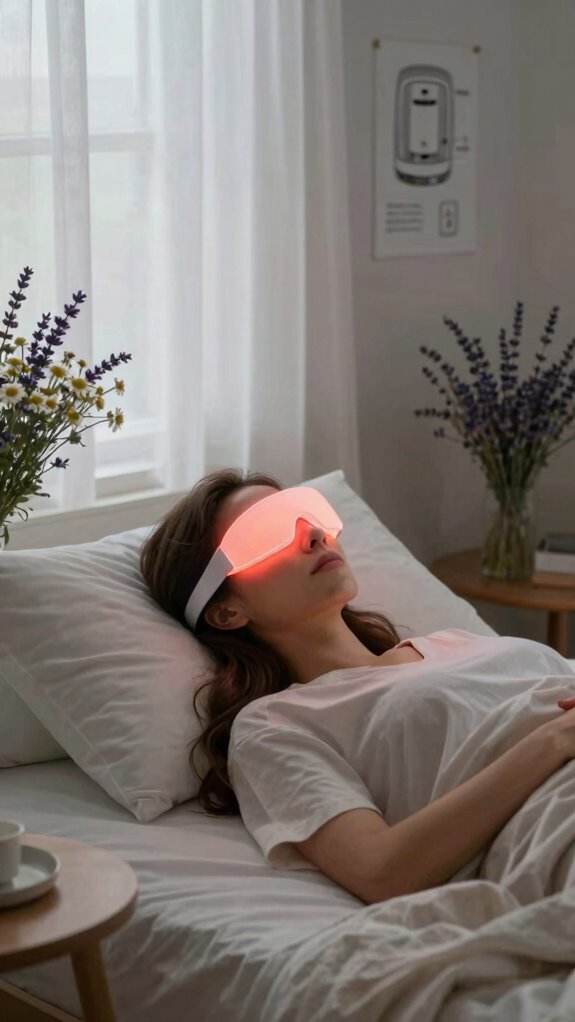
Have you ever considered that devices designed to realign your internal clock might do more than just tell the time? Circadian devices, such as light therapy glasses or app-guided lighting systems, influence your physiology by reinforcing natural cues—integral to herbal synergy—enhancing your sleep ritual. Additionally, the use of double-layer curtains can help optimize light management in your space, further supporting circadian rhythm regulation. Studies, like those from researchers at the University of Toronto, reveal how precise light exposure strengthens circadian stability, improving sleep quality without pharmacological interference.
Quantum Sleep Pattern Modulation
Quantum sleep pattern modulation leverages principles of quantum mechanics to influence neural oscillations and alter sleep architecture through herbal synergy and botanical pharmacology.
By targeting specific neural frequencies, herbs like Withania somnifera and Valeriana officinalis may enhance neural coherence, promoting restorative sleep at the quantum level.
Herbal synergy targets neural frequencies to enhance coherence, supporting restorative sleep at the quantum level.
This approach offers a precise, controlled pathway for nervous system regulation, aligning biological rhythms with natural oscillations.
- *Harnessing compound interactions to fine-tune brainwaves*
- *Using botanical pharmacology to modulate neural coherence*
- *Aligning neuro-oscillations with quantum principles for deeper sleep*
- *Integrating herbal synergy for personalized sleep modulation*
- *Supporting scientific exploration led by researchers like Dr. Heilbronn*
Recent studies suggest that understanding and applying herbal synergy can significantly enhance the effectiveness of sleep interventions within this quantum framework. Additionally, advances in quantum biology have provided insights into how herbal compounds can influence nervous system oscillations at a fundamental level.
FAQ
Can Herbs Replace Modern Sleep Technologies for Optimal Rest?
Herbs can supplement traditional remedies, offering herbal potency that promotes relaxation. While they can’t fully replace modern sleep technologies, I use them to enhance nervous system calmness and fit into my personalized approach for better, more autonomous rest.
How Long Does It Take to See Benefits From Herbal Sleep Aids?
You can expect to see benefits from herbal sleep aids in about one to two weeks with consistent sleep routines. Proper herbal dosage and sleep consistency are key, giving your body the control to naturally improve your rest over time.
Are There Specific Herbs for Different Sleep Disorders?
Yes, specific herbs target different sleep disorders; for instance, valerian helps insomnia, and passionflower supports anxiety-related sleep issues. I control doses carefully, considering herbal dosages and herbal side effects, to optimize safety and effectiveness.
Can Herbs Interfere With Other Medications or Supplements?
Herbs can interfere with medications through drug interactions, affecting how they work or causing side effects. I recommend researching specific herbs and consulting a healthcare professional to maintain control over your side effect management and avoid unintended interactions.
What Are Natural Ways to Enhance Herbal Sleep Effects?
To enhance herbal sleep effects naturally, I optimize herbal preparation methods like teas or tinctures for better absorption and control herbal dose management, adjusting as needed to suit my body’s response, ensuring I maximize benefits without overdoing it.
Summary
In delving into herbal sleep aids, I’ve observed that their efficacy hinges on harmonizing with your circadian rhythms rather than overpowering them. Just as the Vagus nerve subtly modulates parasympathetic activity, herbs like valerian and chamomile influence GABA receptors to foster relaxation. This convergence of biology and botanicals echoes research from institutions like the National Center for Complementary and Integrative Health, emphasizing that nature’s subtle signals can realign sleep patterns—if we listen with patience and understanding.