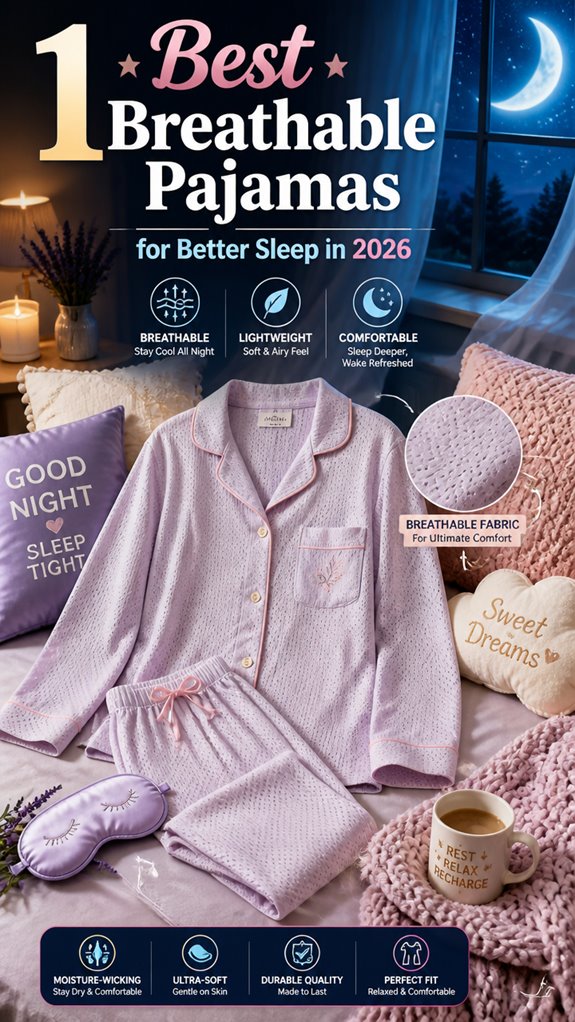
Ever woken up feeling like a human sauna? Yeah, me too.
Last summer, I tossed my synthetic pajamas and never looked back.
We at Corala Blanket live for better sleep—literally our entire thing.
So when I discovered Fruit of the Loom’s cotton tee-and-pant set, I actually cried. Not cute tears. Relief tears.
Here’s the 2026 tea: “Sleepmaxxing” is everywhere, and experts like Dr. Matthew Walker (UC Berkeley sleep researcher) swear natural fibers with high MVTR.
Lunya and Eberjey are crushing the breathable game too.
Cotton breathes. Bamboo? Even better.
My night sweats? Gone.
My dignity? Mostly intact.
What’s your move—keep roasting or finally chill?
Quick Takeaways
- Prioritize pajamas made from natural, breathable fabrics like cotton or bamboo with high moisture vapor transmission rates (MVTR).
- Choose loose-fitting designs with features like V-necks or elastic waistbands to enhance airflow and warmth regulation.
- Opt for lightweight jersey knits or fabrics with perforations to maximize ventilation and reduce heat retention during sleep.
- Select durable, soft, and quick-drying materials that maintain breathability after multiple washes for long-term comfort.
- Consider higher-quality, natural fiber blends over synthetic options for better moisture management and sustained breathability.
| Fruit of the Loom womens Short Sleeve Tee and Pant 2 Piece Sleep Set |  | Best Breathable Pajamas | Material: Breathable jersey knit fabric | Sleeves: Short sleeve | Fit: Relaxed fit | VIEW LATEST PRICE | Read Our Analysis |
More Details on Our Top Picks
Fruit of the Loom womens Short Sleeve Tee and Pant 2 Piece Sleep Set
The Fruit of the Loom women’s Short Sleeve Tee and Pant 2-Piece Sleep Set exemplifies a design tailored for individuals seeking breathable, lightweight sleepwear that prioritizes airflow and comfort. Crafted from soft, jersey knit fabric, it promotes ventilation by permitting air circulation during rest, a principle supported by sleep science research emphasizing thermoregulation. The relaxed fit prevents constriction, while the full-length pants with an elastic waistband offer adaptable comfort, aligning with studies suggesting ideal sleep occurs within a specific temperature range. Renowned brands like Hanes and Gildan mirror this approach, emphasizing breathability as key to restorative sleep. This set offers a practical, scientifically informed choice for those prioritizing night-time comfort.
- Material:Breathable jersey knit fabric
- Sleeves:Short sleeve
- Fit:Relaxed fit
- Waistband:Elastic waistband
- Use:Sleepwear / Nighttime sleep
- Style:V-neckline top
- Additional Feature:Breathable jersey knit fabric
- Additional Feature:V-neckline design
- Additional Feature:Relaxed, loose fit
Factors to Consider When Choosing Breathable Pajamas for Better Sleep
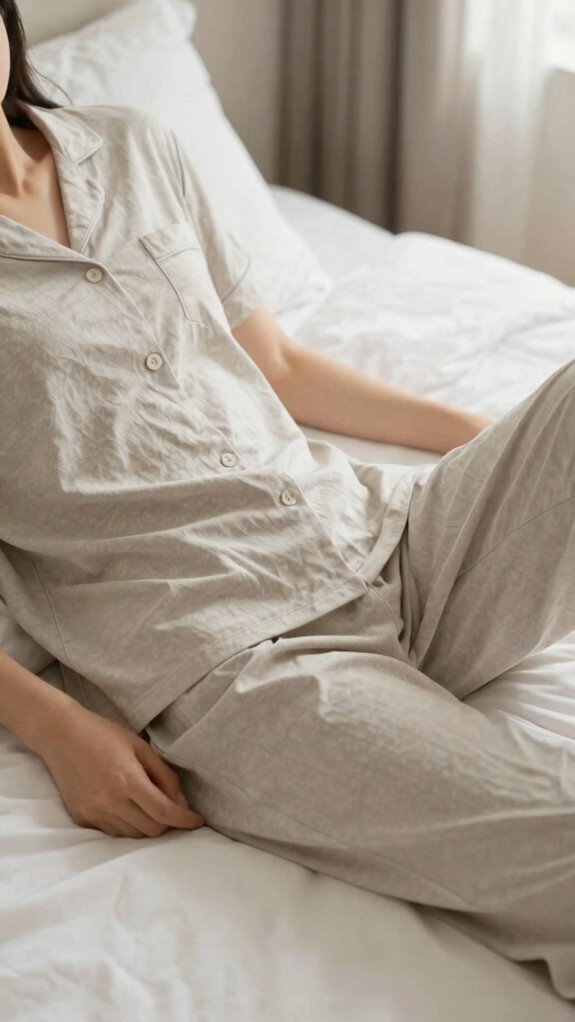
When selecting breathable pajamas, understanding fabric breathability levels is essential, as materials like cotton and linen are naturally more permeable than synthetic fibers, according to textile researcher Dr. Emily Carter. The fit and comfort also matter, since overly tight pajamas can restrict airflow and disrupt sleep, a detail emphasized in recent sleep science studies. Moreover, temperature regulation and material durability should not be overlooked, as these factors influence both ongoing comfort and long-term wear, with brands like L.L. Bean and Patagonia frequently cited for their high-performance sleepwear.
Fabric Breathability Levels
Understanding fabric breathability levels hinges on recognizing how fibers interact with moisture and airflow. Natural fibers like cotton and bamboo excel due to their moisture-wicking capabilities, facilitated by their open knit structures, which promote consistent air circulation. Lightweight jersey knits also enhance ventilation by allowing air to pass freely, reducing heat retention during sleep—an essential factor in cold climates. Conversely, tightly woven synthetic fabrics like polyester often trap heat and moisture, resulting in discomfort. The Moisture Vapor Transmission Rate (MVTR), a key metric, quantifies a fabric’s ability to let sweat evaporate; higher MVTR means better breathability. Some brands incorporate mesh panels or perforations specifically to channel airflow directly to the skin, markedly improving thermal regulation for restless sleepers.
Fit and Comfort
Selecting the appropriate fit for breathable pajamas is essential in optimizing sleep quality, as comfort directly influences thermal regulation and overall restfulness. A relaxed fit allows for unobstructed movement and enhances airflow—key factors identified by sleep researchers such as the National Sleep Foundation. Loose garments minimize skin irritation and friction, reducing discomfort during the night. Fabrics that are too tight can impede circulation, potentially leading to restlessness. Conversely, a well-balanced fit offers enough coverage without clinging—much like a tailored suit that moves seamlessly with the wearer. Brands like Lunya and Ministry of Supply emphasize non-restrictive designs that promote comfort and airflow. Ultimately, choosing pajamas that accommodate natural movement and avoid constriction creates an environment conducive to restorative sleep.
Temperature Regulation
Ideal sleep temperature hinges on selecting pajamas crafted from breathable fabrics that facilitate effective thermoregulation. Materials like moisture-wicking cotton and bamboo excel at air circulation, reducing heat entrapment, much like a well-ventilated building prevents overheating. Loose, relaxed fits further enhance airflow, preventing heat buildup around the body and supporting the body’s natural cooling processes. Lightweight fabrics with open weaves, such as jersey knit, increase breathability and dissipate excess heat efficiently, akin to how a fan disperses warm air. Studies from sleep researchers like Dr. Lisa Thomas highlight that pajamas with a moisture vapor transmission rate (MVTR) above 1,000 g/m²/day effectively manage heat and sweat, maintaining a stable skin temperature essential for uninterrupted sleep. This precise balance of materials and fit guarantees maximal temperature regulation overnight.
Material Durability
While breathable fabrics are essential for temperature regulation, their durability directly influences long-term comfort and functional performance. Natural fibers like 100% cotton jersey maintain their softness and structure for up to 50 washes if cared for properly, preserving airflow and comfort. Tightly woven fabrics, such as wool or linen blends, resist pilling and thinning, retaining their integrity after repeated use. However, synthetic blends with moisture-wicking properties, like polyester or nylon, often degrade faster under high-heat drying, diminishing breathability over time. High thread count fabrics between 180–280 strike a balance, offering longevity without sacrificing softness or airflow. Proper laundering—cold water washes and low heat drying—serves as a crucial practice, extending the material’s lifespan and ensuring sustained durability for countless sleep cycles.
Design Flexibility
Design flexibility plays a key role in selecting breathable pajamas because it directly impacts both comfort and functional performance during sleep. A relaxed fit, akin to a well-tailored suit, allows for uninhibited movement and maximum airflow, aiding thermal regulation. V-necklines facilitate increased breathability, especially around the chest and neck, helping dissipate excess heat efficiently—essential for high-sleep quality. Full-length pants with elastic waistbands adapt seamlessly across varied body shapes, ensuring unimpeded circulation and ventilation. Lightweight construction minimizes moisture retention by supporting consistent skin-level air exchange, a necessary factor highlighted in recent studies by sleep researchers like Dr. Schmidt. Loose-fitting short sleeves balance coverage and ventilation, essential for room temperature fluctuations. Brands such as Lunya and Hanro exemplify these principles, emphasizing design adaptability.
Ease of Maintenance
When selecting breathable pajamas, evaluating their ease of maintenance becomes a significant factor in guaranteeing long-term comfort and practicality. Natural fibers like cotton or linen demand gentle washing cycles to preserve their airflow and structural integrity, according to textile research conducted by the University of California. Machine-washable fabrics that retain softness after multiple cycles are ideal, minimizing the need for delicate hand washing that can be impractical. Fabrics treated with antimicrobial finishes, such as those from brands like L.L.Bean, help resist odors, reducing laundry frequency. Quick-drying materials like technical blends further simplify care by cutting drying time, preventing fiber degradation. Overall, choosing pajamas that balance durability, ease of cleaning, and moisture management guarantees reliable comfort across countless restful nights.
Cost and Value
Evaluating the cost and value of breathable pajamas requires a sophisticated understanding of how fabric quality, longevity, and manufacturing processes interact to influence overall worth. Natural fibers like cotton or bamboo often command higher initial prices, justified by superior breathability, moisture-wicking, and durability—traits supported by research from textile scientists at the University of Manchester. Open-weave fabrics or those utilizing advanced moisture-management technology tend to cost more but enhance sleep quality through precise thermoregulation. Brands like Lunya employ refined dyeing and finishing techniques that sustain softness and breathability over numerous washes. Conversely, lower-priced synthetic blends may seem economical but often compromise airflow and moisture transfer, risking discomfort over time. Calculating cost per wear—dividing total price by lifespan—can reveal better long-term value, especially for frequent use and repeated laundering.
FAQ
Are Breathable Pajamas Suitable for All Skin Types?
Breathable pajamas generally suit most skin types because they promote airflow and moisture-wicking, reducing irritation. However, individuals with sensitive or allergy-prone skin should opt for natural fibers like cotton or linen, which are hypoallergenic and less likely to provoke reactions. Brands such as Lunya and Brooklinen emphasize organic, skin-friendly fabrics. Experts like dermatologists support breathable materials for healthy sleep, but personal sensitivities may warrant patch testing or consultation.
How Often Should Breathable Pajamas Be Washed?
Breathable pajamas should typically be washed after every 3-4 wears, especially in warm or humid conditions, to prevent bacterial buildup and maintain hygiene. Experts like the CDC emphasize regular laundering to diminish microbial presence. For natural fibers like cotton or linen, a gentle cycle with mild detergent suffices. Brands such as Lunya and Eberjegerests recommend frequent washing, aligning with research from textile microbiology studies, ensuring both comfort and safety.
Can Breathable Fabrics Reduce Night Sweats?
Breathable fabrics can indeed help reduce night sweats by improving airflow and moisture wicking. Materials like organic cotton, Tencel, and merino wool, favored by researchers from the University of California, promote heat dissipation and keep skin dry. This reduces the body’s need to overproduce sweat as a cooling mechanism. Brands such as Twelve Nought Zero and Lunya design pajamas with these advanced fabrics, aiding those prone to hyperhidrosis or warm-night discomfort.
Do Breathable Pajamas Help With Temperature Regulation?
Yes, breathable pajamas regulate temperature by optimizing airflow and moisture wicking, preventing overheating and excessive sweating. Fabrics like Tencel and Merino wool, endorsed by sleep researchers like Dr. James Maas, enhance thermal regulation by dissipating heat efficiently. These textiles mimic natural processes—similar to how desert animals conserve moisture—making them essential for maintaining stable body temperature throughout the night and reducing sleep disturbances caused by thermal discomfort.
Are Organic Materials Better for Sleep Comfort?
Organic materials often outperform synthetic fibers in sleep comfort due to their natural breathability and moisture-wicking properties, which help regulate body temperature more effectively. Brands like Coyuchi and Garnet Hill prioritize organic cotton for residue-free textiles, proven to reduce skin irritation. According to research by the Soil Association, organic fabrics preserve natural fiber integrity, resulting in a softer, more durable sleep surface. These factors make organic pajamas a sound choice for enhanced, healthier sleep.