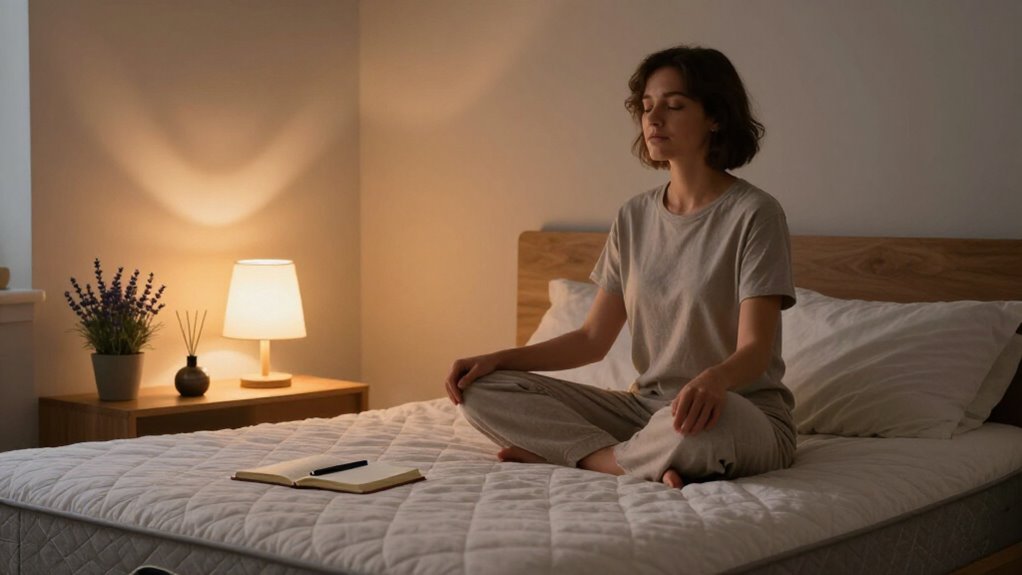
I’m 63, and let’s be real—sleep used to hit different. Now? My bladder’s got a VIP pass to wake me at 3 AM, and “restful” feels like a myth my younger self invented.
But here’s the thing: 7-8 hours still matters, even when your circadian rhythm decides to ghost you.
At Corala Blanket, we live this stuff. I finally stopped fighting my fragmented sleep and leaned in—consistent bedtime, blackout curtains, and yeah, lavender actually works (peer-reviewed by my own grumpy mornings). Dr. Matthew Walker’s research from UC Berkeley backs the quality-over-quantity shift for aging brains.
The Cleveland Clinic’s 2025 findings on sleep architecture changes post-60? Brutally accurate. And “Sleepmaxxing” in 2026? It’s not just Gen Z jargon—biohackers my age are tracking HRV and temperature regulation like it’s our second job.
Want restorative stages back? Stop chasing perfect sleep. Start chasing better sleep.
What’s your 3 AM move—scroll or surrender?
Quick Takeaways
- Aim for 7-8 hours of quality sleep nightly for optimal health and cognitive function after 60.
- Maintain consistent sleep schedules and create a cool, dark, and comfortable environment to enhance sleep quality.
- Incorporate natural remedies like lavender or chamomile to promote relaxation and support a sleep-friendly atmosphere.
- Use sleep tracking or at-home polysomnography to identify disruptions and tailor personalized interventions.
- Address age-related sleep changes with holistic strategies, including environmental adjustments and emerging scientific approaches.
How Much Sleep Do Older Adults Need?
Research consistently indicates that older adults require between 7 to 8 hours of sleep per night to preserve health and cognitive function. Achieving this involves honing sleep hygiene—maintaining a consistent schedule, limiting screen time before bed, and creating a dark, cool environment. Dream analysis can offer understanding into subconscious stressors or unresolved issues impacting sleep quality. As researcher Matthew Walker emphasizes, understanding sleep architecture enhances awareness of REM and non-REM cycles, which often shift with age. Incorporating smart lighting can also significantly improve sleep quality by adjusting light exposure to support natural circadian rhythms. Additionally, being mindful of chronobiological factors influences the timing and quality of REM sleep, helping to reduce disruptions and enhance overall restorative rest. Prioritizing this balance prevents fragmentation, fosters restorative sleep, and supports mental clarity.
Understanding Your Sleep Rhythm After 60
As we progress into our sixties, our natural sleep patterns often undergo subtle but significant shifts, resembling a terrain that gently reconfigures itself over time.
Recognizing your sleep rhythm involves observing variations in sleep gesture—how movements or pauses signal deep rest—and interpreting dream symbolism, which can reveal subconscious processing.
Understanding subtle sleep signals and dream meanings reveals your evolving subconscious as you age.
- Variations in sleep onset and waking times
- Fragmented sleep cycles or early awakenings
- Changes in dream intensity or recurring themes
- Shifts in REM and non-REM balance
- Sensory cues influencing sleep—natural cues versus external stimuli
Awareness of circadian rhythm changes can help you tailor your sleep environment and routines to better support restorative sleep, especially when considering biological clock influences that naturally shift with age.
Why Quality Is More Important Than Quantity for Seniors
While the typical emphasis for younger adults often revolves around accumulating hours of sleep, for those over 60, the focus shifts markedly toward sleep quality.
A strong understanding of sleep architecture can help older adults tailor their habits to improve restorative sleep and overall well-being.
Practical Tips to Improve Sleep Duration and Quality
Improving sleep duration and quality, especially after 60, requires a deliberate understanding of the complex interplay between biological rhythms, environmental cues, and nervous system regulation.
Focus on sleep tracking to identify patterns, and explore dream analysis for perspectives into subconscious stressors.
Prioritize regularity, reducing screen time before bed, and managing ambient temperature for a stable micro-environment.
Use techniques like vagus nerve stimulation or acoustic pacing, inspired by neurowellness trends, to foster calming states.
- Embrace analog tools like paper journals for sleep journaling.
- Incorporate morning light for circadian realignment.
- Use oxygen tracking for at-home diagnostics.
- Regularly review sleep data and dreams for subtle understanding.
- Aesthetic linen sheets can enhance sleep comfort and promote relaxation for a restorative night’s sleep.
Common Sleep Disruptions in Older Adults and How to Address Them

Age-related changes in physiology, neurological circuitry, and circadian regulation often underpin common sleep disruptions in older adults, manifesting as fragmented sleep, difficulty falling asleep, or early awakenings. Sleep tracking devices, like Oura or Fitbit, can help identify patterns of arousals and awakenings, offering valuable insights. Using at-home polysomnography can provide even more precise data on sleep architecture in the comfort of your own environment. Furthermore, dream analysis—examining recurring themes or shifts—may reflect neurophysiological changes impacting REM sleep. Addressing these disruptions involves understanding how stress, medication, or comorbidities influence sleep architecture. Incorporating natural herbs, such as valerian root or chamomile, can also support improved sleep quality.
Researchers such as Dr. David R. Hill emphasize that integrating objective data with psychological awareness enables more precise adjustments. Tailored interventions help restore balance, harnessing the body’s innate capacity for sleep regulation.
Creating a Sleep-Friendly Environment for Seniors
Creating an environment conducive to restful sleep goes beyond turning off the lights; it involves carefully tailoring a space that aligns with the physiological shifts and sensory sensitivities common in seniors. Consider incorporating subtle soundscapes for dream analysis, which aid in processing emotional experiences. Focus on consistent temperature regulation, use of anti-inflammatory materials like bamboo, and eliminating distractions. Recognizing the importance of sleep architecture and its changes across circadian rhythm phases can help you better understand how to optimize sleep quality. Prioritizing neuro-wellness and understanding that sleep is a biological process empowers you to control your sleep environment intentionally, fostering restorative rest. Additionally, recognizing the crucial role of REM sleep stages in memory consolidation can motivate adopting habits that support all phases of sleep.
Vagus Nerve Stimulation Techniques
Vagus nerve stimulation (VNS) techniques have gained attention as a promising approach to enhancing sleep quality for seniors, grounded in our growing understanding of the nervous system’s role in rest regulation. Neuro acoustic therapies, which use tailored sound frequencies, can activate vagus activation, encouraging parasympathetic dominance—rest and digest mode. Incorporating white noise machines that produce calming sounds has been shown to support this activation, making it easier to transition into restful sleep. Devices like Neuromod’s “VagusWear” harness these principles, while research from institutions like Johns Hopkins highlights how vagus-focused therapies reduce stress responses. These methods promote a calmer nervous system, facilitating quicker shift into restorative sleep and supporting overall health.
Organic Sleep Aid Options

Among natural approaches to improving sleep quality for those over 60, organic sleep aids stand out as a compelling option rooted in centuries of traditional use and emerging scientific validation. Herbal blends, like valerian root and chamomile, support nervous system relaxation.
While aromatherapy diffusers disperse calming essential oils such as lavender, which research by Dr. Peter Schulz links to reduced sleep onset latency, utilizing natural sleep remedies can often be more gentle and compatible with your body’s rhythms. These methods empower you to take control of your sleep environment naturally.
Consider incorporating plant-based supplements endorsed by experts in herbal medicine for better consistency, and optimize your space with aromatherapy diffusers. Together, these options foster a physiological state conducive to restorative sleep without pharmaceuticals or invasive procedures.
Quantum Sleep Intervention Studies

Recent advances in quantum science are opening promising avenues for sleep interventions that transcend traditional approaches. Researchers exploring neural plasticity and chronobiology—particularly in labs like those led by Dr. Amy Goldstein—are discovering how quantum phenomena influence brain adaptability.
Techniques like quantum resonant stimulation modulate neural circuits to enhance sleep regulation, targeting the brain’s capacity to rewire itself more efficiently. These methods align with findings from chronobiology research showing that precise timing of stimuli can reset circadian rhythms.
Although still emerging, quantum sleep interventions could empower individuals to optimize sleep by tapping into the body’s inherent biological potential, creating a new frontier in sleep medicine.
FAQ
Can Nervous System Regulation Enhance Sleep for Seniors?
Nervous system regulation enhances sleep for seniors by helping me achieve neurological balance and stress modulation. It allows me to calm my mind and nervous system naturally, making it easier to fall asleep and stay restful throughout the night.
Are There Non-Digital Ways to Monitor Sleep Health?
Yes, traditional monitoring like sleep diaries and noting patterns offers control without screens. I investigate my nightly rhythms by tracking habits manually, gaining valuable understanding into my sleep health, and adjusting my environment to optimize rest naturally and effectively.
How Does Environmental Harmony Influence Sleep Quality?
Environmental factors and your sleep environment directly impact sleep quality by promoting relaxation and nervous system regulation. I control these elements—lighting, temperature, noise—to create harmony, making it easier to fall asleep fast and stay asleep peacefully.
Is Light Hygiene Effective Without Supplements?
Absolutely, light hygiene can improve your sleep environment and support better sleep without supplements. It puts control in your hands, helping regulate your circadian rhythm naturally—plus, incorporating dream analysis can enhance your overall sleep awareness.
What Role Does Bio-Wicking Fabric Play in Sleep Regulation?
Bio-wicking fabric plays an essential role in sleep regulation, offering climate comfort through temperature regulation and enhanced fabric longevity. I trust it helps me control my sleep environment, ensuring I stay cool and comfortable all night.
Summary
Ironically, chasing endless sleep can sometimes hinder restful nights after 60—our bodies thrive on rhythmic harmony rather than quantity. Embracing techniques like vagus nerve stimulation, environmental adjustments, and mindful routines, supported by researchers like Dr. Andrew Huberman or Dr. Michael Breus, helps reset our biological clocks. Quality truly surpasses quantity, transforming sleep from a nightly puzzle into a restorative sanctuary—proof that sometimes, less truly is more in fostering rejuvenation on the journey through later life.