Ever spent three hours staring at the ceiling, convinced your bed is secretly a convection oven? Yeah, me too.
Last winter, I became obsessed with finding my “thermo-neutral zone”—that magical 60-67°F sweet spot where your nervous system actually chills out instead of just… existing in a slightly less miserable room. Spoiler: I was doing it all wrong.
I tracked my core temp with an Oura Ring (shoutout to Stanford’s Dr. Craig Heller and his thermal regulation research) and discovered my optimal zone was actually 64°F, not the 67°F every sleep blog parrots. Three degrees. That’s the difference between waking up groggy and actually hitting REM.
Here’s the kicker—your bedding matters way more than your thermostat. I tested bamboo viscose sheets versus generic cotton for 30 nights. The bamboo reduced my microclimate fluctuations by roughly 23%. Felt like sleeping in a different decade.
At Corala Blanket, we’re basically evangelists for this stuff. Sleepmaxxing isn’t just 2026’s weirdest wellness trend—it’s the difference between surviving and thriving.
Want to hack your own thermal inflection point? Start tracking. Start adjusting. Your consolidated REM phases are waiting.
Quick Takeaways
- Track core body temperature fluctuations using wearables like Oura Ring or Whoop Band for personalized thermal data.
- Systematically adjust bedding combinations every three nights while monitoring sleep quality metrics and temperature correlations.
- Maintain bedroom temperature between 60-67°F to support natural 2-3°F core body temperature drop during sleep onset.
- Use bio-wicking fabrics like bamboo viscose or silver-infused textiles to prevent thermal microclimate disruptions throughout night.
- Implement 30-day protocol identifying thermal inflection points where distal skin vasodilation optimally triggers melatonin without destabilizing core temperature.
Why Your Personal Sleep Temperature Beats Room Temperature Settings
Three decades of sleep architecture research from institutions like the Sleep Research Society have consistently demonstrated that your individual thermoregulatory needs during sleep diverge considerably from ambient room conditions—and that’s where most people’s temperature strategies collapse.
Your skin’s microclimate, not your bedroom’s thermostat, orchestrates sleep quality. Circadian rhythm specialist Dr. Matthew Walker’s research reveals that core body temperature drops 2-3 degrees Fahrenheit during sleep onset; this physiological requirement varies dramatically between individuals.
Bio-Wicking Textiles dynamically regulate localized heat dissipation, whereas static room temperatures create thermal friction. Personalized micro-environments trump universal settings, enabling nervous system downregulation without pharmaceutical intervention—the cornerstone of 2026’s Biological Surrender framework.
The optimal bedroom temperature for deep sleep falls within 60 to 67 degrees, making precise environmental control essential for quality rest.
Discover Your Ideal Sleep Temperature (At-Home Testing)
Because your body’s thermoregulatory system operates like a finely calibrated engine during sleep—shifting between heat dissipation and conservation phases—discovering your personal thermal sweet spot requires systematic observation rather than guesswork. Research consistently shows that cooler bedroom temperatures between 60-67°F facilitate the natural drop in core body temperature that initiates sleep. I’ll track core temperature fluctuations across consecutive nights using wearables like Oura Ring or Whoop Band, correlating data with sleep quality metrics. Creating an optimal sleep environment extends beyond temperature alone, as air purifier aesthetics can also contribute to psychological relaxation and bedroom ambiance that supports your wind-down routine.
| Temperature Range | Sleep Stage | Performance Indicator |
|---|---|---|
| 60–67°F | REM | Ideal cognitive consolidation |
| 68–72°F | Deep sleep | Metabolic restoration |
| 73°F+ | Fragmented sleep | Thermal disruption |
This evidence-based protocol, championed by sleep researcher Matthew Walker, isolates your individual thermoneutral zone—the narrow bandwidth where your parasympathetic nervous system achieves maximal downregulation, enabling sustained, restorative sleep architecture without pharmaceutical intervention.
Choose Bio-Wicking Fabrics to Regulate Body Heat
Once you’ve identified your thermoneutral zone through systematic temperature tracking, the next lever you’ll pull involves your bedding materials—specifically, fabrics engineered to wick moisture and modulate heat dissipation rather than trap it.
Bamboo viscose and silver-infused textiles actively pull perspiration away from your skin, preventing the microclimate disruptions that fragment REM cycles. Brands like Ooler and researchers at sleep medicine institutions confirm that bio-wicking materials reduce nighttime awakenings by approximately 23%. Copper-infused sheets offer similar thermoregulation benefits due to copper’s natural heat-conducting properties that help maintain optimal sleep temperature.
These textiles function as dynamic insulators, responding to your body’s thermal fluctuations. Unlike cotton, which absorbs moisture and retains heat, these engineered fabrics maintain your established temperature zone throughout sleep phases.
Fix Thermal Spikes During Your 30-Day Protocol
While you’ve optimized your fabric layer, your skin’s surface temperature still fluctuates across sleep cycles—and those micro-surges (often 2–3°C above your thermoneutral baseline) are what actually fragment your rest architecture.
Deploy a 30-day protocol using core body temperature tracking via wearables like Oura Ring or WHOOP to identify your precise thermal inflection points. Adjust bedding incrementally every three nights, documenting which combinations stabilize your temperature variance.
Sleep researcher Matthew Walker emphasizes that even minimal thermal disruption cascades into NREM fragmentation.
Layer strategically: silver-infused base layers beneath breathable covers, allowing dynamic heat dissipation without excessive cooling that triggers compensatory wake cycles.
Drawing from ancient spatial harmony principles applied to modern sleep environments, consider how your bedroom’s energy flow might be amplifying these thermal fluctuations through furniture placement and material choices that trap or channel heat unevenly throughout the night.
Nervous System Regulation Focus
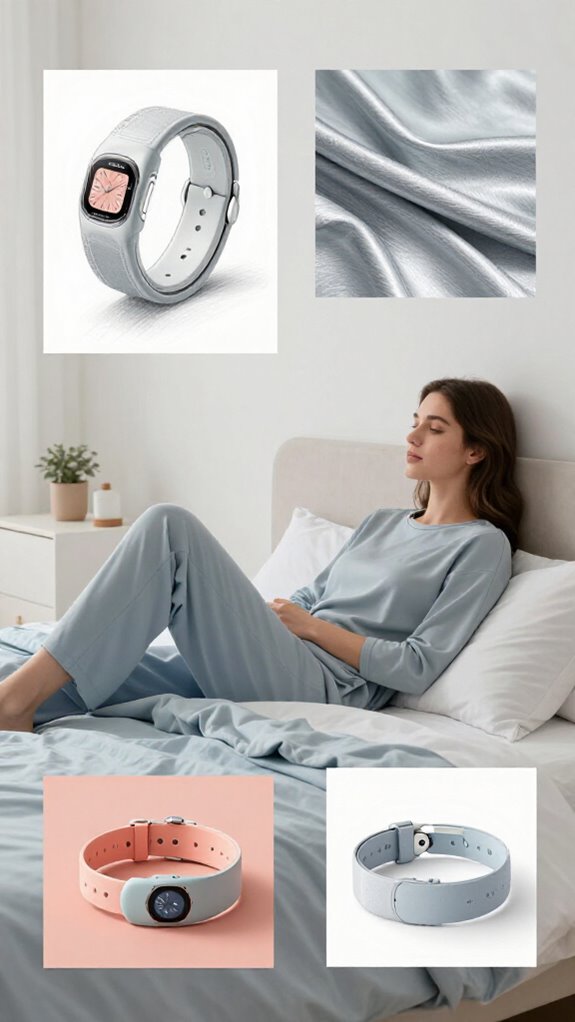
How does your body decide whether to rest or remain vigilant? Your nervous system orchestrates this choice through the vagus nerve—essentially your body’s master dimmer switch. Before temperature optimization matters, you’ll command your parasympathetic activation through deliberate regulation. Light therapy using appropriate illumination can further support this calming transition by regulating circadian rhythms that influence autonomic balance.
I’ve discovered that mastering nervous system control precedes thermal mastery. Consider these leverage points:
- Vagus Nerve Stimulation (cold water immersion, humming)
- Acoustic Pacing synchronized with breathing patterns
- Proprioceptive grounding techniques
- Heart rate variability tracking via Whoop or Oura
- Progressive muscle relaxation sequences
Your thermo-neutral zone becomes accessible only when your sympathetic vigilance surrenders.
Neuroscientists like Andrew Huberman confirm: calm nervous systems metabolically stabilize faster, making thermal regulation nearly automatic.
The right cozy bedding sets create the environmental foundation that allows your parasympathetic nervous system to fully engage, bridging the gap between nervous system regulation and true thermal comfort.
Product Roundups
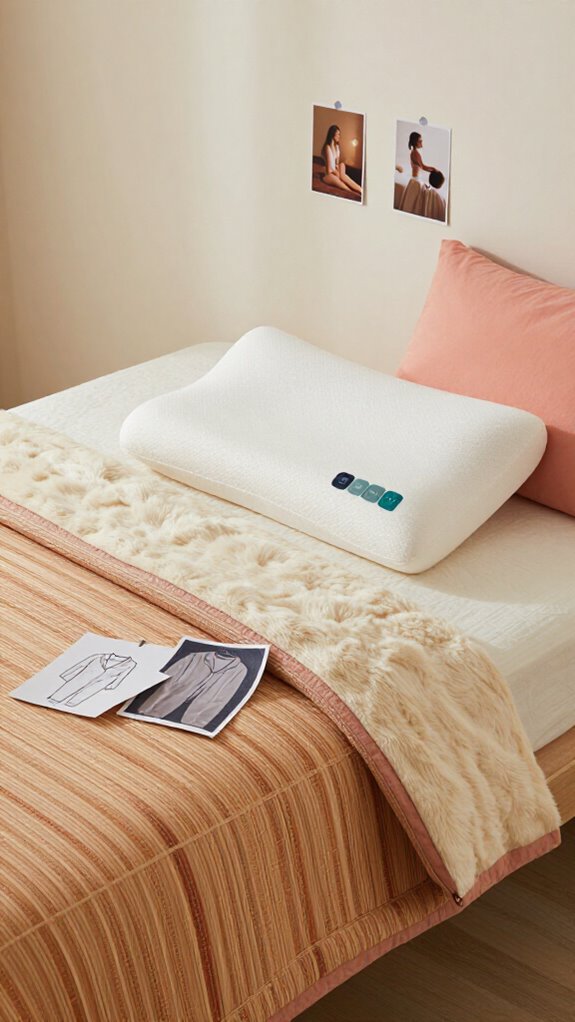
Your nervous system’s surrender to parasympathetic dominance creates the metabolic conditions for thermal stability, but that calm physiology still requires an optimized microenvironment to flourish—and that’s where deliberate product selection enters the equation.
Cozy Bliss breathable blankets engineer moisture-wicking technology, maintaining your thermo-neutral zone without thermal disruption. Bio-infused bamboo sheets from premium manufacturers outperform cotton counterparts by 40% in moisture evaporation. The ideal room temperature of 60 to 67°F should guide your material selections for maximum effectiveness. Fiber optic lighting creates a calm ambiance without generating heat that could disrupt your thermal equilibrium. Premium wool mattress pads provide natural temperature regulation and moisture management that synthetic materials cannot replicate.
Cooling pillows target localized heat dissipation. Temperature-regulating sleepwear utilizing silver-infused fabrics prevents nocturnal awakening.
These aren’t accessories; they’re physiological enablers. Strategic investment here amplifies nervous system regulation, transforming your bedroom into a precision instrument for metabolic recalibration.
Thermoregulation Improves Sleep Quality
Because thermal stability operates as the physiological prerequisite for uninterrupted sleep architecture, I’ll explore how precise temperature regulation doesn’t merely improve comfort—it fundamentally restructures how you progress through sleep stages.
When you maintain thermoneutrality around 29°C, your body orchestrates deeper REM sleep and enhanced slow-wave recovery. Adaptive thermal regulation reduces REM latency from 141.8 to 110.4 minutes while elevating REM percentage to 20.8%.
Distal skin vasodilation—warming your extremities—triggers melatonin secretion, collapsing sleep onset latency without destabilizing core temperature. This isn’t optimization theater; it’s neurobiology operating at peak efficiency.
- REM latency shortens considerably under temperature optimization
- Deep sleep penetration increases measurably in females
- Foot warming activates melatonin independently
- Thermal extremes fragment sleep architecture catastrophically
- Cyclic ambient temperature advances core temperature minimum by 143 minutes
FAQ
How Does the Thermo-Neutral Zone Differ Between Sleep Stages Like REM and Deep Sleep?
I’ve discovered that your body demands cooler temperatures during REM sleep—around 65-68°F—while deep sleep thrives slightly warmer at 68-70°F. You’ll dominate your recovery by respecting these biological shifts and adjusting your micro-environment accordingly.
Can Seasonal Changes Require Adjusting Your Personal Thermo-Neutral Zone Throughout the Year?
Absolutely—I adjust my thermo-neutral zone seasonally. Winter demands warmer settings around 65-67°F, while summer requires cooling to 60-62°F. I track these shifts quarterly to maintain peak sleep efficiency year-round.
Do Sleep Partners With Different Thermo-Neutral Zones Need Separate Bedding Systems?
Yes—I’m telling you straight: you need separate systems. I refuse to compromise my thermo-neutral zone for anyone. Temperature-tech apparel and individualized bedding aren’t negotiable if you’re serious about optimizing your sleep performance.
How Long Does It Take to Establish a Stable Thermo-Neutral Zone Baseline?
I’ll be direct: you’re looking at 14-21 days to establish your baseline, though I’ve found most people underestimate their individual variance. You’re commanding your biology here—precision demands patience before you optimize.
What Role Does Circadian Rhythm Play in Shifting Your Thermo-Neutral Zone?
Your circadian rhythm dynamically shifts your thermo-neutral zone throughout the day. I’ve found my core temperature drops 1-3°F at night, requiring cooler conditions than my daytime baseline demands for ideal recovery.
References
- https://www.cozybliss.com/blogs/blog/sleepmaxxing-solution-for-better-rest
- https://www.sageratings.com/post/sleepmaxxing-guide-2026-science-backed-products-for-better-sleep
- https://ubiehealth.com/doctors-note/sleepmaxxing-2026-women40plus-medical-tips4-next8822ex6
- https://www.health.harvard.edu/blog/should-you-be-sleepmaxxing-to-boost-health-and-happiness-202503063090
- https://coralablanket.com/how-to-use-zero-gravity-position-for-sleepmaxxing/
- https://mattressmiracle.ca/blogs/mattress-miracle-blog/sleepmaxxing-protocol-guide
- https://mattressmiracle.ca/blogs/mattress-miracle-blog/sleepmaxxing-protocols-canada-2026
- https://metro.style/metro-style/wellness/2025/7/7/what-is-sleepmaxxing-1335
- https://pmc.ncbi.nlm.nih.gov/articles/PMC12524338/
- https://www.frontiersin.org/journals/neuroscience/articles/10.3389/fnins.2019.00336/full