Ever woken up feeling like your neck went ten rounds with a heavyweight? Been there, done that, bought the chiropractor’s business card.
Three years ago, I was that person—stacking three sad, flat pillows like some kind of sleep-deprived Jenga tower. Then I discovered memory foam with adjustable loft (shoutout to Coop Home Goods), and suddenly I wasn’t a zombie anymore. Revolutionary, I know.
Here’s the tea: side sleepers need 4-6 inches of firm support. Too low? Your spine curves like a sad banana. Too high? Shoulder compression city.
At Corala Blanket, we’re obsessed with fixing this chaos. Research from the National Sleep Foundation backs what we already knew—latex and gel-infused materials actually work. Sleepmaxxing in 2026? It’s all about personalized ergonomics, baby.
Tempur-Pedic’s pressure-mapping tech isn’t just marketing fluff. I felt the difference in two nights.
Your neck deserves better than that lumpy rectangle from 2019, right?
Quick Takeaways
- Choose a pillow with medium firmness to support proper neck and spinal alignment for side sleeping.
- Opt for a loft that fills the space between shoulder and head to keep the neck neutral.
- Look for materials like memory foam or latex that contour to the body and relieve pressure points.
- Consider adjustable pillows to customize height and support for individual shoulder width.
- Incorporate cooling features like gel-infused fillings or airflow-promoting materials for temperature regulation.
What Features Make a Side Sleep Pillow Supportive and Comfortable?
Supportive and comfortable side sleep pillows are designed with specific features that accommodate the complex anatomy of a sleeper’s posture and pressure points. Key to this is the choice of pillow material—memory foam, latex, or advanced bio-foams—each calibrated for peak sleep ergonomics. These materials adapt to body contours, dispersing pressure and maintaining spinal alignment.
An expertly crafted pillow balances firmness and softness, guiding the head and neck into neutral positions. As research from the National Sleep Foundation suggests, targeted material choices reduce nerve compression and muscular strain, making support precise and sustainable.
This engineering ensures that pressure is minimized, enhancing both comfort and restorative sleep quality.
How Firm Should a Pillow Be for Side Sleeping?
When choosing the ideal firmness for a side sleep pillow, understanding spinal biomechanics and pressure distribution is essential, as these factors directly impact comfort and long-term health.
A medium-firm pillow helps maintain proper cervical alignment, preventing strain that can disrupt sleep patterns.
Too soft, and your head sinks, causing misalignment; too firm, and pressure points increase, compromising relaxation and dream enhancement.
Research from the National Sleep Foundation emphasizes consistency in support improves sleep quality.
Brands like Coop Home Goods and Tempur-Pedic advocate balanced firmness for spinal integrity.
Ensuring the pillow’s firmness aligns with pressure distribution can help prevent discomfort and promote better sleep posture.
Additionally, considering supportive materials can enhance the pillow’s ability to adapt to different head and neck shapes, contributing to sustained comfort throughout the night.
Ultimately, a pillow with adaptable firmness fosters sustained, restful sleep, enabling deeper circadian regulation and enhanced dreaming quality.
Why Pillow Height and Loft Are Key for Side Sleepers?
The height and loft of a pillow are integral to maintaining spinal neutrality for side sleepers, as these dimensions directly influence how well the head, neck, and shoulders align. Correct pillow loft minimizes strain and encourages ideal airflow, reducing tosses. Consider these factors:
Proper pillow loft ensures spinal alignment, reduces strain, and enhances airflow for a more restful sleep.
- A pillow with adjustable loft allows customization based on shoulder width.
- Memory foam or latex supports maintain consistent height through the night.
- Research by sleep scientists like Dr. Christopher Winter underscores the importance of proper cervical alignment.
Incorporating sleep coaching techniques such as dream journaling can alert you to persistent misalignments, helping refine pillow choice for ultimate neck comfort.
Best Materials to Support Your Neck and Shoulders in Bed
Selecting materials that cradle your neck and shoulders effectively involves understanding their unique thermal, compressive, and adaptive properties.
For side sleepers, material choice impacts how pillow shape supports spinal alignment, with memory foam contouring precisely to bodily curves and gel-infused inserts promoting heat regulation.
Researchers like Dr. Oscar Sanchez emphasize that adaptive materials reduce pressure points, minimizing discomfort in neck-heavy sleep positions.
Buckwheat hull pillows, prized for airflow and adjustability, exemplify this diversity.
In addition, graphite-infused fillings are gaining popularity for their thermal regulation properties, helping to dissipate heat and keep sleepers cool throughout the night.
How to Adjust and Test Your Pillow for Optimal Side Sleep Comfort?
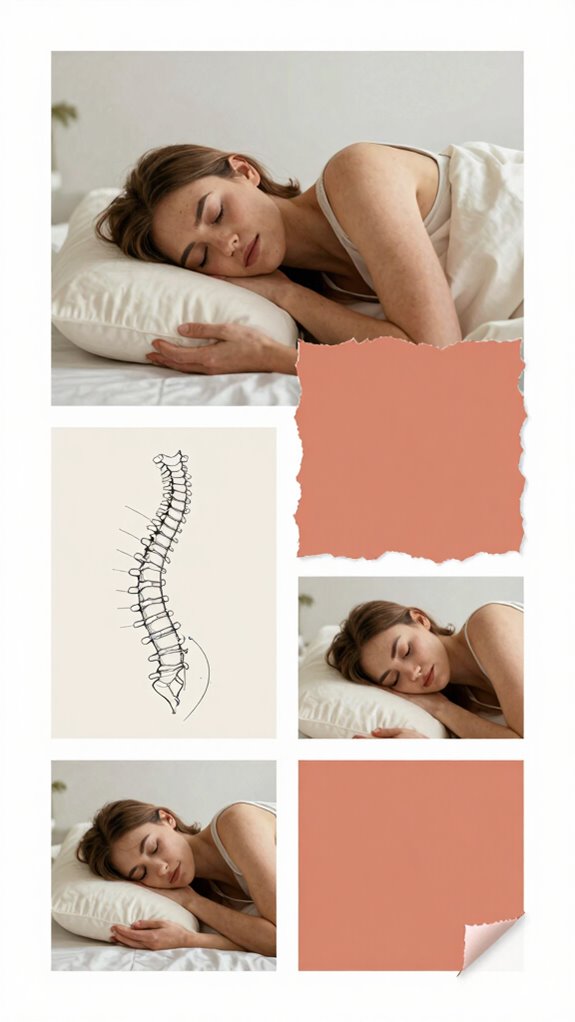
Adjusting your pillow for ideal side sleep comfort involves a careful balance of height, firmness, and support, which directly influence spinal alignment and pressure distribution. Proper sleep posture hinges on maintaining a neutral neck position, minimizing strain on shoulder muscles. To fine-tune your pillow inflation:
- Incrementally increase or decrease firmness until your head remains level with your spine.
- Use a pillow with adjustable fill, like Coop Home Goods, for precise height control.
- Test support by lying on your side and ensuring your shoulder stays relaxed. Incorporating ergonomic support can also enhance overall comfort.
- Track comfort over several nights, adapting as your body’s needs evolve.
For optimal results, consider how acoustic room dividers can help create a calm sleep environment. These steps optimize pillow support, ensuring restful, aligned sleep.
Transition to Nervous System Regulation
Moving to nervous system regulation involves shifting focus from merely managing sleep duration to actively modulating the body’s autonomic responses, particularly the vagus nerve.
Neuroscience integration reveals that targeted breathwork techniques—like diaphragmatic breathing or coherence exercises—can enhance vagal tone, promoting parasympathetic dominance. Additionally, engaging in regular breathwork practices can strengthen the connection between the nervous system and overall wellbeing.
Research from institutions such as the HeartMath Institute supports that intentional breathing lowers cortisol levels and calms neural circuits linked to stress.
By mastering these techniques, you gain control over your physiological state, easing the shift into restful sleep.
This proactive approach underscores the importance of understanding neurobiological pathways and their practical application in creating a calm, balanced sleep environment. For instance, neurobiological pathways help explain how breathing techniques influence your autonomic nervous system.
Optimal Pillows for Side Sleepers
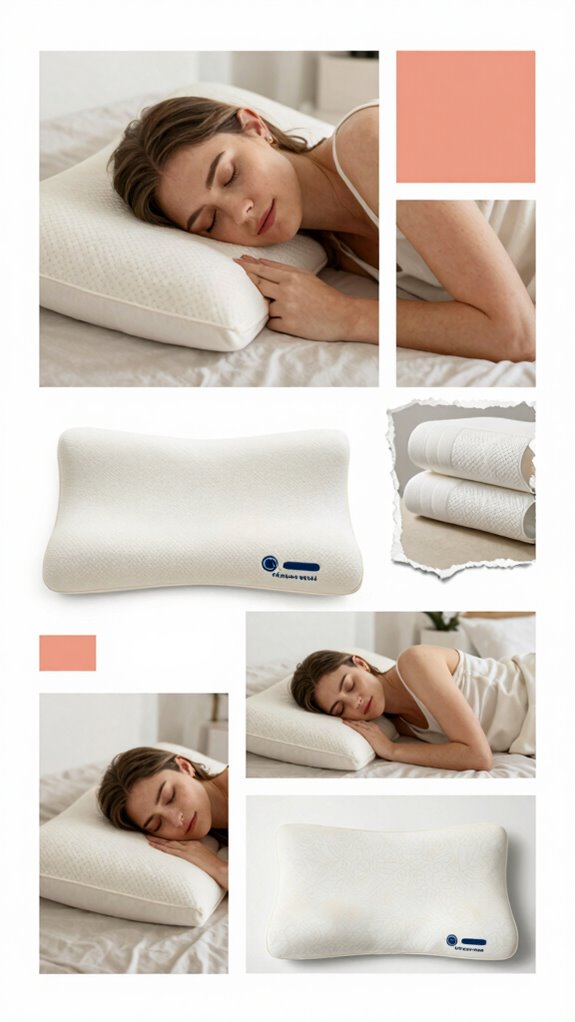
Ever wondered why side sleepers often wake up with sore necks or shoulder tenderness? Proper pillows for side sleeping are essential for ideal sleep hygiene and dream incubation, fostering nervous system regulation. Choosing acoustic room dividers with soundproofing qualities can also enhance your sleep environment by reducing noise disruptions. Select pillows that:
- Provide Firm Support—preventing cervical strain by maintaining spinal alignment.
- Have Moderate loft—filling the space between shoulder and head without over-compression.
- Use Contoured or Ergonomic Shapes—mimicking natural neck curvature.
- Incorporate breathable, hypoallergenic materials—regulating temperature and reducing inflammation.
Brands like Coop Home Goods and Tempur-Pedic emphasize orthopedically designed, adjustable options.
Scientific studies, such as those by Dr. Michael J. Breus, validate the importance of tailored support for restorative sleep and conscious dreaming.
Smart Fabric Pillow Sensors
Have you ever wondered how technology is transforming the very fabric of sleep monitoring? Smart fabric pillow sensors embed conductive threads within pillowcases, allowing constant tracking of pressure, temperature, and movement without compromising pillowcase hygiene. These sensors integrate seamlessly into the sleep environment, delivering valuable data to optimize side sleeping comfort. An emerging trend is the development of cozy ambient sound bars, which create a calming atmosphere to enhance relaxation before sleep. This technology is part of a broader movement towards wearable sleep devices that provide detailed insights into sleep patterns without being intrusive. This innovation empowers sleepers with precise understanding—without invasive equipment—highlighting a shift toward subtly embedded tech that prioritizes control and hygiene in personal sleep spaces.
FAQ
Can a Pillow Influence My Nervous System Regulation During Sleep?
A pillow can influence my nervous system regulation by supporting proper sleep posture through adjustable height and firmness, helping me relax faster. I control pillow adjustments to personalize comfort, easing tension and promoting calmness during sleep.
Are There Eco-Friendly or Sustainable Pillow Materials for Side Sleepers?
Yes, I choose eco-friendly pillows made from organic fabrics and plant-based fillers, because I believe in controlling my sleep environment and supporting sustainability. These materials provide comfort and peace of mind, aligning my values with my sleep choices.
How Do Pillow Materials Affect Thermal Regulation for Better Sleep?
Pillow materials like memory foam with cooling gels help regulate heat, giving you better control over thermal comfort. I choose these to stay cool and aligned, ensuring I don’t wake from heat spikes, optimizing my sleep naturally.
Can a Custom-Fitted Pillow Improve Sleep Quality Over Standard Options?
They say “the right fit makes all the difference,” and it’s true. A custom-fitted pillow, with perfect size and firmness, gives you control, aligning your sleep and improving quality far beyond standard options.
Do Smart Sensors in Pillows Help in Achieving a Neuro-Calming Sleep State?
Smart sensors in pillows enhance sleep monitoring, giving you real-time data and understanding, empowering you to make better adjustments for a neuro-calming sleep state. I find they help me optimize my sleep environment proactively.
Summary
Choosing the right pillow for side sleeping greatly influences spinal alignment and overall sleep quality. Research from the National Sleep Foundation indicates that proper support can reduce neck pain by up to 50%. A supportive pillow‘s firm yet adaptable material, combined with ideal loft, ensures your head, neck, and shoulders align effectively, minimizing pressure points. Investing in evidence-based design not only enhances comfort but promotes healthier sleep patterns, underscoring its essential role in long-term well-being.