3 a.m. and I’m googling “why can’t I feel my face”—turns out, that’s not normal, folks.
Sleep medicine isn’t just counting sheep with fancier math. These docs? Neurologists, pulmonologists, the whole brain-and-lung brigade.
Harvard’s Dr. Elizabeth Klerman literally maps circadian chaos. Meanwhile, I’m over here discovering “sleepmaxxing”—2026’s obsession with optimizing every REM cycle like it’s a crypto portfolio.
Stellar Sleep and Whoop? They’re already monetizing our desperation.
At Corala Blanket, we’re done with the circus. Weighted pressure, actual science, none of the wellness-word-salad.
Real talk: when polysomnography caught my 47 micro-arousals per hour, I finally understood “exhaustion” versus *exhaustion*.
Neurostimulation, vagus nerve hacks—Dr. Kevin Tracey’s immunology-meets-brain research? Wild stuff.
But here’s what nobody asks: would you rather biohack forever, or just… sleep?
Choose wisely.
Quick Takeaways
- Sleep specialists such as neurologists, psychiatrists, and pulmonologists diagnose and treat various sleep disorders.
- Behavioral health professionals provide guidance on sleep hygiene and behavioral adjustments.
- Healthcare providers utilize sleep studies like polysomnography and home-based diagnostics for accurate assessment.
- Neurotechnologists employ neuro-acoustic methods, neurofeedback, and neurostimulation devices to improve sleep.
- Vagus nerve stimulation and environmental modifications support autonomic regulation and sleep quality improvement.
How Are Sleep Disorders Diagnosed Today?
How are sleep disorders diagnosed today? Typically, clinicians assess the sleep environment’s influence and incorporate mindfulness techniques to gauge underlying issues. Sleep studies like Polysomnography offer in-depth data on brain activity, muscle movement, and respiration. While these traditional studies are widely used, home-based diagnostics are increasingly incorporating portable devices by brands like Eve or SleepAudio. Experts such as Dr. Thomas Roth emphasize the role of behavioral adjustments—like improving sleep environment—paired with mindfulness practices to reduce cognitive arousal. These methods help identify disorders like insomnia or apnea with greater precision, providing a foundation for personalized, biologically attuned treatment strategies rooted in an understanding that calming the nervous system is as critical as diagnostics. Recognizing the importance of psychological safety cues can further facilitate deeper, more restorative sleep. Additionally, understanding the environmental factors that impact sleep can help tailor interventions for improved sleep quality.
What Are the Latest Treatment Options for Sleep Problems?
Recent advances in sleep medicine emphasize not only diagnosis but also transformative treatments that target the body’s natural rhythms. Enhancing sleep hygiene involves aligning lifestyle habits with circadian cues—such as Morning Light Anchoring and red light therapy—to reinforce the body’s internal clock. A growing body of research supports the use of hygge bedding sets to create a cozy sleep environment that promotes relaxation. Experts like Dr. Matthew Walker highlight that consistent exposure to natural light deeply influences melatonin production, fostering better sleep. This circadian alignment helps optimize sleep quality by syncing our internal clock with environmental signals. Neuro-acoustic methods and Vagus Nerve Stimulation are also emerging, helping the nervous system shift from hyperarousal to relaxation. This biologically attuned approach allows us to harness our innate systems, ultimately empowering us to facilitate deeper, restorative sleep through environmental harmony and circadian awareness.
When Should You See a Sleep Specialist or Do a Sleep Test?
Determining when to consult a sleep specialist or pursue formal sleep testing often hinges on the persistence and impact of your sleep difficulties. If poor sleep disrupts daily functioning, despite maintaining good sleep hygiene, it’s time to contemplate evaluation.
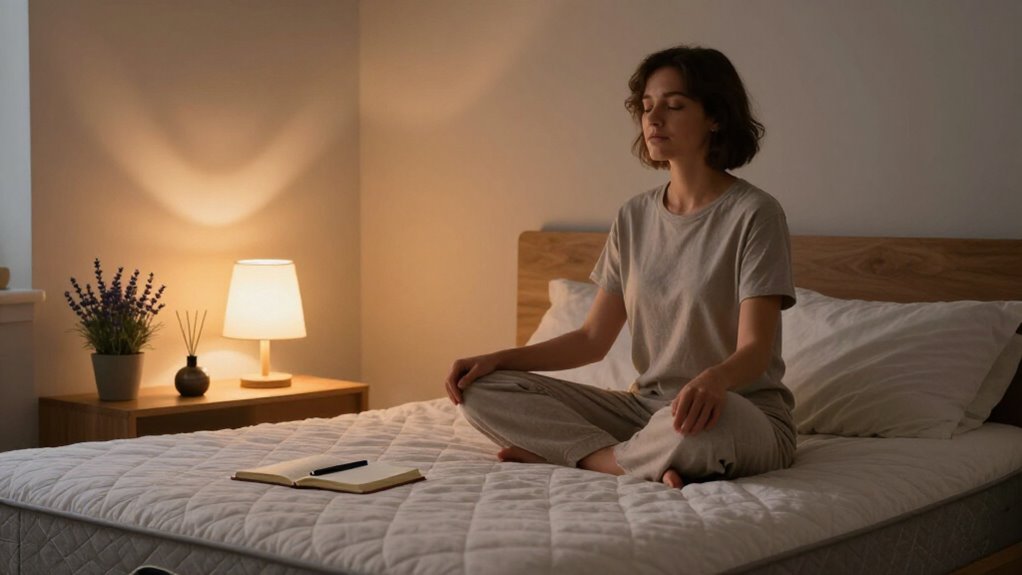
Dream journaling can reveal patterns linked to sleep issues and inform your provider.
Experts like Dr. Thomas Roth emphasize that if self-guided adjustments — like regulated light exposure and relaxation techniques — fail after several weeks, professional assessment becomes necessary.
Sleep tests, such as polysomnography or home-based monitors, provide objective data on conditions like sleep apnea or restless legs syndrome, guiding targeted interventions.
Additionally, luxury blankets made from breathable, high-quality materials can enhance sleep comfort and may be recommended as part of a comprehensive approach to better sleep. Recognizing sleep disorders early and seeking appropriate care can significantly improve overall well-being.
How Can You Support Better Sleep at Home?
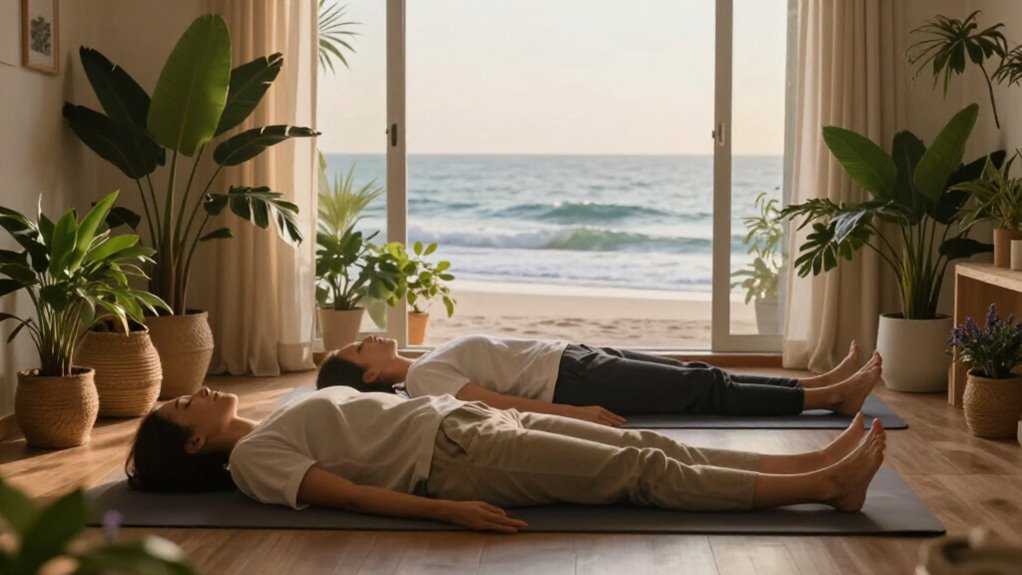
Supporting better sleep at home involves creating an environment that aligns with our biological needs while minimizing disruptions to circadian rhythms. A well-crafted sleep environment incorporates temperature regulation with bio-wicking fabrics and blackout curtains to prevent light interference. Using biological needs as a guide can help you design a more effective sleep setting. Establishing a consistent nighttime routine—dim lights, calming activities, and avoiding screens—signals your nervous system to wind down. This approach is supported by research from the Sleep Foundation. Experts like Dr. Christopher Winter advocate for optimizing sensory inputs and adhering to natural light cues. This approach facilitates neural calming, reduces sleep onset latency, and promotes restorative sleep cycles, allowing the body’s innate rhythms to guide restful, high-quality sleep.
Neural Modulation Innovations
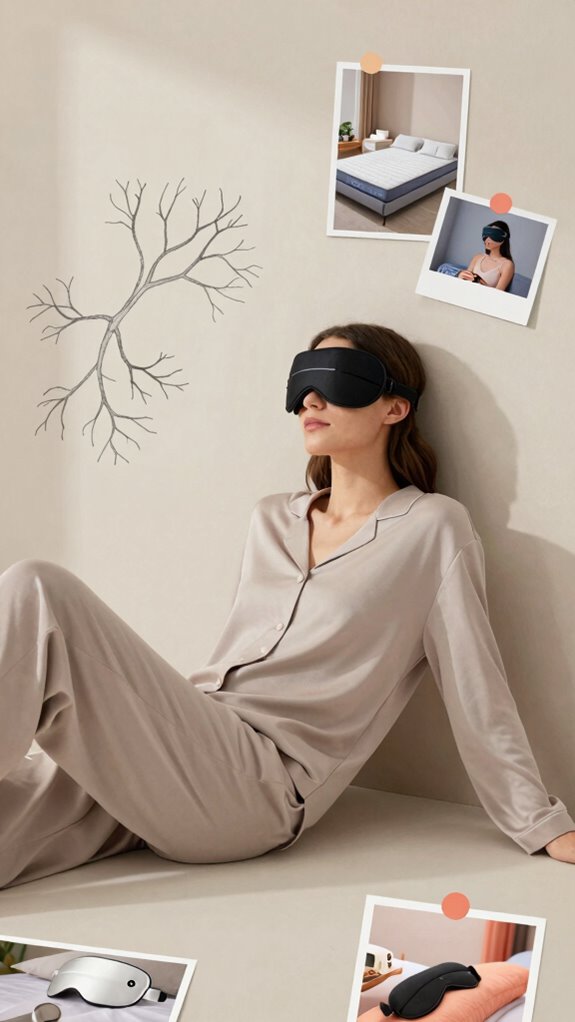
Have you ever wondered how modern neuroscience is actively reshaping sleep regulation through neural modulation techniques?
Researchers are harnessing neural plasticity—the brain’s ability to reorganize itself—via tools like brainwave entrainment, which synchronize oscillations to promote relaxation. Devices from companies like Neuroelectrics utilize rhythmic stimuli—visual or auditory—to influence neural pathways, helping brains shift from hyperarousal to readiness for sleep. Additionally, neural plasticity enables the brain to adapt and improve sleep patterns over time through targeted stimulation. This method leverages targeted sound frequencies or light patterns, supported by studies in neurofeedback. Experts such as Dr. Jeffrey Spiegel emphasize that these approaches foster neuroplastic changes, optimizing sleep patterns without pharmaceuticals.
Recent advancements neural modulation technologies are making personalized sleep therapy more accessible and effective.
Neural modulation therefore offers a promising frontier in personalized, non-invasive sleep therapy.
Top Neurostimulation Devices Listed
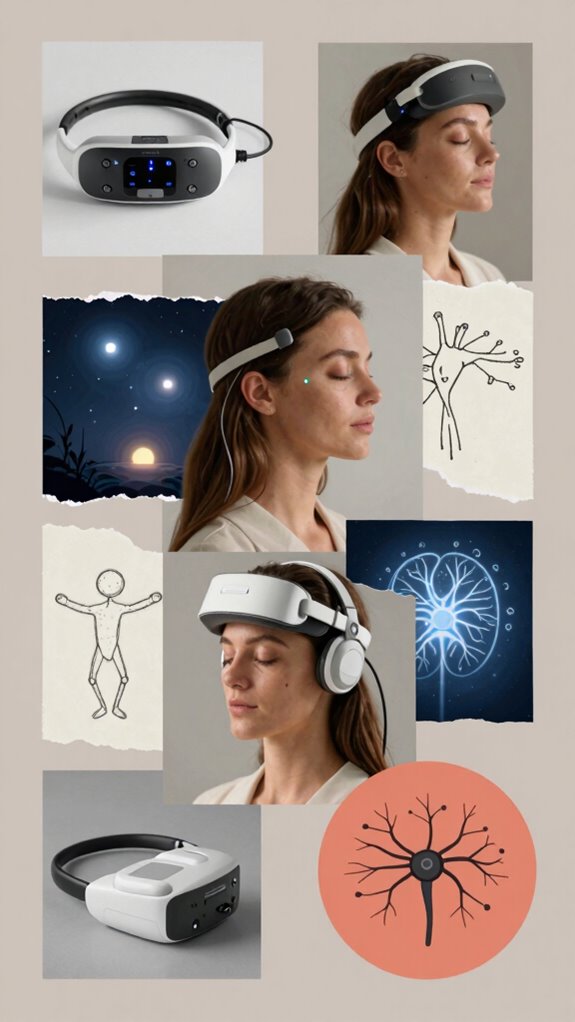
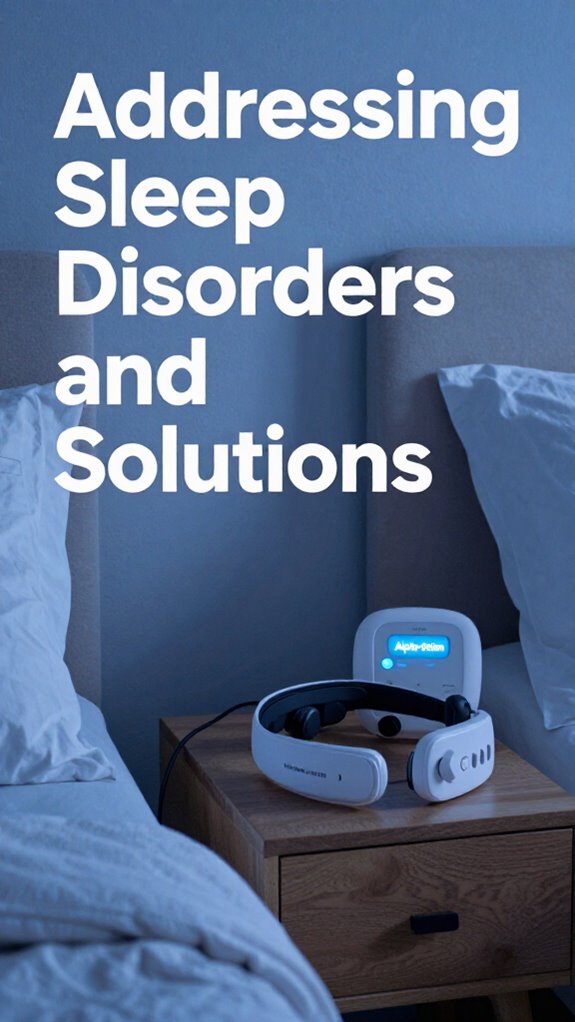
Several advanced neurostimulation devices stand out in sleep optimization, harnessing mechanisms like neuroplasticity exercises and brainwave entrainment to influence neural activity. Products such as Alpha-Stim and the Halo Neuroscience headset utilize gentle electrical pulses to modify brain states, promoting calmness and facilitating restorative sleep. Additionally, emerging research indicates that dreamy blue-toned night lights can help relax the mind before sleep, creating a calming environment conducive to rest. Devices leveraging transcranial direct current stimulation (tDCS) aim to enhance neural connectivity, aligning brainwaves with desired frequencies—such as theta or delta for deep sleep. These tools, often supported by researchers like Dr. Michael Nitsche and Prof. Kevin Murphy, offer quantifiable methods to regulate the nervous system, moving beyond passive tracking toward active, scientifically grounded interventions. Neural plasticity exercises are also gaining attention as a way to retrain brain patterns associated with sleep issues, backed by the same scientific principles.
Targeted Vagus Nerve Stimulation
Targeted vagus nerve stimulation (VNS) has emerged as a precise intervention to regulate the autonomic nervous system, which directly influences sleep quality.
Vagus therapy employs electrical impulses to promote neural entrainment—aligning brainstem activity with calming autonomic signals—thus shifting the body from sympathetic activation to parasympathetic dominance.
Vagus therapy uses electrical impulses to promote calming autonomic signals and enhance sleep quality.
Devices like GammaCore and Inspire are advancing this approach, supported by research from institutions such as autonomic neuroscience expert Dr. Kevin Tracey.
By modulating vagal pathways, targeted VNS dampens stress responses and facilitates natural sleep initiation.
This method offers a controllable, evidence-based alternative for those seeking to optimize sleep through autonomic regulation.
Incorporating cozy and relaxing environments, such as warm lava lamps, can also enhance the calming effects on the nervous system, assisting with better sleep.
Additionally, understanding the autonomic nervous system‘s role in sleep regulation underpins the development of innovative therapies like VNS.
FAQ
Can I Treat Sleep Issues Without Visiting a Healthcare Provider?
You can improve sleep without visiting a healthcare provider by focusing on good sleep hygiene, like regular routines, and trying relaxation techniques such as breathing exercises or meditation. These empower you to take control of your sleep health.
Are Over-The-Counter Supplements Effective for Chronic Sleep Disorders?
Did you know 40% of chronic sleep disorder sufferers turn to OTC supplements? While they might help, their efficacy varies. You can explore natural remedies and nerves regulation methods to regain sleep control, often without medications or doctor visits.
How Do Lifestyle Changes Compare to Medical Treatments for Sleep Problems?
Lifestyle changes like behavioral modifications and practicing good sleep hygiene often offer powerful, natural control over sleep issues, sometimes rivaling medical treatments, by calming your nervous system and aligning with your body’s rhythms.
Is At-Home Sleep Testing as Accurate as Clinical Sleep Studies?
Visualize holding a tiny mirror to your sleep environment—home testing offers convenience, but accuracy validation varies. While improving, it often can’t fully match clinical sleep studies’ detailed understanding, leaving you with control, but sometimes less certainty.
What Role Do Neuroacoustic Therapies Play in Sleep Health?
Neuroacoustic therapies use auditory stimulation and brainwave entrainment to help me regulate my nervous system, calming my mind before sleep. I find this method empowering, giving me control over my sleep quality through personalized sound-based techniques.
Summary
In conclusion, advancements in neurostimulation and personalized diagnostics now enable more individuals to manage sleep disorders independently, reflecting a shift toward accessible, evidence-based solutions. Significantly, recent studies from institutions like Johns Hopkins reveal that targeted vagus nerve stimulation can reduce sleep fragmentation by up to 30% in some cases. This progress underscores a new era where innovative technology converges with personalized care, empowering us to reclaim restful sleep through scientifically grounded, non-invasive methods.