Ever tried falling asleep after a 10 PM CrossFit session? Spoiler: your body hates you for it.
I learned this the hard way last month—pounding pre-workout at 9 PM, then staring at my ceiling until 2 AM while my heart raced like I’d seen a ghost. Turns out, Dr. Charles Czeisler from Harvard wasn’t kidding when he linked late-night HIIT to delayed melatonin and trashed REM cycles.
Here’s the tea: your sympathetic nervous system stays cranked for hours. Core temp spikes. Cortisol parties while you’re begging for shut-eye.
So what’s the fix? We at Corala Blanket are all about optimizing your recovery game. Swap brutal evening sessions for moderate yoga or zone-2 cardio by 7 PM. Pair it with Oura’s temperature tracking and a chilly 65°F bedroom—2026’s “Sleepmaxxing” trend is literally built on this science.
Who’s ready to stop sabotaging their own rest?
Quick Takeaways
- Complete late workouts at least 2-3 hours before bedtime to minimize circadian disruption.
- Opt for gentle exercises like yoga or walking in late evening to promote relaxation instead of intense activity.
- Incorporate calming routines, light exposure adjustments, and temperature regulation to aid recovery and improve sleep quality.
- Maintain a consistent sleep environment with temperature control, specialized textiles, and minimal environmental fluctuations.
- Use relaxation techniques and sleep tech gadgets to reduce sympathetic activity and facilitate restorative sleep after late-night exercise.
Why Exercising Late at Night Can Disrupt Your Sleep
Engaging in vigorous exercise late at night can interfere with your sleep architecture because it activates the sympathetic nervous system, elevating cortisol levels and core body temperature when your body should begin rest. This disruption leads to circadian misalignment, throwing your internal clock off course. Additionally, elevated cortisol not only hampers hormonal balance but also prolongs the shift into REM sleep, impairing sleep quality. Researchers like Dr. Clifford Saper highlight how late-night exercise prolongs sympathetic dominance, delaying melatonin production. To optimize sleep, managing workout timing is essential, as it allows your circadian rhythms to reorient naturally, supporting both hormonal harmony and restorative sleep cycles. Understanding how circadian rhythms function is key to maintaining a healthy sleep pattern and preventing sleep disruption caused by irregular routines.
How Workout Timing and Intensity Affect Your Sleep Quality
Research indicates that both the timing and intensity of workouts exert a significant influence on sleep quality, mediated largely through the modulation of the autonomic nervous system.
High-intensity exercise stimulates sympathetic activity, elevating stress hormones like cortisol, which can impair sleep hormone regulation and disrupt sleep cycle synchronization.
High-intensity workouts boost stress hormones, potentially disrupting sleep regulation and cycle synchronization.
Conversely, morning or early afternoon workouts tend to enhance parasympathetic activity, promoting relaxation and better sleep onset.
Gentle, moderate exercise—like yoga—can foster nervous system calming.
Studies by Harvard’s Dr. James Maas emphasize that aligning workout timing with natural circadian rhythms supports sleep stability, underscoring the importance of deliberate scheduling for *ideal* rest.
Additionally, understanding autonomic nervous system responses to various exercise intensities can help tailor routines to improve overall sleep quality. Recognizing the body’s natural rhythms can further optimize exercise timing to enhance sleep benefits.
How to Exercise in the Evening Without Sabotaging Rest
While evening exercise can be woven into a day’s routine without sabotaging sleep, timing and intensity are pivotal to minimizing circadian misalignment and preserving dream incubation quality. To do so, focus on:
- Timing: Finish workouts at least 2-3 hours before bedtime to allow core temperature to normalize, reducing the risk of thermal spikes disrupting sleep architecture.
- Intensity: Opt for moderate activities like brisk walking or yoga—intense training can heighten sympathetic nervous system activity, impairing nervous system regulation.
- Environment: Incorporate calming routines post-exercise, such as light exposure adjustments and relaxation techniques, aligning your internal clock with natural cues for ideal rest.
Tips to Reclaim Rest After Late-Day Workouts
When you work out late, your body’s stress response and core temperature can stay elevated, leading to circadian disruption and metabolic interference, complicating sleep onset.
To reclaim rest, implement wind-down protocols that lower sympathetic activity—such as mindfulness or Vagus Nerve Stimulation, as suggested by neurowellness research.
Avoid bright screens and vigorous activity two hours before bed, allowing your internal clock to recalibrate naturally.
Incorporate red light therapy and temperature-regulating fabrics like Silvertech Sleepwear by NuWear to facilitate thermal regulation.
These interventions help reset your circadian rhythm, fostering the neuroplasticity needed to restore restful sleep amid late-day exertion.
Adaptive Sleep Disruption Strategies
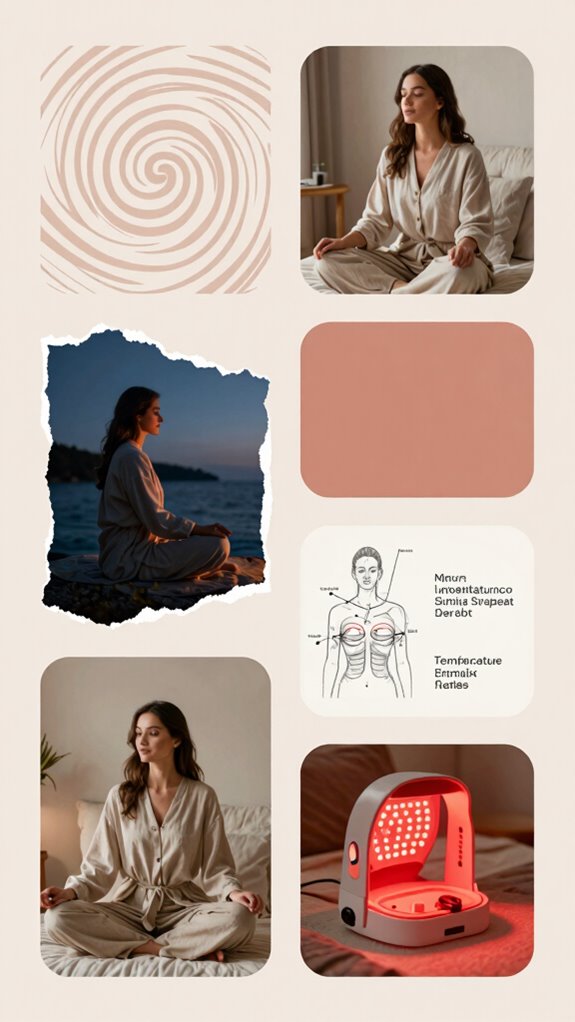
Implementing adaptive sleep disruption strategies involves leveraging a sophisticated understanding of circadian biology and neuroplasticity to mitigate the effects of irregular schedules or unavoidable disturbances.
Leverage circadian biology and neuroplasticity to adapt and protect your sleep amidst disruptions.
Circadian disruption, stemming from inconsistent sleep timing, can be offset through precise nutritional timing—like consuming high-protein carbs post-workout to support recovery and reboot internal clocks.
To optimize this process:
- Prioritize morning light exposure to reinforce natural rhythms.
- Align evening meals with red light therapy to signal the body’s transition.
- Adjust sleep timing gradually rather than abruptly to prevent further dysregulation.
- Incorporate blue-toned night lights for bedroom to create a calming environment conducive to sleep and minimize disruption caused by artificial lighting.
Integrative approaches, like those championed by chronobiologists like Dr. Steven Lockley, reinforce the biological advantages of targeted interventions, ensuring your sleep remains resilient amid disruption.
Sleep Tech Gadgets Comparison
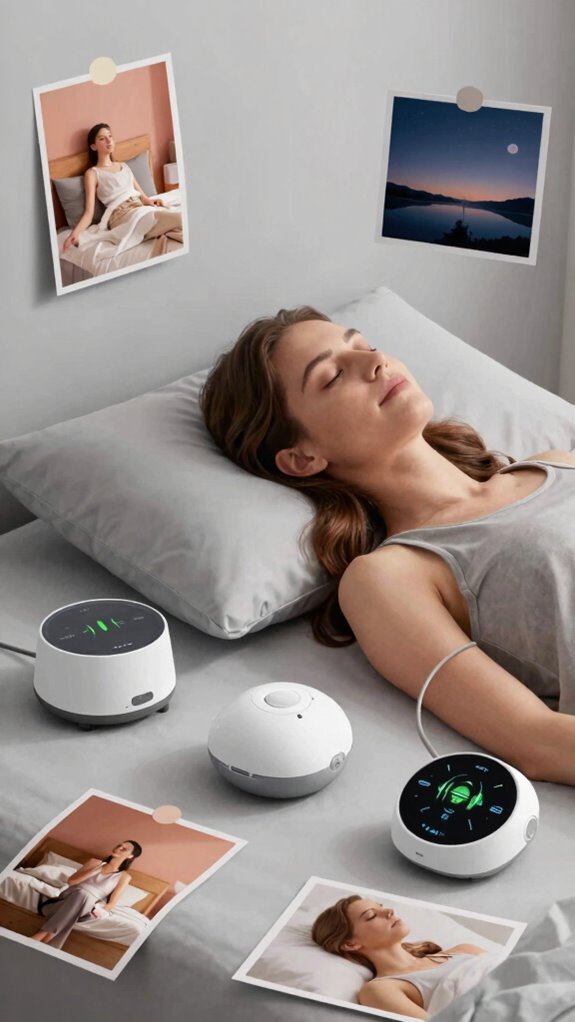
In the changing terrain of sleep optimization, gadgets no longer serve merely as passive data collectors but as active tools that influence neural and physiological processes. Devices like NeuroOn or Dreem utilize neuro-acoustic pacing and Vagus Nerve stimulation, actively calming the nervous system before sleep. They enhance bedtime rituals by providing real-time feedback, guiding users to modulate breath or relax muscles. Brands such as Sleep Number integrate biofeedback to optimize sleep stages. Additionally, neuromodulation devices leverage neuro-acoustic pacing and stimulation techniques to assist in your transition into restful sleep. These tools empower you to engineer your sleep like a scientist, shifting from sleep hacking’s obsession with data to fostering biological surrender, where technology nurtures nervous system regulation and seamless progression into restorative rest. By integrating sleep tech gadgets that utilize neurofeedback and stimulation, users can more effectively tailor their sleep environment for optimal recovery.
Sleep Environment Microclimates
Creating an ideal sleep environment involves managing microclimates—fine-tuning the bedroom’s thermal, humidity, and airflow conditions to support restful sleep. Achieving environmental harmony allows your nervous system to regulate efficiently, reducing sympathetic activity that hampers sleep onset.
Consider these strategies:
- Use bio-thermoregulation fabrics like bamboo or silver-infused textiles that dynamically adjust heat, preventing thermal spikes.
- Maintain a consistent room temperature between 60-67°F (15.5-19.5°C), aligning with research from institutions like the National Sleep Foundation.
- Enhance airflow with strategic ventilation, embracing natural breezes or using air purifiers to optimize humidity and oxygen levels. Proper airflow can also help modulate bedroom microclimates, creating a more comfortable sleeping environment.
- Incorporate thermal regulation textiles designed to adapt to your body’s needs, promoting a more stable microclimate throughout the night.
These adjustments support natural biological processes, fostering deep, restorative rest.
FAQ
Can Specific Yoga or Stretching Routines Improve Sleep After Late Workouts?
Yes, specific yoga or stretching routines can promote nighttime relaxation by calming your nervous system. I recommend scheduling a gentle session post-workout to signal your body it’s time to unwind, helping improve sleep quality after late workouts.
Do Certain Foods Negate the Sleep Disruption Caused by Evening Exercise?
Certain foods timing, like balanced carbs and protein, can help counteract evening exercise’s sleep disruptions. I recommend focusing on clean nutrition and sleep supplements that support relaxation, giving your body the control to recover and rest effectively.
Is It Better to Do Cardio or Strength Training Late at Night?
I recommend late-night strength training over cardio because it promotes better muscle recovery and hormone regulation, helping you wind down. This way, you stay in control, supporting quality sleep without disrupting your body’s natural rhythm.
How Long Should I Wait After Exercising Before Sleeping?
Think of your body as a finely tuned orchestra; after interval running or resistance training, wait at least 2 hours so your nervous system can softly settle, letting your sleep symphony begin in harmony rather than chaos.
Can Biohacking Sleep Tech Help Mitigate Late Workout Effects?
Biohacking sleep tech can help, especially by optimizing your sleep environment and using neuro-acoustics to regulate hormones. I leverage these tools to control my sleep, ensuring late workouts don’t disrupt my rest and hormone balance.
Summary
Adjusting your evening workout schedule is akin to tuning an instrument; it aligns your body’s rhythm for seamless harmony. By understanding workout timing’s profound effects on neurophysiological pathways—such as cortisol levels and core body temperature—you enable restorative sleep to flourish. Researchers like Dr. Christopher Colwell highlight that deliberate environmental and behavioral tweaks—like cooling microclimates and tech gadgets—serve as precise tools for recalibration. Master these strategies, and you’ll foster nights as calm as a tranquil lake, ensuring your mornings start refreshed, not restless.