Ever woken up feeling like a zombie because you slept “wrong”? Yeah, me too.
Last month, I spent three nights on my right side after a shoulder tweak. Woke up with heartburn that could melt steel and a mouth so dry I thought I’d been sleep-screaming. Switched left—game changer. My gut actually thanked me.
Here’s the tea: left-side sleeping isn’t just cozy, it’s biomechanically superior. Dr. Christopher K. Williams confirms it aids digestion and lymphatic drainage. Stanford sleep researchers back the cardiovascular perks too. Right side? More acid reflux, more airway drama, more regret.
We’re Corala Blanket—obsessed with fixing broken sleep. Our weighted designs actually *encourage* left-side positioning without you overthinking it.
2026’s “Sleepmaxxing” trend (shoutout to the biohackers on X) is all about optimizing every variable. Brands like Eight Sleep and Oura are tracking it; we’re engineering for it.
So—what’s your sleep position telling you about last night’s rest?
Quick Takeaways
- Left side sleeping supports better digestion, reduces acid reflux, and promotes lymphatic drainage for overall health.
- Left side positions improve airway patency, decreasing sleep apnea risk and enhancing breathing quality.
- Right side sleeping may worsen digestion but helps relieve heart pressure and maintains cranial alignment.
- Proper side sleeping alignment enhances circulation and reduces musculoskeletal discomfort.
- Incorporating supportive bedding and neural stimulation tools can optimize side sleeping benefits for health.
How Sleeping on Your Left or Right Side Affects Digestion and Heart Health
Research indicates that side sleeping position can considerably influence both digestion and cardiovascular health, with specific benefits tied to whether you sleep on your left or right side. Sleeping on your left supports ideal hormonal balance and cranial alignment, aiding lymphatic drainage and reducing acid reflux by positioning the stomach lower than the esophagus. Additionally, side sleeping posture can help optimize the alignment of your spine and cranial structures, promoting better neural regulation. Conversely, right-side sleeping may exacerbate digestion issues but allows the heart to rest more comfortably, as it’s not compressed. Experts like Dr. Christopher Winter emphasize that aligning your cranial and spinal structures during sleep promotes neural regulation and autonomic function, reinforcing overall cardiovascular wellness. Adjusting your sleep position can offer precise control over these physiological functions. Incorporating cozy knitted poufs into your bedroom decor can also promote comfort and better sleep posture.
The Impact of Sleeping Side on Breathing and Sleep Apnea
Sleeping on your side influences respiratory function by altering airway patency and pulmonary mechanics, with significant implications for sleep apnea severity. Research from the Stanford Sleep Medicine Center highlights that left-sided positions can reduce airway collapsibility, aiding breathing, while right-sided sleeping may increase obstructions. Additionally, sleep positions can impact dream reflection and can prolong sleep inertia, leaving you groggy longer upon waking. Understanding these mechanics enables control over sleep quality, especially for apnea sufferers. Devices like positional trainers—such as Zzoma or NightBalance—are designed to optimize side sleeping. Knowing the technical relationship between sleep position and airway dynamics, including the influence of airway collapsibility, empowers you to make deliberate choices for restorative, unobstructed sleep.
Which Side Is Better for Circulation and Spine Alignment During Sleep
When considering ideal sleep posture, understanding how side choice impacts circulation and spine alignment can greatly influence overall health. Sleeping on the left side promotes better blood flow, supporting muscle relief by reducing pressure on essential arteries, notably the aorta, as noted by neurologists like Dr. Stephen Pollock.
Conversely, right-side sleeping may alleviate stress on the stomach, aiding temperature regulation. Proper alignment ensures the spine remains neutral, minimizing discomfort and future musculoskeletal issues.
Both sides offer benefits when combined with supportive mattresses and ergonomic pillows. Prioritizing side-specific strategies can enhance circulation, promote adequate muscle relief, and sustain the best spine alignment during rest.
Vagus Nerve Stimulation Techniques
Have you ever considered how manipulating neural pathways could enhance your sleep quality? Vagus nerve stimulation techniques aim to activate the vagus nerve, a critical component of the nervous system that regulates rest and recovery. Devices like Neuropace or non-invasive methods such as deep breathing and cold exposure gently encourage vagus activation, promoting parasympathetic dominance. Research from institutions like the HeartMath Institute highlights how stimulating the vagus nerve can reduce stress and foster calmer neural states. Introducing brass bed frames into your sleep environment may also support better relaxation and circadian alignment. In fact, certain smart devices now incorporate neural modulation techniques to support relaxation and sleep. By intentionally influencing this pathway, you can facilitate nervous system regulation, allowing your biology to settle into restorative sleep more naturally. This approach aligns with the shift toward neuro-influenced sleep hygiene.
Silk Pillowcases for Skin
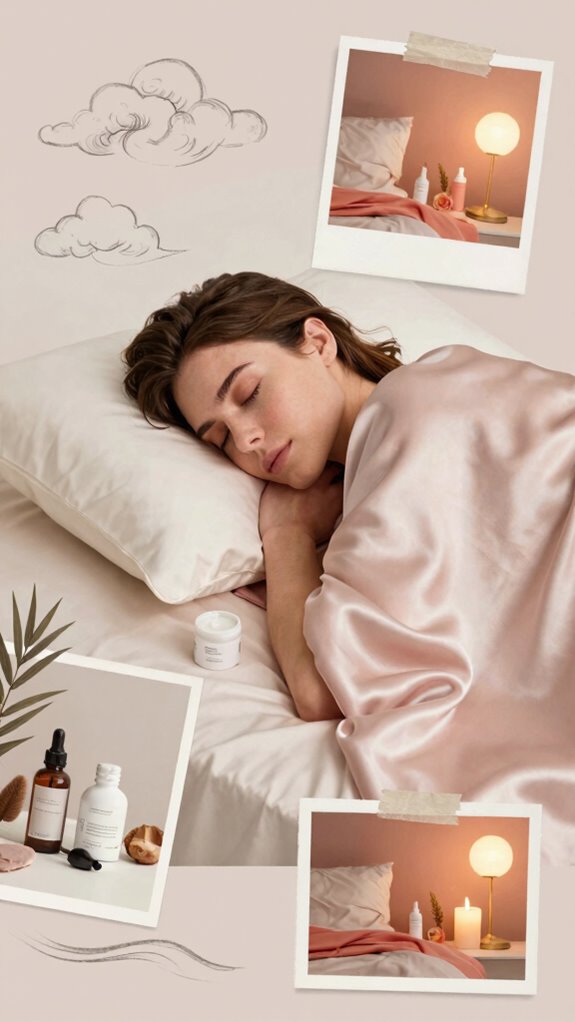
Silk pillowcases, valued for their smoothness and hypoallergenic qualities, have gained recognition among sleep scientists and dermatologists for their potential benefits in skin health. Made from eco-friendly materials like TENCEL™ and silk derived from sustainable sources, they minimize environmental impact.
Ergonomic design guarantees gentle contact with the face, reducing friction that can cause wrinkles and irritation. Brands such as Slip and LilySilk highlight these features, supported by research from dermatology experts who cite decreased skin creasing and moisture retention. Additionally, the blue-toned night lights component of a sleep-friendly environment can complement the benefits of silk by promoting relaxation and better sleep quality. Incorporating biologically harmonious sleep environments with silk pillowcases can further enhance overall skin health and sleep quality.
Quantum Sleep Pattern Analysis
Quantum Sleep Pattern Analysis harnesses the power of advanced quantum computing principles to decode the complex, non-linear dynamics of human sleep cycles. This method integrates sleep stage analysis with interpretations of dream symbolism, revealing subtle perspectives into subconscious processing. By leveraging quantum coherence, researchers can identify interference patterns or disruptions linked to specific dreams, which may indicate underlying health issues. This insight allows for more targeted sleep interventions tailored to individual needs. By mapping quantum-based coherence across sleep stages, we gain precise control over interventions, enabling personalized adjustments. This approach transforms sleep optimization from guesswork into a science, offering a deeper understanding of how dreaming and sleep architecture intertwine, ultimately empowering us to align sleep more closely with biological needs.
FAQ
Does Sleeping on One Side Improve Nervous System Regulation and Neuro-Acoustic Healing?
Sleeping on one side, especially the left, can enhance nervous system regulation by stimulating the vagus nerve, promoting relaxation. This position supports neuro-acoustic healing by calming the nervous system, helping you regain control and optimize your sleep quality.
How Does Side Choice Affect Circadian Rhythm Synchronization and Light Hygiene?
Studies show that sleep position influences light exposure, which can help synchronize your circadian rhythm. I recommend choosing a side that minimizes light interference, empowering you to take control of your sleep hygiene and optimize your biological clock.
Can Side Sleeping Influence At-Home Diagnostics Accuracy for Sleep-Related Disorders?
Your bed position and sleep posture can affect at-home diagnostics accuracy, as certain positions might obscure signals from sleep monitors. I recommend maintaining consistent posture and using reliable devices to guarantee precise results and better control over your sleep health.
Is There a Preferred Side for Optimizing Temperature-Tech Apparel Effectiveness?
Think of your body as a symphony, and temperature regulation as the conductor. Sleeping on your left side optimizes apparel efficiency, guiding heat seamlessly, so you maintain perfect control over your comfort, revealing better sleep harmony.
How Does Side Sleeping Impact Vagus Nerve Stimulation and Overall Neurowellness?
Side sleeping can enhance vagus activation by promoting neural modulation, helping your nervous system relax. I focus on this position to harness the power of controlled neural modulation, giving me greater control over my neurowellness and overall sleep quality.
Summary
Ultimately, selecting your sleep side resembles choosing a strategic move in a biological chess game—except you’re the king, and your health’s the checkmate. As research by sleep scientists like Dr. Matthew Walker and neurobiologists underscores, subtle positional tweaks influence circadian rhythms and autonomic functions. So, whether you side with science or comfort, keep in mind: in sleep, as in life, sometimes the smallest move—like turning to your left or right—can tip the scales toward well-being or unwinding chaos.