Ever lie there at 3 AM, listening to your neighbor’s “performance art”—aka their Chihuahua having an existential crisis? Same.
I was that person until I rage-bought a Marpac Dohm. Game. Changer.
White noise machines don’t cancel sound; they neutralize it. Think of it as acoustic camouflage—traffic, snoring,世界末日-level storms? All smothered by that steady fan hum. The LectroFan takes this digital, offering 20 sound profiles for picky sleepers like me.
Here’s the science bit: Research from Harvard Medical shows these devices stabilize brainwave activity, nudging you into deeper sleep stages. That “sleepmaxxing” trend everyone’s obsessing over in 2026? This is your entry-level hack.
At Corala Blanket, we’re basically obsessed with this stuff—better sleep is our whole thing. The Yogasleep folks (formerly Marpac) have been at it since 1962. Sixty-two years of drowning out chaos.
So—what’s keeping YOU awake?
Quick Takeaways
- White noise machines produce a consistent sound that masks unpredictable external noises, preventing sleep disruptions.
- They create a stable auditory environment, reducing the impact of sudden noises like traffic or barking dogs.
- By stabilizing ambient sound levels, they help maintain steady sleep cycles and prevent abrupt awakenings.
- The masking effect minimizes the nervous system’s response to external disturbances, promoting relaxation.
- Acoustic layering from white noise devices enhances overall sound masking effectiveness in the bedroom.
Does White Noise Help Improve Sleep Quality?
Have you wondered whether white noise truly enhances sleep quality? Research from Stanford Sleep Epidemiology suggests steady auditory backgrounds can mask disruptive sounds, promoting sleep continuity.
White noise can mask disruptions and promote continuous, restorative sleep.
When integrated into a sleep ritual, white noise acts as a sonic anchor, aligning sensory inputs to ease passages into restorative sleep phases.
Dream journaling indicates that consistent ambient sounds facilitate more vivid nocturnal recall, potentially reflecting deeper sleep cycles.
Devices like Yogasleep or LectroFan help establish this sensory consistency, empowering you to take control of your sleep environment.
Proper use of white noise therefore supports circadian rhythm stability and nervous system regulation, ultimately fostering an ideal space for biological surrender—where effortless sleep becomes achievable. Sleep environment factors also play a crucial role in achieving restful sleep.
Additionally, understanding sound masking techniques can help optimize your sleep setting for long-term restorative benefits.
How White Noise Machines Reduce Bedroom Disruptions and Enhance Sleep
White noise machines serve as an effective means to minimize bedroom disruptions by creating a consistent auditory environment that masks unpredictable sounds like traffic, barking dogs, or conversations.
Sound masking through these devices reduces the impact of sudden noises, allowing your nervous system to relax more quickly. This stability promotes auditory consistency, which can contribute to overall sleep quality.
According to research by Dr. Colin Sullivan, effective sound masking stabilizes brainwave activity, facilitating smoother progressions into deeper sleep stages.
A constant auditory environment created by white noise machines helps maintain a stable sleep cycle by preventing abrupt awakenings caused by external noise fluctuations.
For those seeking control over their sleep environment, white noise machines act as a technological safeguard—fostering a tranquil atmosphere where biological regulation, not external chaos, takes center stage.
How to Choose the Best White Noise Machine for Your Sleep Environment
Selecting the most suitable white noise machine demands a clear understanding of your acoustic environment. For effective sound masking, prioritize devices that produce consistent, neutral sound profiles—machines like LectroFan or Marpac Dohm excel here. Consider whether you need acoustic layering, where multiple sound frequencies blend seamlessly, to drown out specific intrusive noises. Features like adjustable volume, sound type variety, and portability enhance control over your sleep setting. Pay attention to machine design: compact models suit smaller spaces, while larger units may offer richer soundscapes. Additionally, understanding your sleep environment can help determine which features will be most effective in promoting restful sleep. When choosing a white noise machine, assessing the room’s acoustic profile ensures you select a device tailored to your specific noise challenges. Ultimately, choosing a device rooted in scientific research and tailored to your room’s acoustic dynamics empowers you to craft a harmonious sleep sanctuary.
Vagus Nerve Stimulation Techniques
Could stimulating the vagus nerve serve as a tangible bridge between neural regulation and improved sleep quality? Vagus activation promotes parasympathetic engagement, shifting the nervous system toward rest and digest. Techniques such as deep diaphragmatic breathing, cold exposure, and biofeedback leverage vagus nerve pathways, encouraging calmness. Incorporating neural regulation mechanisms into your routine can further amplify the benefits of vagus nerve stimulation. Research by neuroscientists like Dr. Stephen Porges underpins this approach, emphasizing its role in reducing sympathetic dominance. Devices like HeartMath’s emWave harness vagus stimulation to enhance autonomic balance. For those seeking control over sleep, activating the vagus nerve facilitates a biological reset, easing progressions into restorative sleep by modulating neural circuits that govern stress and relaxation. Understanding neural pathways helps clarify how these techniques influence neural activity to promote relaxation.
Top Sleep Sound Machines
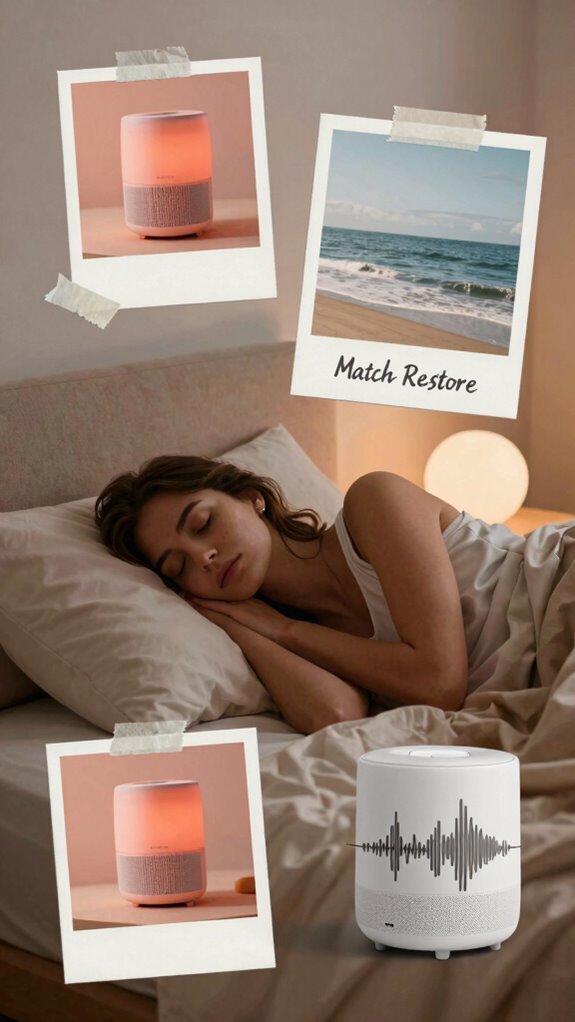
In the quest for ideal sleep environments, top sleep sound machines rooted in neuroacoustic science serve as precise tools to shape calming auditory settings, influencing neural activity for relaxation. Devices like LectroFan, Sound+Sleep, and Hatch Restore utilize sound therapy to create consistent, adjustable background noise that suppresses disruptive bedroom sounds. A new study involving neuroacoustic principles highlights how these machines can be tailored to individual auditory preferences, enhancing their effectiveness sound modulation techniques. Aura meditation-inspired features—such as gentle, developing sound scenes—enhance the nervous system’s shift to tranquility. By leveraging acoustic pacing, these machines help modulate brainwaves, fostering a sense of control and calm. Recent research, including work by sound therapy pioneer Dr. Jeffrey Thompson, underscores their efficacy in promoting faster nervous system regulation and restorative sleep, especially when integrated with other sleep-friendly lighting systems.
Ambient Light Spectrum Adjustments
Adjusting ambient light spectrum involves more than simply switching off a lamp; it’s about targeted modulation of wavelength compositions to synchronize with circadian rhythms.
Blue-rich light, common during the day, activates mood and alertness centers, while red and near-infrared spectra promote melatonin production in the evening, signaling sleep readiness.
Experts like Dr. Phyllis Zee emphasize the importance of light spectrum tuning for circadian entrainment.
Devices like Lumos or Casper’s Sleep Spirit incorporate adjustable spectral output, allowing users to control their bedroom’s light environment with precision.
Proper spectrum adjustments reduce circadian disruption, fostering more natural sleep cycles and aligning biological processes with the earth’s diurnal rhythms.
FAQ
Can White Noise Machines Help Trigger the Body’s Parasympathetic Response?
Yes, white noise machines can trigger your body’s parasympathetic response, creating an auditory distraction that fosters a calming effect. This helps you gain control over your nervous system, making it easier to relax and fall asleep peacefully.
Do White Noise Devices Interfere With Natural Sleep Cycle Oscillations?
No, white noise devices typically don’t disrupt natural sleep cycle oscillations. Instead, they create a calming auditory interference, helping you control your sleep environment and foster smoother, more mindful sleep cycles without upsetting your body’s biological rhythm.
Are There Any Health Risks Associated With Long-Term White Noise Exposure?
Long-term white noise exposure might pose hearing damage risks if volume levels are too high, and dependency concerns could arise if you rely on it exclusively. I recommend controlling volume and using it mindfully to maintain your sleep autonomy.
How Does White Noise Influence Nervous System Regulation Beyond Masking Sound?
Many think white noise just masks sounds, but it actively reduces auditory distraction, easing stress modulation. I control my nervous system better and fall asleep faster when I use a white noise machine, promoting calm throughout the night.
Can White Noise Machines Be Integrated With Neuro-Acoustic Sleep Therapies?
Yes, I can integrate white noise machines with neuro-acoustic sleep therapies by using auditory stimulation to guide sensory adaptation, giving me greater control over my nervous system’s calming response and enhancing my sleep quality naturally.
Summary
Just as a conductor orchestrates harmony amid chaos, white noise machines shape our sonic environment to foster restful sleep, counterbalancing unpredictable disturbances. By masking disruptive sounds and signaling tranquility, they engage the brain’s natural relaxation pathways. Inspired by research from sleep scientists like Dr. Kelly Glazer Baron, these devices serve as a crucial link between environmental control and biological regulation. Embracing white noise isn’t merely noise cancellation—it’s a sophisticated tool for tuning our nervous system toward rest.