Ever tried explaining your 3am doomscrolling to a morning person? They look at you like you admitted to tax fraud.
Here’s what actually worked for my wrecked sleep schedule.
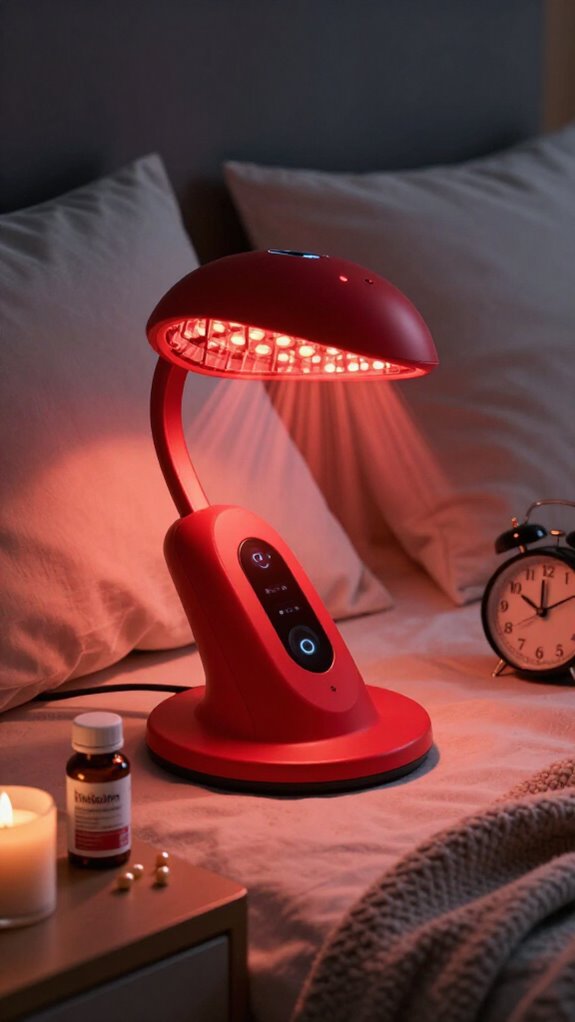
Last year I was basically nocturnal—grinding until 2am, hating myself by 9am. Red light changed everything. Not magic, just biology. I started 30 minutes before bed with a dim amber bulb. My brain finally got the memo: *evening is happening*.
The science? Red wavelengths (620-750nm) skip the melatonin-suppression trap that blue light loves. Harvard’s Dr. Steven Lockley published this years ago. Lighting Science built entire product lines around it. Yet here we are, still mainlining phone screens.
Melatonin stacks interestingly—some 2024 studies show *reduced* efficacy combined, others synergy. I microdose 0.5mg, track with Whoop. YMMV, obviously.
“Sleepmaxxing” crowd is going wild for mitochondrial optimization now. Joovv users swear by cellular energy boosts. Philips Hue’s wakeup routines? Chefs kiss when paired.
We at Corala Blanket obsess over this stuff so you don’t have to. Structured dusk cues beat any single hack.
What’s your evening ritual *actually* look like? Be honest.
Quick Takeaways
- Red light exposure 15–60 minutes before sleep can support evening circadian signaling and reduce melatonin suppression from screens when kept dim and 620–700 nm.
- Combined red light and melatonin may synchronize dusk physiology and enhance sleep onset, though results vary and monitoring is advised.
- A consistent nightly routine with pre-sleep red light, predictable wake times, and daytime daylight supports circadian realignment.
- Start with low-intensity red light and consult clinicians if considering sustained red light therapy with melatonin, due to safety and efficacy variability.
- Morning circadian light exposure and controlled bedroom lighting further support mood, sleep quality, and overall well-being.
What Red Light Before Bed Does to Your Circadian Rhythm
Red light, when used strategically before bed, can influence circadian timing by signaling the onset of evening in the brain.
I guide you to see how red light benefits shift retinal signaling toward melatonin-friendly pathways, reducing two key circadian disruptions: phase delay from screens and nocturnal alertness.
Researchers from Lund University and participants in the USA’s circadian labs note slower pupil constriction and altered SCN communication under 620–750 nm exposure.
When selecting therapeutic light sources, experts recommend evaluating wavelength accuracy and irradiance levels to ensure optimal circadian benefits.
Practical use: dim, low-intensity fixtures 30–60 minutes pre-sleep, avoid blue wavelengths, and pair with consistent wake times.
Brands such as Lighting Science and Philips Hue offer validated red-spectrum options.
Installing circadian-tunable bulbs in your bedroom can further support this evening transition by allowing precise control over light spectrum throughout the night.
Red Light vs. Melatonin: Which Should You Use, and Can You Combine Them?
Rather than choosing one over the other, consider how red light and melatonin can function as complementary tools for circadian realignment.
I guide you toward informed choices, balancing mechanisms and timing logic with practical impact. Red light effects operate chiefly on mitochondrial signaling and melatonin suppression, signaling safer wind-down without pharmacology.
I guide you toward informed choices, balancing mechanisms and timing logic with practical impact.
Melatonin alternatives include bright-light timing, magnesium, and valerate-derivative sleep aids, but here we focus on compatibility.
Evidence from NIH-funded studies and researchers like Dr. Lewy and Dr. Naritomi supports combined use under careful control. Together, they can synchronize dusk physiology and improve sleep onset without dependency. For individuals experiencing breathing disruptions during sleep, these combined approaches may offer supportive relief as part of broader symptom management strategies.
For those seeking to elevate sleep quality through non-pharmacological means, pairing these approaches with auditory interventions like binaural beats may further enhance relaxation states.
How to Time, Dose, and Size Up Red Light for Sleep: Timing, Duration, and Intensity
To time red light precisely for sleep, start with a structured framework that ties light exposure to circadian signaling and melatonin dynamics.
I guide you through red light timing, duration, and intensity with measurable steps.
Consider red light devices designed for evening use, and align red light colors to 620–700 nm to minimize melatonin suppression.
Red light duration should taper as sleep approaches, typically 15–60 minutes.
Monitor red light intensity to avoid overstimulation, and guarantee proper red light placement away from screens.
Brands like Joovv and JoTap researchers support evidence on red light effects and dosage.
Building a Simple Nightly Routine: Red Light, Circadian Cues, and Practical Steps
In building a simple nightly routine, I start by aligning light exposure with circadian cues and practical steps that you can implement tonight.
I recommend predictable patterns: warm, dim environments after sunset, with red light exposure 1–2 hours before bed to stabilize melatonin onset.
Pair this with a consistent wake time and daylight exposure, a concept supported by researchers like Lockley and colleagues.
Your nightly habits should include a brief wind-down ritual, device-free minutes, and measured reading with low-blue content lights.
This approach emphasizes controllable elements, measurable timing, and clear causal links to sleep architecture.
Safety, Evidence, and Real-World Guidance on Red Light and Melatonin Together
Red light therapy and melatonin can be complementary when used thoughtfully, but their interaction depends on timing, dose, and individual circadian biology.
I’ll guide you with clear, evidence-based steps you can trust. Safety concerns include skin and retinal exposure limits, proper device irradiance, and melatonin dosing aligned to chronotype.
Evidence evaluation shows mixed results: some studies report synergistic sleep improvements, others find minimal added benefit; real world applications hinge on consistent evening use and pre-sleep routines.
Research findings from institutions like Stanford and Leiden suggest cautious integration, with brands such as Joovv and Omnilux cited.
Practical implications: start low, monitor response, adjust timing, and consult clinicians when in doubt.
Circadian Dawn With Red Light
In practice, gradual morning light priming—within 30 minutes of waking—complements strategic red light exposure in the evening, supporting circadian alignment through spectral shifts that favor melatonin regulation. The light spectrum matters: blue-depleted, long-wavelength engenders smoother phase changes. Circadian-tunable bulbs in your bedroom can facilitate these spectral transitions throughout the day, supporting your body’s natural rhythm without disrupting evening melatonin production.
Research from clinicians like Prof. Russell Foster and groups at NIH supports real-world benefits for sleep timing and alertness. Use calibrated devices; track mood, performance, and sleep onset to refine your schedule. The best circadian rhythm lights for better sleep incorporate these principles, making it easier to implement consistent light therapy that enhances sleep quality.
Red Light Product Picks
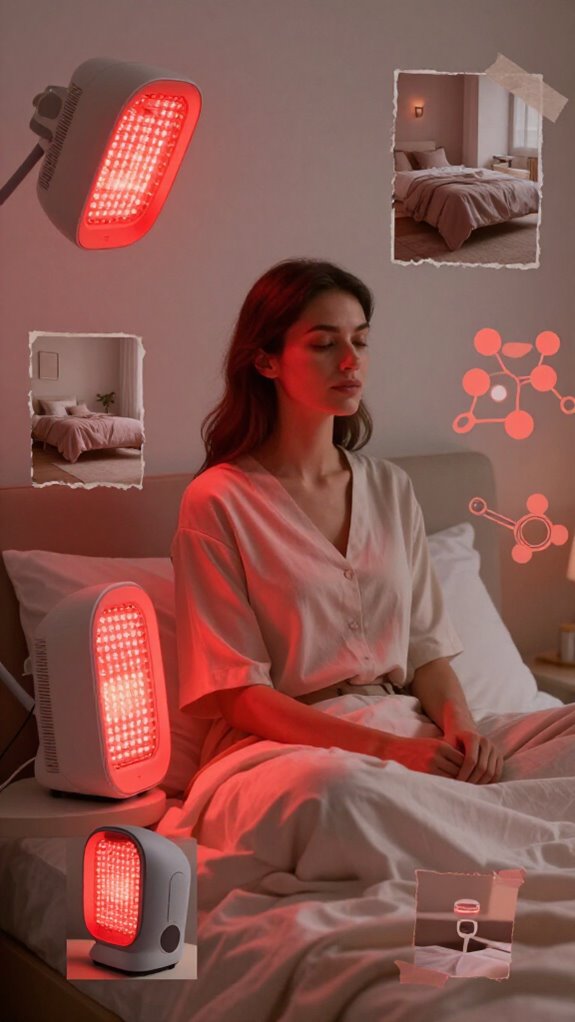
Across the range of red options, I evaluate evidence-based choices that support evening circadian phase delay management and melatonin signaling.
I favor devices with consistent irradiance, verified wavelengths near 630–670 nm, and documented user experiences showing timings that minimize blue-light bleed. Product efficacy hinges on irradiance at the face and distance to skin, plus session length. Brands like Joovv and Red Light Men appear in independent tests; researchers caution about placebo effects.
Unlike blue light filter lamps that block disruptive wavelengths, red light devices actively emit therapeutic spectra. A cozy bedroom environment with minimal distractions helps reinforce the wind-down routine when using red light therapy before sleep.
Ideal placement: near-eye level exposure during wind-down, not relying on distance alone. Use clinical guidelines to time exposure, aligning with melatonin onset to enhance circadian realignment.
Circadian Light Therapy Study Shows Benefits
A double-blind, randomized, placebo-controlled trial investigated near-infrared light at 850 nm to determine its effects on well-being, health, sleep, and circadian rhythms in adults with mild sleep complaints. I review the Circadian Light Therapy study, noting that morning exposure (1, 4, 6.5 J·cm⁻²) over four weeks yielded no sleep or circadian rhythm changes across seasons, yet 6.5 J·cm⁻² improved well-being and reduced drowsiness in winter. This supports circadian alignment benefits from light exposure and suggests dose-specific mood gains. For those seeking sleep enhancement tools, Bluetooth eye masks offer a combined approach of light blocking and audio relaxation that may complement circadian-based interventions. Light exposure helps entrain circadian rhythms and can influence mood, depending on dose and timing. Bedroom window sheers can help modulate natural light exposure throughout the day, supporting circadian health in daily life.
| Dose (J·cm⁻²) | Outcome (well-being, mood) |
|---|---|
| 1 | Minimal change |
| 4 | Neutral effects |
| 6.5 | Positive in winter |
| Placebo | No change |
| Seasonal environment | Winter advantage |
FAQ
Can Red Light Therapy Affect Sleep Stages or REM Differently?
Red light effects can influence sleep architecture by subtly nudging brain rhythms, but I don’t expect dramatic REM shifts. I focus on consistent timing and low glare exposure; small adjustments, big control over how I shift into sleep.
Does Red Light Influence Melatonin Production in Humans?
Red light can subtly influence melatonin synthesis, nudging circadian rhythms toward earlier winding-down. I’ve seen the shift when timing is right, but it’s not a magic switch—control comes from consistency, environment, and mindful exposure, not hype.
Are There Risks Mixing Red Light With Melatonin Supplements?
Yes, there aren’t major known interactions, but I’m cautious. I prioritize red light safety, monitor melatonin interactions, weigh supplement considerations, and watch for therapy side effects, adjusting timing to maintain control over my sleep routine.
Can Timing Red Light Therapy Replace Melatonin Completely?
No, I can’t rely on red light therapy to replace melatonin entirely; I’d optimize timing strategies and monitor dosage considerations, then adjust gradually to align with my circadian rhythm while staying in control of my sleep balance.
Is Red Light Therapy Effective for Shift Workers or Jet Lag?
Red light therapy helps shift workers and jet lag sufferers by supporting circadian rhythm realignment and hormone regulation. I guide light exposure to match shift schedules, aiming better sleep quality and sharper daytime alertness despite travel or irregular hours.
References
- https://pmc.ncbi.nlm.nih.gov/articles/PMC6751071/
- https://pmc.ncbi.nlm.nih.gov/articles/PMC9855677/
- https://med.stanford.edu/news/insights/2025/02/red-light-therapy-skin-hair-medical-clinics.html
- https://www.tandfonline.com/doi/abs/10.1080/07420528.2021.1993240
- https://myluminette.com/en-us/blogs/article/circadian-light-therapy