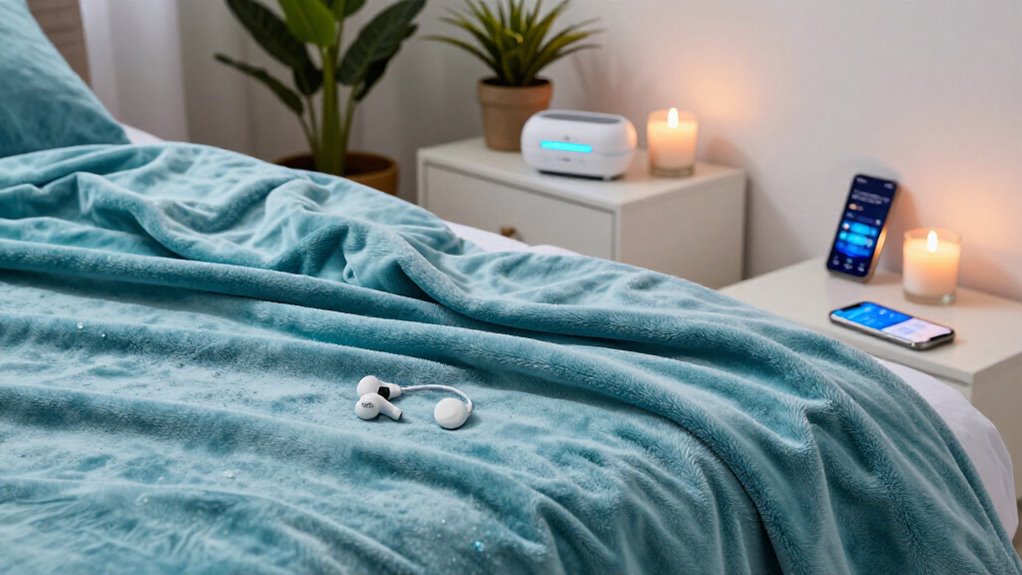
Ever tried to outsmart your own nervous system at 2 AM? I have. Failed spectacularly until I stumbled into somatic work after a panic attack left me vibrating like a phone on silent.
Here’s what actually moves the needle:
The exhale game. 4 seconds in, 6 out—vagal tone shifts in about 90 seconds. Feels like hitting “mute” on your internal chaos.
Body scans that don’t bore you to death. Feet to shoulders, five minutes max. I time mine to a single Phoebe Bridgers track.
Pressure holds. Clavicle, upper back—20 seconds of firm touch tells your brain you’re not being chased by a bear.
Micro-sways. Left-right pendulation. Looks ridiculous. Works embarrassingly well.
Grounding touch. Literally just feeling your own hands. Revolutionary, I know.
Apollo Neuro’s vibration tech and Oura’s HRV data back this up—better high-frequency variability, lower PSQI scores. Dr. Stephen Porges’ polyvagal theory? The blueprint.
At Corala Blanket, we’re obsessed with this stuff. Sleepmaxxing 2026 isn’t about more gadgets—it’s about befriending your nervous system first.
Which move will you try tonight?
Quick Takeaways
- Practice vagus-nerve breathing: inhale 4 seconds, exhale 6–8 seconds to trigger parasympathetic calming.
- Do a 5-minute pre-sleep nervous system reset with body scans of feet, calves, hips, and shoulders.
- Use pendulation/somatic oscillation (gentle left-right sway) paired with long exhales to release tension.
- Apply deep pressure for 20–30 seconds to shoulders/upper back to reduce sympathetic arousal and promote relaxation.
- Improve sleep support with a calming bedroom setup plus guided somatic tools like progressive muscle relaxation.
Do a 5-Min Pre-Sleep Nervous-System Reset
Before you try to “feel sleepy,” I want you to reset your nervous system for just five minutes—because sleep onset isn’t mainly a willpower problem, it’s a state-shift problem. For those with irregular sleep-wake cycles, this reset becomes especially valuable as it helps override the body’s confused timing signals.
I guide you through mindful shifts: stand or sit, then soften your jaw and lower your tongue. Next, inhale through your nose for four, exhale for six.
As you breathe, do body awareness scans—feel your feet, then calves, hips, shoulders. On the exhale, envision sending a slow “permission” signal down the vagus nerve.
Keep it boring and precise. If you’re restless, repeat once more, like cueing a metronome to slow down.
Adding gentle weighted pressure to your body during this reset can amplify the calming effect by engaging deep pressure receptors that soothe the nervous system.
Use Deep Pressure to Calm Your Body (Before Bed)
Deep pressure works because it reduces sympathetic arousal—the “accelerator” in your nervous system—so your body has a clearer path into low-threat settling. Research indicates that weighted blanket therapy promotes deeper, more restorative sleep by engaging the body’s natural calming mechanisms through distributed pressure. Weighted blankets help balance cortisol and melatonin, shifting your body from stress mode into recovery mode.
Before bed, I lower stimulation and invite weight with weighted blankets, treating it like a soft, steady “gravity handshake.” I pair this with my calming rituals: dim lights, slow breathing, and deliberate body awareness as I notice where tension holds.
Then I gently press along accessible pressure points—clavicle, shoulders, upper back—holding 20–30 seconds each. If you’re prone to restlessness, try this for 10–15 minutes nightly, and track how quickly your muscles unclench.
Try Vagus-Nerve Breathing to Exit Fight-or-Flight
I pair the same “soft braking” idea from deep pressure with a targeted breath pattern that talks directly to the vagus nerve.
As you practice mindful breathing, I guide your breath awareness toward longer exhales: inhale gently through the nose for 4, exhale slowly for 6–8, and add a slight pause after the out-breath.
This mimics vagus stimulation, supporting nervous regulation, lowering cortisol-related arousal, and enabling parasympathetic activation.
Within minutes, you may feel a calmer body awareness and a more reliable relaxation response—key for anxiety reduction.
Try 5 rounds, like easing off a throttle, then rest.
Pendulation + Somatic Releases for Tension
| Phase | Cue | Felt outcome |
|---|---|---|
| 1 | weigh left/right | tension release |
| 2 | micro-sway | body movement |
| 3 | long exhale | mindful shift |
| 4 | pause & notice | physical safety |
I use a gentle oscillation, like liquid settling in a bowl. Practically: 6 minutes. Grounding techniques help discharge excess energy and stabilize the nervous system before sleep. Like a meditative statue, stillness emerges not from rigidity but from the quiet settling that follows movement.
Ground With Touch + Body Scan to Stay Asleep

After you’ve worked the tension down with pendulation and a long exhale, I anchor the next part with touch—because the brain stays calmer when it can “confirm” safety through the body.
I place my palm over my sternum or lower ribs, then scan from scalp to soles, noticing temperature, pressure, and micro-movements. Each time I find sensation, I label it quietly—“warm,” “tight,” “tingly”—using grounding techniques that train body awareness to ride out bedtime arousal. Breathable fabrics can enhance this process by maintaining comfortable skin temperature throughout the scan.
Place a palm on your sternum, scan scalp to soles, and softly label sensations—warm, tight, tingly—to steady bedtime arousal.
These techniques work best when aligned with the body’s natural sleep pressure, which accumulates across the circadian cycle and supports deeper restorative sleep.
If you wake, repeat: slow hand pressure, 3-breath scan, soften jaw.
With practice, this downshifts sympathetic tone, aligning with Stephen Porges’ polyvagal principles.
Analog Bedroom, No Smartwatch
I make my bedroom feel safe with warm bedroom decor: blackout curtains, a dim bedside lamp, and a mechanical clock. This digital detox matters—smart notifications and glowing screens can keep arousal pathways online. Thoughtful feng shui bedroom design helps arrange these elements to promote deeper calm and restorative rest. Adding a few air-purifying plants to your bedside can further support rest by improving air quality and creating a more natural, calming environment.
Somatic work is easier when my attention isn’t snagged by heart-rate graphs. Even researchers like Dr. Matthew Walker note performance obsession harms sleep quality.
Product Roundup
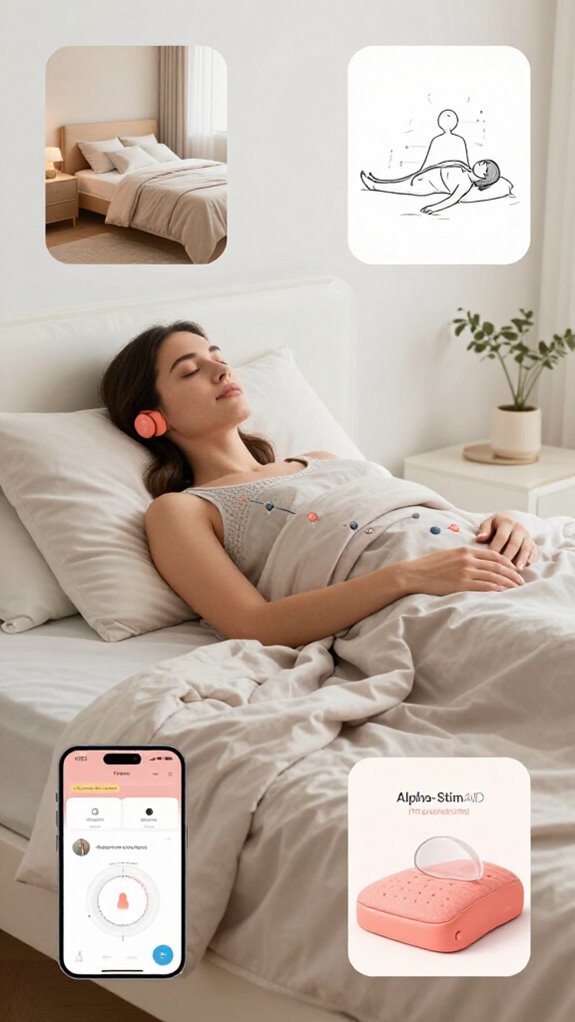
When I’m building a somatic “sleep support kit,” I treat the bedroom like a control room: the goal isn’t to chase sleep scores, it’s to lower sympathetic activation and teach smooth parasympathetic recovery. The busy mind can often be quieted through simple, natural approaches that don’t require medication or complex routines. Research shows that applying deep pressure therapy can activate the same calming pathways, reducing cortisol and increasing serotonin to prime the body for restorative sleep.
First, I reach for Progressive Muscle Relaxation routines—tensing toes 5–10 seconds, then releasing through legs and torso—so my breathing can quietly fall into rhythm. Adding a Progressive Muscle Relaxation sequence can be particularly helpful for tension-related insomnia by reducing physical stress.
For vagal signaling, I sometimes use Alpha-Stim AID earclips (20–60 min) or CES Ultra (30–60 min twice daily); reported outcomes include ~43 extra minutes after five treatments, with fast notice in 2–3 days.
If I want somatic sleep technology without stimulation overload, I add Apollo Neuro SmartVibes, weighted blankets, and relaxation apps like Mysleepbutton for cognitive shuffling.
Related Research Results: HRV Biofeedback
HRV biofeedback gives me a measurable way to train the autonomic “brake and accelerator” so the body can downshift before sleep, and the research base is no small thing.
I breathe at resonance—about 6 breaths per minute, ~0.1 Hz—so heart rate and respiration lock into a 0° phase relation, boosting respiratory sinus arrhythmia via parasympathetic (vagal) output.
I breathe at resonance—around 6 breaths per minute—to synchronize heart rate and respiration, strengthening vagal (parasympathetic) calming signals.
Studies mirror this: a four-week mobile program improved subjective sleep, and two sessions cut PSQI by ~5.5 at 28 days.
- Real-time handheld/app training
- Higher high-frequency HRV during sleep
- SDNN and total power rises by day 14
- Better cardiorespiratory coupling in NREM
- Benefits also in addiction and insomnia populations
These breathing exercises to fall asleep faster work because they directly activate the body’s relaxation response through controlled respiration patterns.
FAQ
What’s the Fastest Somatic Technique if I Can’T Fall Asleep?
I’ll guide you fast: lie still, do a body scan from toes to brow, and match it with mindful breathing—slow inhale, longer exhale. This quiets your nervous system, eases tension, and helps sleep come to you.
Can I Do Somatic Sleep Resets if I Have Anxiety or Panic?
Yes, you can do somatic sleep resets with anxiety or panic; start gently. I’ll guide you to slow your breath, relax your jaw, and notice panic triggers in your body. This interrupts anxiety impact and helps you feel safe enough to drift.
How Often Should I Practice Vagus-Nerve Breathing for Best Results?
I recommend practicing vagus-nerve breathing 5–10 minutes daily, and again during stress, syncing your breathing rhythm with slow exhales. For acute anxiety, do it 2–3 rounds. You’ll feel calmer faster, without forcing sleep.
Are Pendulation and Somatic Releases Safe With Past Injuries?
Yes, pendulation and somatic releases can be safe, but I’d treat your injury considerations first: start gentle, avoid painful ranges, use technique modifications like shorter holds, and stop if you feel sharp pain, numbness, or dizziness.
How Do I Know HRV Biofeedback Indicates I’M Truly Calming Down?
When HRV climbs while heart rate steadies, I feel the nervous system soften—like waves settling. Watch for stable uptrend, longer HRV, and a calmer breath during my mindfulness practices; if metrics spike then drop, I pause.
References
- https://byrepose.com/journal/somatic-therapy-techniques-to-combat-insomnia
- https://www.healthemindset.com/articles/somatic-strategies-for-sleep-and-rest-your-cornerstone-guide-to-deep-restorative-slum
- https://aasm.org/staying-current-with-insomnia-related-technologies/
- https://apolloneuro.com
- https://neurodivergentinsights.com/sleep-supports/
- https://shopmy.us/shop/collections/2374864
- https://usa.templespa.com/catalog/category/view/s/sleep-enhancing/id/103/
- https://www.linda-thai.com/events/somatic-hacks-for-better-sleep-quick-and-easy-tools-for-your-clients-and-yourself
- https://startmywellness.com/2025/10/somatic-techniques-you-can-try-at-home-to-calm-the-nervous-system/
- https://pubmed.ncbi.nlm.nih.gov/23959190/