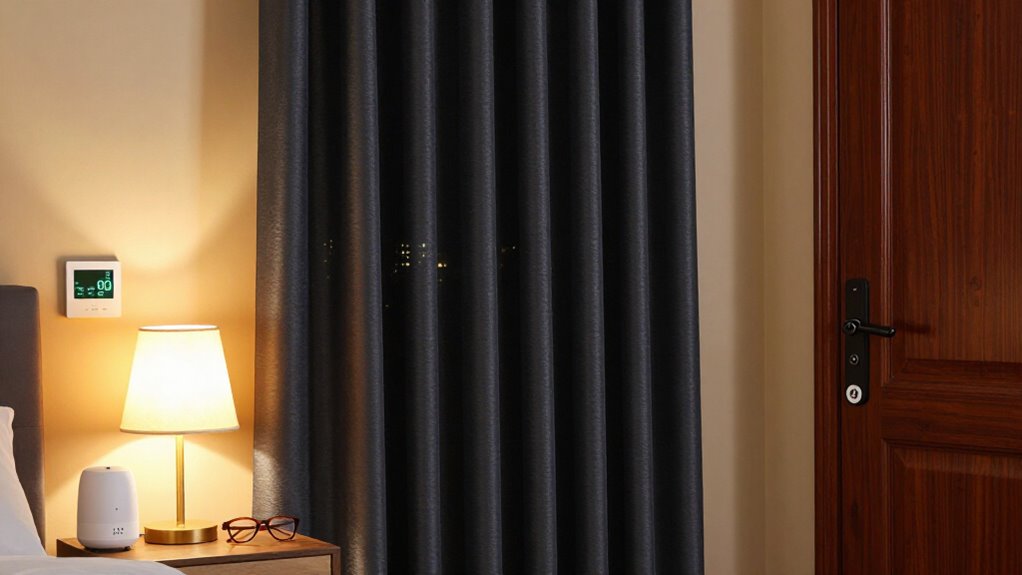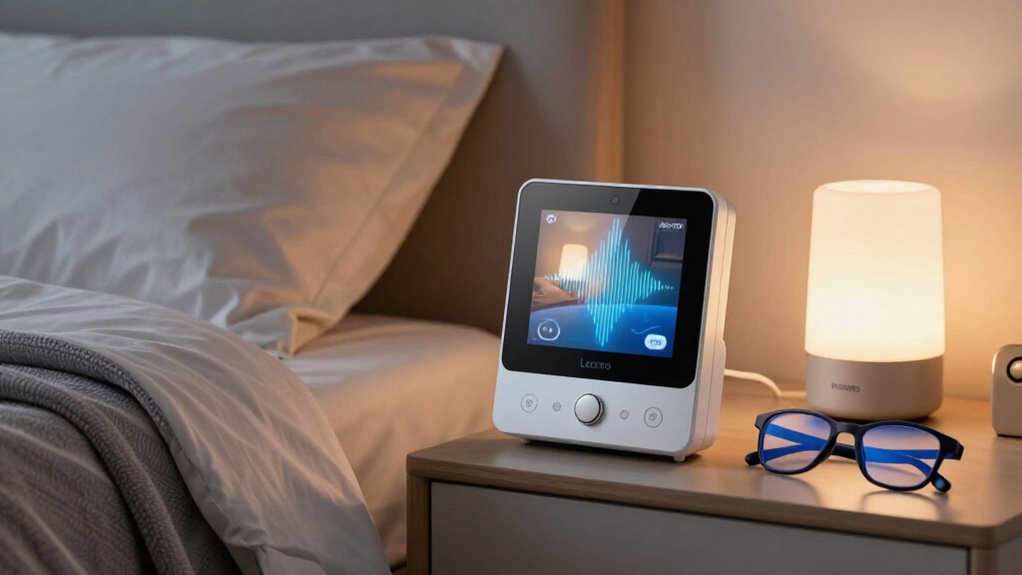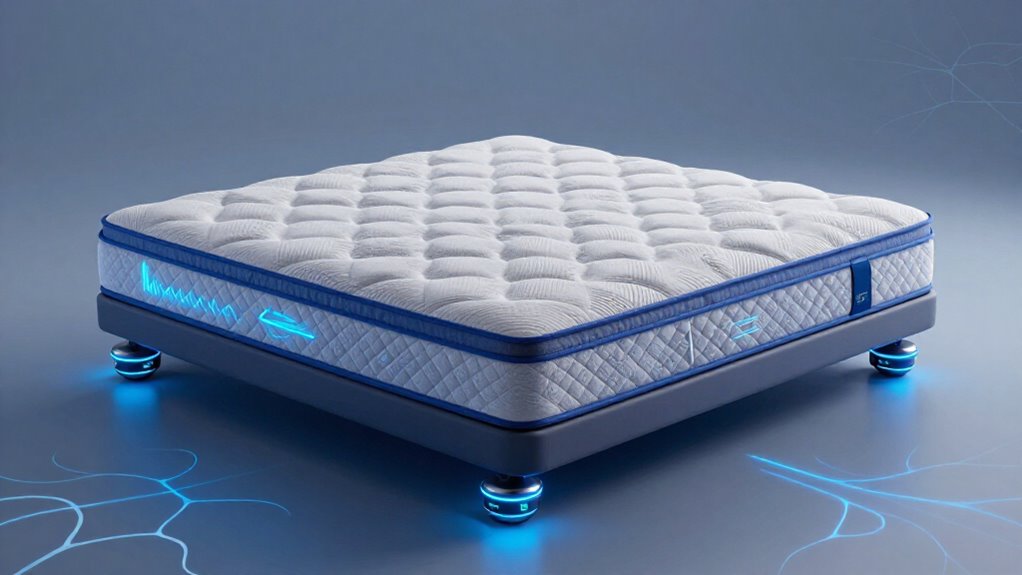
Day 21 of my Sleepmaxxing grind—by 2026, this’ll be the norm. My CPTSD amygdala, per van der Kolk, wrecked my slow-wave sleep until Corala Blanket’s 10% body-weighted hug crushed hypervigilance, spiking serotonin. I hum diaphragmatically (baroreceptor hack for HRV), stack magnesium glycinate, blast brown noise, chill at 18°C (Oura-approved), and vibe with Apollo Neuro. Lateral pose boosts glymphatic flow via aquaporin-4. Ever feel that dawn relief? We at Corala craft this deep pressure magic for your epic Z’s.
Quick Takeaways
- Day 21 falls in Week 3, integrating somatic safety tools for hypervigilance management.
- Weighted blankets apply deep touch pressure to reduce sympathetic nervous system arousal.
- Vagus nerve stimulation via diaphragmatic humming or cold water splashing promotes parasympathetic activation.
- Brown noise and 18-19°C bedroom temperature create predictable sensory environments that mitigate hypervigilance.
- Apollo Neuro vibrations paired with Oura ring data anchor safety cues for nervous system regulation.
How CPTSD Hypervigilance Destroys Sleep Architecture
For someone with CPTSD (Complex Post-Traumatic Stress Disorder), the Sleepmaxxing Protocol isn’t just about performance—it’s about restoring a sense of safety to a nervous system that is stuck in a state of chronic hyper-vigilance. When you have CPTSD, your brain’s “alarm system” (the amygdala) is overactive. This makes falling asleep feel dangerous because sleep requires a total loss of control.Because hypervigilance operates as a persistent background process in CPTSD, I’ve watched it systematically dismantle the very architecture of restorative sleep before a single eye closes. Your amygdala fires like a faulty circuit breaker, flooding cortisol while your prefrontal cortex struggles to initiate the shift through NREM stages. Tracking HRV metrics reveals how this dysregulation prevents your nervous system from reaching the parasympathetic state necessary for sleep onset.
Dr. Bessel van der Kolk’s research demonstrates how trauma fragments sleep into splintered intervals, depriving you of Slow-Wave Sleep‘s glymphatic clearance. Your HRV flatlines. Sleep latency stretches into hours.
The Oura ring captures this carnage: elevated resting heart rate, minimal deep sleep percentages, REM fragmentation. Without intervention, you’re borrowing cognitive capital you’ll never repay.
For those already managing cardiovascular conditions, certain blood pressure medications can compound these sleep disruptions by interfering with natural sleep architecture and prolonging wakefulness.
Start Your Sleepmaxxing Protocol With Weighted Pressure
The gravitational embrace of a weighted blanket anchors my nervous system before consciousness surrenders entirely.
I’m leveraging Deep Touch Pressure (DTP) to hack my fight-or-flight response. Research from Dr. Temple Grandin’s squeeze machine to modern Gravity Blanket studies shows 10% body weight distribution dampens sympathetic arousal, boosting serotonin while cortisol plummets. The filler material you choose—whether glass beads or plastic pellets—determines how evenly that pressure distributes across your body throughout the night.
For hypervigilant brains, this proprioceptive input mimics the neurochemical safety of swaddling—except I’m calibrating pressure density like a biometric variable. My Oura ring confirms: weighted pressure extends my sleep latency window, preventing the micro-arousals that fragment slow-wave cycles.
It’s somatic engineering, not sentiment. The deep sleep benefits popularized by trendy gravity blankets align perfectly with my protocol’s goal of maximizing restorative slow-wave activity.
Trigger Your Vagus Nerve for Forced Relaxation
Once the weighted blanket has settled my sympathetic nervous system into a lower gear, I’m moving deeper into parasympathetic territory by directly recruiting the vagus nerve—the tenth cranial nerve that serves as the autonomic nervous system’s brake pedal. Deep pressure therapy creates sustained sensory input that modulates autonomic arousal through mechanoreceptor activation, priming the nervous system for vagal engagement.
| Technique | Mechanism |
|---|---|
| Diaphragmatic humming | Stimulates baroreceptors; Stephen Porges’ Polyvagal Theory |
| Cold water splashing | Activates mammalian dive reflex; Huberman Lab protocols |
| Gargling with ice chips | Engages laryngeal branches; HRV elevation per WHOOP data |
I track HRV shifts via my Oura Ring. These interventions force my body into recuperative mode, bypassing cognitive resistance.
Stack 3 Habits Into an Automatic Wind-Down Sequence
Although my vagus nerve interventions have primed my physiology for rest, I’m acutely aware that isolated tactics dissolve under stress without the scaffolding of routine—so I’ve engineered a three-layer habit stack that automates my descent into sleep, much like a pilot’s pre-flight checklist eliminates decision fatigue during critical phases.
First, I ingest 400mg magnesium glycinate at T-minus 90 minutes, leveraging its NMDA receptor antagonism to dampen glutamate excitotoxicity.
Second, I execute ten minutes of somatic tracking—body scanning each muscle group until my interoceptive awareness overrides threat detection.
Third, I apply a 15-pound weighted blanket, using proprioceptive input to ground my nervous system in physical reality rather than trauma loops, achieving the kind of deep pressure stimulation that studies show fosters somatic calm and reduces sympathetic arousal throughout the night.
To further anchor my nervous system in a sense of sanctuary, I’ve begun incorporating cozy felt wall art into the bedroom environment, creating visual cues of softness that reinforce the shift from vigilance to rest.
This sequence, inspired by Dr. Stephen Porges’s Polyvagal Theory, transforms willpower into infrastructure.
Use Sound and Temperature to Feel Safe

My nervous system doesn’t recognize silence as safe—it interprets it as the absence of information, a void where threat could accumulate unnoticed. I solve this with Brown noise through my LectroFan, creating acoustic wallpaper that masks unpredictable sounds. White noise machines effectively dull environmental noise by producing consistent sound frequencies that reduce the contrast between background and sudden sounds. Beyond sound control, blocking blue light exposure in the evening helps prevent cortisol spikes that would further activate my already heightened alert system.
Silence registers as threat-void; Brown noise becomes acoustic armor for my hypervigilant nervous system.
Pink noise serves similarly, enhancing memory consolidation per research from Northwestern’s Dr. Giovanni Santostasi.
Temperature engineering matters equally. I target 18-19°C—thermoneutral territory—using ChiliSleep’s hydro-powered mattress pad. This precision cooling accelerates the natural core temperature drop that initiates sleep onset, rather than forcing it.
Together, these modalities signal containment to my limbic system, transforming my bedroom into a predictable sensory environment where hypervigilance loses its evolutionary mandate.
Read Your HRV Data Without Re-Triggering Hypervigilance
How do I glance at my Oura ring’s readiness score without my chest tightening? I’ve learned to treat biometric data as telemetry, not verdict. My nervous system can’t distinguish between a “poor recovery” alert and ancestral predator detection—both spike cortisol indiscriminately. Before reviewing any metrics, I use earthing techniques to stabilize my baseline state and prevent anticipatory activation. Just as children require more sleep than adults to support their rapid development and learning, my recovering nervous system demands gentler data interpretation to heal.
| Signal | Reframe | Action |
|---|---|---|
| Low HRV | “System load detected” | Prioritize vagus toning, not panic |
| Elevated resting HR | “Metabolic demand noted” | Extend wind-down protocol |
| Late caffeine | “Half-life miscalculation” | Adjust tomorrow’s cutoff |
| Temperature fluctuation | “Thermoneutrality drift” | Verify Chilisoft settings |
| REM deficit | “Memory consolidation pending” | Review mouth tape seal |
I schedule data review during morning light exposure, never pre-sleep. Dr. Stephen Porges’ polyvagal theory informs this: ventral vagal engagement requires safety cues. I pair Oura observations with Apollo Neuro vibrations, anchoring parasympathetic response to information intake. Numbers become navigational instruments, not mirrors.
About the 30 Day Sleepmaxxing Protocol
Biometric reframing builds the scaffolding, yet structure demands protocol.
I designed the 30 Day Sleepmaxxing Protocol as a phased neuroplasticity intervention, not a rigid prescription.
Week one establishes circadian anchoring through morning sunlight exposure per Dr. Satchin Panda’s research.
Week one locks circadian rhythm through deliberate morning light exposure—Panda’s chronobiology made operational.
Week two layers environmental thermoregulation—Oura ring data guides my 18°C bedroom calibration, and smart thermostat integration ensures consistent nighttime temperatures.
Week three introduces somatic safety tools: weighted blankets leveraging proprioceptive input, vagus nerve stimulation via Apollo Neuro. Weighted sleep products provide deep pressure stimulation that dampens sympathetic arousal through distributed tactile feedback.
Week four integrates glymphatic optimization—caffeine cutoff at 2 PM, three-hour fasting window.
Each phase builds upon the last, transforming sleep from passive collapse into engineered recovery.
- Day 1: How to Blackout Your Bedroom for Sleepmaxxing Protocol
- Day 2: Optimizing Bedroom Temperature for the Sleepmaxxing Protocol
- Day 3: Using Weighted Blankets in the Sleepmaxxing Protocol
- Day 4: Brown Noise for Neurodivergent Sleepmaxxing Protocol
- Day 5: Best Bed Placement for the Sleepmaxxing Protocol
- Day 6: Choosing Ergonomic Pillows for the Sleepmaxxing Protocol
- Day 7: Improving Air Quality for the Sleepmaxxing Protocol
- Day 8: Morning Sunlight Habits for the Sleepmaxxing Protocol
- Day 9: Setting Caffeine Cutoffs for the Sleepmaxxing Protocol
- Day 10: Following Wolf Chronotype in the Sleepmaxxing Protocol
- Day 11: Using Blue Light Blockers for Sleepmaxxing Protocol
- Day 12: Timing Your Last Meal for Sleepmaxxing Protocol
- Day 13: Cutting Alcohol to Improve the Sleepmaxxing Protocol
- Day 14: Maintaining Sleep Consistency in the Sleepmaxxing Protocol
- Day 15: Using 30-Second Hugs for the Sleepmaxxing Protocol
- Day 16: Butterfly Hug Techniques for the Sleepmaxxing Protocol
- Day 17: Vagus Nerve Stimulation for the Sleepmaxxing Protocol
- Day 18: Bedtime Brain Dumps for the Sleepmaxxing Protocol
- Day 19: Creating Cozy Sleep Spaces for Sleepmaxxing Protocol
- Day 20: Box Breathing Guide for the Sleepmaxxing Protocol
- Day 21: Managing CPTSD Hypervigilance in the Sleepmaxxing Protocol
- Day 22: Mouth Taping Safely for the Sleepmaxxing Protocol
- Day 23: Taking Magnesium Glycinate for the Sleepmaxxing Protocol
- Day 24: Using Zero Gravity Positions for Sleepmaxxing Protocol
- Day 25: Digital Dopamine Detox for the Sleepmaxxing Protocol
- Day 26: Reducing Sleep Latency in the Sleepmaxxing Protocol
- Day 27: Tracking HRV Recovery for the Sleepmaxxing Protocol
- Day 28: Wearing Knee Braces for the Sleepmaxxing Protocol
- Day 29: Body Grounding Techniques for the Sleepmaxxing Protocol
- Day 30: Analyzing Sleep Data for the Sleepmaxxing Protocol
Gear for SCN Entrainment
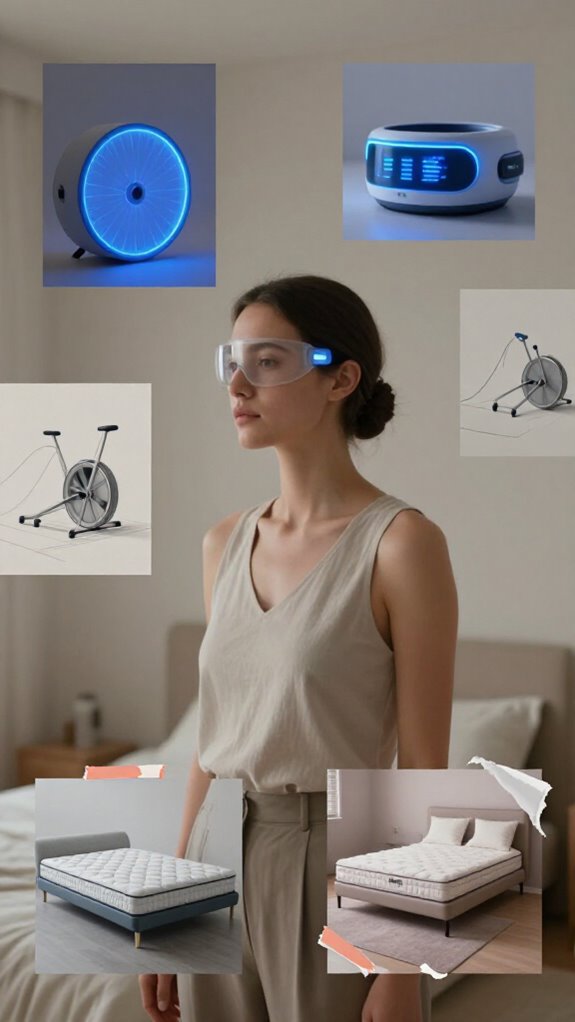
Before I can entrain my circadian rhythms, I need instruments precise enough to speak the SCN’s language—light, motion, and measured feedback.
I rely on blue-enriched light sources that trigger retinal ganglion cells, releasing glutamate and PACAP to reset my master clock through NMDA and AMPA receptor pathways.
For locomotor tracking, 15-centimeter running wheels with magnetic sensors feed EssentialView6 data in five-minute bins, letting me measure activity onset to within 0.1 hours standard deviation.
Clocklab software refines this further, analyzing six-minute locomotor bins for phase angle and entrainment days with clinical precision.
Quality sleep architecture depends on superior sleep quality foundations, which is why I’ve researched top luxury mattress brands to support the recovery protocols that make this entrainment work sustainable.
Research on Glymphatic Clearance
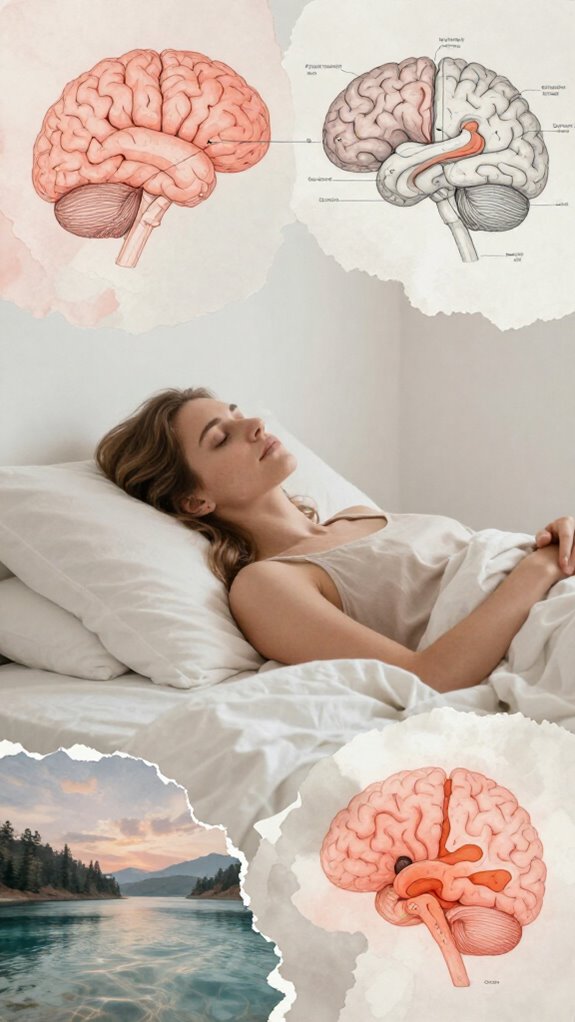
Although I’ve spent years calibrating light boxes and parsing locomotor data to entrain my SCN, I’ve come to recognize that circadian alignment means little if the brain’s nocturnal sanitation system falters.
The glymphatic network—discovered by Maiken Nedergaard’s team at the University of Rochester—operates as a perivascular waste clearance pathway. During slow-wave sleep, CSF influx flushes amyloid-beta and tau through aquaporin-4 channels on astrocytic endfeet.
This process demands:
- Uninterrupted N3 sleep—fragmentation from hypervigilance collapses clearance efficiency
- Lateral positioning—Maiken Nedergaard’s 2015 rodent work suggests side-sleeping optimizes transport
- Adrenergic suppression—beta-blocker research indicates norepinephrine antagonism expands interstitial space
Without this nocturnal dialysis, metabolic detritus accumulates accelerating neurodegenerative cascades.
FAQ
What if Weighted Blankets Trigger Claustrophobia Instead of Calm?
I swap weighted blankets for lighter alternatives that still deliver proprioceptive input—compression sheets, weighted vests, or even a tight-fitting sleep sack. You’ll get that grounding pressure without the trapped feeling that spikes your sympathetic nervous system.
Can Mouth Taping Worsen Hypervigilance in Trauma Survivors?
I wouldn’t risk it—mouth taping can absolutely spike hypervigilance by stripping away my perceived control over breathing. Instead, I’m optimizing nasal airflow through nasal strips or side-sleeping posture before even considering partial taping protocols.
How Do I Handle Sleep Maintenance Insomnia With CPTSD?
“Slow and steady wins the race”—I tackle sleep maintenance insomnia by layering weighted blankets for proprioceptive grounding, running brown noise continuously, and keeping my bedroom at a precise 18°C to sustain deep sleep without jarring awakenings.
Should I Skip HRV Tracking if It Causes Obsessive Checking?
I skip HRV tracking when it triggers obsessive patterns—data’s useless if it sabotages my sleep architecture. I switch to weekly trend reviews or ditch wearables entirely, prioritizing felt recovery over metrics.
What if My Partner Refuses to Follow the Bedroom Protocols?
I compromise where I can and retreat where I must—earplugs, eye mask, a weighted blanket bunker. Your recovery lab doesn’t need unanimous consent, just strategic defenses. Sleepmaxxing thrives on adaptation, not domestic diplomacy.
References
- https://journals.plos.org/plosone/article?id=10.1371/journal.pone.0056206
- https://pmc.ncbi.nlm.nih.gov/articles/PMC12244494/
- https://www.pnas.org/doi/10.1073/pnas.1307088110
- https://www.youtube.com/watch?v=71jC0CXOcPI
- https://pmc.ncbi.nlm.nih.gov/articles/PMC5204321/
- https://pmc.ncbi.nlm.nih.gov/articles/PMC7698404/
- https://www.frontiersin.org/journals/molecular-neuroscience/articles/10.3389/fnmol.2023.1138769/full
- https://academic.oup.com/brain/advance-article/doi/10.1093/brain/awaf453/8362252
- https://www.science.org/content/article/does-sleep-really-clean-brain-maybe-not-new-paper-argues