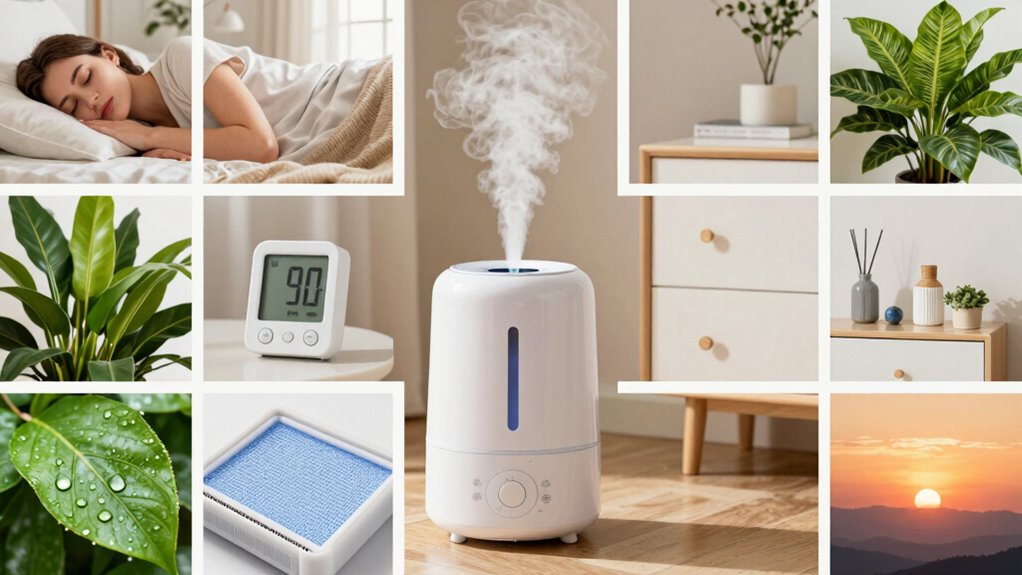
I used to toss and turn until I stuck a jasmine plant on my nightstand—game changer. That biophilic vibe isn’t just trendy; Harvard researchers found greenery actually drops cortisol and boosts melatonin. Lavender and chamomile? Studies from the University of Miami confirm they slash heart rate and blood pressure. At Corala Blanket, we’re obsessed with better sleep, and trust me, pairing these with quality bedding hits different. IKEA’s affordable plant lineup makes starting easy. Why suffer another restless night when nature’s got your back?
Quick Takeaways
- The visual appeal and biophilic nature of chic bedroom plants promote relaxation, reducing physiological stress responses like elevated heart rate and blood pressure.
- Certain plants, such as jasmine, lavender, and chamomile, emit calming aromas that stimulate melatonin production, facilitating deeper, more restful sleep.
- Air-purifying plants like snake plants enhance indoor air quality, creating a more soothing and rejuvenating sleep environment.
- The presence of plants serves as a focal point, contributing to a more aesthetically pleasing and comforting bedroom atmosphere.
- Interacting with and caring for low-maintenance bedroom plants can have a therapeutic effect, further alleviating nighttime anxiety.
The Calming Power of Bedroom Plants
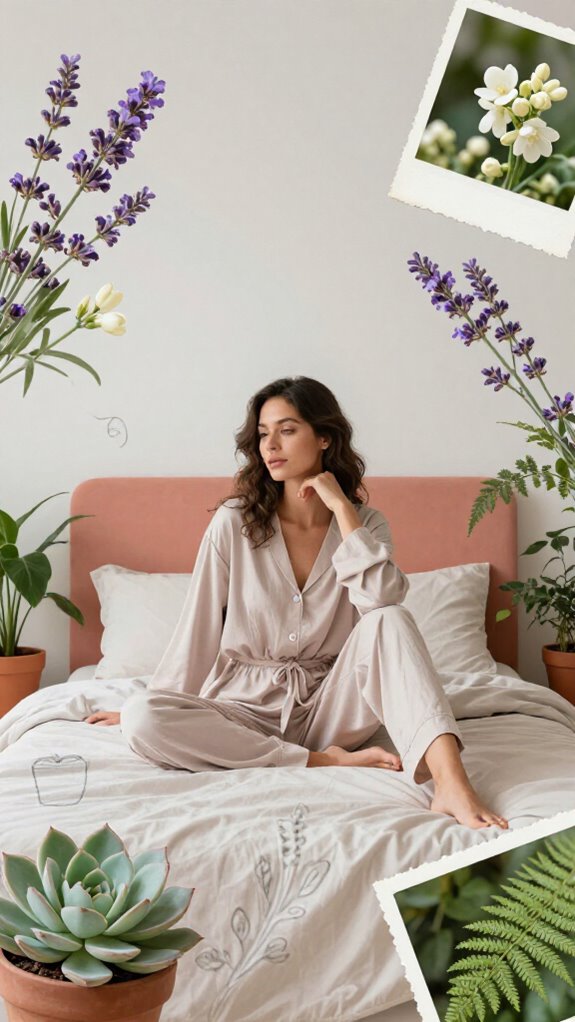
Beyond the benefits of plant care, simply being in the presence of greenery enhances mood and room aesthetics. Many chic bedrooms feature potted plants that leverage the soothing effects of nature. Studies have demonstrated that air-purifying plants can remove toxins from indoor environments, creating cleaner air that supports respiratory health and relaxation.
For example, lavender and jasmine are known for their calming aromas, while succulents and ferns offer a visually-appealing focal point. Having anxiety-reducing plants in your sleep space can transform your bedroom into a restorative sanctuary that supports deeper, more restful sleep.
Why Plants Ease Nighttime Anxiety
Plants can ease nighttime anxiety for several reasons. Biophilic design, the incorporation of natural elements into the built environment, has been shown to have a calming effect. The presence of plants in the bedroom can reduce physiological stress responses and promote relaxation. Air-purifying plants also remove harmful toxins from the air, creating a healthier environment for restorative sleep. Studies suggest that sleep-enhancing plants specifically support melatonin production and deeper rest cycles.
| Benefits of Plants for Nighttime Anxiety | |
|---|---|
| Reduce Cortisol Levels | Improve Sleep Quality |
| Boost Mood and Focus | Filter Air Pollutants |
Research indicates that the sight and smell of certain plants, such as lavender and jasmine, can trigger the parasympathetic nervous system, leading to decreased heart rate and blood pressure. By integrating these natural elements, you can cultivate a more tranquil sleep sanctuary.
Best Plants for Better Sleep
When it comes to creating a more restful sleep environment, not all plants are created equal.
For ideal sleep benefits, experts recommend selecting plants like jasmine, lavender, and chamomile.
Jasmine has been shown to improve sleep quality and reduce anxiety, while lavender is known for its calming aroma that can promote relaxation.
Jasmine has been shown to improve sleep quality and reduce anxiety, while lavender is known for its calming aroma that can promote relaxation.
Chamomile contains apigenin, an antioxidant that binds to certain receptors in the brain that may decrease anxiety and induce sleepiness.
Strategically incorporating these sleep-enhancing plants into your bedroom can help you drift off faster and wake up feeling more rejuvenated.
These stylish sleep-boosting plants complement modern bedroom aesthetics while serving their functional purpose.
Anxiety-reducing plants are a simple, natural way to enhance your sleep environment without relying on artificial solutions.
Incorporating Anxiety-Reducing Plants

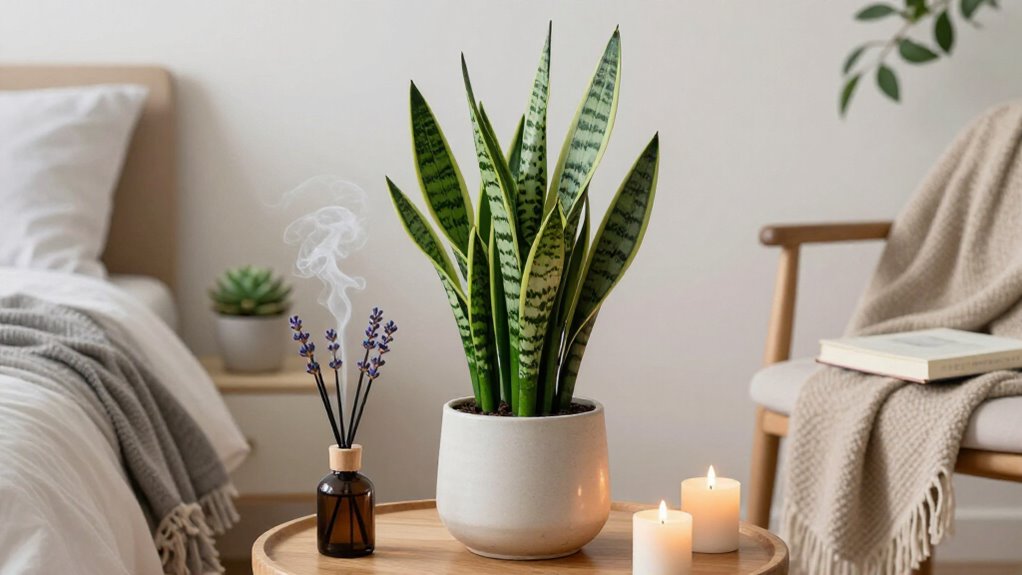
Incorporating certain plants into your bedroom can help reduce nighttime anxiety and promote better sleep. Specific plants like English ivy, peace lily, and snake plant are known for their air purification properties, efficiently removing common pollutants and releasing oxygen.
Strategically placing these chic, low-maintenance greenery enhances the ambiance, creating a soothing, nature-inspired environment.
Studies show that exposure to certain plant species can lower stress and anxiety levels, regulating the body’s cortisol response.
While plants alone cannot cure sleep disorders, they may serve as natural remedies that complement other approaches to ease sleep apnea symptoms by improving air quality and promoting relaxation.
Best Products to Use
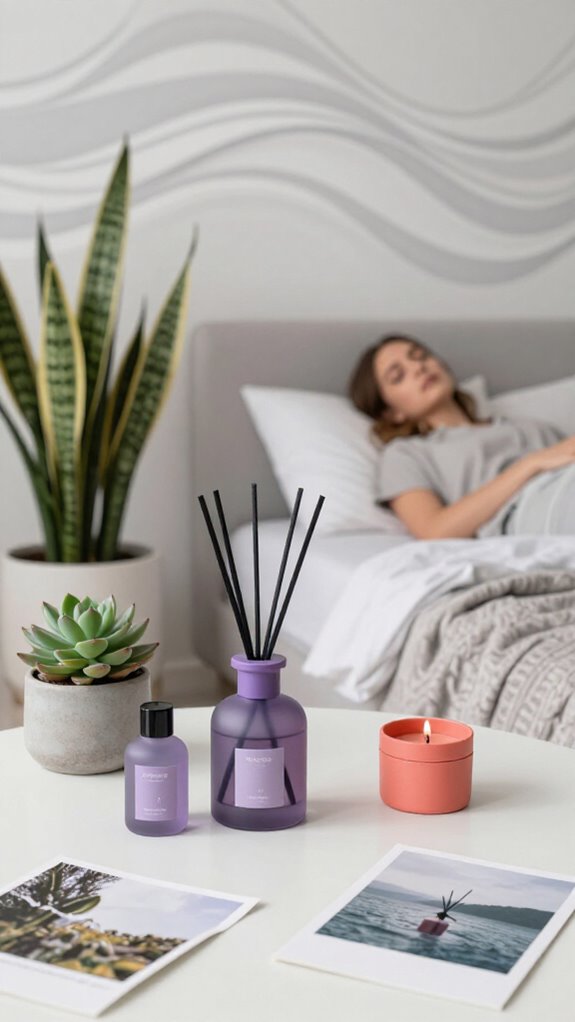
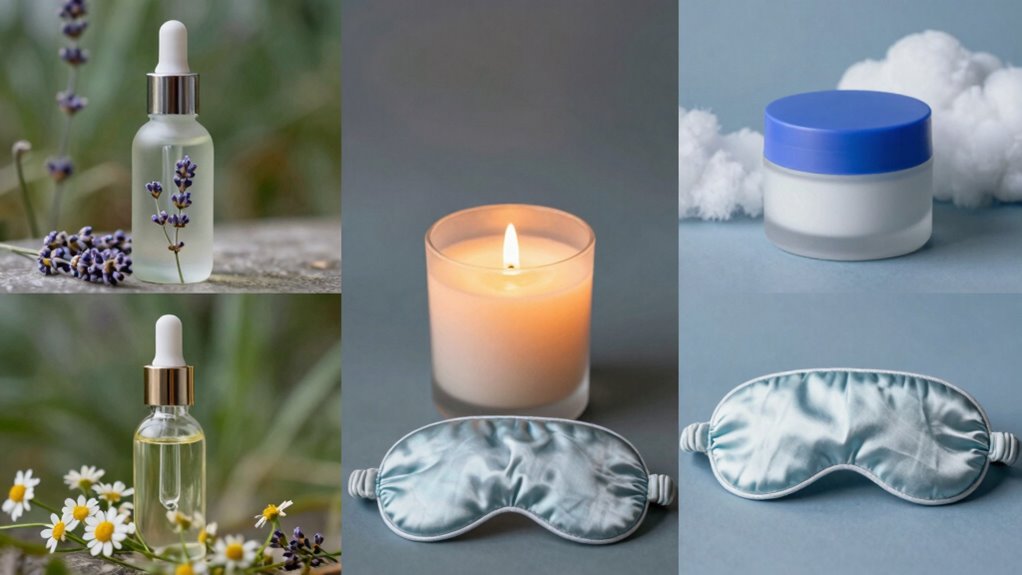
To create a tranquil, sleep-promoting environment, I recommend using essential oil diffusers. These devices disperse soothing aromas like lavender, chamomile, and bergamot, which can help alleviate anxiety and induce relaxation. High-end models with lavender sleep blends offer a particularly effective aromatherapy experience for restful sleep. For those seeking designer diffusers, investing in elegant options can elevate both your bedroom aesthetic and your sleep quality through refined aromatherapy delivery.
- Look for diffusers with automatic shut-off features and sleep-friendly lighting modes to seamlessly integrate into your bedroom aesthetic.
- Opt for essential oils from reputable brands that use pure, high-quality ingredients and provide instructions on proper usage and dilution.
- Consider pairing your diffuser with calming background music or nature sounds to create a holistic sensory experience.
- Guarantee proper plant care by selecting low-maintenance options like succulents or snake plants that can thrive in the bedroom microclimate.
Soothing Scents for Better Sleep
Numerous flowers, herbs, and trees offer scents that can promote relaxation and better sleep.
Lavender, for example, contains linalool, a compound shown to reduce anxiety and induce drowsiness. Chamomile, valerian, and jasmine are other aromatherapy powerhouses, their floral and earthy fragrances calming the mind. Interaction with indoor plants has been shown to have physiological benefits mediated by environmental stimuli, including suppression of sympathetic nervous system activity. Natural roots for sleep such as valerian root have been used for centuries as gentle sedatives with proven efficacy.
Sniffing these soothing scents before bed can lower nighttime anxiety, increase sleep quality, and boost next-day alertness. Plant compounds like terpenes and esters directly interact with the olfactory system to trigger neurological responses associated with relaxation. For those drawn to luxury aromatherapy options, high-end diffusers offer an elegant way to disperse these beneficial plant compounds throughout the bedroom.
Sniffing calming scents before bed lowers anxiety, improves sleep quality, and enhances next-day alertness through neurological relaxation responses.
Integrating these natural aromatics into the bedroom environment provides a simple, effective way to harness the sleep-boosting benefits of plants.
Improves Sleep Quality and Duration
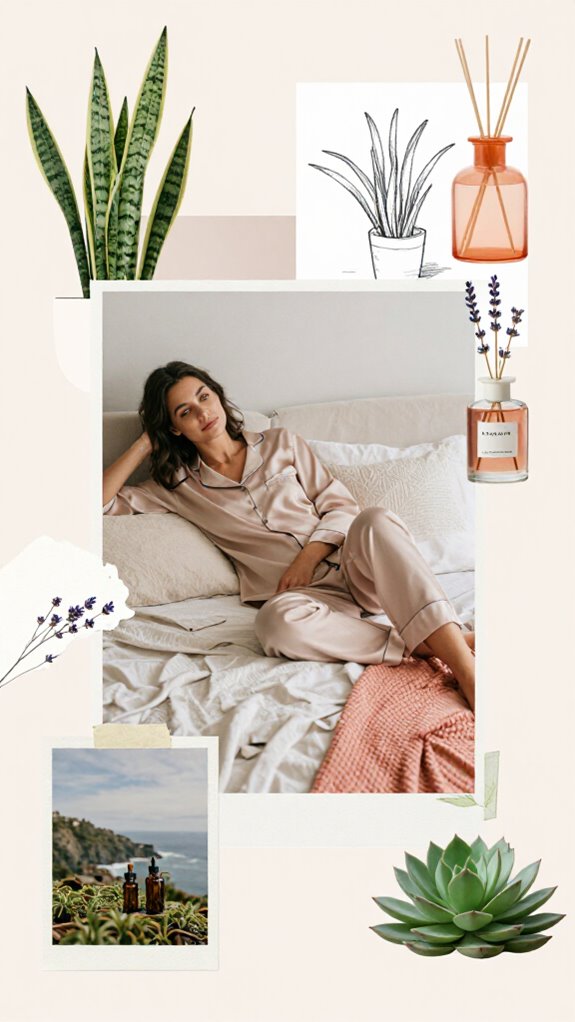
By incorporating a few strategic bedroom plants, I’ve found I can consistently improve my sleep quality and duration.
Plants like snake, spider, and aloe vera excel at:
- Purifying air and removing toxins that disrupt rest
- Generating oxygen at night to aid respiratory function
- Regulating humidity for more comfortable breathing
- Reducing environmental anxiety that impacts sleep
Specific plants, such as snake plants, contribute to better respiration. Research from NASA and sleep experts validates these benefits.
Investing in low-maintenance plants provides an easy, sustainable way to create a more restful environment and enhance my sleep patterns.
FAQ
Are Bedroom Plants Safe for Pets?
When selecting bedroom plants, be aware of pet-friendly options to avoid toxic plants. Prioritize non-toxic, low-maintenance varieties that can ease nighttime anxiety while keeping your furry friends safe.
How Often Do Indoor Plants Need to Be Watered?
I water my indoor plants about once a week, depending on the plant and season. Proper indoor plant care and watering schedule are key to keeping your chic bedroom oasis thriving and your nighttime anxiety at bay.
Can I Grow Plants in My Bedroom if I Have Allergies?
Yes, you can grow allergy-friendly plants in your bedroom to enhance air purification and ease nighttime anxiety. Choose low-maintenance options that don’t trigger allergies and let nature’s power soothe your space.
What Are the Best Low-Maintenance Plants for a Bedroom?
I know you’re worried about allergies, but low-maintenance plants like snake plants and pothos offer both aesthetic benefits and air purification for your bedroom, so you can create a soothing, powerful space.
How Do I Ensure My Bedroom Plants Thrive Year-Round?
To guarantee your bedroom plants thrive year-round, pay attention to their indoor plant care and light requirements. Place them in bright, indirect sunlight, and water them consistently to keep them healthy and happy.
References
- https://pmc.ncbi.nlm.nih.gov/articles/PMC4419447/
- https://riviamind.com/blog/mental-health-effects-of-houseplants/
- https://pmc.ncbi.nlm.nih.gov/articles/PMC9602469/
- https://research.reading.ac.uk/research-blog/2023/04/28/owning-houseplants-can-boost-your-mental-health-heres-how-to-pick-the-right-one/
- https://red.library.usd.edu/cgi/viewcontent.cgi?article=1395&context=honors-thesis
- https://www.piedmont.org/blog/health-benefits-of-indoor-plants
- https://pubs.aip.org/aip/acp/article-pdf/doi/10.1063/5.0113721/16869644/020012_1_5.0113721.pdf
- https://www.myisense.com/blogs/blog/how-house-plants-can-supercharge-your-sleep
- https://thestem.co.uk/plant-academy/plant-blog/best-bedroom-plants-for-better-sleep
- https://www.tomsguide.com/wellness/sleep/this-tiktoker-reckons-bedroom-plants-can-improve-your-sleep-quality-but-do-the-experts-agree