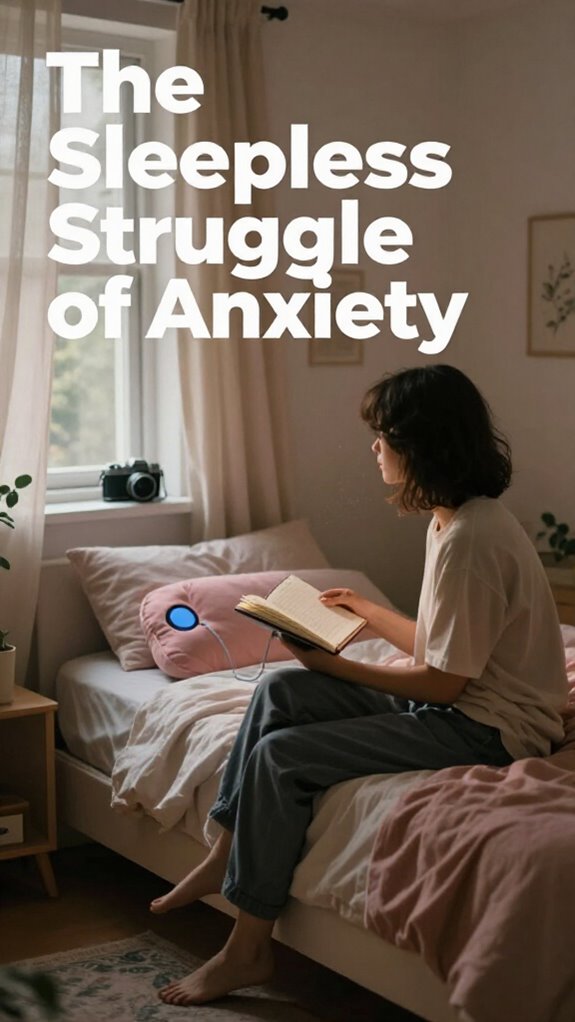
Ever spent 3 AM staring at your ceiling while your brain replays that awkward 2016 meeting? Yeah, me too.
Last Tuesday, my anxiety decided 2 AM was *the perfect* time to analyze every life choice. Fun stuff.
Turns out, our nervous systems are basically overachievers. Hyperarousal crushes melatonin, tanks REM sleep, and suddenly you’re wide-eyed. Dr. Robert Schachter nails it: overstimulated vagus nerve pathways block restful transitions.
Real talk—Stanford’s 2024 circadian research and Calm app’s data back this up.
Enter “Sleepmaxxing,” the 2026 trend everyone and their therapist’s talking about. We’re talking weighted blankets, vagus nerve stimulation, the works.
At Corala Blanket, we’re literally building this future. Our breathable glass-bead tech? GAME. CHANGER.
So here’s my challenge: what’s YOUR 3 AM horror story?
Quick Takeaways
- Anxiety activates the nervous system, increasing alertness and making it difficult to relax or fall asleep.
- It disrupts melatonin production, impairing the sleep cycle and REM sleep essential for rest.
- Persistent worry or distress can cause vivid dreams or nightmares, heightening nighttime arousal.
- Anxiety-induced autonomic nervous system overactivity leads to physical symptoms like racing heart and muscle tension.
- Thought patterns and physiological signals of anxiety hinder the transition into deep, restorative sleep stages.
How Anxiety Messes With Your Nervous System and Keeps You Awake : and What You Can Do About It
When anxiety takes hold, it triggers a cascade of neurological responses that directly interfere with your nervous system’s ability to relax, often leading to persistent sleeplessness. This reaction disrupts the delicate balance of your sleep hormone, melatonin, and hampers dream signaling, making it difficult for your brain to shift into REM sleep. Incorporating techniques like neuro-acoustic pacing from neurowellness brands or vagus nerve stimulation help recalibrate this system, calming overstimulated pathways. Restoring these signals allows your nervous system to regain control, enabling natural sleep rhythms to resume without pharmacological intervention. Understanding how polysomnography at home monitors your sleep patterns can also help identify specific disruptions caused by anxiety, guiding more targeted strategies. Additionally, certain supplements such as melatonin gummies are recommended to support your body’s natural sleep cycles during these times.
Recognizing Physical and Emotional Signs That Fuel Nighttime Anxiety
Many physiological and emotional signals serve as subtle alarm bells that can intensify nighttime anxiety, often creating a feedback loop hindering sleep.
Elevated dream recall—particularly vivid or distressing dreams—can signal an overactive autonomic nervous system, while sleep myths, such as “sleeping more always equals better rest,” distract from genuine physiological needs.
Recognizing these signs allows us to intervene before anxiety spirals.
Researchers like Dr. Matthew Walker emphasize that understanding nervous system cues provides *perspective* into sleep disruptions. An awareness of sleep deprivation’s effects can help distinguish between normal nightly awakening and underlying issues impacting mental health.
Practical Techniques to Calm Your Mind and Promote Restful Sleep
Calming the mind before sleep involves strategic techniques grounded in neurophysiology, with research from neurologists like Dr. Robert Stickgold. Engaging in practices like mindful breathing, visualization of dream symbolism, or reading about symbolic dream imagery helps shift the brain from stress responses to restorative sleep. Utilizing brain wave tracking techniques, such as EEG-based feedback, can help monitor and optimize the transition into deep sleep cycles. Understanding the sleep cycle’s stages—particularly deep NREM and REM—allows us to time relaxation effectively. Techniques that influence brainwaves, such as acoustic pacing or Vagus Nerve Stimulation, aid in smoothing progressions between sleep phases. Additionally, awareness of factors like caffeine’s impact on deep sleep stages can inform bedtime routines to minimize disruptions. These methods facilitate nervous system regulation, enabling a faster entrée into the sleep cycle’s restorative phases, essential for alleviating nighttime anxiety.
Vagus Nerve Stimulation Adoption
Vagus nerve stimulation (VNS) is rapidly gaining traction as a non-invasive method for modulating autonomic nervous system activity to promote relaxation and improve sleep quality. By inducing vagus activation, VNS influences heart rate variability, a key marker of parasympathetic tone linked to recovery and emotional regulation. Devices like the GammaCore or TENS units are now emerging as practical tools for conscious engagement, supporting the body’s natural ability to reduce stress responses. Research by neuroscientists such as Dr. Kevin Tracey underscores VNS’s potential to foster a state of calm, allowing the nervous system’s inherent resilience to unfold—facilitating smoother progressions into restful sleep. Additionally, incorporating feng shui wall hangings into your bedroom environment can further enhance relaxation and support better sleep by promoting positive energy flow. Exploring vagus nerve pathways can also deepen understanding of how these stimulation techniques influence your nervous system’s balance.
Handpicked Sleep Aid Gadgets
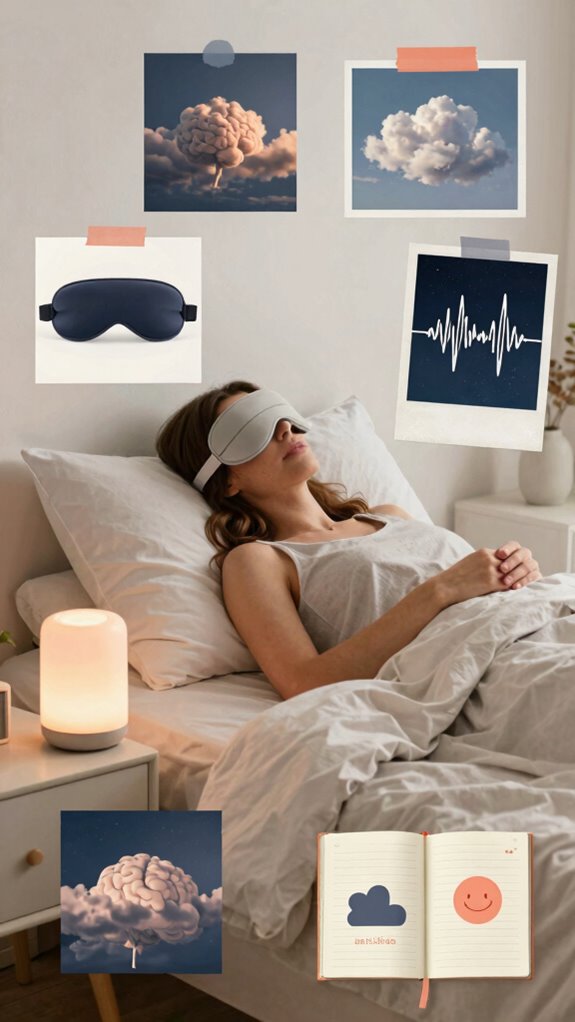
In recent years, scientifically engineered sleep aids have shifted from simplistic gadgets to sophisticated devices that actively influence neural and physiological processes. These include targeted sleep music—designed by neuroscientists like Dr. Michael Breus—that modulates brainwave frequencies to ease anxiety and promote relaxation.
Furthermore, dream journaling apps such as Lumosity’s sleep tracker encourage reflection, helping to process nightly stressors. These tools offer tangible control over sleep by training the nervous system to transition more smoothly into rest. Incorporating LED backlighting techniques into a calming sleep environment can also reduce mental stimulation and promote a more restful atmosphere.
Unlike passive devices, they interact with your mental state, harnessing evidence-based techniques to foster deeper, more restorative sleep amid chronic anxiety.
Infrasound for Sleep Regulation
Building on the recent shift toward environmental and neurological approaches to sleep, researchers and clinicians are increasingly exploring infrasound—sound waves below human hearing—regarding its effects on sleep regulation.
Infrasound effects, though subtle, can alter the sleep environment by influencing autonomic nervous system activity, encouraging relaxation and reducing stress. Some studies indicate that infrasound frequencies may have a measurable impact on sleep quality and circadian rhythms.
Devices like the SonoBeam utilize specific infrasound frequencies, inspired by studies from NASA and neuroacoustic pioneers such as Dr. David Eagleman, aiming to facilitate nervous system calming before sleep.
Emerging research suggests that low-frequency sounds may play a significant role in modulating sleep patterns and promoting relaxation.
FAQ
Can Natural Lighting Improve Nighttime Anxiety Symptoms?
Yes, natural lighting can help reduce nighttime anxiety. Light therapy and consistent morning light grounding your circadian rhythm make melatonin supplements more effective, giving you better control over your sleep and calming your nervous system naturally.
Does Body Temperature Influence Anxiety-Induced Sleep Disruptions?
Body temperature directly influences my anxiety symptoms, especially at night. I control it by adjusting room warmth and wearing temperature-regulating sleepwear, which helps me calm my nervous system and prevent anxiety-induced sleep disruptions.
How Does Circadian Alignment Reduce Nighttime Racing Thoughts?
Visualize calming your mind by syncing with your circadian rhythms; I did this with morning sunlight and light therapy, which greatly improved my sleep regulation and reduced nighttime racing thoughts, giving me back control and peace at night.
Can Environmental Harmony Replace Medication for Sleep Anxiety?
Environmental harmony can replace medication for sleep anxiety when I incorporate meditation practices and herbal supplements, creating a calming space that fosters nervous system regulation naturally. This puts me in control, supporting restful sleep without reliance on drugs.
Are There Specific Neuro-Acoustics Techniques to Target Anxious Thoughts?
Ever wonder if neuro-acoustic therapy can quiet anxious thoughts? Sound masking with relaxing acoustic waves helps by calming your nervous system, giving you control over your mental state and fostering a peaceful, sleep-friendly environment.
Summary
Understanding the neurophysiological underpinnings of nighttime anxiety reveals pathways like vagus nerve stimulation, which therapeutic research by Dr. Stephen Porges supports, to calm hyperarousal. For instance, incorporating gentle breathwork or biocompatible gadgets from brands like Moodo or RestEaze can modulate autonomic activity, fostering sleep. Recognizing these mechanisms empowers you to adopt evidence-based approaches that subtly recalibrate your nervous system—transforming restless nights into restorative slumber through precise, intentional interventions.