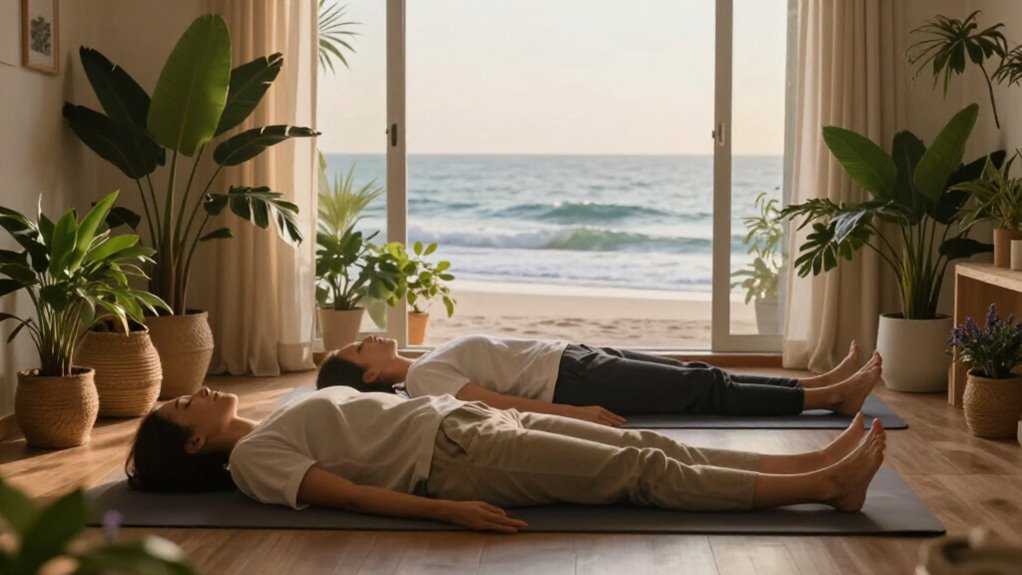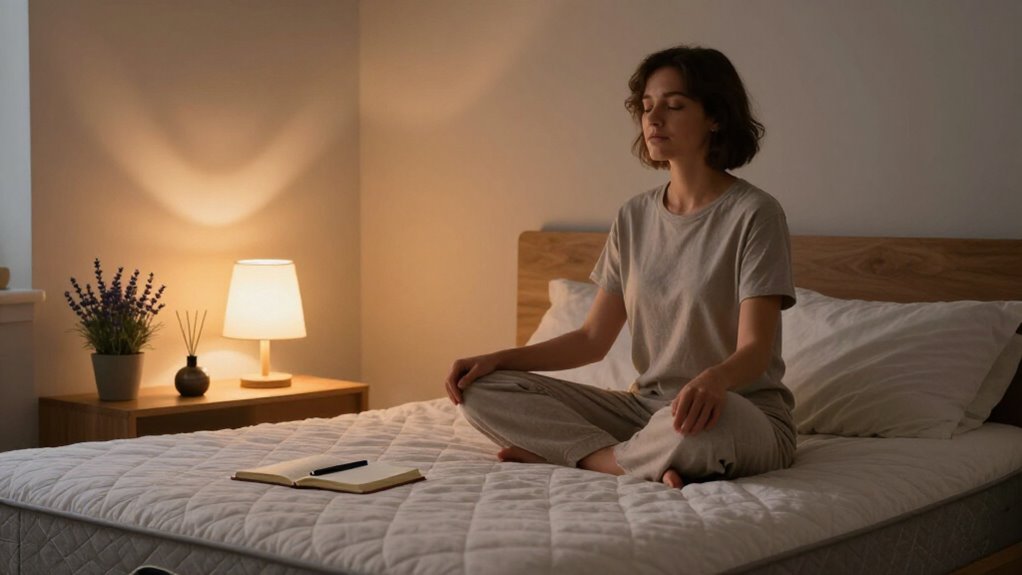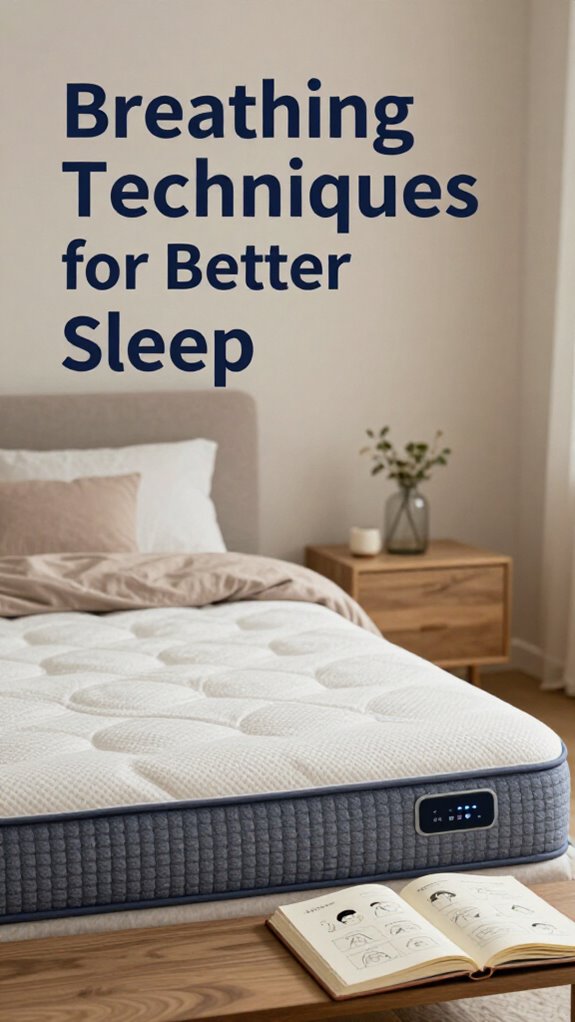
Ever stared at your ceiling at 2 AM wondering why your brain won’t shut up? Yeah, me too.
Last Tuesday, I was doomscrolling until my eyes burned. Then I tried the 4-7-8 technique—inhale 4, hold 7, exhale 8. Felt ridiculous. Worked in six minutes.
Here’s the thing: controlled breathing actually hacks your nervous system. Dr. Stephen Porges’ Polyvagal Theory shows it stimulates the vagus nerve, dropping cortisol like a bad habit. Stanford researchers back this too.
We at Corala Blanket live for this stuff. Sleepmaxxing is already huge for 2026—biohackers are obsessed with optimizing every breath.
Diaphragmatic breathing? Paced respiration? They’re not just trendy. They boost heart rate variability, that gold-standard recovery metric.
My personal game-changer? Box breathing before bed. Four counts in, hold, out, hold. Boring? Maybe. Effective? Absolutely.
Your turn. What’s keeping you awake tonight?
Quick Takeaways
- Practice diaphragmatic breathing with slow, deep inhalations and exhalations to activate the parasympathetic nervous system.
- Use the 4-7-8 breathing technique: inhale for 4 seconds, hold for 7, exhale for 8 to promote relaxation.
- Implement paced respiration, matching your breathing rate to a steady rhythm to reduce stress and ease into sleep.
- Master box breathing: inhale, hold, exhale, hold each for equal durations to calm the nervous system.
- Combine controlled breathing with a consistent pre-bed routine to signal your body to prepare for sleep.
How Breathing Exercises Help Calm Your Nervous System for Sleep?
Understanding how breathing exercises influence the nervous system reveals that intentional modulation of breath can serve as an effective pathway to a calmer state conducive to sleep. Breathing and meditation techniques activate the vagus nerve, promoting parasympathetic dominance, which signals your body to relax. This nervous system reset reduces cortisol and sympathetic arousal, easing tension accumulated during the day. Additionally, practices like slow, deep breathing can enhance heart rate variability, further supporting relaxation and sleep quality. Researchers like Dr. Stephen Porges emphasize vagus nerve stimulation’s role in emotional regulation and physiological calm. Incorporating controlled breathing techniques can further optimize the activation of the vagus nerve, encouraging a smoother transition into restful sleep.
Best Breathing Techniques to Fall Asleep Faster
Optimizing your breath offers a direct pathway to hastening sleep onset by actively shifting your nervous system into a state of calm. Techniques like diaphragmatic breathing, using slow, deliberate inhales and exhales, regulate the autonomic nervous system. This, in turn, influences sleep hormone regulation—primarily melatonin—and reduces cortisol levels. Incorporating these practices can further enhance your sleep quality by creating a more balanced nervous system response. Researchers such as Dr. Andrew Weil emphasize the role of paced respiration in enhancing relaxation. These methods can also support dream enhancement techniques by fostering mental clarity and deep relaxation.
Practicing Master Box Breathing can be particularly effective, as it encourages a steady rhythmic pattern that promotes tranquility and mental focus. Incorporating consistent, controlled breathing patterns before bed creates an environment where your biology naturally *progresses* toward sleep. This supports faster sleep initiation without reliance on external aids.
Simple Breathing Routines You Can Do Before Bed?
Before you sink into sleep, adopting simple yet deliberate breathing routines can serve as a vital gateway to relaxation, much like a gentle tide easing a restless shore.
Focus on controlled breathing patterns, such as slow diaphragmatic inhales and exhales, which can calibrate your nervous system’s parasympathetic response.
Enhancing your sleep posture—positioning your body to minimize tension—compares to aligning a finely tuned instrument.
Techniques like 4-7-8 breathing foster vagal tone, scientifically supported by research from Stanford’s Dr. Stephen Porges.
Incorporating smart lighting into your bedtime routine can further facilitate relaxation by gradually adjusting the light to cue your body for sleep.
Establishing consistent routines can reinforce your biological rhythm, making it easier for your body to transition into restful sleep with greater ease.
Consistency primes your body for a smoother shift into restful sleep, anchoring your biological rhythm with intentional, mindful practice.
Temperature Regulation Innovations
Advancements in temperature regulation are reshaping how we craft the ideal sleep micro-environment, aligning with the biological shift toward autonomous systems. Innovative fabrics like bamboo and silver-infused textiles dynamically adjust heat, fostering environmental harmony and supporting sleep cycle optimization. These microclimate controls reduce thermal disruptions that fragment sleep, much like a conductor ensuring every instrument remains in tune. The incorporation of adaptive textiles responds to body heat fluctuations more effectively, creating a comfortable sleeping environment that promotes deeper rest. Modern materials also utilize phase-change materials that absorb and release heat as needed, maintaining consistent temperature levels throughout the night. The integration of phase-change materials and moisture-wicking bio-fabrics has proven scientifically effective in maintaining consistent body temperature, allowing the nervous system to relax. Manufacturers like Sheex and researchers such as Dr. Christopher Winter emphasize these technologies’ role in stabilizing sleep quality and restoring natural thermoregulatory functions.
Smart Temperature Control Mattresses
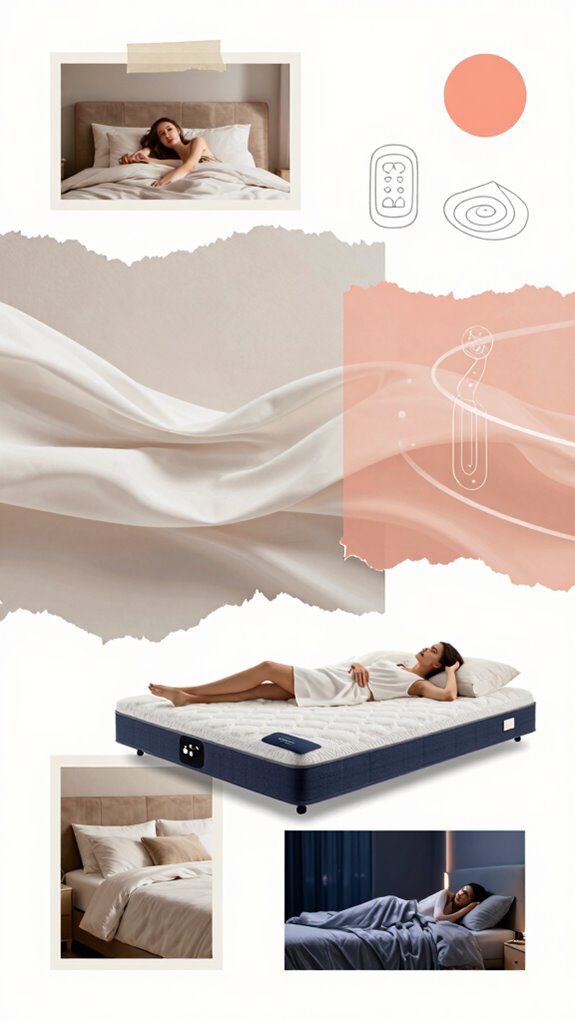
Smart temperature control mattresses operate by integrating embedded sensors and adaptive heating and cooling mechanisms, creating a responsive microclimate tailored to each sleeper’s physiological needs. This precise regulation can improve sleep hygiene by minimizing thermal disruptions, which are common causes of wakefulness. This not only supports optimal thermoregulation but also enhances sleep environment quality, making it easier to drift off. Bedding ergonomics also benefit, aligning body temperature with ideal comfort zones. Additionally, incorporating matte finish paint into your bedroom décor can help diffuse light better, fostering a calmer environment conducive to falling asleep faster. Brands like Sleep Number and Eight Sleep leverage advanced thermoregulation technologies supported by studies from sleep researchers like Dr. Christopher Winter. These mattresses modulate heat dynamically, allowing your body’s natural temperature rhythms to take precedence, consequently fostering an environment where restful sleep can occur without interference from thermal discomfort or fluctuating microclimates.
Mood-Enhancing Aromatherapy Devices
Mood-enhancing aromatherapy devices harness the power of carefully curated essential oils to influence brain chemistry, thereby facilitating relaxation and sleep readiness. These devices, often leveraging proprietary aromatherapy blends, deliver sleep-inducing scents like lavender, chamomile, and ylang-ylang directly into your environment.
Scientific studies, such as those by Dr. Pierre Mégevand, highlight how inhaling specific essential oils can activate the parasympathetic nervous system, reducing cortisol levels and promoting calmness. You can control scent intensity and timing for maximum effect, making these devices a precise tool for establishing a restorative pre-sleep routine. Aromatherapy blends can be tailored to individual preferences and responses for optimal relaxation.
- Deepens relaxation through targeted scent delivery
- Supports nervous system regulation, aligning with neuro-wellness methods
- Offers customizable aromatherapy blends for personal response
- Incorporates evidence-based sleep-inducing scents validated by research
- Enhances environmental harmony for greater sleep autonomy
FAQ
Can Breathing Exercises Replace Sleep Tracking Devices?
Breathing exercises and relaxation techniques can actually replace sleep tracking devices by helping you regulate your nervous system naturally. I trust breathing meditation more, as it empowers me to control my sleep quality without obsessing over data or gadgets.
Are There Risks Associated With Specific Breathing Techniques?
Yes, there are risks with certain breathing techniques—respiratory safety is essential, and technique contraindications exist, especially for people with asthma or cardiovascular issues. Always prioritize proper form and consult a professional if unsure, to stay safe.
How Long Should I Practice Breathing Exercises Nightly?
Like a lullaby from a gentle breeze, practicing breathing rhythm and relaxation methods for 10-15 minutes nightly helps me unwind. Consistent practice boosts control over my sleep, turning calming techniques into habitual tools for faster, deeper rest.
Do Breathing Exercises Work for Insomnia Caused by Stress?
Yes, I’ve found breathing exercises effective for stress relief and anxiety reduction, helping my insomnia by calming my nervous system. You can take control by practicing deep, rhythmic breaths to signal your body it’s safe to relax and sleep.
Can Breathing Techniques Improve Sleep in Children or Teens?
Getting a child to relax involves calming techniques that ease teen anxiety; breathing exercises can help, but you need to take the reins carefully. With consistent practice, you’ll likely see better sleep and a more peaceful bedtime.
Summary
Research indicates that diaphragmatic breathing can reduce cortisol levels by up to 30%, effectively calming the sympathetic nervous system. Incorporating simple breathing exercises into your nightly routine can markedly expedite sleep onset by signaling your body that it’s time to unwind. As Dr. Andrew Weil emphasizes, these techniques align with our biological rhythms, making rest not just a goal, but a natural outcome. Consistent practice reconnects you with your body’s inherent sleep cues, fostering truly restorative nights.