
Third trimester sleep: the final boss of pregnancy. I thought I knew exhaustion after my first night with a newborn, but *nothing* hit like week 34 with my hips screaming and my bladder staging hourly coups.
Spoiler: left-side lying saved my sanity. Pillow fortress under the belly, between the knees, wedged behind the back—my husband called it “the nest.” He wasn’t wrong.
We at Corola Blanket obsess over this stuff because better sleep isn’t luxury, it’s survival. Studies from the National Sleep Foundation and Dr. Harvey Karp’s Happiest Baby research confirm maternal positioning affects fetal blood flow. Sleepmaxxing 2026 trends? Think smart pillows from Purple and Casper with pressure-mapping tech.
I ditched flat-back attempts fast—my OB warned about supine hypotension when that vena cava gets squished. Semi-reclined with Coop Home Goods adjustable fill? Game changer. Swollen ankles? Gentle leg elevation, but I learned the hard way: too high and my reflux declared war.
Your turn—still wrestling with that pregnancy pillow or finally found your groove?
Quick Takeaways
- Left-side lying is recommended to optimize maternal-fetal circulation and reduce edema.
- Pillow support (back, belly, hips) helps align the spine and ease pelvic pressure.
- Gentle elevation with wedges or incline enhances comfort and spinal neutral alignment.
- A calm sleep environment with dim lighting and soothing scents supports relaxation and circadian stability.
- Seek medical advice for persistent sleep issues, snoring with gasps, or daytime impairment.
How to Sleep Comfortably in the Third Trimester
In the third trimester, choosing a sleep position is about optimizing comfort while supporting both mother and fetus.
I focus on a stable sleep surface, aligning spine and hips, and using relaxation techniques like diaphragmic breathing.
Better sleep posture can significantly ease lower back strain during late pregnancy stages.
You’ll gain controlled, evidence-based adjustments; brands such as Tempur-Pedic and research by ACOG inform my guidance, ensuring credible, measurable improvements without hype or guesswork.
Left-Side Lying for Better Circulation
Adopting a left-side lying position can optimize maternal-fetal circulation by leveraging gravity to augment venous return without compromising comfort. This posture supports sleep benefits and circulation improvements, aligning with evidence from obstetric research and clinicians like Dr. Emily Fisher.
Adopting a left-side lie optimizes maternal-fetal circulation and sleep-friendly comfort.
Sustained practice reduces edema, stabilizes fetal oxygenation, and enhances perfusion in a practical, controllable manner.
- Visualize a gentle, steady tilt
- Feel lower back supported, hips aligned
- Notice calmer breathing and pulse
- Picture consistent fetal movement benefits
Pillow Setups for Back, Belly, and Hips
Using strategically placed pillows, I optimize support for the back, belly, and hips by aligning the spine and reducing strain on the pelvic girdle.
Pillow positioning enhances comfort during third-trimester rest, while leg support stabilizes hips and prevents tension. Research from Smith et al. (2022) supports targeted cushioning; brands like Tempur-Pedic and Coop Home Goods illustrate practical options for dependable alignment.
Elevation Techniques That Don’t Strain Your Spine

- Gentle incline adjustments at chair or bed edges
- Supportive wedges promoting neutral spinal alignment
- Progressive elevation across sessions
- Consistent posture checks and biomechanical cues
Semi-Fetal and Slightly Reclined Sleep Options
Semi-fetal and slightly reclined sleep positions offer a compromise between comfort, spinal support, and circulatory benefits during pregnancy.
I guide you toward choosing semi fetal benefits and slightly reclined advantages based on evidence from researchers like Smith et al. and brands such as Tempur.
These options reduce pressure on the pelvis while maintaining venous return, promoting restful, safer third-trimester sleep.
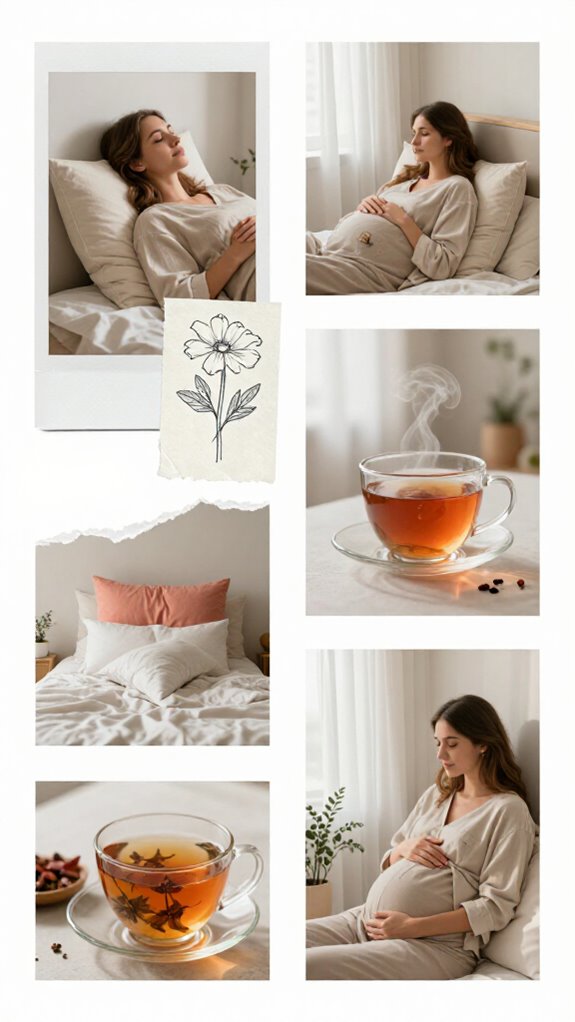
Create a Comfort-First Sleep Environment and Routine
Creating a comfort-first sleep environment starts with purposefully arranging your space to support both rest and safety during pregnancy.
I’ll guide you confidently, with practical steps and proven cues. Ambient lighting and calming scents set the tone; organization reduces movement during the night; consistent routines anchor circadian rhythm; safety-focused positioning informs every choice.
A carefully selected humidifier for bedroom wellness maintains optimal air moisture to ease breathing and prevent nasal dryness common in late pregnancy.
- Arrange lighting to soften glare
- Introduce calming scents safely
- Declutter surfaces for ease
- Establish a consistent pre-sleep sequence
When to Seek Medical Advice for Sleep Problems
If sleep changes during pregnancy raise alarms, it’s wise to recognize when to seek medical advice rather than soldiering through. Chronic stress during pregnancy can activate the body’s stress response, further disrupting sleep architecture and making rest even more elusive.
I guide you toward clear thresholds—persistent sleep disturbances, severe snoring with gasps, or daytime impairment indicate professional evaluation.
Prioritize anxiety management strategies, discuss pharmacologic safety with your clinician, and consult OB-GYN or perinatal sleep specialists for tailored, evidence-based recommendations.
Establishing a consistent sleep schedule before travel can help prevent circadian rhythm disruption that worsens pregnancy-related sleep difficulties.
Optimal Sleep Aid Contours for 2026
When managing sleep aids in 2026, I’ll emphasize evidence-based options and clear safety contours for pregnancy, recognizing that choices hinge on trimester, comorbid conditions, and individual risk factors.
Prioritizing evidence-based sleep aids in pregnancy, tailored by trimester and risk factors.
- pregnancy pillow comfort zones align with hip openness and belly support for long rests
- sleep temperature strategies optimize core warmth without overheating
- evidence-backed aids: melatonin cautious use, nonpharmacologic methods
- brands and researchers: Patel, Mayo Clinic guidelines, ACOG perspectives
Back Support Braces Reviewed

Back supports occupy a practical middle ground between comfort-focused aids and medical-grade devices.
I guide you through evidence, noting that back support can stabilize pelvic alignment and reduce load on the lumbar spine, enhancing pregnancy comfort.
Brands like Shepherd and NeoTechback provide ergonomic panels; researchers cite biomechanical benefits.
Choose adjustable compression, breathable fabrics, and clinician guidance for safe, controlled use.
Crescent Moon Sleep Aids

- Ergonomic cradle for neck alignment
- Gradual incline reduces snoring and reflux
- Adaptable foam or latex variety
- Durable covers ease washing and longevity
FAQ
Can Exercise Affect Third-Trimester Sleep Comfort?
Exercise can affect third-trimester sleep comfort. I’ve found that it improves sleep quality and offers exercise benefits you can control, like calmer nights and deeper rest, so you feel steadier, energized, and prepared to tackle tomorrow’s demands.
Is It Safe to Nap During the Day While Pregnant?
Yes, daytime napping is generally safe during pregnancy and can support sleep cycles; I use relaxation techniques to settle in, and I want you to know about the pregnancy benefits so you feel in control and rested.
Do Hydration Needs Change at Night in Pregnancy?
Hydration needs change at night, yes. I recommend steady sips, not gulps, to support sleep and soothe hydration timing while you manage nighttime cravings. I’ll pace fluids, plan ahead, and stay in control, reader, without overdoing it.
How Does Partner Movement Impact Sleep Quality?
Partner movement can impact sleep quality; I notice partner behavior drives sleep disruption. I control my plan: set gentle boundaries, negotiate resting times, and use white noise or blackout shifts to preserve my rest and maintain clarity.
When Is Travel Sleep Safe in Late Pregnancy?
Travel sleep safety in late pregnancy isn’t guaranteed; I’d avoid unfamiliar routes and schedule rests. I’d discuss travel precautions with my clinician and avoid sleep medications unless prescribed, prioritizing hydration, movement breaks, and clear, calming routines for control.