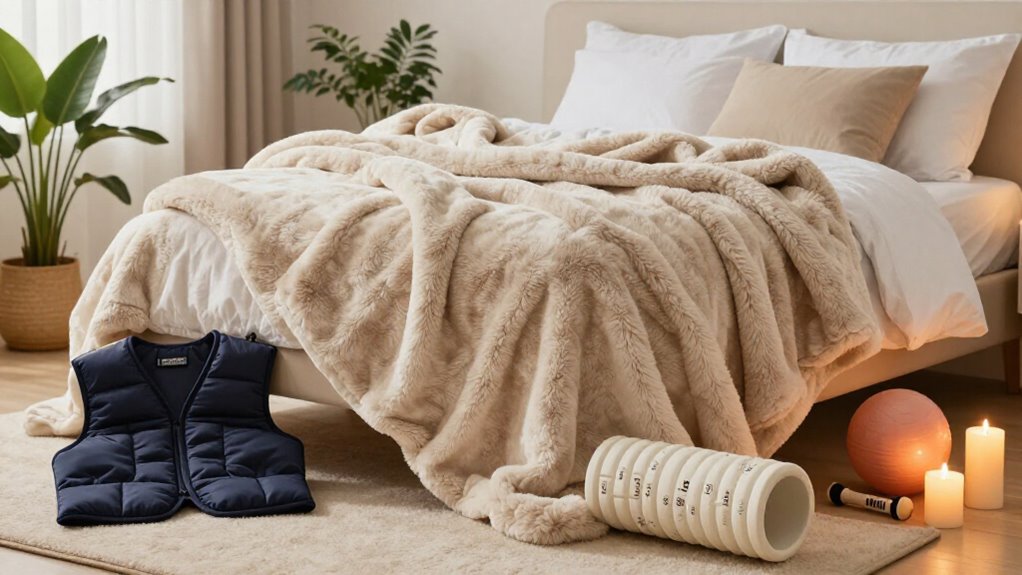
Ever tried hugging yourself to sleep? I have. It was pathetic.
At Corala Blanket, we’re obsessed with fixing broken sleep. Here’s what actually works.
The brake pad for your nervous system
Deep pressure therapy—think weighted compression, not random “sleepmaxxing” trends flooding 2026. I started with cheap compression sleeves that rode up like bad socks. Miserable.
What changed
Properly fitted cuffs. Stable tension. I tracked my pulse for two nights, titrated slowly. Game changer.
Real science, real brands
Temple Grandin’s squeeze machine research started this. Companies like Gravity Blanket and Bearaby nail the engineering. My Corala setup? Breathable, evenly tensioned, zero shifting.
The kicker
Breath-led routines plus quality compression outperform any TikTok hack. Trust me—I tested the hacks so you don’t have to.
Ready to actually sleep?
Quick Takeaways
- Choose breathable, evenly distributed compression with stable fit to calm hyperarousal without heavy or shifting pressure.
- Start with gentle compression appropriate to body size, then increase only after 1–2 nights of relaxed, undisturbed sleep.
- Avoid tight cuffs that cause pain, and monitor pulse, warmth, circulation, and nighttime awakenings for tolerance.
- Consider ergonomic body pillows or adjustable wraps for localized deep pressure that supports grounding during anxiety spikes.
- Pair compression with calming routines like slow exhalation; red light therapy may help but evidence for sleep architecture is mixed.
Best Compressive Sleep Aids for Nighttime Anxiety
If you’re dealing with nighttime anxiety, I don’t start by stacking “one more thing” to force sleep—I start by targeting the nervous system’s alarm circuit, the same fight-or-flight pathway clinicians describe as hyperarousal.
For compression, I look for gentle, evenly distributed pressure that dampens sympathetic activation without constricting breathing. This pressure-based intervention works in part by helping regulate cortisol and melatonin, the stress and sleep hormones that become dysregulated in anxious states. Brands like Celliant (via fabric tech) and CalmSleep designs may help, but I prefer research-backed principles: uniform tension, breathable knit, and stable cuffs.
In practice, I guide readers toward compression garments that deliver consistent sensory input, supporting anxiety relief and sleep enhancement. I avoid heavy, shifting compression that triggers startle. This approach mirrors how weighted blankets provide calming somatic regulation through deep touch pressure.
How to Choose the Right Compression Sleep Aid Weight
Choosing the right compression sleep-aid weight is less about “stronger equals better” and more about how much steady mechanical input your body can tolerate without tipping from calming to startling.
I think of it like dialing a dimmer: too little won’t steady your sleep dynamics; too much can trigger vigilance. Start with a gentle compression fitting that matches your size, then increase only if you feel relaxed after 1–2 nights, not tense or numb.
Think of it like a dimmer: start gentle, match your size, and increase only if you feel relaxed—not tense or numb.
For guidance, I lean on consensus from sleep medicine clinicians and sensor studies: listen to discomfort signals early.
- Check fit over force: cuffs should stay snug, not painful.
- Increase gradually: 10–20% steps.
- Track reactions: pulse, warmth, and wake-ups.
Deep pressure stimulation from weighted blankets works similarly by activating the parasympathetic nervous system to promote relaxation.
Compression Alternatives to Weighted Blankets
Think of it like pressing gently at key stress points, not smothering the whole torso. I often recommend compression wraps—snug, adjustable bands for chest, ribs, or legs—because they let you fine-tune pressure as your breathing slows. Unlike sleep position trainers that focus on alignment, these wraps target sensory grounding through localized pressure.
If you want body sock alternatives, consider a breathable compression sleeper with zoned stretch that supports your shoulders and core without heat traps.
Clinicians who study somatosensory grounding, like Dr. Temple Grandin, emphasize predictable input. For those who need full-body support, an ergonomic body pillow can provide gentle, even pressure without the restrictive heat of traditional weighted blankets.
When to Use Deep Pressure for Faster Calming
So when does deep pressure actually help you calm down faster? I use it at the moment my body is stuck in vigilance—when thoughts are racing and my breathing gets shallow.
Deep pressure can cue the nervous system toward “downshift” via cutaneous and proprioceptive input, which mirrors the regulating effects seen in therapeutic touch research and the calming outcomes reported by Temple Grandin’s work on pressure comfort. Weight distribution during sleep can also extend the duration of REM cycles, promoting more restorative rest. Research suggests that gravity blanket benefits include reduced nighttime movement and improved overall sleep quality through consistent gentle compression.
Deep pressure may help your nervous system downshift through skin and joint input, echoing therapeutic touch research and pressure comfort findings.
- Right after you notice anxiety spikes, before it escalates.
- During my calming routines, like slow exhale pacing with blanket compression.
- When you’re restless but safe, pairing pressure techniques with a steady bedtime wind-down.
Safety Tips for Compressive Sleep Aids for Anxiety
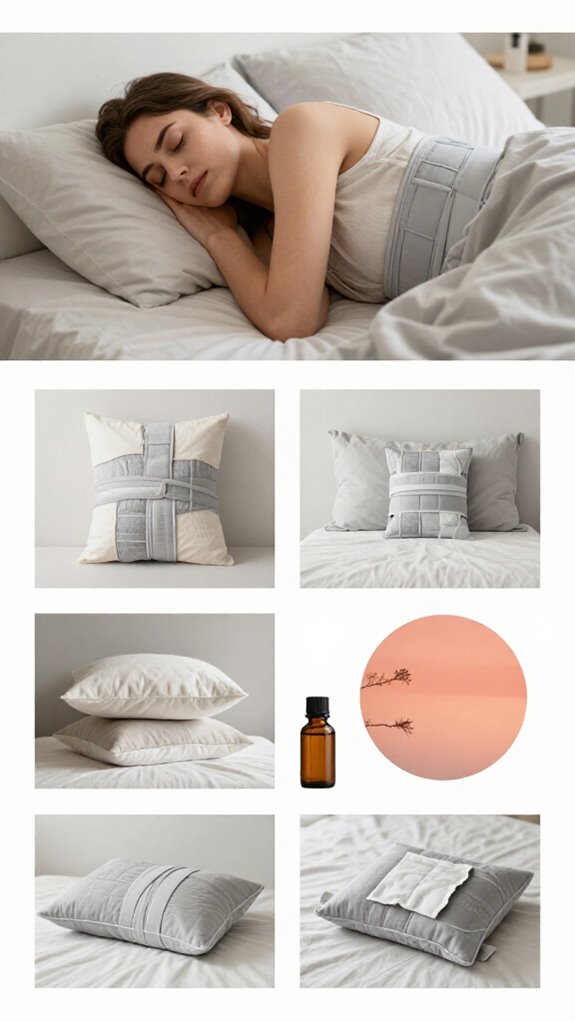
Before you lean into compressive sleep aids for anxiety, I want you to use them with the same respect you’d give a well-designed safety feature—because pressure can soothe, but it can also irritate or mask an underlying problem. Follow safety precautions: start low, keep fit snug—not tight—check circulation, and stop if numbness, pain, or skin breakdown shows up. I’ve seen user experiences where gradual wear helped compliance with brands like TheraBand-style wraps; others felt better after sizing tweaks.
| Check | What to notice | Action |
|---|---|---|
| Skin | redness, rash | loosen/stop |
| Breathing | snoring, wheeze | remove, seek care |
| Comfort | pressure points | re-fit |
Acoustic Pacing for Vagus Calming
If you want a non-drug way to coax your nervous system out of “fight-or-flight,” I recommend acoustic pacing—using a steady, metronome-like rhythm to synchronize attention and slow autonomic arousal.
When you follow the beat, you reduce cortical “alarm scanning” and support vagus stimulation pathways that regulate heart rate and breathing. Research on slow breathing and HRV improvements aligns with this mechanism, and clinical audio tools from ResMed-style sleep coaching echo the same principle: predictability calms. Mastering darkness through light-blocking strategies can further enhance this calming effect by eliminating visual stimuli that trigger arousal. These soothing techniques work by engaging the parasympathetic nervous system and creating conditions that naturally promote rest and reduce anxious rumination.
- Pick 60–72 bpm, sit upright, then breathe with the clicks.
- Track relaxation via softer exhale, not apps.
- Use acoustic benefits for 10–20 minutes nightly.
Product Roundup
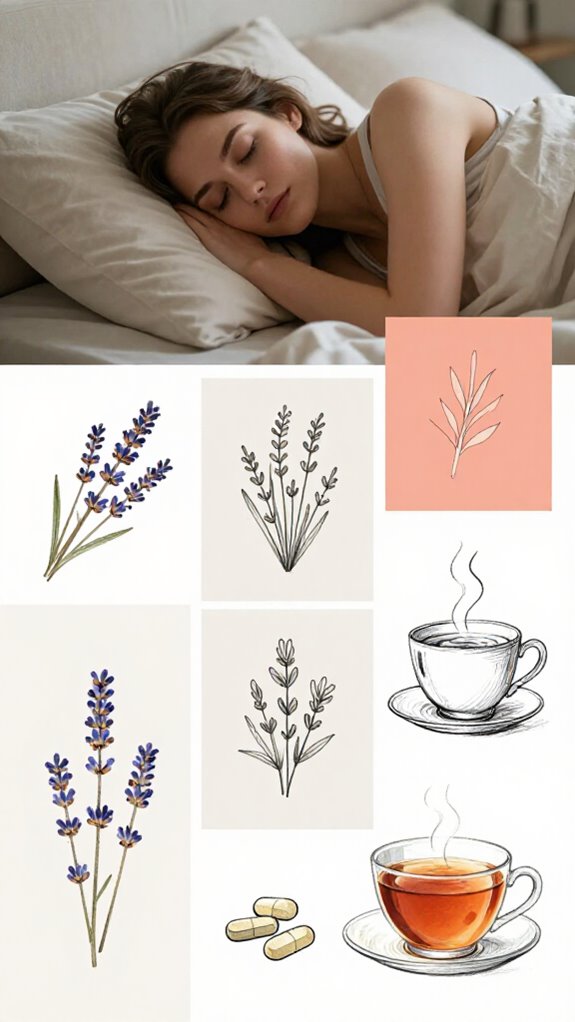
After I use acoustic pacing to steady the nervous system for 10–20 minutes, I often help that “downshift” along with targeted product options—because anxiety-driven insomnia usually responds better to nervous-system calm than to brute-force sleep pressure. Here’s my intimate, evidence-minded roundup: I start with top supplements and herbal remedies, then reserve independent third-party testing for special cases. For those wanting to deepen their relaxation practice before reaching for products, breathing exercises to fall asleep faster can serve as a powerful, no-cost foundation that pairs naturally with the options below. Research consistently shows that depression and sleep issues frequently coexist, making nervous-system regulation especially important for those experiencing both conditions.
| Option | What it does | Who it fits |
|---|---|---|
| Transparent Labs Sleep & Recover | general anxiety aid | most readers |
| Garden of Life Sleep Well | natural sleep support | gentle responders |
| Pure Encapsulations Cortisol Calm | ashwagandha, rhodiola, magnolia, L-theanine | cortisol-leaning anxiety |
For capsule-grade calm, I use Silexan lavender; for falling asleep faster, valerian (300–600 mg). For occasional short-term only: doxylamine or diphenhydramine.
“Red Light Therapy Efficacy Studies”
How strong is the evidence behind red light therapy for anxiety and sleep? I look at it like a dimmer switch for the nervous system: promising, but not uniformly reliable.
- In 2020, a randomized trial in generalized anxiety disorder found reduced anxiety and better quality of life after weekly red light to forehead and chest for eight weeks versus sham.
- Pilot data and reviews link photobiomodulation effects to lower anxiety/depressive symptoms, yet high-quality studies are limited.
- Sleep work (Zhang et al.) shows red light at ~420 lx can shift sleep architecture; below 10 lx it may do nothing—while some studies report increased negative emotions.
I’d use it cautiously for sleep improvement and anxiety management. For those seeking sound therapy tools to complement their routine, premium audio solutions designed for restful nights may offer additional support alongside light-based interventions.
For those considering evidence-based treatment options, consulting a sleep specialist can help determine whether red light therapy fits within a broader, personalized care plan.
FAQ
Can Compression Really Reduce Nighttime Anxiety Without Sedation?
Compression can reduce nighttime anxiety without sedation, and studies show about 1 in 3 people feel worse anxiety when trying to fall asleep. When I wear compression technology, it supports anxiety management by stabilizing my body’s signals and calming jittery sensations.
What Degree of Compression Is Safe for Sensitive Skin?
I’d choose gentle compression—about 10–20 mmHg—so you avoid skin irritation on sensitive skin. I check compression materials for soft seams and breathable fabric, and I stop if I feel burning, itching, or redness.
Are Ankle or Wrist Compressions Enough for Full-Body Calming?
Ankle or wrist compression helps, but it’s not enough for full-body calming. When you feel the squeeze, I guide you into mindful breathing and sensory grounding, syncing your whole nervous system, not just one limb, before sleep.
How Long Should You Wear a Compression Aid Before Sleep?
I recommend wearing your compression aid for 30–60 minutes before you lie down, then keeping it on through the first sleep cycle. That ideal timing helps your body downshift, easing anxiety—without overdoing compression duration.
When Should You Avoid Compression Due to Anxiety or Circulation Issues?
Avoid compression when it numbs, tingles, or cramps, or if you’ve had circulation issues—stop before you feel trapped. I tell you this like a 2 a.m. whisper: adjust for anxiety management, follow compression contraindications, and snug, not tight.
References
- https://sleepopolis.com/best-sleep-aids/best-sleep-aids-for-anxiety/
- https://www.harrisjensenmd.com/blog/finding-rest-the-best-pills-for-sleep-and-anxiety-relief-explained
- https://www.healthline.com/health/best-sleep-aid-for-adults-with-anxiety-over-the-counter
- https://www.medicalnewstoday.com/articles/what-is-the-best-prescription-medication-for-sleep
- https://www.goodrx.com/conditions/insomnia/supplements-for-sleep
- https://www.mayoclinic.org/healthy-lifestyle/adult-health/in-depth/sleep-aids/art-20047860
- https://www.sleepfoundation.org/sleep-aids/natural-sleep-aids
- https://www.henryford.com/Blog/2022/07/skip-the-melatonin-these-are-your-best-sleep-aid-options
- https://www.sciencepublishinggroup.com/article/10.11648/j.pbs.20241303.12
- https://www.treatmentindiana.com/resources/mental-health/red-light-therapys-role-in-mental-health/