Night owls, unite—we’re done pretending 8am lectures are “character building.”
I spent my undergrad in a zombie haze, chugging coffee while my cortisol finally woke up around noon. Sound familiar?
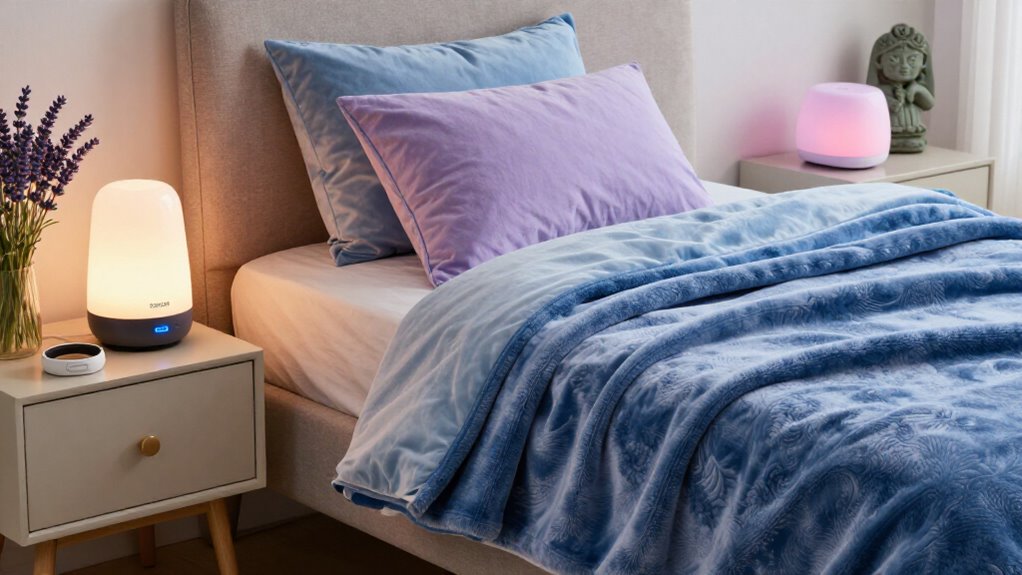
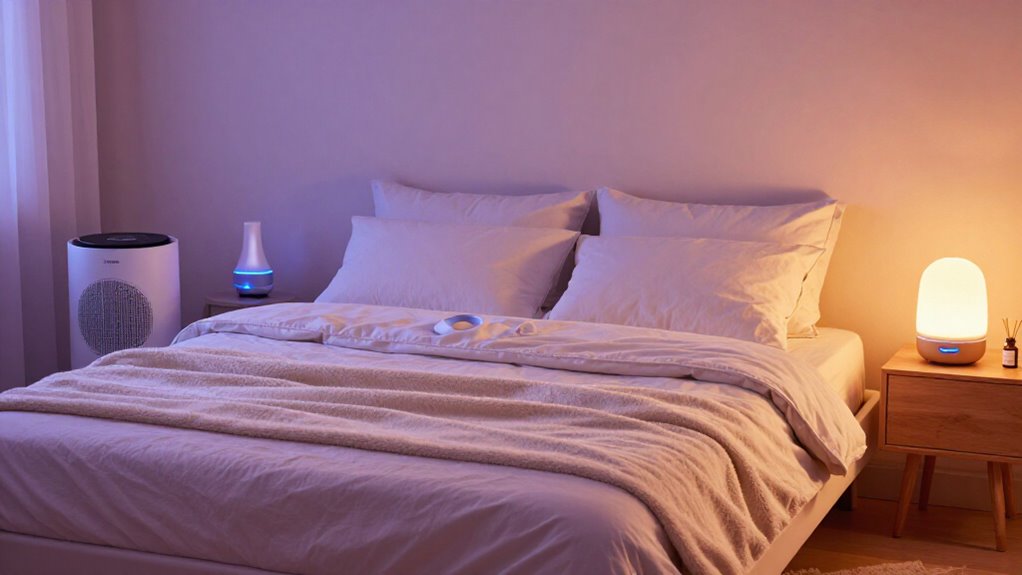
Here’s the fix: kill those overhead LEDs 60–90 minutes before you study, flip on f.lux or Night Shift, and drag yourself outside for morning light—yes, even when it hurts. I run 16–19°C rooms at Corala Blanket (we’re obsessed with actual rest), plus vagal breathing or humming to shut down the chaos.
Researchers like Till Roenneberg and brands like Oura back this. The 2026 trend? Sleepmaxxing—optimizing every variable, not just duration.
Ready to stop suffering?
Quick Takeaways
- Use morning outdoor bright light to advance circadian timing and reduce sluggish attention during early classes.
- Dim LEDs and switch screens to amber/low-blue settings before study to protect melatonin and preserve a longer effective sleep window.
- Keep a consistent wake time and create a 60–90 minute off-ramp with low-cognitive tasks to improve readiness and recall.
- Improve sleep quality with a cooler bedroom (16–19°C) and quality bedding to enhance restorative sleep and next-day performance.
- Practice vagus-nerve downshifting (long exhale, gentle humming/vibration) to reduce anxiety and cortisol before studying or sleep.
Why Evening Chronotypes Struggle With Social Jetlag
Even though I can function perfectly well on my own schedule, I still feel the hit when society pulls me onto an early clock—because evening chronotypes run on a different internal timing “train.” Your circadian pacemaker (the suprachiasmatic nucleus in the hypothalamus) tends to delay the release of core alerting hormones like cortisol and delays the rise of melatonin, so your body temperature drop and sleep pressure peak later. Paying attention to your caffeine cutoff can help protect your already delayed sleep window from further disruption. When classmates sleep in, I’m biologically “late” for social obligations, creating social jetlag. Researchers like Till Roenneberg show this mismatch predicts worse grades and mood. I feel it as sluggish attention and delayed reaction speed, especially after an enforced late bedtime. Blue light exposure from evening screen use further compresses my already delayed sleep window, amplifying the disconnect between biological time and social demands.
How To Use Light Hygiene To Protect Late-Night Performance
When my evening chronotype gets dragged into late-night obligations, light—not willpower—decides whether my brain stays sharp or slips into “dim hallway” mode, because photoreceptors in the retina feed the circadian system through the retinohypothalamic tract.
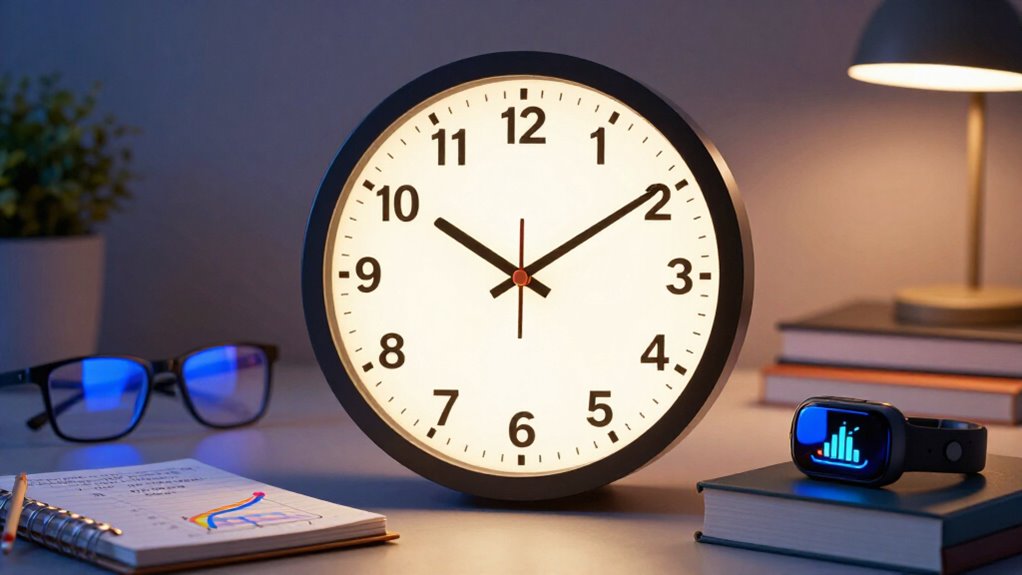
I protect performance by dimming overhead LEDs 60–90 minutes before studying, and I switch screens to amber/low-blue using f.lux or Night Shift.
If I must work late, I keep a warm desk lamp near the task and avoid bright room lighting, which suppresses melatonin.
Afterward, I use bright light outdoors in the morning to realign fast, consistent with chronobiology work by Till Roenneberg.
Since quality sleep supports any late-night study effort, I also prioritize my bedding setup, including organic latex pillows, to ensure my rest is as restorative as possible. For optimal sleep quality, I also keep my bedroom cooler at night, as lower temperatures facilitate deeper, more restorative sleep.
Evening Chronotype Sleep Setup for Steadier Grades and Focus
To keep my late-night focus from wobbling, I build an evening-chronotype sleep setup that treats light, temperature, and wind-down time as inputs to the circadian clock rather than as “good vibes.”
I start by assuming my brain will demand later darkness: photoreceptors in my retina feed the suprachiasmatic nucleus through the retinohypothalamic tract, so I remove competing cues early—dim overhead LEDs 60–90 minutes before studying ends, switch to low-blue modes (Night Shift or f.lux) in the last stretch of work, and keep any task lighting warm and localized.
Dim lights 60–90 minutes before you finish; use low-blue modes late, keep task lighting warm—let your circadian clock lead.
- Set my bedroom at 16–19°C to favor heat-loss sleep onset
- Follow a 30–45 minute off-ramp: shower, dim lamp, low-cognitive tasks
- Keep wake time fixed; use melatonin only if timing’s off
I steal steadier grades by protecting sleep architecture.
Vagus Nerve Calm-Down Method
I used to treat my late-night focus setup like a checklist—light down, temperature steady, work ramped off gently—but I now add one more lever that works faster than willpower: the Vagus Nerve Calm-Down Method.
Here’s how I do it: I lengthen my exhale to cue parasympathetic tone, then I pair it with gentle humming or a soft “vibration” through the throat. The same proprioceptive input that enhances deep sleep stages can further amplify this calming effect when added through slow, deliberate body positioning or gentle weighted pressure.
This recruits the vagus via cranial nerve branches and slows heart-rate variability. Studies on HRV and breathing show reliable calming effects when paced consistently.
Brands like Muse and researchers in psychophysiology echo this: regulate first, then concentrate.
These techniques are particularly valuable for evening chronotypes who often face anxiety when trying to unwind their active minds after peak productivity hours.
Product Roundup
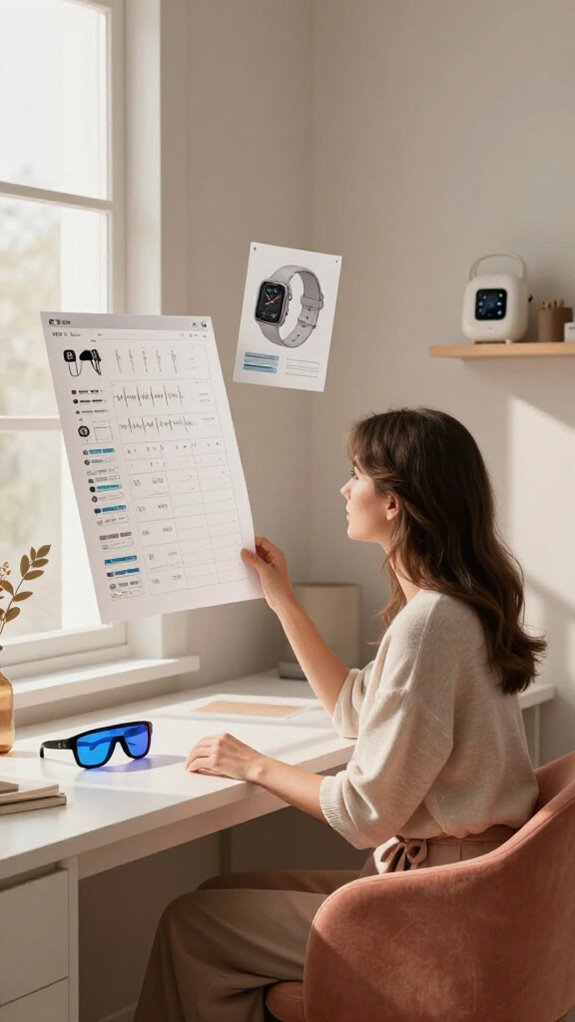
A practical roundup of 2026 sleep-and-performance tools starts with one principle: evening chronotypes lose ground mainly because early school clocks shove their biological night forward—so products should help you regulate timing, not obsess over a score.
The evidence is blunt: misaligned sleep hygiene links to ~0.98 GPA drop from high school to college, and shifting sleep onset earlier can blunt performance loss.
I look for four levers: consistent wake time, light hygiene, realistic scheduling, and nervous-system downshifting.
I prioritize four levers—wake regularity, light hygiene, realistic schedules, and nervous-system downshifting—because misalignment measurably hurts performance.
Here’s what I’d buy.
- Chronotype scheduling apps (e.g., Sleep Cycle-style) plus digital planners to time study during afternoon peaks.
- Blue-light blocking glasses before bed; paired with morning light anchoring to drift toward intermediate rhythms.
- Wearables + smart alarms to enforce wake regularity, reducing evening-type sleep deprivation and class absence.
“Vns Reduces Pre-Sleep Cortisol”
Vagus nerve stimulation (VNS) can nudge your body out of “pre-sleep alarm mode” by lowering evening cortisol before you ever drift off.
I use the logic of neurophysiology: VNS sends electrical impulses through the vagus nerve, typically targeting the left branch, which helps avoid cardiac-side concerns from the right. It modulates the autonomic nervous system, increasing parasympathetic activity while inhibiting the HPA axis—so CRH-driven cortisol release slows. Sleep tracking data can help verify these physiological changes by revealing improved sleep architecture metrics like reduced sleep onset latency and increased deep sleep percentages.
Trials show evening tVNS sessions reduce salivary cortisol about 18–22% in insomniacs, versus sham, with improved sleep onset latency (~12 minutes) and more slow-wave sleep.
In academia, that calmer consolidation supports recall. Evening chronotypes who leverage VNS may finally align with morning schedules without the cortisol spike that typically sabotages their performance.
FAQ
Can Evening Chronotypes Shift School Schedules Without Harming Grades?
Yes—I can shift schedules for evening chronotypes without harming grades by adjusting start times, adding protected study blocks, and matching lessons to alertness peaks. I track outcomes lightly, refine weekly, and reduce stress, so performance holds steady.
What Study Strategies Help Late Chronotypes During Early-Morning Exams?
“Measure twice, cut once”—I study late chronotypes best by front-loading hard concepts the night before, rehearsing early-morning drills at wake time, using short retrieval sprints, and packing a calm pre-exam routine so your focus shows up on cue.
How Should Late-Night Exercise Timing Affect Sleep Quality and Memory?
If you exercise late, I’d expect adrenaline and body temperature to stay elevated, which can delay sleep and weaken memory consolidation. I recommend finishing workouts 2–3 hours before bed, then cooling down and keeping lights low afterward.
Do Red-Light Glasses Improve Focus, or Only Make Sleep Easier?
Do red-light glasses improve focus, or only make sleep easier? I’ve found they do both: they calm your evening nervous system and can reduce glare, so you feel steadier and more present. But daytime brightness cues still matter most.
When Should Clinicians Evaluate Possible Circadian Rhythm Disorders?
I’d evaluate possible circadian rhythm disorders when a patient reports persistent, hard-to-adjust timing—chronic sleep-onset delay, morning insomnia, or severe daytime sleepiness—despite good sleep hygiene, especially if school or work functioning suffers for weeks.
References
- https://aasm.org/evening-chronotype-in-high-school-students-is-associated-with-lower-college-grade-point-average/
- https://pubmed.ncbi.nlm.nih.gov/28272914/
- https://scholarworks.boisestate.edu/cgi/viewcontent.cgi?article=1240&context=psych_facpubs
- https://pmc.ncbi.nlm.nih.gov/articles/PMC11152626/
- https://www.frontiersin.org/journals/psychology/articles/10.3389/fpsyg.2025.1664598/full