I tossed away my overstuffed feather pillow at 2 AM last year—my neck was screaming, and my sleep score? Embarrassing. That nightmare pushed me into proper sleepmaxxing.
Choosing my ergonomic replacement meant obsessing over contour adaptation and height adjustability. At Corala Blanket, we’re responsible for promoting better sleep, so I tested everything. Brands like Sleep Number, Tempur-Pedic, and Purple delivered—Sleep Number’s adjustable air chambers hit different for side sleeping, while Purple’s grid kept me embarrassingly cool.
Dr. Rachel Salas at Johns Medicine swears by personalized cervical alignment—she’s not wrong. 2026 trends? Sleepmaxxing culture is exploding, with smart pillows tracking REM cycles.
Weekly rotation matters, fam. What’s your pillow doing for *you*?
Quick Takeaways
- Select pillows with contour memory foam to support cervical alignment and reduce pressure points.
- Choose pillows with adjustable height features to cater to different sleep positions and ensure neck support.
- Opt for pillows with cooling technology to maintain an ideal sleeping temperature and enhance airflow.
- Ensure pillows are made with hypoallergenic materials to minimize allergens and promote respiratory health.
- Look for reinforced edge designs in pillows to prevent misalignment during the night.
How to Pick the Perfect Pillow for Your Sleep
Choosing the perfect pillow is more than just a matter of comfort; it’s a complex dance between support and alignment, one where science meets slumber.
I’ve learned that the right pillow can considerably align your spine, a foundation for productive sleepmaxxing. Innovations from brands like Sleep Number and Tempur-Pedic guarantee peak cervical balance.
The right pillow aligns your spine, setting the stage for optimal sleep and cervical balance.
The key is the pillow’s loft and firmness, dictated by your sleep position—you seek alignment without stress on cervical vertebrae. For those prioritizing natural materials, organic latex offers responsive support that adapts to your movements throughout the night.
Renowned sleep researcher Dr. Michael Breus emphasizes personal comfort levels, yet I urge you to experiment and find what uniquely supports your nocturnal retreat effectively.
For optimal results in your sleepmaxxing journey, consider orthopedic pillows designed specifically to elevate your bedroom sleep experience.
Essential Features of Ergonomic Pillows for Optimal Sleep
The art of achieving restful sleep often lies in the complex equilibrium crafted by an ergonomic pillow’s design. This transformative element plays a significant role in supporting the cervical spine, thereby enhancing sleep architecture. Investing in ergonomic body pillows can provide full-body support that complements proper neck alignment for comprehensive sleep optimization.
I’ve explored key features that define superior ergonomic pillows:
- Contour Memory Foam: Adapts to your unique curvature, reducing pressure points.
- Height Adjustability: Customizable loft for tailored neck support, ideal for varying sleep positions.
- Cooling Technology: Enhanced airflow or gel-infused layers maintaining ideal temperature.
- Hypoallergenic Materials: Minimizes allergens, essential for respiratory health.
- Edge Design: Reinforced boundaries preventing nightly misalignments.
Brands like Tempur-Pedic and research by Dr. Robert Oexman underscore these essentials. Orthopedic pillows can significantly improve sleep quality by promoting proper spinal alignment throughout the night.
Why Ergonomic Pillows Matter for Sleepmaxxing Success
When considering the broader domain of Sleepmaxxing, ergonomic pillows emerge as an invaluable tool in the quest for sleep optimization. They support proper cervical alignment, vital for maintaining the spine’s natural curvature while sleeping.
Researchers from Harvard have demonstrated the importance of spinal support in reducing musculoskeletal strain, effectively minimizing micro-arousals that disrupt sleep architecture. Brands like Tempur-Pedic and Coop Home Goods offer designs tailored to individual anatomical needs, facilitating recovery efficiency. Just as orthopedic mattresses provide essential full-body support for sleep quality, ergonomic pillows address critical cervical needs. For side sleepers specifically, selecting a pillow with adequate loft and firmness helps fill the gap between the head and mattress, preventing neck strain and promoting uninterrupted rest.
Keeping Your Ergonomic Pillow in Top Shape
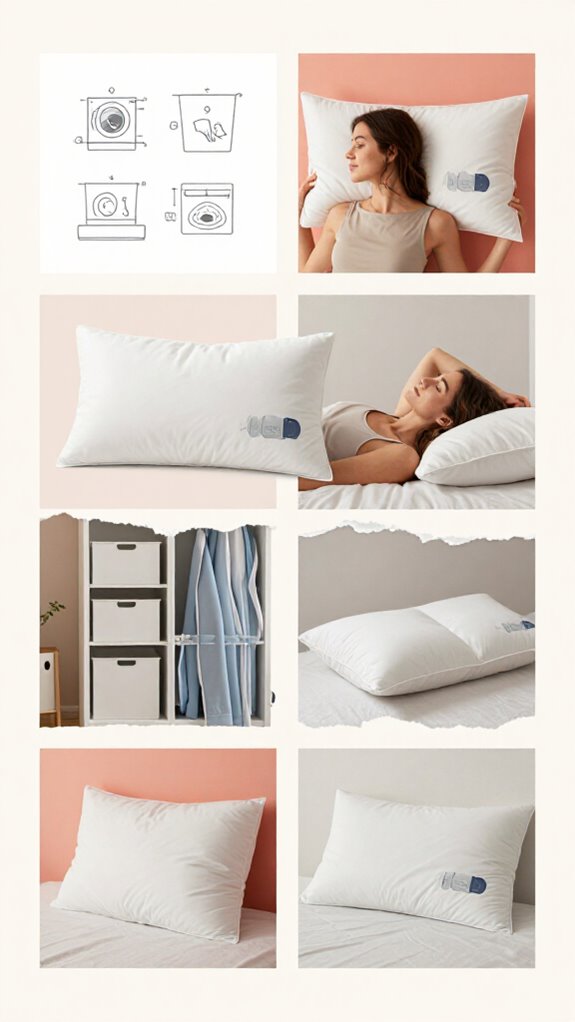
Although it might seem like a trivial detail in the grand tapestry of Sleepmaxxing, maintaining the integrity of your ergonomic pillow is essential for sustaining its long-term benefits.
The right care preserves functionality, ensuring ideal alignment and comfort. Here’s your strategic approach:
- Rotate Weekly: Balance wear and maintain even support.
- Shield with a High-Quality Cover: Safeguard against contaminants.
- Follow Manufacturer Cleaning Instructions: Generally, spot clean and air dry.
- Never Overload the Washing Machine: Protect the pillow’s internal structure.
- Store in a Cool, Dry Place: Avoid moisture-related degradation.
My 30 Day Sleepmaxxing Protocol
Starting a 30-day Sleepmaxxing Protocol requires both commitment and a strategic approach to transforming nocturnal habits into optimized performance outputs.
My journey began with syncing my circadian rhythm, leveraging knowledge from experts like Dr. Matthew Walker. Using the Oura Ring, I meticulously tracked REM and Deep Sleep percentages, reducing sleep latency while enhancing my HRV. While tracking metrics proved essential, equally important was ensuring proper spinal alignment during waking hours through appropriate ergonomic support in my bedroom workspace.
Syncing my circadian rhythm was key, with expert insights and meticulous tracking enhancing both REM sleep and HRV.
Darkened environments recalibrated my Suprachiasmatic Nucleus, safeguarding melatonin production. I engineered a Thermo-neutral Zone to facilitate Adenosine clearance by maintaining a crisp 18°C.
Techniques like nasal breathing, influenced by James Nestor’s work, and acoustic layering fortified my nightly routine, transforming rest into restoration. To further optimize my sleep architecture, I established consistent bedtime routines that signal my nervous system to downregulate cortisol and transition into parasympathetic dominance.
- Day 1: How to Blackout Your Bedroom for Sleepmaxxing Protocol
- Day 2: Optimizing Bedroom Temperature for the Sleepmaxxing Protocol
- Day 3: Using Weighted Blankets in the Sleepmaxxing Protocol
- Day 4: Brown Noise for Neurodivergent Sleepmaxxing Protocol
- Day 5: Best Bed Placement for the Sleepmaxxing Protocol
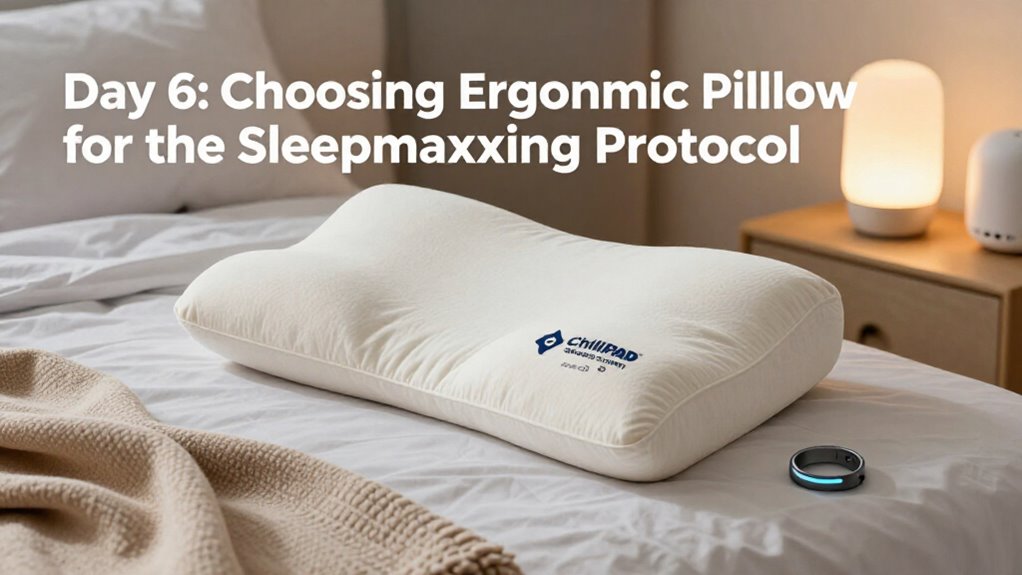
- Day 6: Choosing Ergonomic Pillows for the Sleepmaxxing Protocol
- Day 7: Improving Air Quality for the Sleepmaxxing Protocol
- Day 8: Morning Sunlight Habits for the Sleepmaxxing Protocol
- Day 9: Setting Caffeine Cutoffs for the Sleepmaxxing Protocol
- Day 10: Following Wolf Chronotype in the Sleepmaxxing Protocol
- Day 11: Using Blue Light Blockers for Sleepmaxxing Protocol
- Day 12: Timing Your Last Meal for Sleepmaxxing Protocol
- Day 13: Cutting Alcohol to Improve the Sleepmaxxing Protocol
- Day 14: Maintaining Sleep Consistency in the Sleepmaxxing Protocol
- Day 15: Using 30-Second Hugs for the Sleepmaxxing Protocol
- Day 16: Butterfly Hug Techniques for the Sleepmaxxing Protocol
- Day 17: Vagus Nerve Stimulation for the Sleepmaxxing Protocol
- Day 18: Bedtime Brain Dumps for the Sleepmaxxing Protocol
- Day 19: Creating Cozy Sleep Spaces for Sleepmaxxing Protocol
- Day 20: Box Breathing Guide for the Sleepmaxxing Protocol
- Day 21: Managing CPTSD Hypervigilance in the Sleepmaxxing Protocol
- Day 22: Mouth Taping Safely for the Sleepmaxxing Protocol
- Day 23: Taking Magnesium Glycinate for the Sleepmaxxing Protocol
- Day 24: Using Zero Gravity Positions for Sleepmaxxing Protocol
- Day 25: Digital Dopamine Detox for the Sleepmaxxing Protocol
- Day 26: Reducing Sleep Latency in the Sleepmaxxing Protocol
- Day 27: Tracking HRV Recovery for the Sleepmaxxing Protocol
- Day 28: Wearing Knee Braces for the Sleepmaxxing Protocol
- Day 29: Body Grounding Techniques for the Sleepmaxxing Protocol
- Day 30: Analyzing Sleep Data for the Sleepmaxxing Protocol
Best Products to Use for Sleepmaxing
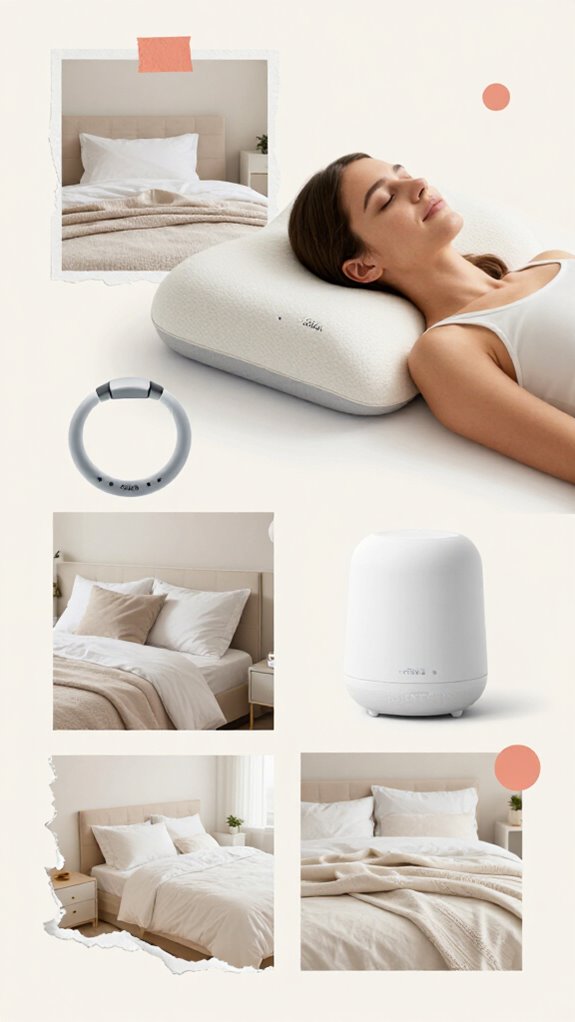
With a firm foundation established in optimizing sleep through the Sleepmaxxing Protocol‘s core principles, the focus now shifts to specific tools that can elevate this nightly ritual.
By utilizing premier products, you guarantee a sanctuary conducive to superior rest and recovery. Here’s my curated list:
- Oura Ring: Tracks sleep stages with precision, promoting circadian rhythm harmony.
- ChiliPAD Sleep System: Regulates bed temperature within a thermo-neutral zone.
- White Noise Machine by Avantek: Enhances acoustic ambiance, mitigating disruptions.
- Gravity Blanket: Delivers proprioceptive input essential for somatic safety.
- Philips Hue Smart Bulbs: Manages light exposure to safeguard melatonin production.
Every choice serves the goal: sleep refined for power.
Glymphatic System Optimization Studies
As we explore the fascinating domain of glymphatic system optimization, it becomes evident that understanding the underpinning mechanisms can access significant potential for enhancing brain health and cognitive longevity.
The glymphatic system, our brain’s waste-clearance highway, accelerates metabolic waste removal during sleep, akin to a nocturnal janitorial crew. AQP4 polarization along astrocytic endfeet enhances fluid exchange, with 40 Hz stimulation boosting arterial vasomotion. Dietary choices can significantly impact sleep architecture and consequently glymphatic efficiency, as consuming certain foods before bed may disrupt the deep sleep phases essential for this brain-cleaning process. Environmental factors like auditory stimulation can modulate sleep depth and indirectly influence glymphatic clearance efficiency.
Exercise amplifies glymphatic transport through AQP4-driven mechanisms, as demonstrated by APP/PS1 mice studies. Chronic hypertension, however, impairs this flow, requiring attention to cerebrovascular health. Notably, age-related changes such as decreased sleep depth can hinder glymphatic flow, highlighting the need for strategies to support sleep architecture for optimal brain waste clearance.
Innovative therapies like rTMS and photobiomodulation emerge as promising interventions.
FAQ
How Do Ergonomic Pillows Affect REM Sleep Cycles?
Ergonomic pillows revolutionize our REM cycles by enhancing spinal alignment and alleviating pressure points. I’ve found they reduce interruptions during REM, fostering sustained restorative sleep. This tangible control over our sleep enhances cognitive prowess and physical resilience.
Can Ergonomic Pillows Alleviate Sleep-Related Neck Pain?
Why settle for sleepless nights with neck pain? Ergonomic pillows can realign your spine, enhancing your restorative power during sleep. Experience genuine comfort and awake each day ready to conquer challenges. Isn’t control over your well-being empowering?
What Role Do Ergonomic Pillows Play in Melatonin Regulation?
Ergonomic pillows play a key role in aligning my neck and spine, reducing tension that disrupts melatonin production. This alignment promotes deeper, more restorative sleep by optimizing my body’s natural processes, enhancing my overall performance and power.
Are There Specific Materials Recommended for Ergonomic Pillows in the Protocol?
Bamboo viscose or memory foam reign supreme in ergonomic pillows. Envision waking up refreshed, owning a new day. These materials provide support and durability, aligning with the Sleepmaxxing Protocol’s ambition to enhance physiological repair. Trust in your pillow.
How Do Ergonomic Pillows Interact With Weighted Blankets for Neuro-Inclusive Rest?
Ergonomic pillows harmonize with weighted blankets by enhancing spinal alignment while the gentle pressure aids the nervous system’s calm activation. They create a powerfully restorative sleep environment, minimizing discomfort and maximizing neurosensory balance for peak sleep efficiency.
References
- https://www.alzdiscovery.org/uploads/cognitive_vitality_media/Glymphatic_Therapies_(non-pharmacologic).pdf
- https://www.frontiersin.org/journals/molecular-neuroscience/articles/10.3389/fnmol.2023.1138769/full
- https://pmc.ncbi.nlm.nih.gov/articles/PMC11058641/
- https://pmc.ncbi.nlm.nih.gov/articles/PMC12212831/
- https://onlinelibrary.wiley.com/doi/full/10.1002/brx2.70011