Night 3 hit different when I finally caved and tried a weighted blanket—7.5% of my body weight, to be exact. The first time? I felt this weird, instant calm wash over me, like someone was actually hugging my nervous system into submission. Game-changer.
At Corala Blanket, we’re all about pushing better sleep into 2026, and Sleepmaxxing is *the* trend right now—people are optimizing every variable. I pair my even-fill Bearaby with slow nasal breathing (shoutout Dr. Andrew Huberman’s protocols) and keep my room at 18°C, tracking HRV and SWS on my Oura Ring.
Gravity Blankets started this whole movement, but breathable, non-toxic fill matters more than brand hype. Ever felt that “weighted” relief yourself, or still sleeping restless?
Quick Takeaways
- On Day 3, begin using a weighted blanket at 5–7% body weight centered over the torso for 30–60 minutes before bedtime to assess comfort.
- Monitor sleep latency and subjective relaxation using your wearable and a sleep journal to establish early responses to deep-pressure stimulation.
- Keep bedroom temperature around 18°C and use breathable, moisture-wicking sheets to prevent overheating under the blanket.
- If hypervigilant or low HRV, increase to ~10% body weight or add 1–3 kg gradually, stopping if discomfort or increased wakefulness occurs.
- Note any changes in middle-night awakenings, REM duration, and SWS in your tracker for later weekly adjustments.
Sleepmaxxing Basics: How This Protocol Speeds Sleep Onset and Deep Sleep
Because rapid, restorative sleep depends on specific physiological shifts, I focus the Sleepmaxxing Basics on interventions that reliably shorten sleep latency and increase slow-wave (deep) sleep.
I train circadian timing via timed light exposure, following SCN principles from chronobiologists like DeCoursey and Roenneberg, and target a thermo-neutral bedroom near 18°C to permit core temperature decline.
I train circadian timing with timed light exposure and a cool ~18°C bedroom to promote core temperature decline.
I enforce a three-hour pre-sleep metabolic fast and caffeine cutoff to aid glymphatic clearance.
I use nasal-breathing techniques, HRV-focused vagal activation, and wearables (Oura, Whoop) to track latency, deep-sleep minutes, and HRV trends, iterating protocols with objective data.
Velvet weighted blankets provide exceptional tactile comfort that enhances the calming effects of deep pressure stimulation, making them ideal for sustained nightly use. Weighted blankets provide deep pressure stimulation that activates the parasympathetic nervous system, promoting somatic calm and further reducing sleep latency through physiological downregulation.
Weighted Blankets: Choosing the Right Weight for Oura/WHOOP Users
I recommend treating a weighted blanket as a calibrated somatic tool rather than a comfort accessory, and I’ll walk you through how to pick a weight that complements Oura or WHOOP metrics. I use evidence-based rules: target 5–10% of body weight for general parasympathetic activation, adjust toward 10% if HRV is low, and prefer 2–3 kg heavier for hypervigilant profiles (ADHD/CPTSD), monitoring Oura HRV and Whoop strain. Brands like Gravity and Bearaby offer even fill and breathability. The gentle, distributed pressure mimics deep touch stimulation, which helps explain why these products promote restful sleep. Consult occupational therapists (Wilbarger protocol) for sensory needs; validate changes with two-week wearable trends. The anxiety relief benefits of weighted blankets make them particularly valuable for users tracking stress-related biomarkers.
Positioning and Bedding for Thermoneutral Core Cooling That Boosts SWS
When you optimize positioning and bedding for thermoneutral core cooling, you directly influence the onset and depth of Slow-Wave Sleep (SWS) by facilitating the nocturnal drop in core body temperature that drives adenosine clearance and glymphatic flow.
I recommend a neutral torso exposure—light, breathable sheets over a weighted blanket centered on the chest and hips—to cool core temperature while preserving proprioceptive input.
Use moisture-wicking fabrics (e.g., Outlast, Coolmax) and a breathable weighted option like Hush or Bearaby. Cooling weighted blankets designed specifically for hot sleepers help maintain thermal comfort without sacrificing the deep pressure benefits that promote relaxation.
Evidence from sleep labs (Kräuchi, 2007) shows distal vasodilation and modest skin temperature manipulation shorten sleep latency and deepen SWS.
For additional head and neck cooling, consider pairing your setup with a cooling gel pillow designed to dissipate heat and maintain thermal comfort throughout the night.
Somatic Safety for Hypervigilant Sleepers (ADHD/CPTSD): Proprioception, Vagal Tools, and Limits

Having optimized bedding and torso exposure to help core cooling, I now focus on somatic safety for hypervigilant sleepers—those with ADHD or CPTSD—by examining how proprioceptive input and vagal modulation reduce arousal and speed sleep onset.
I use weighted blankets (e.g., 7–12% body weight; Gravity Blankets data) for deep pressure stimulation to boost proprioception and lower sympathetic tone. I pair that with vagal tools—slow nasal breathing, humming, or cold-face stimulation—to raise HRV.
Limits matter: start light, brief sessions, track responses with Oura/Whoop, and consult clinicians for trauma histories to avoid retraumatization. Research on calming sleep aids shows weighted tools can significantly reduce overnight anxiety when properly calibrated to individual needs. Studies suggest deep pressure touch may stabilize REM sleep cycles through consistent proprioceptive feedback throughout the night.
- Proprioceptive dosing: gradual weight increases
- Vagal layering: breath + humming + facial cooling
- Safety checks: biometric monitoring and clinician input
Troubleshoot: Middle-Night Wakeups, Overheating, and REM Reduction
Although middle-night wakeups, overheating, and REM reduction can feel like separate problems, I treat them as interdependent failure modes of sleep architecture that often share common mechanisms—core body temperature dysregulation, autonomic arousal, and fragmented REM cycles.
I start by defining mechanisms: weighted blankets add proprioceptive input that lowers cortisol and vagal tone, but excess insulation raises core temperature, shifting REM toward lighter stages. The gravity blanket deep sleep benefits popularized in recent years depend heavily on proper thermal regulation to avoid these tradeoffs. For those seeking alternative thermal management solutions, copper memory foam offers similar conductive heat dissipation properties that can complement a weighted blanket protocol.
I recommend 6–10% bodyweight blankets, breathable cotton or graphite-infused fabrics, and room temp near 18°C per Van Someren research.
If REM drops or wakeups increase, reduce weight, improve airflow, or use a phase-change liner (Outlast).
Track Sleepmaxxing Results: Oura/WHOOP and Home-PSG Metrics (HRV, Latency, SWS, REM)
How do you know the Sleepmaxxing adjustments are actually changing your physiology? I track objective metrics with Oura and WHOOP and, when needed, home-PSG to verify shifts in HRV, sleep latency, SWS, and REM. I compare baseline nights to weighted-blanket nights, noting effect sizes and consistency. Studies suggest that deep pressure therapy may amplify these benefits by increasing slow-wave sleep through reduced sympathetic arousal. The mechanism appears to involve vagus nerve stimulation, which promotes parasympathetic dominance and faster transition into restorative sleep stages.
- HRV: higher nightly RMSSD signals parasympathetic gain; correlate with WHOOP strain and Oura readiness.
- Latency: reduced sleep onset time confirms faster SCN alignment, especially with evening cooling.
- SWS/REM: home-PSG or validated ring algorithms show increased deep sleep percent and stable REM cycles, indicating improved glymphatic clearance and cognitive recovery.
My 30 Day Sleepmaxxing Protocol
After verifying effects with Oura, WHOOP, and occasional home-PSG nights, I set a 30-day intervention to systematically test and engrain Sleepmaxxing behaviors. I tracked HRV, sleep latency, SWS, and REM while manipulating weighted blanket use, timing, and temperature. I referenced Walker, Rechtschaffen, and recent glymphatic research to guide protocol limits: 18°C thermal target, 3-hour fast, caffeine cutoff. Each week I adjusted pressure, session length, and breathing exercises for vagal tone. Results informed personal setpoints and objective thresholds for durable change, creating a replicable blueprint you can adapt and validate with your own wearable. I prioritized non-toxic natural fill materials to avoid off-gassing and inflammatory responses that could confound recovery metrics. The cortisol-melatonin balance regulated by deep pressure stimulation provided measurable improvements in sleep architecture that tracked consistently across all monitoring devices.
- Day 1: How to Blackout Your Bedroom for Sleepmaxxing Protocol
- Day 2: Optimizing Bedroom Temperature for the Sleepmaxxing Protocol
- Day 3: Using Weighted Blankets in the Sleepmaxxing Protocol
- Day 4: Brown Noise for Neurodivergent Sleepmaxxing Protocol
- Day 5: Best Bed Placement for the Sleepmaxxing Protocol
- Day 6: Choosing Ergonomic Pillows for the Sleepmaxxing Protocol
- Day 7: Improving Air Quality for the Sleepmaxxing Protocol
- Day 8: Morning Sunlight Habits for the Sleepmaxxing Protocol
- Day 9: Setting Caffeine Cutoffs for the Sleepmaxxing Protocol
- Day 10: Following Wolf Chronotype in the Sleepmaxxing Protocol
- Day 11: Using Blue Light Blockers for Sleepmaxxing Protocol
- Day 12: Timing Your Last Meal for Sleepmaxxing Protocol
- Day 13: Cutting Alcohol to Improve the Sleepmaxxing Protocol
- Day 14: Maintaining Sleep Consistency in the Sleepmaxxing Protocol
- Day 15: Using 30-Second Hugs for the Sleepmaxxing Protocol
- Day 16: Butterfly Hug Techniques for the Sleepmaxxing Protocol
- Day 17: Vagus Nerve Stimulation for the Sleepmaxxing Protocol
- Day 18: Bedtime Brain Dumps for the Sleepmaxxing Protocol
- Day 19: Creating Cozy Sleep Spaces for Sleepmaxxing Protocol
- Day 20: Box Breathing Guide for the Sleepmaxxing Protocol
- Day 21: Managing CPTSD Hypervigilance in the Sleepmaxxing Protocol
- Day 22: Mouth Taping Safely for the Sleepmaxxing Protocol
- Day 23: Taking Magnesium Glycinate for the Sleepmaxxing Protocol
- Day 24: Using Zero Gravity Positions for Sleepmaxxing Protocol
- Day 25: Digital Dopamine Detox for the Sleepmaxxing Protocol
- Day 26: Reducing Sleep Latency in the Sleepmaxxing Protocol
- Day 27: Tracking HRV Recovery for the Sleepmaxxing Protocol
- Day 28: Wearing Knee Braces for the Sleepmaxxing Protocol
- Day 29: Body Grounding Techniques for the Sleepmaxxing Protocol
- Day 30: Analyzing Sleep Data for the Sleepmaxxing Protocol
Best Products to Use for Sleepmaxing
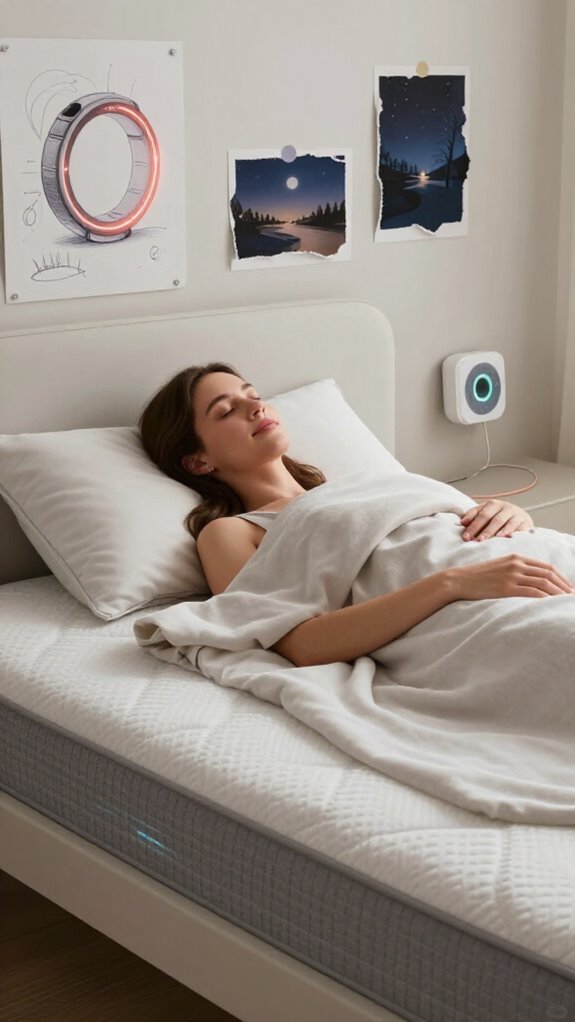
I’ll start by laying out the categories of gear that matter most for Sleepmaxxing and why each one changes measurable sleep architecture. HRV recovery tracking is particularly valuable for validating which interventions actually improve your sleep quality metrics over time. For additional temperature regulation benefits, consider adding gel mattress toppers to your sleep setup.
I’ll outline key gear for Sleepmaxxing and how each measurably alters sleep architecture.
I recommend precise tools that affect circadian cues, thermoregulation, and proprioception: wearables (Oura, Whoop) for HRV and sleep-stage tracking; climate control (Nest, Ecobee, or a smart AC) to hold 17–19°C core-drop conditions; and weighted blankets (Gravity, Hush) sized to 10% of body weight to provide proprioceptive input that lowers autonomic arousal.
- Oura Ring for stage observations and HRV trends
- Gravity blanket for calibrated pressure
- Ecobee/Nest for stable bedroom thermoneutrality
Increased Deep Sleep Percentage (SWS)
Because deep sleep (slow-wave sleep, SWS) is the phase most responsible for synaptic downscaling, memory consolidation, and glymphatic clearance, I focus on interventions—like calibrated weighted blankets from Gravity or Hush—that can nudge SWS percentage upward without disrupting overall architecture. Deep pressure stimulation increases parasympathetic tone, raises pre-sleep melatonin, and reduces sympathetic arousal, mechanisms linked to small objective gains: 2% lower light sleep and 7% improved WASO in trials. Budget-friendly options like cozy twin weighted blankets under $50 can deliver comparable deep pressure benefits for those testing the intervention before investing in premium brands. Clinical data show insomnia remission and sustained benefits; researchers note A-beta afferent engagement and glymphatic facilitation. I use wearables (Oura, Whoop) to track SWS shifts and iterate weight and thermal conditions. The filler material composition—whether glass beads or plastic pellets—can affect how evenly weight distributes and how well the blanket regulates temperature across the night.
References
- https://aasm.org/study-shows-weighted-blankets-can-decrease-insomnia-severity/
- https://onlinelibrary.wiley.com/doi/10.1155/2023/3109388
- https://academic.oup.com/sleep/article-abstract/43/Supplement_1/A460/5846888
- https://www.frontiersin.org/journals/psychiatry/articles/10.3389/fpsyt.2024.1333015/full
- https://pmc.ncbi.nlm.nih.gov/articles/PMC11056563/
- https://www.uclahealth.org/news/article/pressure-weighted-blankets-may-help-sleep
- https://www.health.harvard.edu/mind-and-mood/anxiety-and-stress-weighing-heavily-at-night-a-new-blanket-might-help