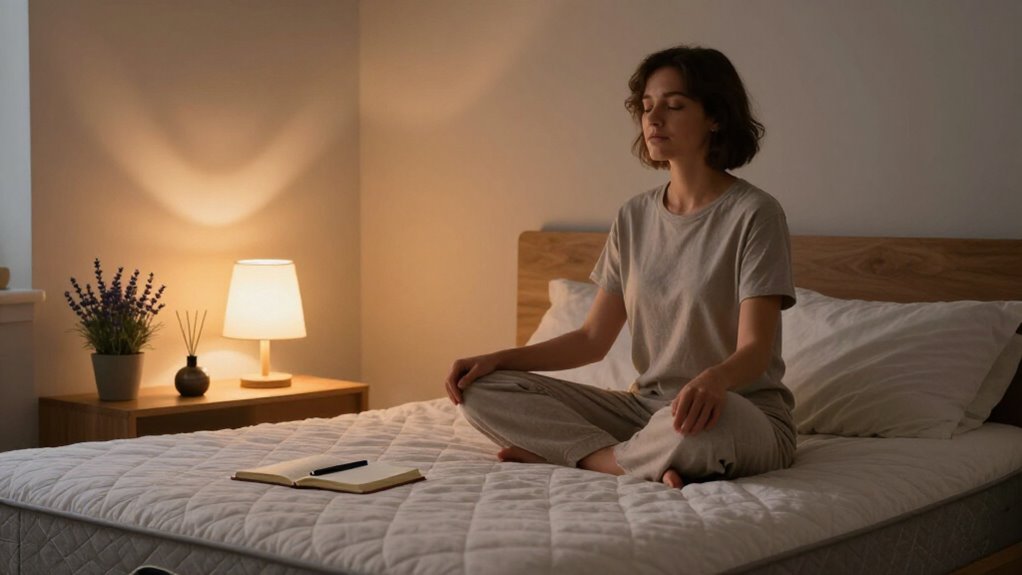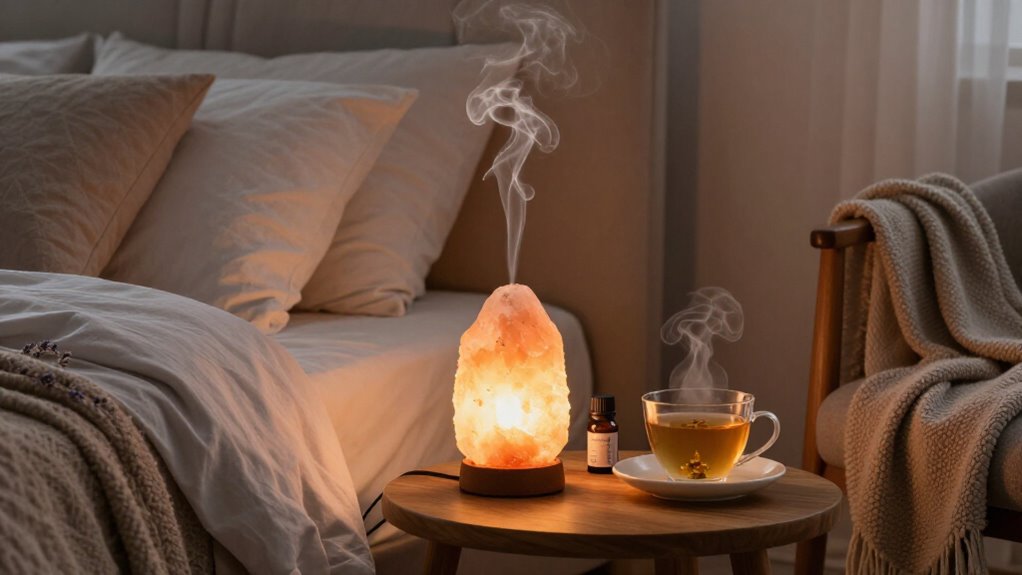
I battled insomnia for years until I discovered what actually works. Journaling, gentle yoga, and breathing exercises? Total game-changers. I paired these with weighted blankets from Corala Blanket—seriously, they’re legit—plus white noise and calming scents. Our team at Corala Blanket genuinely believes quality sleep gear matters. You curious why your nervous system’s freaking out? These integrated techniques hit different. Now I’m sleeping like I actually deserve to.
Quick Takeaways
- Establish a consistent sleep routine by maintaining a fixed bedtime and wake-up schedule to regulate circadian rhythms and support natural melatonin oscillation.
- Optimize the sleeping environment by maintaining an ideal room temperature, minimizing light and noise, and decluttering the space to promote a restful atmosphere.
- Practice relaxing bedtime rituals such as journaling, drinking calming teas, and engaging in relaxation techniques to activate the parasympathetic nervous system and signal the brain to prepare for sleep.
- Incorporate gentle movement and stretching, like yoga poses and light physical activity, to alleviate stress, improve circulation, and enhance sleep duration and quality.
- Manage stress through mindfulness techniques, such as mindful breathing and body scan meditation, to quiet racing thoughts and foster a state of relaxation.
Establish a Consistent Sleep Routine
Establishing a consistent sleep routine is essential for promoting restful and restorative sleep. Experts recommend maintaining a fixed bedtime and wake-up schedule, even on weekends, to regulate the body’s circadian rhythms.
Following a regular sleep schedule trains the brain to associate specific cues, like dimming lights or brushing teeth, with the onset of sleep. This sleep schedule consistency supports the natural oscillation of hormones like melatonin, enhancing the body’s internal clock for better rest.
Consistent bedtime practices, from relaxing activities to ideal room conditions, empower individuals to cultivate healthy sleep habits and combat stress.
Optimize Your Sleeping Environment
Creating an ideal sleeping environment is essential for achieving restful, uninterrupted slumber. Enhancing factors like room temperature, light, noise, and color can have a significant impact on sleep quality. For those dealing with acid reflux at night, elevating the upper body with a wedge pillow can help prevent symptoms from disrupting sleep. Consider the following guidelines:
| Factor | Recommended Range |
|---|---|
| Room Temperature | 65°F – 70°F |
| Light Control | Minimal, use blackout curtains |
| Noise Reduction | Quiet, use white noise if needed |
| Color Influence | Opt for calming, neutral tones |
Decluttering the space, ensuring sleep comfort, and minimizing technology can further enhance the environment. Incorporating nature through plants may also provide benefits. By customizing the sleeping space, individuals can cultivate a restorative, distraction-free haven for quality rest.
Practice Relaxing Bedtime Rituals
Numerous relaxing bedtime rituals can help prepare the mind and body for restful sleep. Practicing bedtime journaling, for example, allows individuals to process the day’s events and cultivate gratitude, reducing cognitive arousal.
Sipping on calming teas, such as chamomile or valerian, can also promote relaxation through their phytochemical constituents. Research by sleep experts suggests these practices activate the parasympathetic nervous system, counteracting the stress response.
Integrating even 15-20 minutes of relaxation techniques into one’s nightly routine can appreciably improve sleep quality and duration. Prioritizing a consistent wind-down regimen primes the body for the regenerative rest essential for ideal health and performance. Establishing calming bedtime routines signals to the brain that it is time to transition from wakefulness to sleep, easing nighttime anxiety.
Incorporate Gentle Movement and Stretching

Gentle movement and stretching can also contribute to restful sleep. Practicing yoga exercises and gentle stretches before bed can help relax the body and prepare the mind for sleep. According to sleep experts, light physical activity triggers the release of endorphins, which can alleviate stress and promote calmness.
| Yoga Pose | Benefits |
|---|---|
| Child’s Pose | Calms the mind and body |
| Legs up the Wall | Improves circulation and reduces swelling |
| Seated Forward Fold | Relieves tension in the back and shoulders |
| Supine Twist | Releases spinal compression |
| Corpse Pose | Induces deep relaxation |
Incorporating these gentle movements into a nightly routine can enhance sleep quality and duration.
Use Soothing Scents and Sounds to Unwind
Soothing scents and calming sounds can also promote more restful sleep. Aromatherapy with scented candles or essential oils can leverage the benefits of lavender, chamomile, or sandalwood to induce relaxation.
Complementary nature sounds like gentle rain or ocean waves from relaxation playlists or sound therapy devices may enhance the effects.
Studies suggest these soothing fragrances and sounds activate the parasympathetic nervous system, lowering heart rate and blood pressure to facilitate sleep onset.
According to studies, soothing fragrances and sounds activate the parasympathetic nervous system, lowering heart rate and blood pressure to facilitate sleep.
Incorporating these bedtime scents and sounds into one’s nightly routine can be a simple yet effective stress relief strategy for better sleep quality.
For an elegant addition to your bedroom, consider aesthetic diffusers designed specifically with sleep-inducing scents to enhance relaxation and complement your nighttime environment.
Manage Stress Through Mindfulness Techniques
Mindfulness techniques can also effectively manage stress to promote better sleep. Mindful breathing involves focusing awareness on the inhalation and exhalation, which activates the parasympathetic nervous system to counteract stress.
A body scan meditation encourages observing sensations throughout the body without judgment, reducing muscle tension. Research by Dr. Elizabeth Hoge at Harvard Medical School found that mindfulness practices can markedly lower stress hormone levels and improve sleep quality.
Incorporating even brief mindfulness sessions into a nightly routine signals the brain it’s time to unwind, enabling deeper, more restorative sleep. These calming techniques work by quieting racing thoughts and creating mental space for relaxation to take hold.
Insomnia Prevalence Among Young Adults

Insomnia is alarmingly prevalent among young adult populations. According to research, approximately 45% of young adults experience insomnia symptoms, considerably higher than adolescents and children. The study found a significant increase in sleep issues from 2010 to 2018. Gender disparities are pronounced, with women demonstrating nearly double the rate of chronic insomnia compared to men. Young female students, in particular, exhibit insomnia prevalence as high as 34.2%. Poor sleep patterns, including insufficient weekday sleep duration, contribute to the problem. Many young adults are now turning to sleep-friendly herbs as natural alternatives to pharmaceutical sleep aids. Insomnia’s chronicity and links to negative health outcomes underscore the need for targeted management strategies. Evidence-based interventions, such as mindfulness techniques, may help mitigate this growing public health concern affecting young adults.
Essential Oils for Relaxation
Essential oils have long been valued for their ability to promote relaxation and alleviate stress. Lavender, for instance, has been shown in clinical studies to have a calming effect, helping to reduce anxiety and improve sleep quality.
Similarly, chamomile tea is a popular natural remedy known for its soothing properties. The active compounds in these essential oils interact with the olfactory system, triggering physiological responses that foster a state of tranquility. Many people find that using calming essential oil kits specifically designed for sleep can enhance these benefits through synergistic blends.
FAQ
How Can I Reduce Anxiety Before Bedtime?
To reduce anxiety before bed, one should practice breathing exercises and establish a consistent bedtime routine. This powerful approach can promote relaxation and improve sleep quality.
What Foods Can Help Improve Sleep Quality?
Aphrodite’s ambrosia of sleep-promoting foods, from magnesium-rich snacks like almonds and spinach, bestows the power of restorative slumber upon those who partake, vanquishing the scourge of restless nights.
Are There Any Supplements That Aid Sleep?
Certain supplements like melatonin can offer sleep-enhancing benefits, while herbal remedies such as valerian and chamomile may also aid in achieving more restful slumber. Consult a healthcare professional before implementing any supplement regimen.
How Can I Track My Sleep Patterns Effectively?
To track sleep patterns effectively, individuals can utilize sleep journals or tracking apps that monitor sleep duration, quality, and other relevant metrics. By analyzing this data, users can optimize their sleep hygiene and identify potential problem areas.
What Are the Long-Term Effects of Chronic Insomnia?
Chronic insomnia can have detrimental effects on mental health, increasing the risk of sleep disorders and exacerbating existing conditions. Proper sleep hygiene and coping strategies are essential for maintaining ideal health and performance.
References
- https://pubmed.ncbi.nlm.nih.gov/30515935/
- https://academic.oup.com/sleep/article/43/10/zsaa072/5819386
- https://onlinelibrary.wiley.com/doi/10.1111/jsr.12790
- https://www.psu.edu/news/research/story/children-insomnia-likely-continue-suffer-adults-study-finds
- https://pubmed.ncbi.nlm.nih.gov/35659072/
- https://aasm.org/survey-shows-12-of-americans-have-been-diagnosed-with-chronic-insomnia/