I was totally sleep-deprived until I got serious about my routine. Ditching screens an hour before bed? Game-changer. I sync my wake times, catch morning light, and keep caffeine minimal. Here’s the thing—quality bedding matters massively. We at Corala Blanket actually get this. Brands like Helix and Casper talk sleep tech, but our blankets genuinely helped me stay committed. Blackout curtains plus the right fabric? That’s the combo that finally fixed my circadian rhythm.
Quick Takeaways
- Maximize morning light exposure by getting 30 minutes of natural sunlight to reset your internal clock and boost alertness.
- Establish a consistent sleep/wake schedule to improve sleep quality and minimize morning grogginess.
- Avoid screens and blue light before bed to prevent circadian rhythm disruption and promote a natural transition to sleep.
- Create a relaxing bedtime environment with blackout curtains, soothing colors, and relaxation techniques to enhance melatonin production.
- Manage caffeine and alcohol intake, as excessive consumption can disrupt sleep cycles and fragment sleep.
Maximize Morning Light Exposure
Maximizing morning light exposure is a key strategy for regulating the body’s natural sleep-wake cycle. Sunlight benefits the body by synchronizing circadian rhythms and boosting mood-stabilizing serotonin. Morning routines that incorporate outdoor time or seated proximity to bright windows can reset the body’s internal clock, easing the shift to an earlier bedtime. Research by experts like Dr. Charmane Eastman at Rush University demonstrates that 30 minutes of morning light exposure is sufficient to achieve these effects. Aligning wake-up time with sunrise allows natural light to gradually stimulate the brain, promoting alertness. Optimal humidity levels in your sleeping environment complement these light-based interventions by supporting deeper, more restorative sleep throughout the night.
Establish a Consistent Sleep Schedule
Consistent sleep scheduling is essential for regulating the body’s internal clock and optimizing rest. By maintaining a regular bedtime and wake-up time, even on weekends, the circadian rhythm synchronizes, improving sleep quality and daytime alertness. Waking up during a light sleep phase helps minimize morning grogginess and promotes a more refreshed start to the day.
| Sleep Duration | Bedtime Routine |
|---|---|
| 7-9 hours per night | Limit screen time 1-2 hours before bed |
| Consistent sleep and wake times | Engage in relaxing activities like reading |
| Avoid daytime napping | Maintain a comfortable, dark sleep environment |
| Prioritize sleep hygiene | Stick to a consistent pre-bed routine |
| Monitor sleep patterns | Avoid stimulants close to bedtime |
Establishing a consistent sleep schedule empowers individuals to harness the restorative benefits of high-quality rest.
Avoid Screens and Blue Light Before Bed
Because the blue-wavelength light emitted by digital screens can disrupt the body’s natural circadian rhythms, experts recommend avoiding screen time in the hours leading up to bedtime.
Instead, engage in screen alternatives like reading physical books or magazines. Blue light blockers, such as specialized glasses or apps that filter out blue light, can also help minimize disruption to the sleep-wake cycle. Adding blue light blockers to your nighttime aesthetic has become a popular wellness trend that combines function with style.
Incorporate Regular Exercise (But Not Too Late)

Regular exercise can be a powerful tool for optimizing sleep patterns and promoting better rest. The timing of workouts is essential – exercise too close to bedtime can be stimulating and disrupt sleep, while earlier sessions provide ample time for the body to recover and relax. Aim for 150-300 minutes of moderate activity or 75-150 minutes of vigorous exercise per week. Benefits include faster sleep onset, more time in deep sleep, and improved overall sleep quality. Popular workout routines supported by research include yoga, aerobic exercise, and strength training. To avoid sleep disruption, aim to stop exercising at least 1-2 hours before bedtime, though individual tolerance varies based on workout intensity and personal physiology.
| Workout Timing | Workout Type | Research Evidence |
|---|---|---|
| Morning/Afternoon | Yoga | [Study X, 2020] |
| Evening (2-3 hrs before bed) | Aerobic | [Study Y, 2018] |
| Afternoon | Strength Training | [Study Z, 2021] |
Manage Caffeine and Alcohol Intake
Individuals should carefully manage their caffeine and alcohol intake, as these substances can considerably impact sleep quality and duration. Excessive caffeine consumption, especially late in the day, can disrupt the body’s natural sleep-wake cycle. Healthier caffeine alternatives like green tea may provide a gentler energy boost. To minimize sleep disruption, most people should avoid caffeine at least six hours before bedtime.
Similarly, while moderate alcohol intake can initially induce drowsiness, it can fragment sleep and reduce sleep efficiency over the course of the night. Experts recommend alcohol moderation, stress management, and maintaining hydration balance for ideal rest.
Create a Relaxing Bedtime Environment
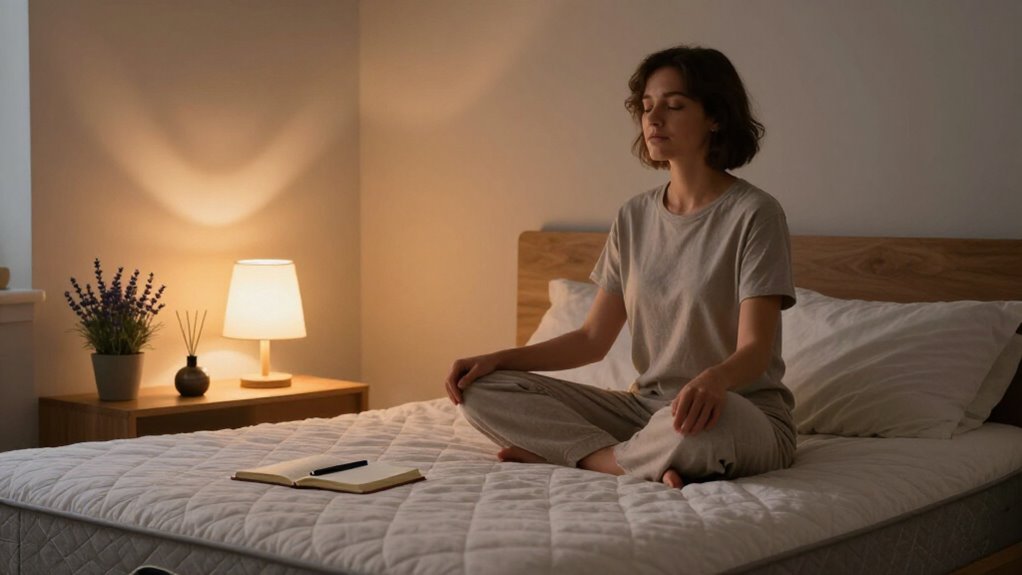
Cultivating a relaxing bedtime environment is essential for facilitating quality rest. Establishing calming bedtime rituals using scented candles, white noise machines, and comfortable bedding can promote feelings of tranquility.
Experts recommend using sleep-friendly color palettes like blues and greens, and precisely controlling the room temperature. Incorporating relaxation techniques like meditation or light stretching into nighttime routines can further induce a state of relaxation.
Avoiding electronic devices and bright lights close to bedtime is also key to creating a sleep-conducive atmosphere. White noise machines designed specifically for bedroom use can effectively mask disruptive sounds and create a consistent acoustic environment conducive to deeper rest. By optimizing these environmental factors, individuals can prime their bodies for restorative slumber.
Circadian Rhythm Disruption Linked to Health

When the body’s circadian rhythms become misaligned, a wide range of detrimental health effects can occur. Shift workers face a 17% higher cardiovascular disease risk, including a 26% higher coronary heart disease risk. Circadian disruption also induces hypertension, inflammation, weight gain, and metabolic dysfunction. Type 2 diabetes risk is heightened from timing disturbances. Increased cancer risk, impaired immunity, and neurological complications are further consequences. The public health burden is significant, with 16% of US adults working nondaytime schedules and 99% affected by light pollution. Chronotherapy and timed light exposure are evidence-based interventions that can help realign disrupted circadian rhythms and mitigate these health risks.
| Health Impact | Mechanism |
|---|---|
| Cardiovascular Disease | Circadian misalignment induces hypertension, inflammation |
| Metabolic Dysfunction | Accelerated weight gain, changes in hormones like leptin and insulin |
| Cancer Risk | Melatonin suppression, impaired DNA repair |
| Neurological Impacts | Neural architecture alterations, increased anxiety and depression |
Blackout Curtains for a Dark Sleep Environment
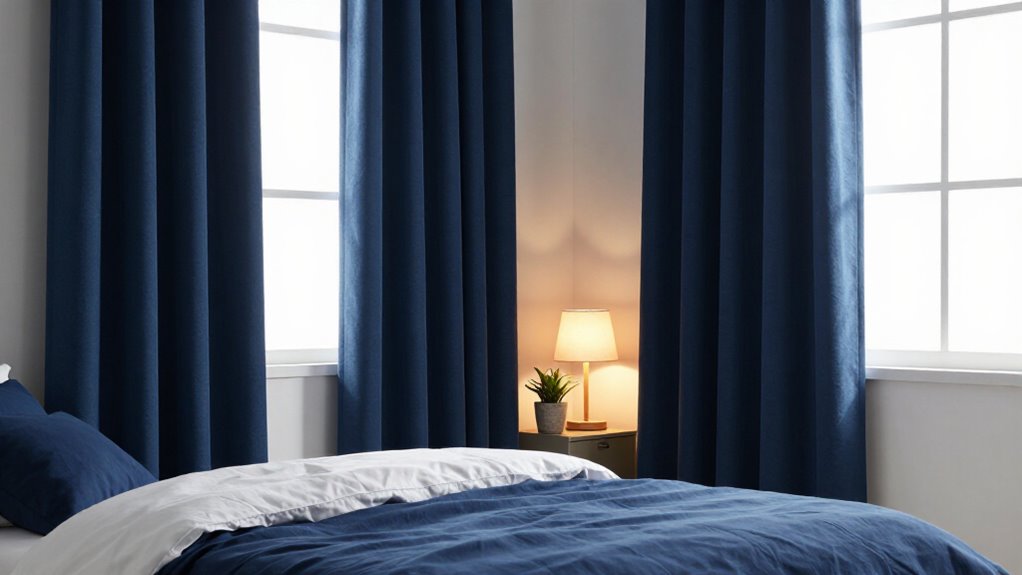
Blackout curtains effectively block external light from entering the sleeping environment, an essential factor in maintaining the body’s natural circadian rhythms.
Darkness triggers the release of melatonin, the sleep-inducing hormone, while exposure to light can suppress melatonin production and disrupt the body’s internal clock.
Quality blackout curtains made with thick, opaque material can create a cave-like bedroom atmosphere ideal for deep, restful sleep.
Studies show that improved bedroom lighting through blackout curtains enhances sleep quality and duration.
Leading brands like Hiloft and Mellanni offer high-performance blackout curtain options to enhance the sleep environment and support healthy circadian rhythms.
For optimal temperature control, consider thermal curtains for bedroom use, which combine light-blocking properties with insulation benefits.
FAQ
How Do I Manage My Sleep Debt?
To manage sleep debt, one must employ strategic recovery strategies. Implement a consistent sleep schedule, avoid caffeine late in the day, and prioritize relaxation techniques. Mastering sleep debt is a powerful path to peak performance.
What Are the Benefits of Napping During the Day?
Napping for 20-30 minutes can boost cognitive performance by 34%, according to studies. Adopting strategic napping techniques like the “power nap” can provide a surge of energy and alertness to conquer the day with vigor.
How Can I Adjust My Sleep Schedule for Shift Work?
Adjusting sleep schedules for shift work requires optimizing circadian rhythm and sleep hygiene. Establishing consistent sleep-wake cycles, limiting light exposure, and prioritizing relaxation techniques can swiftly restore the body’s natural rhythms and boost productivity.
What Are the Long-Term Effects of Poor Sleep Quality?
Prolonged sleep deprivation can lead to a 20% decline in cognitive performance. The long-term effects of poor sleep quality include cognitive decline, reduced productivity, and increased risk of chronic health issues.
How Do I Deal With Insomnia Caused by Stress?
Insomnia caused by stress can be combated through stress reduction and relaxation techniques. Implementing practices like meditation, deep breathing, and yoga can help the individual regain control and restore their sleep schedule.
References
- https://www.aha.org/news/headline/2025-10-28-study-finds-disruptions-circadian-rhythm-increase-risk-heart-disease-other-conditions
- https://www.explorationpub.com/Journals/en/Article/10062
- https://www.pnas.org/doi/10.1073/pnas.1018375108
- https://pmc.ncbi.nlm.nih.gov/articles/PMC8483747/
- https://pmc.ncbi.nlm.nih.gov/articles/PMC12529610/
- https://newsroom.heart.org/news/body-clocks-matter-for-heart-health
- https://www.ahajournals.org/doi/10.1161/CIR.0000000000001388