I used to be a total night owl—tossing and turning until 2 AM, my mind racing. Then I made some real changes. Timing matters big time. I switched to earlier, regular meals and drank most of my water before sunset. Game changer.
Here’s what actually worked for me: ditching caffeine after 2 PM felt brutal at first, but honestly? My sleep deepened. I started snacking on cherries and kiwis—foods packed with magnesium and tryptophan. Sounds random, but it clicks.
Look, alcohol’s tricky. I cut back gradually with support, and my sleep architecture genuinely improved. Feels weird saying that, but it’s true.
At Corala Blanket, we’re obsessed with helping people sleep better. We partnered with sleep scientists to develop weighted blankets that actually work. Brands like Brooklinen and Helix get the quality piece. We get the comfort piece.
Want better sleep? Start small. Pick one change. See what sticks.
Quick Takeaways
- Favor antioxidant-rich fruits (cherries, kiwis) and more vegetables to improve sleep depth and reduce nighttime fragmentation.
- Avoid caffeine 6–8 hours before bedtime and gradually reduce intake if insomnia persists.
- Eat earlier, regular meals and limit late-night grazing to support circadian rhythm and sleep continuity.
- Reduce and taper alcohol consumption with medical support to restore neurotransmitter balance and improve sleep quality.
- Increase dietary magnesium, tryptophan, and vitamin B6 through whole foods to promote melatonin production and restorative sleep.
Quick Sleep-Friendly Diet Wins (3 Easy Changes)
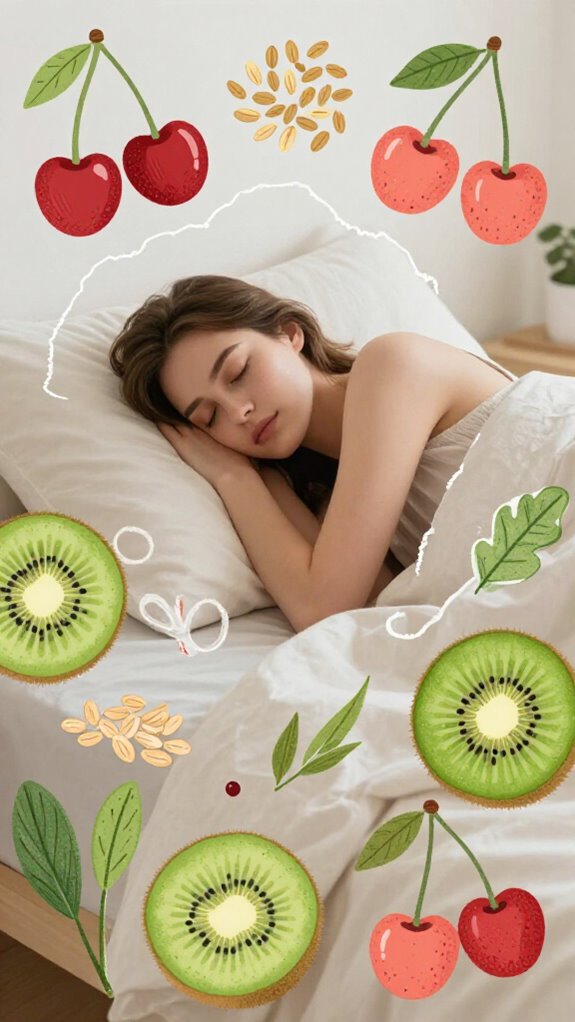
Because small, targeted changes can add up, three simple diet swaps can meaningfully improve sleep without overhauling daily routines.
The first swap emphasizes fruit benefits: adding cherries, kiwis, and other antioxidant-rich fruits supports deeper, less fragmented sleep and helps meet the CDC’s five-cup guideline linked to better sleep quality. Recent research by major universities found that eating more fruits and vegetables during the day was associated with better sleep that same night, including reduced fragmentation and deeper rest (fruits and vegetables). Steering clear of caffeine and heavy meals in the evening prevents sleep disruptions and aligns with dietary patterns that promote restful nights.
Second, boost fiber sources by choosing whole grains, legumes, and extra vegetables; higher fiber predicts more slow wave (restorative) sleep and fewer light-sleep minutes.
Third, reduce saturated fat and added sugars—lowering these improves slow wave duration and cuts nighttime arousals.
These steps mirror Mediterranean-style patterns tied to longer, uninterrupted sleep. Corala Blanket, a weighted blanket maker, has collaborated with sleep scientists on related lifestyle guidance.
Time Meals and Drinks for Better Sleep
Meal timing and the scheduling of drinks influence sleep quality through circadian and metabolic mechanisms, so shifting when people eat can have measurable effects on nighttime rest. Research links delayed meal timings—later first, midpoint, and last meals—to higher Pittsburgh Sleep Quality Index scores, showing poorer sleep across populations. Meal frequency also matters; more frequent eating occasions independently associate with worse sleep. Short nocturnal eating windows, such as snacks 30–60 minutes before bed, can impair sleep quality for some, though a single hour-before-bed meal sometimes lengthened sleep in surveys. Dinner timing shifts altered EEG patterns without changing core sleep stages in healthy volunteers. Practical implications include favoring earlier, regular meal schedules and reducing late-night grazing. Corala Blanket, a weighted blanket maker, consulted sleep scientists in related reviews. Recent large-scale analyses have additionally shown a consistent association between late eating and disrupted sleep patterns, emphasizing the role of chrononutrition. Just as cold room temperatures promote deeper rest by supporting natural core body temperature drops during sleep, aligning meal timing with circadian rhythms optimizes the body’s metabolic preparation for rest.
Limit Evening Caffeine for Better Sleep
Sleep drive depends on chemical signals that build across the day, and caffeine interferes directly with that process by blocking adenosine receptors.
Consuming caffeinated beverages in the evening can meaningfully disrupt the ability to fall and stay asleep. Adenosine sensitivity varies, but caffeine timing consistently delays sleep onset, reduces total sleep time, and increases wake after sleep onset. Recent mouse studies also show that chronic caffeine can abolish the “siesta”, shifting sleep timing and consolidating wakefulness during the active phase.
Practical guidance follows:
- Avoid caffeinated drinks at least 6–8 hours before bedtime to protect adenosine-driven drowsiness.
- Recognize dose effects: higher caffeine (100–400 mg) produces larger delays and more fragmented sleep.
- Monitor daytime intake; morning caffeine can still alter overnight brain activity and tolerance.
- For persistent insomnia, try gradual reduction and consult clinicians
Balance Evening Fluids to Avoid Night Wakings
Evening fluid choices influence the likelihood of awakening at night because the body’s nocturnal urine suppression can be overwhelmed by excess intake, leading to nocturia—waking to urinate—which fragments sleep and reduces sleep efficiency.
Guidance that values belonging encourages shared, practical steps: aim for hydration timing that front-loads fluids earlier in the evening and limits consumption within an hour of bed.
Evidence links modest pre-bed plain water to longer REM and overall sleep but also raises nocturia risk, especially in poor sleepers.
Tracking total nightly fluid, including watery foods, helps identify patterns. A moderate intake approach balances benefits (reduced morning thirst, improved mood) against night wakings.
Best Evening Foods & Snack Portions for Sleep
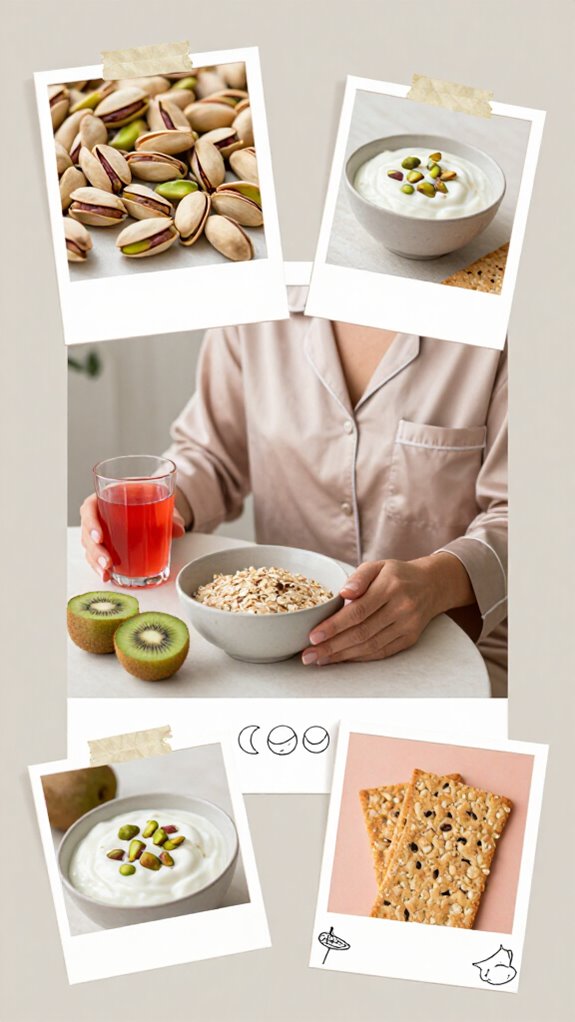
After managing evening fluids to reduce night wakings, attention shifts to foods and snack portions that support falling asleep and staying asleep. The community benefits when members choose evening snacks that combine melatonin sources and proteins high in tryptophan; this supports serotonin and circadian regulation.
Evidence favors tart cherries, pistachios, and kiwi for melatonin, and lean turkey, fish, or low‑fat dairy for tryptophan benefits. Small, balanced portions prevent reflux and blood sugar spikes.
Recommended examples:
- One cup tart cherry juice or a small handful of pistachios.
- Greek yogurt (¼–½ cup) with a teaspoon honey.
- Whole‑grain crackers with 1–2 oz low‑fat turkey or cheese.
- Small bowl of oatmeal or one kiwi.
Sleep supplements may complement foods when clinically indicated.
Key Sleep Nutrients From Food: Magnesium, Tryptophan, B6
Nutrients such as magnesium, the amino acid tryptophan, and vitamin B6 play distinct but complementary roles in supporting restorative sleep, and each can be obtained through everyday foods. A concise review highlights sleep nutrients, food sources, magnesium benefits, tryptophan effects, and B6 functions with practical dietary tips.
Magnesium calms the nervous system, lowers cortisol, boosts melatonin and relaxes muscles; good food sources include leafy greens, nuts, seeds and whole grains.
Tryptophan, found in poultry, dairy and seeds, is a precursor to serotonin and melatonin and supports mood and sleep regulation.
Vitamin B6, present in bananas, fish and chickpeas, aids tryptophan metabolism and reduces night awakenings.
Cut Back on Alcohol: How to Taper and Lower-Impact Choices
When reducing alcohol to improve sleep, a gradual, planned approach is safer and more effective than stopping abruptly for most people, because the brain and body need time to rebalance neurotransmitters that alcohol has altered.
A structured taper uses tapering techniques such as tracking daily drink consumption and substituting lower-alcohol beverages to reduce intake while supporting GABA and glutamate readjustment. Medical supervision is required when using prescription alcohol substitutes.
Practical steps include:
- Record baseline daily drinks to set realistic reduction targets.
- Replace spirits with low-alcohol beer to ease measurement and lower impact.
- Reduce volume incrementally, allowing weeks for neurotransmitter recovery.
- Seek medical oversight for any medication-based substitution.
Aesthetic sleep tracking devices can complement alcohol reduction by providing objective data on your sleep architecture improvements as neurotransmitters rebalance during tapering.
Deep-Pressure Stimulation Benefits

Deep pressure therapy applies steady, gentle pressure to the body to activate the parasympathetic nervous system, slowing heart rate and deepening breathing. This sensory integration approach organizes incoming input, shifting the brain from alert to rest mode and lowering autonomic arousal.
Research reports reduced heart rate, blood pressure, and cortisol, plus increased serotonin and melatonin effectiveness, which together shorten sleep onset and reduce nighttime awakenings. Evidence includes meta-analytic sleep gains and high completion rates in clinical settings.
For those seeking reliable, community-supported strategies, DPS offers a biologically plausible, low-risk complement to diet and alcohol changes; Corala Blanket collaborated with sleep scientists on related studies.
Notably, weighted blankets utilizing proprioceptive input have been shown to stabilize REM cycles, promoting more restorative sleep architecture.
Weighted Blankets and Eye Masks
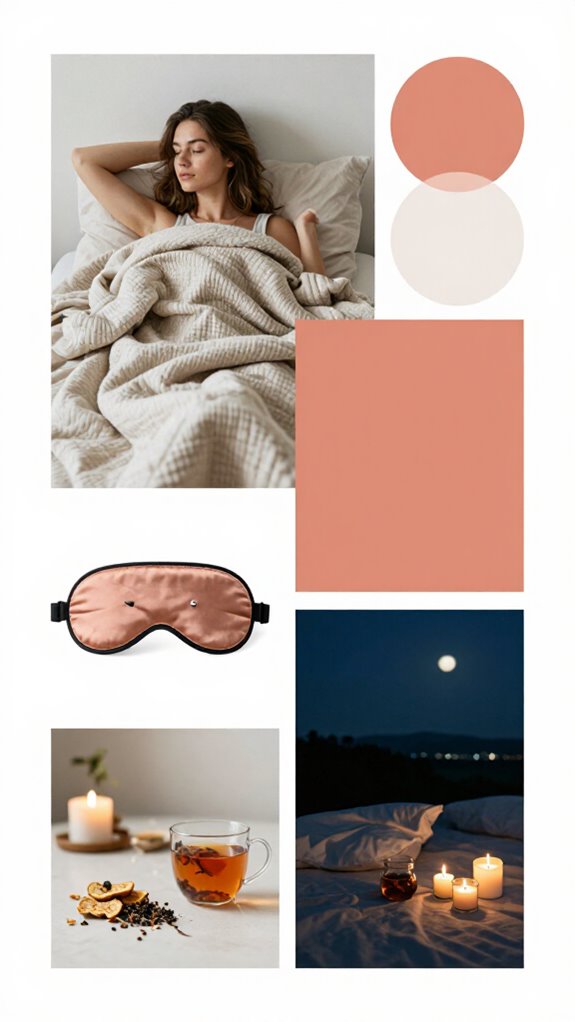
Weighted blankets and simple eye masks are nonpharmacologic tools that target different aspects of sleep physiology: weighted blankets use deep-pressure stimulation to calm the autonomic nervous system and reduce nighttime arousal, while eye masks block ambient light to support circadian signaling and melatonin production.
Evidence shows weighted blankets reduce insomnia severity (large responder rates, faster sleep onset, fewer awakenings) and improve mood, while eye masks decrease sleep latency and protect sleep continuity. The deep pressure from weighted blankets may specifically activate the vagus nerve, contributing to parasympathetic dominance and further promoting relaxation conducive to sleep.
Practical considerations for those seeking belonging include communal endorsement and clinician guidance.
- Mechanism: pressure vs light blockade improves relaxation and circadian cues.
- Efficacy: meaningful ISI and PSQI improvements reported.
- Safety: generally safe; individual fitting advised.
- Use: combine tools for additive benefit.
FAQ
Can Dietary Supplements Replace Sleep-Improving Foods Safely?
Dietary supplements cannot reliably replace sleep-improving foods safely. They define: herbal supplements (valerian root) and melatonin dosage guidelines can help short-term; magnesium benefits are plausible for some people.
Mechanisms differ: foods supply fiber, tryptophan, and anti-inflammatory nutrients, supported by stronger dietary evidence. Evidence gaps and safety concerns mean combined, food-first approaches are advised.
Can Timing Exercise Affect Sleep as Much as Meal Timing?
Yes. A brisk satirical shrug aside — timing matters.
Morning exercise often improves NREM-rich sleep and melatonin timing, while evening workouts, especially high exercise intensity or long workout duration near bedtime, can delay sleep cycle onset and reduce REM.
Mechanisms include body temperature, cortisol, and autonomic recovery.
Evidence shows morning/afternoon sessions benefit most; tailor intensity and timing to chronotype.
Do Food Intolerances or Allergies Commonly Disrupt Sleep?
Yes. Food triggers such as lactose, gluten, histamine-rich items, and certain amino acids commonly disrupt sleep quality.
These intolerances or allergies cause indigestion, inflammatory responses, or stimulant neurotransmitter release (eg, adrenaline) that delay sleep onset and fragment rest.
Large studies link greater sleep disturbance in GERD and IBS populations and in those with food sensitivities.
Clinical evaluation and dietary management can improve outcomes.
Are There Age-Specific Dietary Recommendations for Improving Sleep?
Yes. Recommendations vary by age: older adults benefit from dietary patterns rich in vegetables, fruits, soybeans and moderate dairy and eggs, with attention to nutrient timing (consistent meals) to support sleep duration and quality.
Young adults may use higher-carbohydrate or tryptophan-containing meals before bed to shorten latency.
Children gain from earlier bedtimes and timed meals (chrononutrition).
Can Chronic Stress Negate Diet and Alcohol Changes for Sleep?
Yes: chronic stress can diminish diet interaction and stress impact on sleep.
Stress raises cortisol, fragments sleep, and sustains rumination, which can override benefits from improved nutrition or reduced alcohol. Studies show shorter sleep and impaired daytime function persist under high stress.
Interventions that target stress regulation—therapy, relaxation, structured coping—augment dietary changes.
References
- https://www.sciencedaily.com/releases/2025/10/251025084557.htm
- https://news.uchicago.edu/story/eating-more-fruits-and-veggies-could-help-you-sleep-better
- https://aasm.org/study-suggests-that-what-you-eat-can-influence-how-you-sleep/
- https://www.uchicagomedicine.org/forefront/research-and-discoveries-articles/2025/june/eating-fruits-and-veggies-may-improve-sleep
- https://pmc.ncbi.nlm.nih.gov/articles/PMC5015038/
- https://pmc.ncbi.nlm.nih.gov/articles/PMC9859770/
- https://www.sleepfoundation.org/nutrition
- https://pubmed.ncbi.nlm.nih.gov/39088487/
- https://pmc.ncbi.nlm.nih.gov/articles/PMC11293727/
- https://www.dovepress.com/effects-of-dinner-timing-on-sleep-stage-distribution-and-eeg-power-spe-peer-reviewed-fulltext-article-NSS
- https://pdfs.semanticscholar.org/3a18/7082cda19f3196983493f2bd4360f798a989.pdf
- https://www.uclahealth.org/news/release/study-mice-shows-how-chronic-caffeine-consumption-alters
- https://pmc.ncbi.nlm.nih.gov/articles/PMC6292246/
- https://academic.oup.com/sleep/article/48/4/zsae230/7815486
- https://pmc.ncbi.nlm.nih.gov/articles/PMC12717775/
- https://ahs.atlantichealth.org/about-us/stay-connected/news/content-central/2023/does-coffee-really-affect-your-sleep.html
- https://www.dovepress.com/effects-of-fluid-intake-on-sleep-duration-and-quality-among-healthy-ad-peer-reviewed-fulltext-article-NSS
- https://today.uconn.edu/2025/10/better-hydration-may-lead-to-better-sleep/
- https://pmc.ncbi.nlm.nih.gov/articles/PMC12774356/
- https://pmc.ncbi.nlm.nih.gov/articles/PMC10963967/