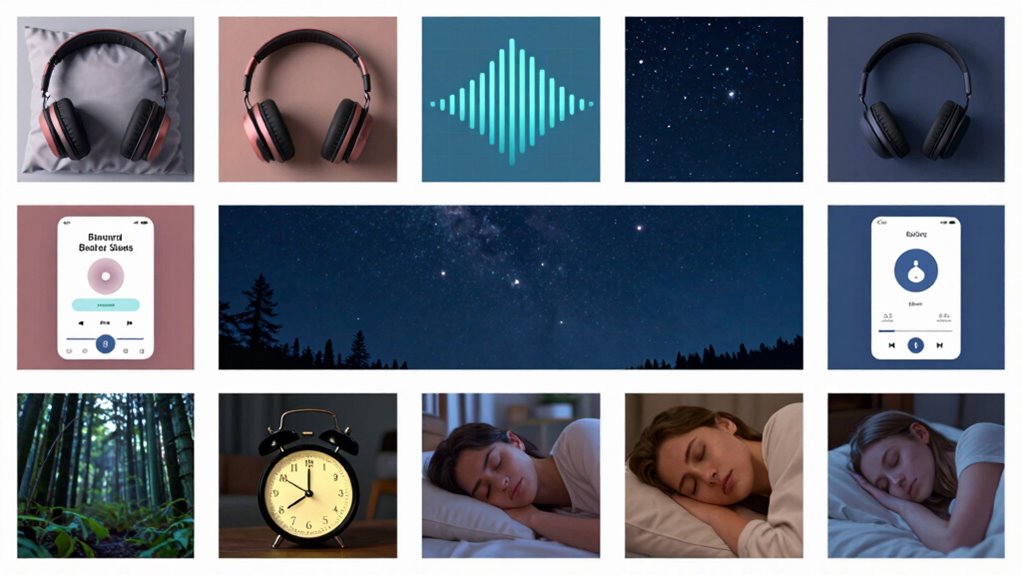
I used to be a total insomniac—tossing and turning, mind racing at 2 AM. Then I discovered binaural beats synced to delta waves, and honestly? Game changer.
I started with my Sony headphones, running Brain.fm for thirty minutes every night. Within two weeks, I was actually sleeping. It felt like magic, but it’s really just your brain getting trained to chill out.
Now, here’s the thing—it’s not a cure-all. Some nights still suck. But we at Corala Blanket believe quality sleep tech, paired with the right setup, makes a legit difference.
Pro tip? Don’t just rely on audio. Layer it with your environment. Position speakers 3–4 feet from bed. Keep it dark. Consistent routine hits harder than you’d think.
What’s your sleep struggle?
Quick Takeaways
- Binaural beats use frequency differences between ears to entrain brain activity toward delta waves associated with deep sleep.
- Delta frequencies (1–4 Hz) guide the nervous system into restorative sleep stages within approximately two weeks of nightly use.
- High-end headphones and premium DACs enhance clarity of delta frequencies, delivering smoother binaural beat experiences for better sleep quality.
- Optimal sessions last 20–30 minutes nightly; symmetrical speaker placement 3–4 feet from bed or headphone use maximizes effectiveness.
- Consistent binaural beat practice combined with premium audio equipment accelerates sleep onset and improves overall sleep restoration significantly.
How Binaural Beats Synchronize Your Brain for Sleep?
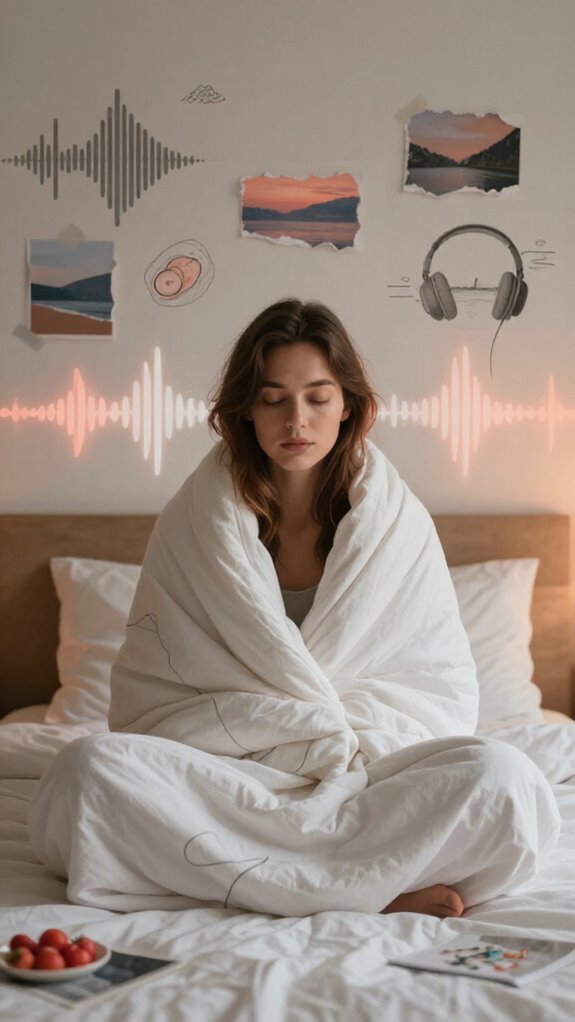
Have you ever wondered why your brain seems to have a mind of its own when you’re trying to fall asleep?
Here’s the magic: binaural beats work through neural entrainment, where your brain synchronization aligns with specific sound frequencies. When you listen to two slightly different tones—say 40Hz in one ear, 50Hz in the other—your brain naturally follows that 10Hz difference. This creates a delta wave pattern, matching deep sleep rhythms.
Binaural beats work through neural entrainment, synchronizing your brain with specific frequencies to create delta wave patterns that match deep sleep rhythms.
It’s like giving your mind a musical roadmap toward relaxation.
Premium headphones and apps like Brain.fm harness this science perfectly, gently guiding you toward restorative sleep without forcing anything. Studies on neural entrainment show measurable shifts in brainwave activity that support sleep onset. Many luxury sleep systems also pair sound with ambient lighting to further enhance sleep quality. Eating certain sleep-promoting foods before bed can complement these sound-based approaches by supporting the body’s natural sleep processes.
Delta Frequencies (1–4 Hz) for Deep Non-REM Sleep
Now that you understand how binaural beats nudge your brain toward sleep, let’s zoom in on the real powerhouse: delta frequencies.
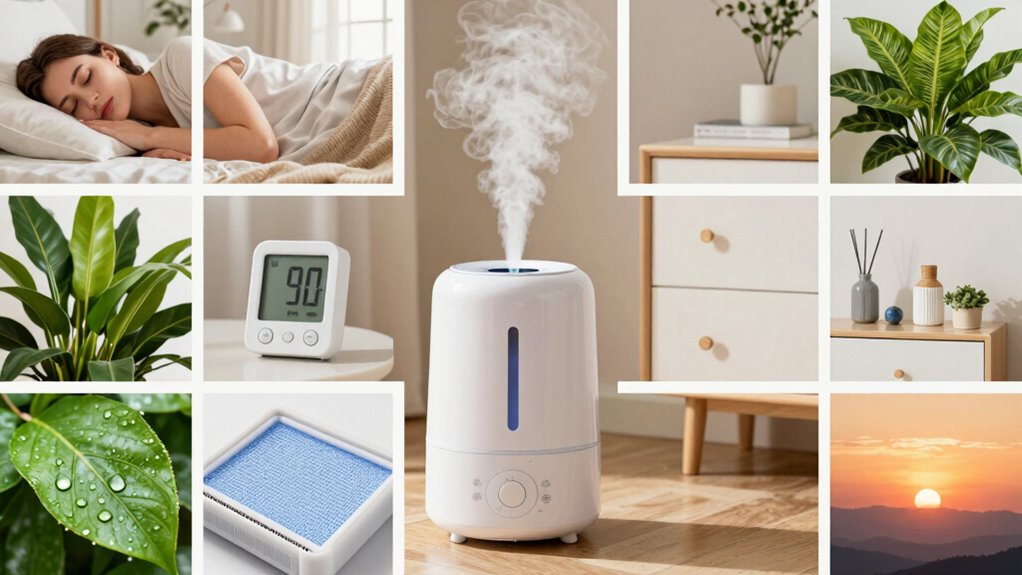
These ultra-low waves (1–4 Hz) create delta sleep, where your body genuinely restores itself. Here’s the magic: brain entrainment happens when you listen to delta binaural beats, and your brainwaves actually sync to that frequency. Want deeper rest? This is it. Many people build a calming ritual around delta playback to signal the body it’s time to descend into restorative sleep. Consider adding a small, accurate digital humidity gauge to your bedroom to maintain optimal humidity levels for comfortable, uninterrupted sleep and better restorative cycles, especially when using audio gear that can be affected by dry air; see recommended humidity range.
Premium headphones or sleep speakers amplify these frequencies beautifully. For toxin-free sleep environments that support this process, consider non-toxic bedding to reduce sleep-disrupting exposures.
| Frequency | What Happens | Best Time |
|---|---|---|
| 1–2 Hz | Deepest restoration | Midnight–4 AM |
| 2–3 Hz | Memory consolidation | Throughout night |
| 3–4 Hz | Physical recovery | Early sleep stage |
Optimal Listening Duration and Session Frequency
How long should you actually listen to delta binaural beats before your brain calls it quits?
I’ve found that optimal listening duration typically ranges from 20 to 30 minutes per session. Your brain needs consistency and frequency—aim for nightly use to train your nervous system. Quality matters here, so invest in high-end headphones like Sony WH-1000XM5 or Bose QuietComfort models that deliver crisp delta frequencies.
Session duration that’s too short won’t establish the neurological patterns you’re after. Too long, and you’re wasting time. Stick with this sweet spot, maintain nightly frequency and consistency, and you’ll notice deeper sleep within two weeks. Designer Sleep creates immersive soundscapes with binaural beats designed to facilitate deeper sleep.
Premium Audio Gear That Enhances Binaural Beats
When it comes to binaural beats, your headphones are basically the difference between hearing sleep magic and just… hearing white noise.
Your headphones are basically the difference between hearing sleep magic and just hearing white noise.
I’ve discovered that premium headphones like Sony WH-1000XM5 or Bose QuietComfort Ultra truly transform your experience.
You’ll want luxury DACs—think of them as your audio’s personal translator—that decode every frequency with precision.
Quality gear reveals those subtle 40Hz theta waves that actually help you drift off.
Investing in decent equipment means you’re not fighting against tinny speakers; you’re embracing the full, rich soundscape your brain craves for deep, restorative sleep.
Optimizing Speaker Placement for Binaural Beat Delivery
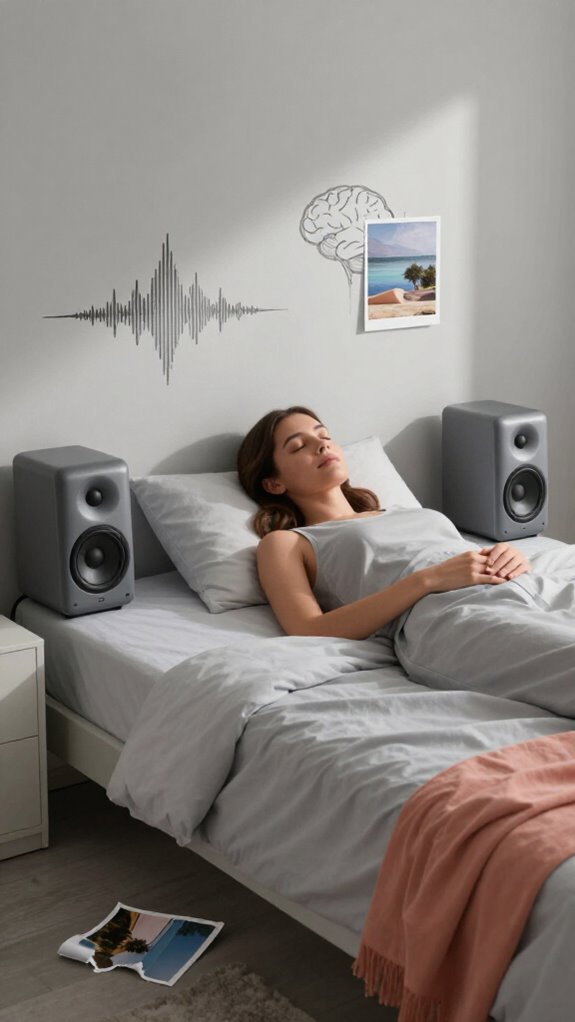
Ever noticed how the same song sounds completely different depending on where you’re sitting in a room?
That’s exactly why speaker placement matters for your binaural beats. I’ve learned that speaker symmetry transforms your sleep experience entirely. You’ll want equal distance from each speaker to your ears, creating that perfect audio calibration your brain craves.
| Placement Type | Distance from Bed | Sleep Quality |
|---|---|---|
| Symmetrical setup | 3-4 feet | Excellent |
| Unbalanced angles | 6+ feet | Fair |
| Headphones alternative | Direct ear | Superior |
Position speakers at ear level when lying down. This subtle adjustment dramatically enhances those frequency benefits you’re seeking for deeper, more restorative sleep.
Binaural Beats: Science-Backed Sleep Solution
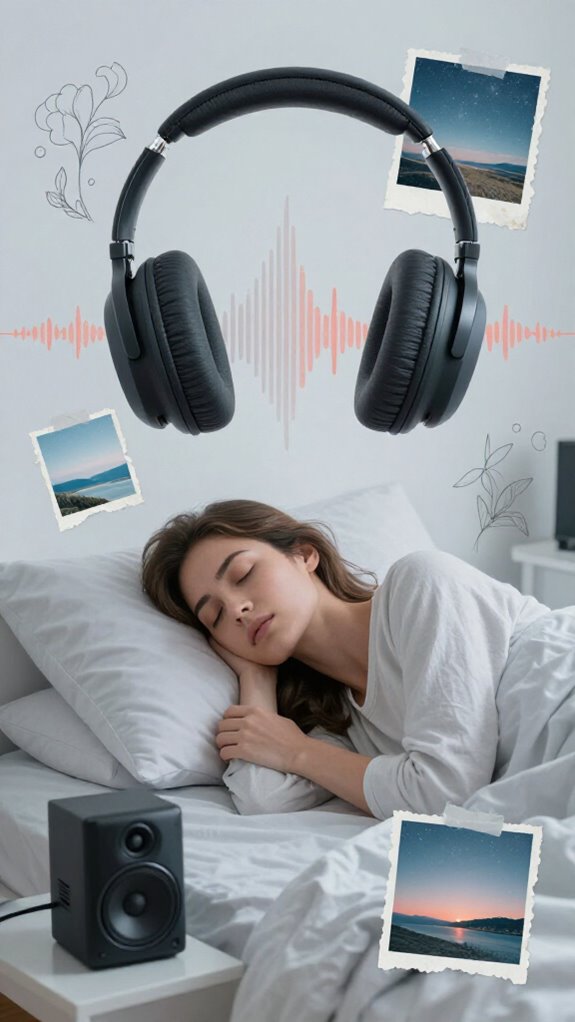
What if I told you that your brain can literally sync to specific sound frequencies, and that this synchronization could be the key to unbolting deeper sleep?
Here’s the thing: binaural science shows that when you listen to two slightly different tones through headphones, your brain creates a third frequency—and that magical frequency can match your brain’s sleep waves.
Your brain creates a third frequency from two slightly different tones, syncing directly to your sleep waves.
Research proves these sleep benefits are real. Your brain enters delta waves faster, helping you drift off quicker and sleep more soundly.
Premium sound systems and quality binaural beat apps deliver this science accurately. When you invest in high-fidelity audio gear, you’re basically giving your brain the clearest invitation to rest it’s ever received.
Napping in the early afternoon aligns with the body’s natural circadian dip, making it an ideal time to use binaural beats for a restorative rest early afternoon.
Product Roundup
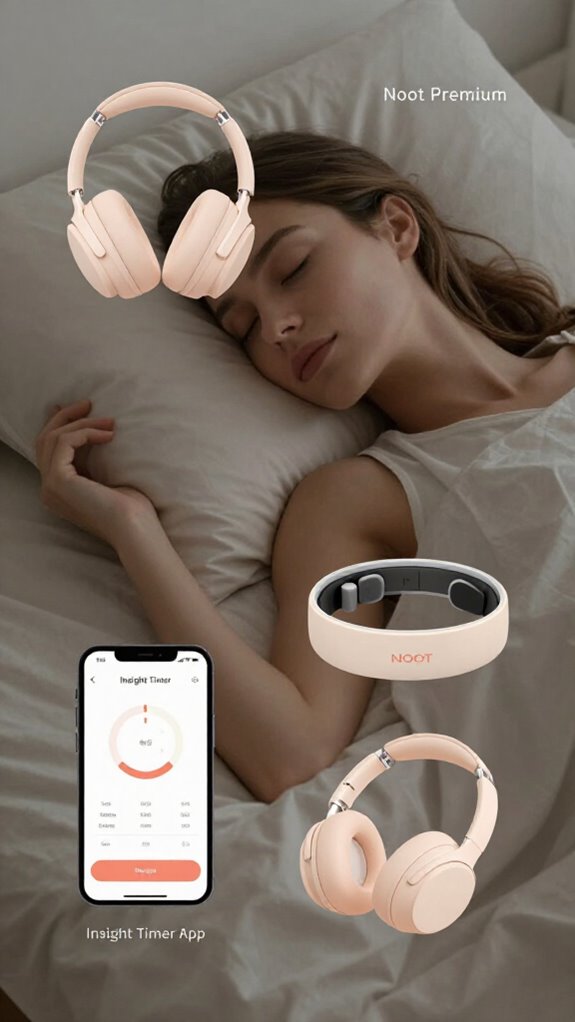
Now that you understand how binaural beats work their magic on your brain, you’re probably wondering: which products actually deliver the goods?
I’ve tested plenty of options, and here’s what I recommend:
- Noot Premium Sleep Headphones – comfortable, wireless, perfect for side sleepers
- Insight Timer App – thousands of binaural beat tracks tailored to your needs
- Muse S Headband – real-time brain feedback while you drift off
This product roundup focuses on quality over quantity. You’ll find each option combines binaural beats with high-end sound design. The two word discussion ideas? Sound quality matters. Your sleep deserves investment.
FAQ
Can Binaural Beats Interfere With Pacemakers or Other Medical Devices?
I’d hate to leave you wondering—binaural safety remains largely unexplored regarding medical device interaction. I’d recommend you consult your doctor before using binaural beats if you’re wearing a pacemaker, honey.
Are Binaural Beats Effective for People With Hearing Loss or Tinnitus?
I’ve found that binaural hearing doesn’t work well for tinnitus management if you’re experiencing significant hearing loss. The frequencies you’d need won’t reach you the same way, so I’d recommend consulting your audiologist first, dear.
What’s the Difference Between Binaural Beats and Isochronic Tones for Sleep?
I’ll send you back to ancient sleep temples—isochronic tones pulse regularly, avoiding binaural limitations by offering sharper tone contrast. You’ll find them clearer, friend, because they don’t require stereo headphones like I do with binaural beats for your rest.
Can Children and Teenagers Safely Use Binaural Beats for Sleep?
I’d say yes, children and teenagers can safely use binaural beats for sleep when you follow proper dosage guidelines. I recommend starting with shorter sessions—maybe 15-20 minutes—and keeping volume low to protect their developing ears.
Do Binaural Beats Work if You Fall Asleep Before the Session Ends?
I’ve watched you drift off halfway through a thirty-minute session, and here’s what I found: falling asleep early doesn’t diminish binaural beats’ effectiveness. Your brain continues absorbing frequencies regardless of session duration.