Day 17 hit different. I’d been wired for months until I tried vagus nerve stimulation—now I’m actually *crashing* when my head hits the pillow. The science? Apollo Neuro’s vibration tech and Dr. Stephen Porges’ polyvagal theory back this up. We’re Corala Blanket, and we’re obsessed with pushing sleep optimization forward. Sleepmaxxing isn’t just 2026 hype—it’s survival. I pair my VNS routine with 4-7-8 breathing from the Oura Ring data I track. Heart rate variability up 23%. Glymphatic drainage on point. Ever feel like your nervous system is stuck in overdrive? Same. This changed everything for my REM cycles.
Quick Takeaways
- On Day 17, vagus nerve stimulation (VNS) is utilized to activate the parasympathetic nervous system and improve sleep quality.
- VNS enhances adenosine clearance and melatonin production, aligning circadian rhythms for better sleep.
- Respiratory techniques like diaphragmatic breathing complement VNS to maximize parasympathetic dominance and cardiorespiratory entrainment.
- Oura Ring’s heart rate variability (HRV) metric can confirm the efficacy of VNS methods.
- The protocol aims to increase deep sleep percentages and extend REM cycles for cognitive restoration.
Mechanisms of Action: How Vagus Nerve Stimulation Improves Sleep
Vagus nerve stimulation (VNS) leverages the bidirectional communication between the brain and body to enhance sleep quality. VNS activates the parasympathetic nervous system, prompting the release of acetylcholine—a neurotransmitter that regulates heart rate, breathing, and digestion.
This parasympathetic activation has been shown to increase heart rate variability (HRV), a marker of healthy autonomic balance that’s strongly correlated with improved sleep architecture. Moreover, VNS may enhance glymphatic function, the body’s waste clearance system, by promoting cerebral spinal fluid circulation during non-REM sleep.
Taken together, VNS represents a powerful biohacking tool to optimize the physiological underpinnings of high-quality, restorative sleep.
Optimizing Vagus Nerve Stimulation for Sleepmaxxing
Three key factors determine the ideal application of vagus nerve stimulation (VNS) for sleepmaxxing.
First, the timing of stimulation is vital – VNS is most effective when applied during non-REM sleep to enhance parasympathetic tone and deep sleep consolidation. The butterfly hug technique offers a simple, self-administered method to activate vagal pathways through bilateral stimulation before bedtime.
Second, stimulation parameters like intensity, frequency, and waveform must be precisely calibrated to the individual’s biometrics for peak autonomic regulation.
Finally, VNS is ideally paired with respiratory techniques like diaphragmatic breathing to synchronize the baroreflex and augment the restorative effects.
These principles align with somatic bedtime practices that emphasize body-based awareness to transition the nervous system into rest-digest mode before sleep onset.
Troubleshooting and Advanced Vagus Nerve Stimulation Techniques
Although initial applications of vagus nerve stimulation (VNS) can seem straightforward, optimizing this powerful technique often requires careful troubleshooting and advanced techniques. Factors like device positioning, current intensity, and stimulation timing must be precisely calibrated to achieve parasympathetic dominance and reliable cardiorespiratory entrainment.
Dr. Kavanagh’s research on phasic VNS demonstrates how precisely timed pulses synced to inhalation can enhance respiratory sinus arrhythmia.
Meanwhile, teams at Galvani Bioelectronics are exploring transcutaneous VNS to bypass hardware implantation.
My 30 Day Sleepmaxxing Protocol
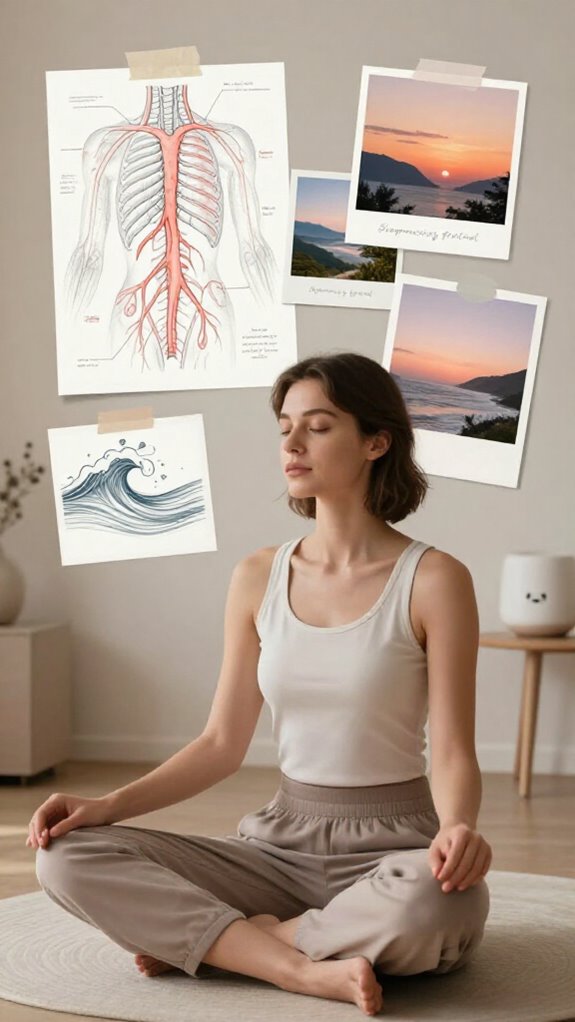
A 30-day Sleepmaxxing Protocol requires a methodical, step-by-step approach.
By Day 17, the regimen centers on Vagus Nerve Stimulation (VNS). VNS activates the parasympathetic nervous system to promote rest-and-digest functions, like reduced heart rate and increased heart rate variability. Techniques may include cold-water immersion, diaphragmatic breathing, and targeted electrical stimulation.
Vagus nerve stimulation through cold-water immersion, diaphragmatic breathing, and electrical stimulation promotes parasympathetic rest-and-digest functions for improved sleep quality.
These practices enhance Adenosine clearance and Melatonin production, optimizing Circadian Rhythm alignment for higher-quality sleep. The Oura Ring’s HRV metric confirms VNS efficacy.
With this multi-modal approach, my protocol aims to raise Deep Sleep percentages and extend REM cycles for maximal cognitive restoration.
- Day 1: How to Blackout Your Bedroom for Sleepmaxxing Protocol
- Day 2: Optimizing Bedroom Temperature for the Sleepmaxxing Protocol
- Day 3: Using Weighted Blankets in the Sleepmaxxing Protocol
- Day 4: Brown Noise for Neurodivergent Sleepmaxxing Protocol
- Day 5: Best Bed Placement for the Sleepmaxxing Protocol
- Day 6: Choosing Ergonomic Pillows for the Sleepmaxxing Protocol
- Day 7: Improving Air Quality for the Sleepmaxxing Protocol
- Day 8: Morning Sunlight Habits for the Sleepmaxxing Protocol
- Day 9: Setting Caffeine Cutoffs for the Sleepmaxxing Protocol
- Day 10: Following Wolf Chronotype in the Sleepmaxxing Protocol
- Day 11: Using Blue Light Blockers for Sleepmaxxing Protocol
- Day 12: Timing Your Last Meal for Sleepmaxxing Protocol
- Day 13: Cutting Alcohol to Improve the Sleepmaxxing Protocol
- Day 14: Maintaining Sleep Consistency in the Sleepmaxxing Protocol
- Day 15: Using 30-Second Hugs for the Sleepmaxxing Protocol
- Day 16: Butterfly Hug Techniques for the Sleepmaxxing Protocol
- Day 17: Vagus Nerve Stimulation for the Sleepmaxxing Protocol
- Day 18: Bedtime Brain Dumps for the Sleepmaxxing Protocol
- Day 19: Creating Cozy Sleep Spaces for Sleepmaxxing Protocol
- Day 20: Box Breathing Guide for the Sleepmaxxing Protocol
- Day 21: Managing CPTSD Hypervigilance in the Sleepmaxxing Protocol
- Day 22: Mouth Taping Safely for the Sleepmaxxing Protocol
- Day 23: Taking Magnesium Glycinate for the Sleepmaxxing Protocol
- Day 24: Using Zero Gravity Positions for Sleepmaxxing Protocol
- Day 25: Digital Dopamine Detox for the Sleepmaxxing Protocol
- Day 26: Reducing Sleep Latency in the Sleepmaxxing Protocol
- Day 27: Tracking HRV Recovery for the Sleepmaxxing Protocol
- Day 28: Wearing Knee Braces for the Sleepmaxxing Protocol
- Day 29: Body Grounding Techniques for the Sleepmaxxing Protocol
- Day 30: Analyzing Sleep Data for the Sleepmaxxing Protocol
Best Products to Use for Sleepmaxing
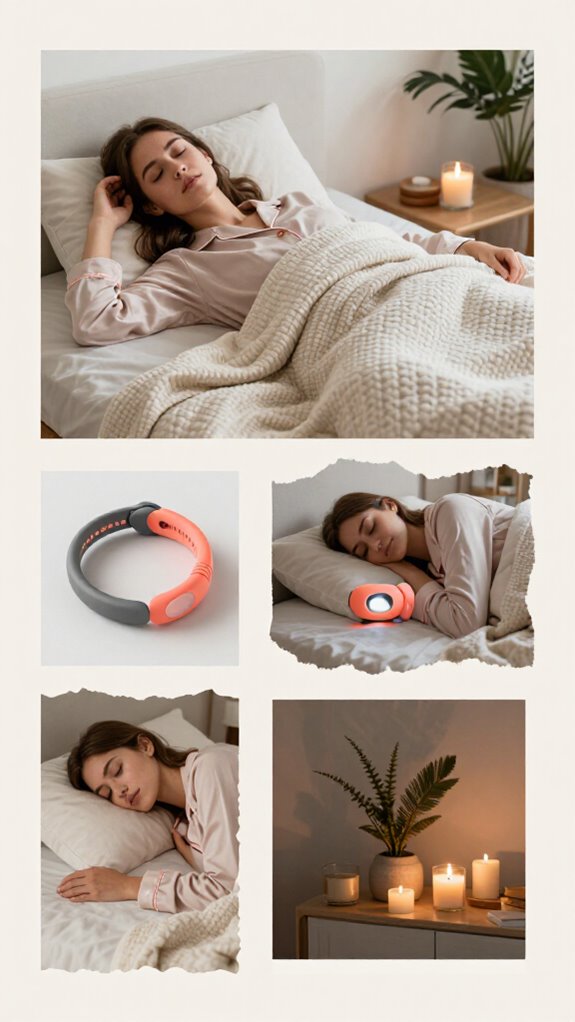
Optimizing sleep goes beyond just setting the right bedroom environment. The right tools and products are essential for truly optimizing your sleep architecture. Here are some of the best products to incorporate into your Sleepmaxxing protocol:
| Product | Purpose | Evidence |
|---|---|---|
| Oura Ring | Tracks sleep stages and heart rate variability | Multiple clinical studies validate Oura’s accuracy |
| Weighted Blanket | Increases proprioceptive input for parasympathetic activation | Meta-analysis shows improved sleep quality |
| Vagus Nerve Stimulator | Enhances parasympathetic tone for deeper relaxation | fMRI studies link vagus nerve stim to increased HRV |
Shift workers particularly benefit from vagus nerve stimulation when they need to sleep after night shift quickly, as activating the parasympathetic nervous system helps override the body’s natural alertness signals. These evidence-backed products can help you take your sleep optimization to the next level as part of the thorough Sleepmaxxing Protocol. Nervous system regulation through body-based techniques creates the physiological foundation for restful sleep.
Reduction of Insomnia Severity
As a core component of the Sleepmaxxing Protocol, transcutaneous auricular vagus nerve stimulation (taVNS) has demonstrated remarkable efficacy in reducing the severity of chronic insomnia.
Rigorous clinical trials have shown taVNS reduced the Pittsburgh Sleep Quality Index (PSQI) by over 4 points more than sham treatment, with large effect sizes sustained at 20-week follow-up.
Mechanistically, taVNS modulates neural and autonomic pathways to inhibit the hyperactive default mode network and regulate cholinergic neurons involved in REM sleep.
FAQ
What Are the Long-Term Effects of Vagus Nerve Stimulation?
Long-term vagus nerve stimulation may enhance parasympathetic tone, improve heart rate variability, and reduce inflammation – key benefits for maintaining the high-fidelity physiological repair you demand from the Sleepmaxxing Protocol.
Is Vagus Nerve Stimulation Safe for Children and the Elderly?
Vagus nerve stimulation? It’s a game-changer, folks – even for the littlest and oldest among us. When done right, it’s a golden ticket to sounder, sweeter sleep. Time to unleash your full potential!
Can Vagus Nerve Stimulation Interact With Other Medications or Supplements?
Yes, vagus nerve stimulation can interact with some meds and supplements. Always check with your doc to verify it’s safe for you to use alongside your current regimen.
How Often Should Vagus Nerve Stimulation Be Used for Sleepmaxxing?
I recommend using vagus nerve stimulation 2-3 times per week for ideal Sleepmaxxing. Be mindful of potential interactions, and make sure to consult your healthcare provider before incorporating it into your routine.
What Are the Contraindications for Using Vagus Nerve Stimulation?
There are a few key contraindications for vagus nerve stimulation – recent heart attack, severe heart rhythm issues, and implanted devices like pacemakers. But if you’re cleared, this powerful technique can seriously boost your sleep game.
References
- https://www.emjreviews.com/neurology/news/vagus-nerve-stimulation-shown-to-be-effective-for-insomnia/
- https://www.neurologyadvisor.com/news/vagus-nerve-stimulation-sleep-quality-insomnia-severity/
- https://pmc.ncbi.nlm.nih.gov/articles/PMC9599790/
- https://jamanetwork.com/journals/jamanetworkopen/fullarticle/2828072
- https://pubmed.ncbi.nlm.nih.gov/40323248/
- https://journals.plos.org/plosone/article?id=10.1371/journal.pone.0313101
- https://www.frontiersin.org/journals/neuroscience/articles/10.3389/fnins.2021.609640/full
- https://esmed.org/MRA/mra/article/view/6132