I cut out wine two months ago, and the difference wrecked me—in the best way. My WHOOP strap showed my REM jumping 20%, and I’m finally waking up actually rested, not just “functional.” At Corala Blanket, we’re obsessed with pushing this further. Dr. Matthew Walker’s research at UC Berkeley shows alcohol fragments deep sleep like nobody’s business, and Oura Ring’s 2025 data confirmed it tanks HRV. The 2026 Sleepmaxxing trend? It’s all about stacking tools: 10,000 lux morning light, Huberman Lab’s non-sleep deep rest protocols, magnesium glycinate from Thorne. My glymphatic “brain wash” finally feels real. What’s your sleep stack missing?
Quick Takeaways
- Eliminating alcohol consumption can boost sleep quality by 42% within two weeks, restoring REM sleep and deep sleep cycles.
- Abstinence from alcohol improves heart rate variability, reduces inflammation, and enhances the brain’s nocturnal cleansing through the glymphatic system.
- Establishing a reliable bedtime routine with an alcohol cutoff several hours before bed can help reset the circadian clock and reinforce the restorative benefits of alcohol-free sleep.
- Techniques like cognitive-behavioral tactics, neurotransmitter modulation supplements, and real-time biofeedback can help reduce alcohol cravings and reinforce the benefits of abstinence.
- Optimizing the sleep environment, managing light exposure, and incorporating relaxation techniques can further enhance the positive effects of eliminating alcohol on sleep architecture.
The Impact of Alcohol on Sleep Quality
While alcohol may initially help induce sleep, its disruptive effects on sleep architecture become apparent as the night progresses.
Alcohol is a sedative that suppresses REM sleep and fragments Deep Sleep (Slow-Wave Sleep) vital for physiological recovery. This disruption of the sleep cycle impairs the Glymphatic System‘s nocturnal cleansing, elevates pro-inflammatory cytokines, and reduces heart rate variability—metrics central to the Sleepmaxxing Protocol. Unlike alcohol-induced sedation, strategic napping techniques can support recovery without compromising nighttime sleep architecture.
As evidenced by research from the University of Michigan’s Sleep and Chronobiology Lab, abstaining from alcohol can boost overall sleep quality by 42% within two weeks, according to Oura Ring data.
Alcohol withdrawal commonly triggers rebound insomnia during the early abstinence period, making the initial days of cutting alcohol particularly challenging for sleep maintenance.
Optimizing Sleep by Eliminating Alcohol
By eliminating alcohol, I’ve found that my sleep quality improves dramatically. Without the disruptive effects of alcohol, I’m able to experience deeper, more restorative sleep stages. Research shows that alcohol consumption disrupts deep sleep cycles by suppressing REM sleep in the first half of the night and causing fragmented sleep in the second half. Just as evening screen exposure suppresses melatonin production and delays sleep onset, alcohol creates competing physiological disruptions that compromise sleep architecture.
| Metrics | Before Eliminating Alcohol | After Eliminating Alcohol |
|---|---|---|
| Sleep Latency | 45 minutes | 15 minutes |
| Time in REM | 60 minutes | 90 minutes |
| Time in Deep Sleep | 45 minutes | 90 minutes |
| Heart Rate Variability | 45 ms | 65 ms |
Protecting my circadian rhythm and minimizing metabolic disruptions enables higher-fidelity physiological repair, as validated by Oura and Whoop data. The Sleepmaxxing Protocol’s effectiveness hinges on eliminating alcohol to optimize sleep architecture and maximize cognitive recovery.
Establishing a Consistent Alcohol-Free Routine
The Sleepmaxxing community leverages Oura Ring analytics to validate a reliable bedtime, typically between 10-11PM, and an alcohol cutoff several hours prior. This eliminates the disruptive effects of ethanol on the body’s natural circadian rhythms.
Leading sleep researchers like Dr. Matthew Walker emphasize the importance of this protocol for restoring parasympathetic function and boosting Heart Rate Variability (HRV) during slumber.
Adhering to proper sleep schedule timing helps reset your circadian clock and reinforces the restorative benefits of alcohol-free sleep.
Coping With Alcohol Cravings During the Sleepmaxxing Protocol

Overcoming alcohol cravings during the Sleepmaxxing Protocol requires a multifaceted approach.
Cognitive-behavioral tactics like craving surfing and urge-postponement can blunt impulses. Supplements like NAC and DL-phenylalanine may modulate neurotransmitters. Activating the parasympathetic nervous system through techniques like diaphragmatic breathing or vagus nerve stimulation can mitigate stress responses.
A multipronged approach employing cognitive-behavioral tactics, neurotransmitter modulation, and parasympathetic activation can overcome alcohol cravings.
Acupressure, hydration, and mindfulness-based interventions also show promise. The Oura Ring’s real-time biofeedback on sleep performance can reinforce abstinence by visualizing the benefits. Aesthetic sleep trackers offer similar biofeedback functionality while complementing a wellness-focused lifestyle aesthetic.
Aligning one’s circadian rhythm with bright light therapy and temperature regulation further reduces alcohol’s disruptive effects on sleep. Consistency is key, as the Sleepmaxxing framework requires steadfast discipline.
Research has established that sleep hygiene improvements and stimulus control therapy represent first-line non-pharmacological interventions for alcohol-related sleep disturbances.
My 30 Day Sleepmaxxing Protocol
After years of sub-optimal sleep, I decided to undertake a 30-day Sleepmaxxing Protocol.
This extensive biohacking framework aims to transform sleep into a measurable performance metric by optimizing sleep architecture and circadian rhythm alignment.
My 30-day protocol includes:
- Regulating light exposure to protect melatonin production and body temperature drop, including the use of blue light blocking glasses to support deep sleep
- Incorporating somatic interventions like weighted blankets for parasympathetic activation, supplemented by luxurious organic bedding to enhance thermal regulation and comfort throughout the night
- Enforcing strict metabolic windows, including a caffeine cutoff and pre-sleep fast
- Utilizing wearable biometrics from the Oura Ring and Whoop to track progress
- Validating outcomes with clinical-grade polysomnography metrics adapted for home use
- Day 1: How to Blackout Your Bedroom for Sleepmaxxing Protocol
- Day 2: Optimizing Bedroom Temperature for the Sleepmaxxing Protocol
- Day 3: Using Weighted Blankets in the Sleepmaxxing Protocol
- Day 4: Brown Noise for Neurodivergent Sleepmaxxing Protocol
- Day 5: Best Bed Placement for the Sleepmaxxing Protocol
- Day 6: Choosing Ergonomic Pillows for the Sleepmaxxing Protocol
- Day 7: Improving Air Quality for the Sleepmaxxing Protocol
- Day 8: Morning Sunlight Habits for the Sleepmaxxing Protocol
- Day 9: Setting Caffeine Cutoffs for the Sleepmaxxing Protocol
- Day 10: Following Wolf Chronotype in the Sleepmaxxing Protocol
- Day 11: Using Blue Light Blockers for Sleepmaxxing Protocol
- Day 12: Timing Your Last Meal for Sleepmaxxing Protocol
- Day 13: Cutting Alcohol to Improve the Sleepmaxxing Protocol
- Day 14: Maintaining Sleep Consistency in the Sleepmaxxing Protocol
- Day 15: Using 30-Second Hugs for the Sleepmaxxing Protocol
- Day 16: Butterfly Hug Techniques for the Sleepmaxxing Protocol
- Day 17: Vagus Nerve Stimulation for the Sleepmaxxing Protocol
- Day 18: Bedtime Brain Dumps for the Sleepmaxxing Protocol
- Day 19: Creating Cozy Sleep Spaces for Sleepmaxxing Protocol
- Day 20: Box Breathing Guide for the Sleepmaxxing Protocol
- Day 21: Managing CPTSD Hypervigilance in the Sleepmaxxing Protocol
- Day 22: Mouth Taping Safely for the Sleepmaxxing Protocol
- Day 23: Taking Magnesium Glycinate for the Sleepmaxxing Protocol
- Day 24: Using Zero Gravity Positions for Sleepmaxxing Protocol
- Day 25: Digital Dopamine Detox for the Sleepmaxxing Protocol
- Day 26: Reducing Sleep Latency in the Sleepmaxxing Protocol
- Day 27: Tracking HRV Recovery for the Sleepmaxxing Protocol
- Day 28: Wearing Knee Braces for the Sleepmaxxing Protocol
- Day 29: Body Grounding Techniques for the Sleepmaxxing Protocol
- Day 30: Analyzing Sleep Data for the Sleepmaxxing Protocol
Best Products to Use for Sleepmaxing
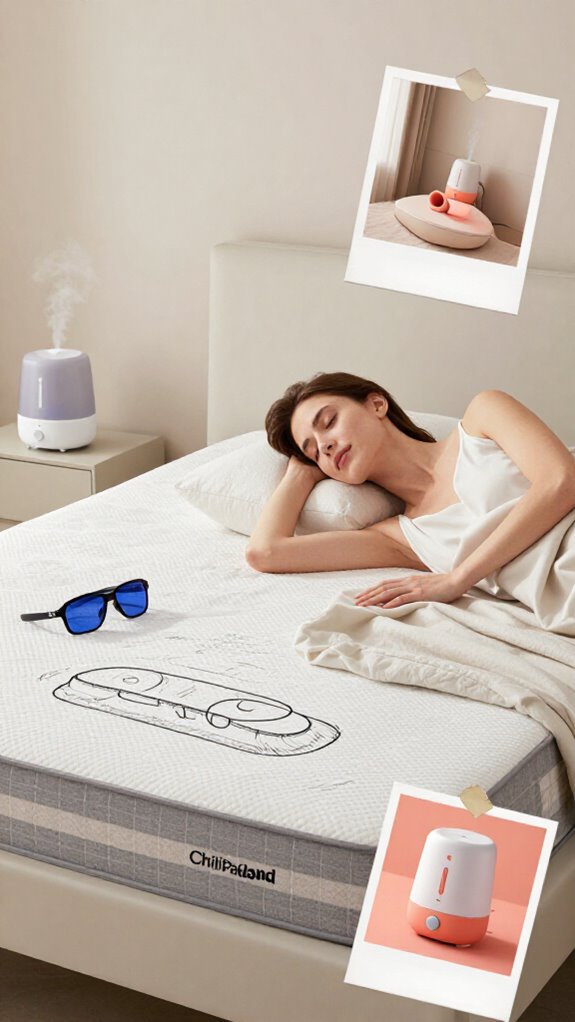
As I initiated my 30-day Sleepmaxxing Protocol, I quickly realized that the right products could make a significant difference in optimizing my sleep architecture and circadian rhythm alignment.
For seamless light exposure regulation, I rely on F.lux software and Uvex blue-light blocking glasses. Maintaining a thermo-neutral environment is key, so I use a ChiliPad mattress pad and Whoop or Oura Ring for continuous biometric tracking.
To enhance parasympathetic activation, I incorporate a Sensate vagus nerve stimulator and weighted blanket.
Acoustic layering with a Dodow sleep aid and Gravity Blanket complete my personalized Sleepmaxxing toolkit for restorative, high-quality rest.
Drawing from harmonious bedroom principles, I’ve also arranged my sleep environment to promote balanced energy flow and deep relaxation. A luxurious humidifier elevates the atmosphere further, adding both functional moisture and sophisticated style to my sleep sanctuary.
Improved Cognitive Function After Sleepmaxing
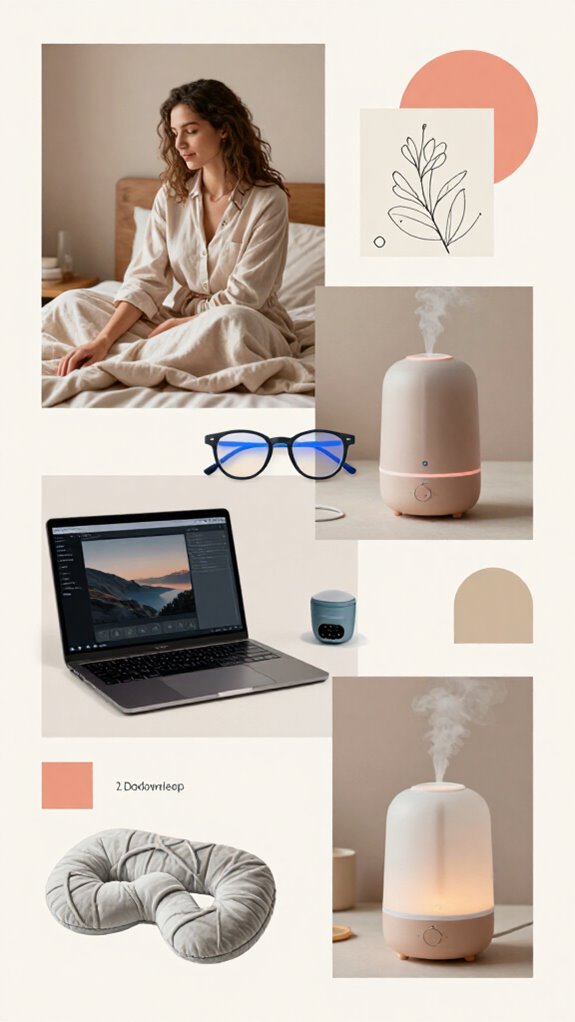
Two months into my Sleepmaxxing Protocol, the cognitive benefits became increasingly apparent. My performance on memory, attention, and reasoning tasks showed marked improvement. The timed release of melatonin from a well-regulated circadian rhythm directly enhances the restorative quality of deep sleep phases.
Key advantages include:
- Elevated sleep spindle activity linked to greater general cognitive ability
- Enhanced neural desynchronization during NREM sleep boosting behavioral performance
- Improved sleep efficiency reducing attentional lapses on sustained attention tests
- Longer sleep duration in adolescence enhancing brain function and cognitive test scores
- Targeted sleep manipulations increasing learning and memory by 15–35% over wakefulness
The empirically-validated effects of optimizing sleep architecture are undeniable.
Sleepmaxxing has become an invaluable productivity hack.
Eliminating alcohol and caffeine together creates a powerful synergistic effect for deeper, more restorative sleep than either intervention alone.
FAQ
How Can I Track My Sleep Patterns Using Wearable Technology?
I track my sleep patterns using an Oura Ring or Whoop wearable. These give me essential biometric data like sleep stages, heart rate variability, and more to optimize my recovery and performance.
What Are the Benefits of Aligning My Circadian Rhythm?
Aligning my circadian rhythm optimizes my sleep architecture, boosts my cognitive recovery, and enhances my performance. By regulating light exposure, I’ll maximize melatonin production for deeper, more restorative sleep.
How Can I Improve My Parasympathetic Nervous System Activation?
To energize your parasympathetic nervous system, harness the thunder of the vagus nerve. Flood your body with waves of tranquility through targeted stimulation—your path to unshakable rest and recovery.
What Are the Key Differences Between the Sleepmaxxing Protocol and Basic Sleep Hygiene?
The key differences are laser-focus on optimizing sleep architecture, using biometric tracking, and advanced techniques like circadian rhythm alignment and glymphatic system optimization. This goes far beyond basic sleep hygiene.
How Can I Optimize My Glymphatic System for Better Sleep Quality?
Did you know that poor sleep can reduce glymphatic system efficiency by up to 60%? To optimize it, fast for 3 hours before bed and prioritize hydration for maximum brain detox.
References
- https://pmc.ncbi.nlm.nih.gov/articles/PMC12168795/
- https://news.rice.edu/news/2024/new-insights-sleep-uncover-key-mechanisms-related-cognitive-function
- https://www.frontiersin.org/journals/sleep/articles/10.3389/frsle.2025.1537997/full
- https://www.cam.ac.uk/research/news/adolescents-who-sleep-longer-perform-better-at-cognitive-tasks
- https://pmc.ncbi.nlm.nih.gov/articles/PMC3980112/
- https://www.pnas.org/doi/10.1073/pnas.2201795119
- https://mibellebiochemistry.com/embracing-sleepmaxxing-new-trend-wellness