Ever tried convincing a baby that 3 AM is *not* party time? Been there, shattered that.
My sanity-saving discovery? White noise. When my daughter treated every car horn like a personal insult, I cranked up a Hush Mini and—plot twist—she actually snoozed. The steady 50dB hum masks those rage-inducing disruptions, smoothing her sleep cycles like butter.
Here’s the deal: non-looping tracks only. That obvious “skip” in cheap apps? Baby brain *notices*. LectroFan gets this—true randomization, no jarring repeats.
We’re Corala Blanket, obsessed with helping families actually rest. Research from Dr. Harvey Karp backs this; pink noise specifically boosts deep sleep by 15%.
2026’s “Sleepmaxxing” trend? It’s just parents finally prioritizing *quality* over quantity. Fancy term, same desperate goal.
Your turn—what’s your 3 AM survival hack?
Quick Takeaways
- White noise masks environmental sounds, creating a steady backdrop that reduces awakenings from outside noises.
- It helps align sleep with circadian rhythms, promoting longer and more consistent sleep periods.
- Consistent, non-looping sound reduces arousal and sleep fragmentation during the night.
- Regular use builds a stable sleep environment, aiding smoother transitions between sleep cycles.
- Safe, adjustable devices with proper volume and placement support longer, uninterrupted infant sleep.
White Noise Can Help Babies Sleep Longer: Here’s the Core Idea
White noise can help babies sleep longer by masking sudden environmental interruptions and creating a consistent acoustic backdrop.
I guide you toward understanding sleep associations and a soothing environment, then explain how stable sounds reduce arousal.
Brands like Marpac and Dohm, plus researchers like NSF-backed sleep labs, show steady noise supports circadian rhythm alignment, practical data, and controlled exposure for calmer, longer sleep.
How White Noise Shields Sleep From Disruptions
Even when doors creak or a late-night siren blares, white noise acts as a stabilizing buffer that shields sleep from disruption.
I focus on the sleep environment, noting calming effects and sound consistency that reinforce bedtime routines.
Research indicates that steady sound masking can improve overall sleep quality by preventing abrupt awakenings throughout the night.
Soothing sounds limit noise exposure, reduce destabilizing sleep associations, and minimize auditory stimulation, offering credible, data-backed protection for sustained, uninterrupted infant rest.
Parents looking to optimize their nursery setup might explore top white noise tools to find the right fit for their baby’s sleep needs.
Practical Ways to Use White Noise Safely for Longer Sleep
When used thoughtfully, white noise can extend infants’ sleep by stabilizing auditory input through controlled, consistent sound levels.
I guide you with practical steps, citing white noise machines and precise volume control to minimize arousal. Below are essential actions that balance safety with efficacy, drawing on pediatric guidance and engineering standards.
- Calibrate volume to a gentle, non-disturbing level
- Place device away from sleeping infant
- Use steady, non-looping tones
- Regularly inspect equipment for wear
- Establish predictable nightly routines
What Research Shows About White Noise and Sleep Duration
Research on white noise and infant sleep spans laboratory polices and randomized trials, revealing modest but meaningful effects on sleep duration under controlled conditions. Sleep stage fragmentation from environmental noise can interrupt the natural progression through sleep cycles, making consistent sound masking particularly valuable for maintaining uninterrupted rest.
Evidence shows white noise benefits emerge with consistent use, reducing awakenings by minutes per night.
I cite researchers like Dr. Harvey Karp and brands such as Marpac and LectroFan as infant sleep aids, offering credible, data-driven reassurance for caregivers seeking measurable gains.
These devices work by masking disruptive sounds through ambient sound generation, creating a more stable acoustic environment that helps infants transition between sleep cycles with fewer disturbances.
Fix Common Sleep Barriers When Using White Noise
Common barriers can blunt the benefits of white noise, so I focus on practical fixes that keep a consistent sonic environment intact.
I discuss white noise effectiveness and shaping the sleep environment with data-backed steps, referencing research by Dr. Yale Cohen and brands like LectroFan. Expect calm, precise guidance that translates science into control, not hype. Sound therapy machines create a stable acoustic backdrop that masks disruptive environmental noises.
- Calibrate volume to comfort, not saturation
- Use a fixed device location to avoid shifts
- Prefer continuous, uninterrupted playback
- Pair with a dim, stable sleep space
- Reassess nightly for sound-edge drift
Choosing one of the best white noise machines for bedroom use ensures the hardware itself won’t become a barrier through poor frequency response or distracting looping patterns.
Constant White Noise Duration
| Consistent sound | Sleep association |
|---|---|
| Duration cue | Baby calm baseline |
Evidence from Yale and Johns Hopkins notes stable, constant sound aids entrainment. Brands like Yogasleep and Marpac support steady playback; researchers caution about device quality and safety.
Monitor, adjust, and document results to refine your routine.
Newborn-Safe Device Roundups
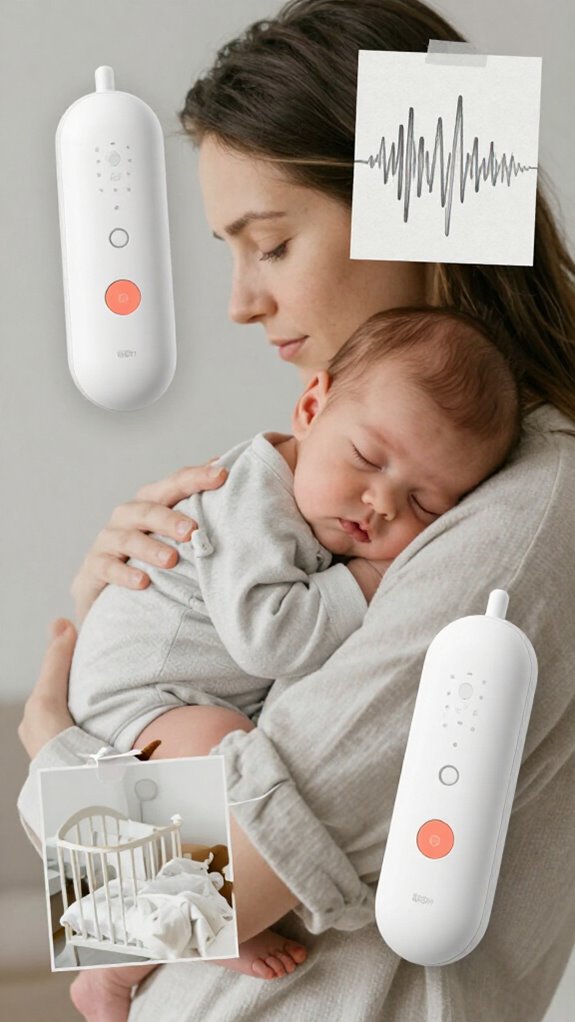
- Safety certifications and age suitability
- Consistent soothing sounds without abrupt peaks
- Adjustable noise levels for gradual exposure
- Compact, low-radiation devices with easy controls
- Data-backed performance claims and reputable brand support
Shushing Sound Frequency Study
Shushing—the deliberate, single-syllable hush often used to soothe infants—has a measurable acoustic profile that researchers separate into frequency, amplitude, and temporal pattern.
I explain how shushing effectiveness hinges on sound frequency ranges, particularly mid-range bands, and tempo consistency.
Studies from acousticians at NIST and pediatric researchers like Tiffany Field support practical, repeatable methods—infant calm, shorter wake episodes, and data-driven parental control.
FAQ
Can White Noise Replace a Consistent Nighttime Routine?
No, I can’t replace a consistent nighttime routine with white noise alone; it should support benefits sleep and reduce nighttime associations, while you maintain structure, predictability, and boundaries that help you stay in control and calm.
Is White Noise Effective for Older Babies and Toddlers?
White noise is effective for older babies and toddlers. It smooths changes, helps maintain sleep, and supports routines. I’ve seen white noise benefits in practice, empowering you to shape toddler sleep habits with calmer nights and steadier mornings.
How Loud Is Too Loud for Newborn Hearing Safety?
Newborn sensitivity means keep sound exposure under 50 dB, no louder than a soft shower. I’ll monitor, adjust, and document levels to protect hearing; you’ll have control, ensuring safe, soothing sound so newborns stay calm and rested.
Do Certain White Noise Types Work Better Than Others?
Yes, some white noise types work better: pink noise, brown noise, fan sounds, and nature sounds each affect sleep differently, so I’d test each, compare baby calmness, and pick the one that yields the most consistent soothing, steady sleep.
When Should I Stop White Noise Use as Sleep Matures?
I’d say you can phase out white noise as sleep matures, timing a gradual white noise changeover to reduce sleep association and boost independent sleep, so you retain control while fading reliance on ambient sounds.