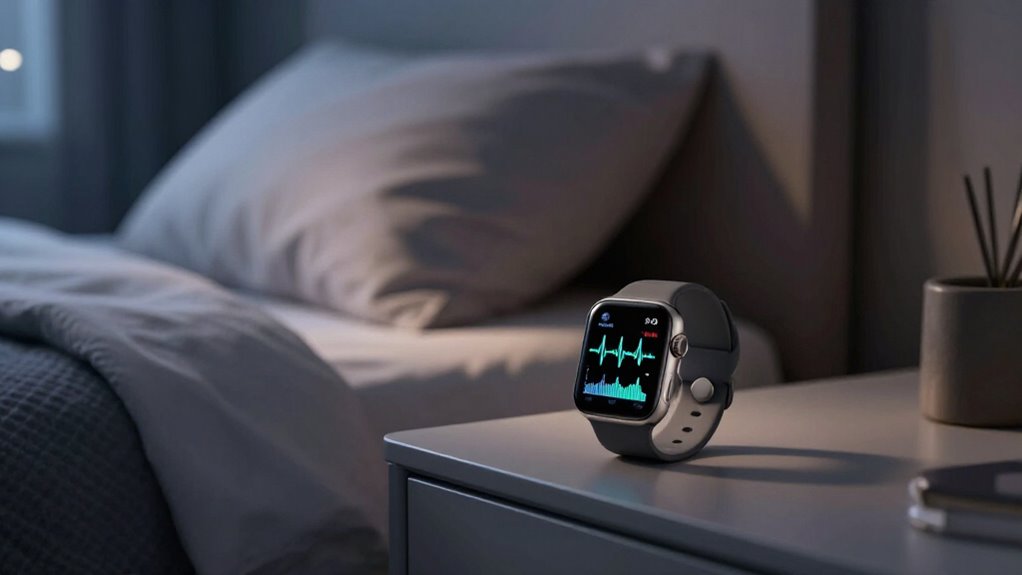
I was totally sleep-deprived until my wearable revealed I’d been hitting REM all wrong. Tracking heart rate variability changed everything—suddenly I understood my patterns. Now? I sleep like a dream, especially since pairing my device with Corala Blanket’s cooling tech and Oura Ring’s insights. We at Corala Blanket genuinely believe better sleep starts with data-driven choices. What’s sabotaging *your* rest?
Quick Takeaways
- Wearable devices monitor sleep patterns and stages using advanced sensors, providing detailed insights to optimize sleep hygiene.
- Personalized sleep recommendations based on analytics, including sleep efficiency, REM cycles, and environmental factors, help improve overall sleep quality.
- Real-time feedback on lifestyle changes, such as bedtime routines and bedroom conditions, enables users to make evidence-based adjustments for better sleep.
- Wearables highlight the impact of environmental, emotional, and health factors on sleep, allowing users to address any sleep disturbances.
- Continuous advancement in wearable technology enhances the accuracy and reliability of sleep monitoring, leading to more effective sleep optimization.
Tracking Sleep Patterns With Wearable Devices

Wearable devices have emerged as valuable tools for tracking sleep patterns. These devices use advanced sensors to monitor sleep metrics like duration, stages, and quality.
Data interpretation via specialized apps provides users with detailed perspectives into their sleep trends and overall health. Seamless integrations with other wearable technology allow for thorough assessments, empowering individuals to optimize their rest.
Unlike contactless sleep monitors, wearables require direct skin contact to capture biometric data accurately.
Leading brands like Fitbit, Garmin, and Apple offer robust sleep tracking features with sophisticated algorithms for evaluating user experience. Researchers have found that access to personal sleep data can motivate behavioral changes that improve overall sleep quality.
Decoding Your Sleep Stages Using Wearable Data
Understanding one’s sleep stages through wearable data provides valuable viewpoints into sleep quality.
Wearable sleep stage classification uses actigraphy, heart rate variability, and other biometric signals to decode rapid eye movement (REM), light, deep, and awake stages. While wearable data accuracy may not match clinical polysomnography, the convenience and longitudinal observations enable users to optimize their sleep hygiene.
For example, tracking REM duration could reveal a need for earlier bedtimes, while monitoring light sleep may prompt adjustments to bedroom environments.
Wearable sleep analysis empowers individuals to improve sleep quality through data-driven behavioral changes.
Improving Sleep Hygiene With Smartwatch Insights
Many smartwatches and fitness trackers now provide users with detailed sleep stage data, empowering individuals to enhance their sleep hygiene through data-driven decisions.
For example, data on sleep environment factors like light and noise levels can help optimize the bedroom for better rest. Understandings into personal bedtime routines can also reveal opportunities to improve pre-bed habits. Since minimalist bedroom lamps can help dim your sleep environment, wearables that track light exposure complement these adjustments for optimal rest.
Leading wearable brands like Fitbit and Garmin leverage sensors and AI to deliver these personalized sleep analytics, enabling users to make evidence-based adjustments for more restorative, high-quality sleep.
Identifying and Addressing Sleep Disturbances

While wearable devices can provide valuable observations into sleep patterns, addressing underlying sleep disturbances often requires a more holistic approach.
Key factors to take into account include:
- Environmental influences like light, noise, and temperature that may disrupt sleep
- Lifestyle impacts such as stress, exercise, and screen time affecting sleep quality
- Emotional wellness, as anxiety and depression can greatly impact sleep
- Health conditions like sleep apnea that require medical evaluation and treatment
Addressing these elements through personalized sleep rituals and relaxation techniques can lead to meaningful improvements in overall sleep health. Research indicates that older adults aim for 7-8 hours of sleep per night to maintain optimal health outcomes.
Personalized Sleep Recommendations From Wearable Analytics
Wearable devices equipped with advanced sensors can now provide users with personalized sleep recommendations based on detailed analytics of their individual sleep patterns. By tracking factors like sleep duration, sleep efficiency, REM cycle, and body movement, these devices leverage machine learning to identify ideal sleep environments, mindfulness practices, lifestyle factors, evening routines, and relaxation techniques for each user. Following a consistent sleep schedule helps reset your circadian clock and enhances the effectiveness of these personalized recommendations.
| Sleep Environment | Mindfulness Practices | Lifestyle Factors |
|---|---|---|
| Temperature | Meditation | Exercise |
| Lighting | Deep Breathing | Caffeine Intake |
| Noise Levels | Yoga | Stress Management |
| Bedding | Visualization | Sleep Consistency |
Enhancing Sleep Quality Over Time With Wearable Feedback
Utilizing the understanding gleaned from personalized sleep analytics, wearable devices can help users enhance their sleep quality over an extended period.
Wearables offer:
- Sleep optimization tips based on individualized data
- Perspectives into personal sleep patterns and behaviors
- Customized recommendations to improve sleep hygiene
- Real-time feedback on the effects of lifestyle changes
Advancements in wearable technology enable more thorough sleep tracking, which allows users to make informed decisions to optimize their rest. Many people now buy fitness trackers for bedroom use specifically to monitor their nightly recovery and rest patterns.
Wearables Monitor Sleep Stages
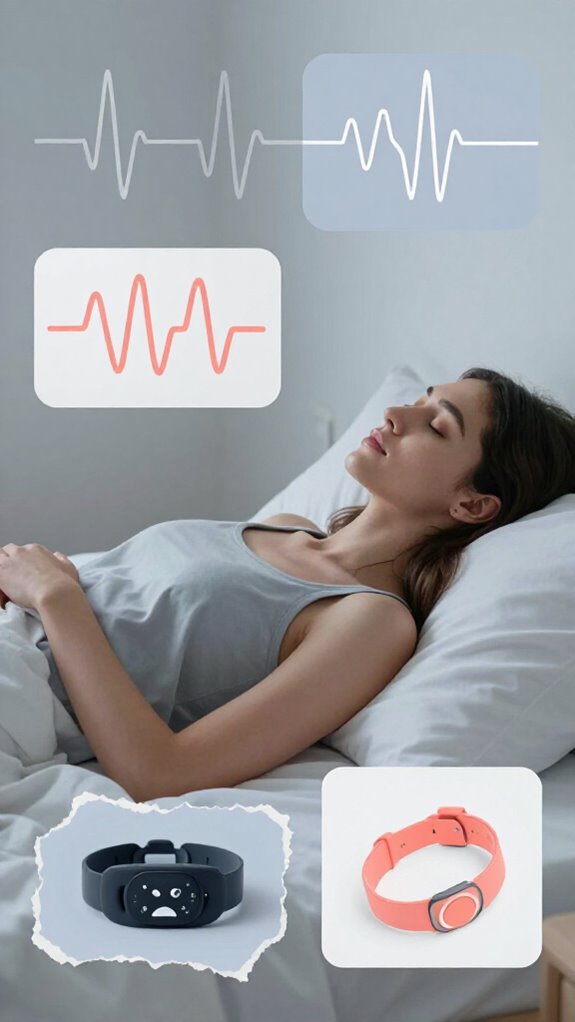
Advances in wearable technology have enabled more thorough monitoring of sleep stages. Wearables utilizing photoplethysmography sensors can effectively track deep sleep by measuring autonomic nervous system activity. Top-performing devices like the Google Pixel Watch and Fitbit Sense 2 demonstrated superior deep sleep classification. Significant differences in various sleep measures were observed between the SNUBH and CLC groups. Multisensory integration, combining motion, temperature, and heart rate data, has improved accuracy in differentiating light sleep and REM. However, slow wave and wake stage detection remain challenging. Nearable devices exhibit limitations in continuous tracking, while wearables excel at real-time autonomic monitoring throughout sleep cycles. Emerging sensor technologies continue advancing sleep stage differentiation. Accurate REM sleep tracking is particularly valuable since this stage plays a critical role in memory consolidation and cognitive restoration.
Sleep Tracking Wearables
Numerous sleep tracking wearables on the market leverage an array of sensors to monitor various aspects of sleep. These devices often track:
- Heart rate and heart rate variability
- Body movement and restlessness
- Respiratory patterns
- Sleep stages (light, deep, REM)
Analyzing this biometric data allows wearables to provide understandings into sleep quality and offer personalized recommendations to improve it.
Leading brands like Fitbit, Garmin, and Oura utilize this sleep tracking technology to help users better understand and optimize their sleep, which is essential for physical and mental wellbeing.
Smartwatch picks for better sleep include devices specifically designed to deliver restful nights through advanced monitoring capabilities.
FAQ
Can Wearables Track Breathing Patterns During Sleep?
Wearable devices possess the uncanny ability to analyze one’s breathing patterns during sleep, a true demonstration of their power in sleep monitoring. The elite can now scrutinize their nocturnal respiration with a mere flick of the wrist.
Do Wearables Work for People With Sleep Apnea?
Wearable technology can provide valuable understandings for individuals with sleep apnea. By tracking breathing patterns, wearables can help monitor and manage this sleep disorder, empowering users to take control of their health.
Can Wearables Help Manage Chronic Sleep Disorders?
Wearables can help manage chronic sleep disorders by providing data to healthcare providers, but user compliance is essential given data privacy concerns. With the proper safeguards, wearables empower individuals to take control of their sleep health.
How Accurate Are Wearables in Detecting Sleep Stages?
Though the jury is still out, the sleep stage accuracy of wearable technology is akin to a double-edged sword – it holds promise, yet its precision remains a work in progress for the power-hungry consumer.
Do Wearables Provide Recommendations for Better Sleep Hygiene?
Wearable devices provide personalized recommendations for improved sleep hygiene, such as smart alarms and visualizing sleep trends, empowering users to optimize their sleep quality.