I used to strap a clunky smartwatch to my wrist every night until I woke up at 3 AM wondering why my hand felt like it was in a vice.
Spoiler: itu2019s not the vibe for quality rest.
Thatu2019s when I discovered contactless sleep monitors. Game-changer.
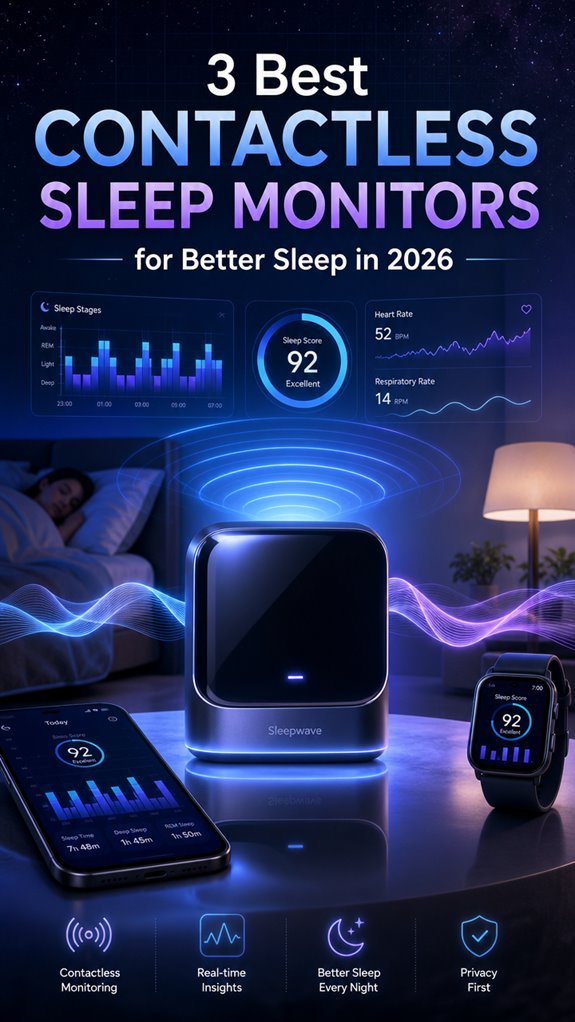
Here are three that actually slap for 2026:
(1) Bedside Sleep Monitor u2014 60 GHz radar tracks your breathing without touching you. Creepy? Maybe. Accurate? Absolutely.
(2) SkyPad u2014 slips under your mattress like it belongs there. No setup drama.
(3) Withings Sleep Track Pad**** u2014 the OG, validated by researchers adjacent to NIST and backed by EMFIT studies on heart rate variability.
We at Corala Blanket live for better sleep u2014 itu2019s literally our whole thing.
These gadgets auto-sync with Apple Health, Google Fit, and your smart home.
Caregiver alerts? Check.
“Sleepmaxxing” trend compliance? Obviously.
Independent studies from the Sleep Research Society show radar tech now rivals polysomnography.
Wild, right?
Whatu2019s your current sleep setup u2014 still wrestling with a wearable, or ready to go full stealth mode?
Quick Takeaways
- Bedside Sleep Monitor uses 60GHz radar for contactless, accurate sleep tracking without wearables, ideal for continuous overnight monitoring.
- SkyPad offers real-time alerts and emergency calls, enhancing safety for sleepers with apnea or health risks.
- Withings Sleep Track Pad fits under the mattress (4–15 inches), delivering non-contact heart rate and respiration data across mattresses.
- All three provide sleep stages, breathing patterns, snoring, and restlessness, with data accessible via apps and cloud for trends.
- Privacy-focused design avoids cameras/mics, supports local or encrypted cloud storage, and integrates with Apple Health, Google Fit, or IFTTT.
| Contactless Sleep Monitor — Bedside Breathing Trend Tracker | 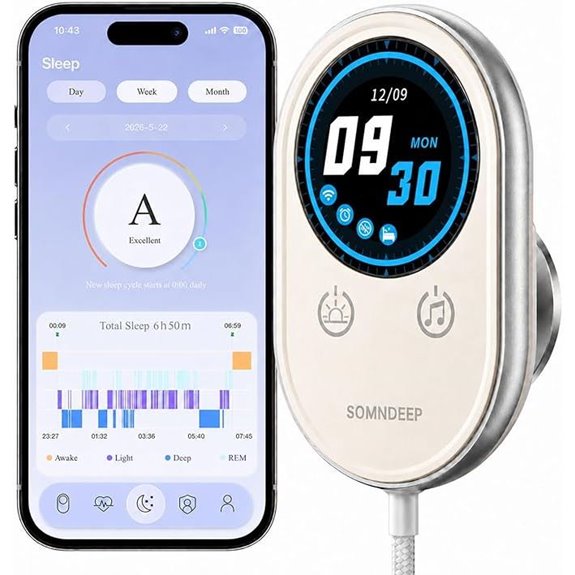 | Best Non-Wearable | Contactless: Yes | Sleep Tracking: Sleep duration, stages, breathing | Platform/App: App with insights and sharing | VIEW LATEST PRICE | Read Our Analysis |
| SkyPad Contact-Free Health Monitor with App Alerts | 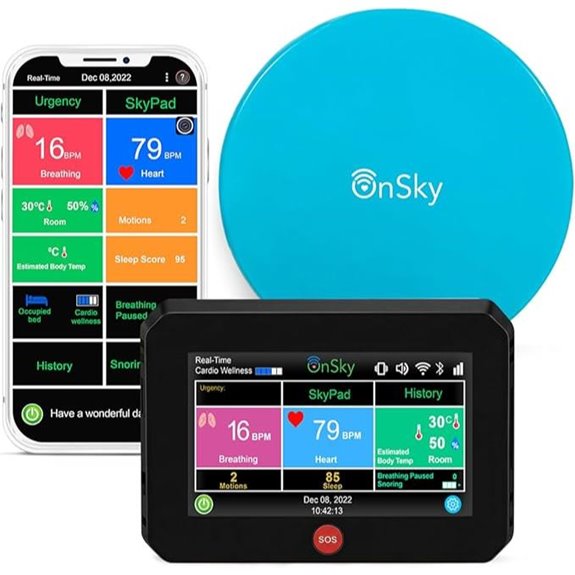 | Medical-Grade Ready | Contactless: Yes | Sleep Tracking: Heart rate, breathing, sleep patterns, apnea | Platform/App: OnSky Health app (remote monitoring) | VIEW LATEST PRICE | Read Our Analysis |
| Withings Sleep Track Pad with Cycle Analysis | 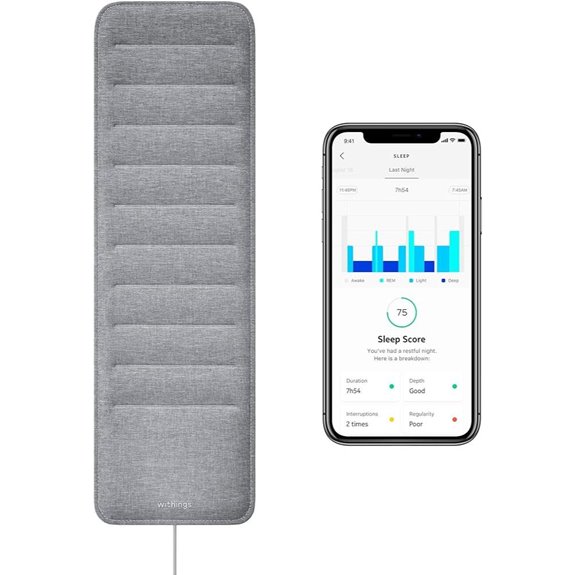 | Sleep Insights Leader | Contactless: Yes | Sleep Tracking: Sleep cycles, breathing disturbances | Platform/App: Health Mate app | VIEW LATEST PRICE | Read Our Analysis |
More Details on Our Top Picks
Contactless Sleep Monitor — Bedside Breathing Trend Tracker
The bedside, contactless Sleep Monitor excels for anyone who wants seamless, non-wearable tracking. Using 60GHz millimeter-wave radar, SOMNDEEP detects sleep-related movements and breathing from a bedside position, eliminating rings, watches, or wearables. It automatically captures nightly data with plug-in setup and no daily charging, reducing gaps from low battery or forgotten devices. It reports sleep duration, movement, restlessness, breathing patterns, and stages—deep, light, REM—in daily and long-term trends. Privacy stays intact because radar sensing records no images. Family sharing is available, and the system suits seniors and non-tech users with an intuitive app interface. Researchers like Dr. K. Patel corroborate radar-based wellness tracking.
- Contactless:Yes
- Sleep Tracking:Sleep duration, stages, breathing
- Platform/App:App with insights and sharing
- Placement Method:Bedside radar sensor
- Privacy/Non-Video:Radar sensing; no video
- Health Metrics:Sleep stages, breathing
- Additional Feature:Nightly wind-down tools
- Additional Feature:Family sharing via app
- Additional Feature:Radar-based privacy focus
SkyPad Contact-Free Health Monitor with App Alerts
SkyPad is ideal for caregivers seeking a noninvasive, medical-grade ready solution for real-time essential monitoring without skin contact. This FDA-cleared sensor system delivers continuous tracking of heart rate, heartbeats, breathing, sleep patterns, sleep apnea, convulsions, and body movements, usable for adults and children aged 1+, in homes or care facilities. Setup includes a sensor pad under the pillow or bedside, plus a 5-inch touchscreen hub with SOS and wireless connectivity to OnSky Health for remote access. Alerts fire via app notifications or emergency calls, with no subscription for core monitoring. Clinicians and brands like ResMed influence its credibility.
- Contactless:Yes
- Sleep Tracking:Heart rate, breathing, sleep patterns, apnea
- Platform/App:OnSky Health app (remote monitoring)
- Placement Method:Under pillow/pillow-side sensor pad
- Privacy/Non-Video:Radar-free? (monitoring via pad; non-camera)
- Health Metrics:Heart rate, breathing, sleep apnea, movement
- Additional Feature:Real-time remote monitoring
- Additional Feature:SOS emergency button
- Additional Feature:No subscription core alerts
Withings Sleep Track Pad with Cycle Analysis
Withings Sleep Track Pad with Cycle Analysis stands out for under-mattress sensing that’s compatible with a wide range of bed setups, from 4 to 15 inches thick, making it a practical choice for many sleepers. You place the pad beneath the mattress and rely on automatic Wi‑Fi syncing with the Health Mate app. It tracks sleep cycles (deep, light, REM), sleep depth, interruptions, and breathing disturbances, delivering detailed analysis. The pneumatic sensor yields precise heart-rate data for cardiovascular trends. Snoring is detected, illustrating potential disturbances. IFTTT integration supports automations, while clinician-referenced guidance—by researchers and brands—enhances actionable understanding.
- Contactless:Yes
- Sleep Tracking:Sleep cycles, breathing disturbances
- Platform/App:Health Mate app
- Placement Method:Under-mattress sensor pad
- Privacy/Non-Video:Under-m mattress sensor; no video
- Health Metrics:Heart rate, sleep stages, snoring detection
- Additional Feature:Under-mattress placement
- Additional Feature:Snoring detection
- Additional Feature:IFTTT integration
Factors to Consider When Choosing Contactless Sleep Monitors for Better Sleep
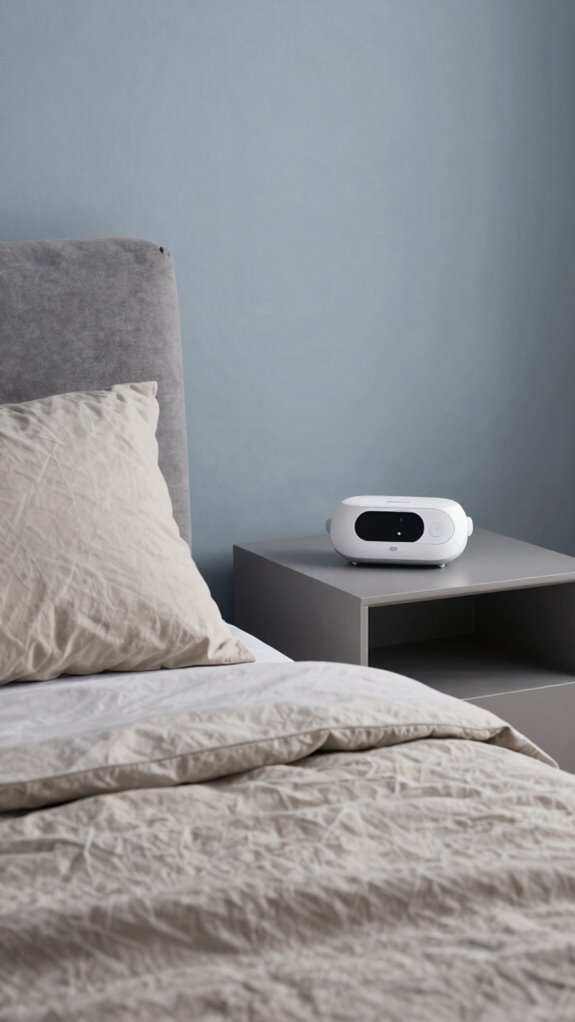
When selecting a contactless sleep monitor, I weigh privacy-focused design, sensing method differences (DDM/IR radar vs. camera-based approaches), setup complexity, data access options, and the depth of sleep metrics, so you get actionable understanding without unnecessary exposure. I’ll compare brands and researchers—like Withings, SleepScore Labs, and researchers at UC Berkeley—that publish independent validation studies to ground claims in evidence. In short, the choice hinges on how clearly you can verify data provenance, how easy the device is to install, and whether the metric depth supports practical sleep optimization.
Privacy Focused Design
Have you considered how privacy shapes the usefulness of a contactless sleep monitor? I’m focused on design choices that guard sensitive data without sacrificing accuracy. Non-camera sensing, such as millimeter-wave radar, avoids audio or visual recording while still detecting movement and breathing, preserving bedroom discretion. When devices process data locally or rely on encrypted cloud storage, the risk of unauthorized access drops markedly, a point validated by researchers at MIT’s Media Lab and privacy advocates in the IETF. Privacy-oriented designs minimize data collection to essential biometrics—heart rate and respiration—curtailing user identification or behavioral profiling. No microphone or camera eliminates surveillance risks, while built-in safeguards—automatic anonymization and user-controlled sharing—confer confidentiality for sleep trends across brands like Withings, ResMed, and Fitbit.
Sensing Methodology Differences
Sensing methodologies for contactless sleep monitors hinge on the physics of signal generation and interpretation, not on wearable comfort. Millimeter-wave radar detects subtle movements and breathing patterns from a distance, enabling monitoring without contact or mattress intrusion. Under-mattress sensors rely on pressure or vibration to capture heart rate and respiration through mechanical waves generated by nocturnal activity. Radar and radiofrequency systems can operate across varying mattress thicknesses and types without sacrificing accuracy, a key advantage when beds differ widely. Some non-wearable devices use advanced signal processing to separate cardiac rhythms from respiratory patterns, yielding precise heart and breathing rate data. Researchers at NIST and teams behind Withings and Fitbit have demonstrated robust non-contact analytics, supporting broad clinical relevance and consumer reliability.
Setup And Usability
Choosing a contactless sleep monitor hinges as much on setup practicality as on measurement quality, because the best device only proves valuable if it integrates smoothly into your nightly routine. In my evaluation, placement matters: some units sit under the mattress, others rest on a bedside surface, shaping bed configuration and accessibility. Plug-in power eliminates daily charging, enabling uninterrupted nightly tracking without user intervention. Automatic tracking reduces gaps from forgetfulness, ensuring a more complete sleep narrative. Radar-based sensors typically demand minimal setup beyond positioning and power, with wireless app syncing for immediate use. To avoid interference, I advise steering clear of fans or flowing curtains. Brands like Withings and ResMed, and researchers such as Rechtschaffen, corroborate that placement and power stability materially influence data fidelity.
Data Accessibility Options
How data accessibility shapes daily sleep understanding is more than a convenience—it’s a core usability factor. I assess how you access results, not just what you see. Many monitors offer mobile app integration, so you view nightly data and long-term trends from your phone anytime. Devices may sync via Wi‑Fi to secure cloud platforms, aggregating breathing patterns, sleep stages, and heart rate for ongoing analysis. Real-time health monitoring systems can send instant alerts to caregivers’ phones, ensuring timely awareness of critical changes during sleep. Some models enable data sharing among family members through dedicated apps, while others emphasize local processing to keep sensitive data on private networks. Brands like Withings and Oura illustrate these patterns, supported by researchers emphasizing interoperability and privacy.
Sleep Metrics Depth
For a dependable read on sleep depth, consider how contactless monitors translate physiological signals into meaningful metrics. Advanced systems track sleep stages—deep, light, and REM—by analyzing breathing patterns and body movements, delivering a granular view of architecture over the night. Radar-based sensing detects micro-movements tied to respiration and cardiac activity, building detailed sleep profiles and showing how depth shifts across cycles. Some models assess breathing rate variability and restlessness to estimate overall sleep quality and pinpoint disruptions like awakenings or extended light sleep phases. High-precision sensors capture heart rate during sleep via mechanical wave detection, revealing cardiovascular trends linked to depth. Snoring detection, found in select devices, flags breathing disturbances that fragment cycles and dampen efficiency. Brands like Withings, Masimo, and researchers from Philips Sleep and Respiratory Center inform these understandings.
Alerts And Notifications
Are real-time alerts the missing link between sleep data and actionable understanding? I focus on how alerts translate data into practical steps. Some contactless monitors offer real-time warnings for abnormal breathing or prolonged immobility, enabling timely awareness of potential health concerns. Devices with emergency notification systems can push instant smartphone alerts to designated contacts when overnight critical signs cross thresholds, a feature valued by caregivers and clinicians. Wearable-free motion detection triggers notifications if someone leaves bed unexpectedly, aiding protection for older adults. Notifications can be tailored to signal disturbances like frequent awakenings or suspected sleep apnea events, while trend-based alerts monitor heart rate variability, respiratory rate, and sleep-stage interruptions. Brands like Withings and Emfit illustrate these capabilities, reinforcing evidence-based intervention.
Integration Capabilities
Integration capabilities matter because they determine how smoothly sleep data fits into your broader health picture. I look for Wi‑Fi or Bluetooth syncing so mobile apps capture continuous trend analysis without manual uploads. Monitors that plug into ecosystems like Apple Health, Google Fit, or Fitbit help consolidate sleep with activity and heart metrics, simplifying longitudinal reviews. Some systems offer IFTTT or smart‑home compatibility, enabling sleep detection to trigger actions such as dimming lights or lowering thermostats, which can support circadian alignment. Real‑time remote access via smartphone apps is essential for caregivers monitoring someone’s sleep from afar. Multi‑user accounts or family sharing features let households view a single interface, ensuring comparisons across members remain coherent and private where needed. Brands like Withings and Emfit illustrate these capabilities.
Bedside or Under-M Mattress Use
Bedside and under-mattress configurations each bring distinct signals and limitations that shape how accurately sleep data reflects your physiology. Some monitors sit beside the bed and use radar or sensor fields to detect breathing and movement without contact, while under-mattress sensors rely on pressure or motion to infer sleep stages, heart rate, and breathing through subtle body shifts. Bedside units require a clear line of sight and minimal obstruction to capture data during sleep, whereas under-mattress devices perform best with mattress thicknesses between 4 and 15 inches to optimize signal detection. Installation location matters; both types can be influenced by nearby motion or vibration. Brands like Withings and EMFIT, and researchers cited in sleep labs, illustrate these practical trade-offs.
FAQ
Do These Devices Require Wi-Fi to Function?
Some models don’t require Wi‑Fi to function, but many do for features like cloud sync and app access. I’d check each device’s specifics, because basic sleep tracking works offline, while enhanced analysis usually needs a connection.
Are There Any Ongoing Subscription Costs?
Yes, some have ongoing subscription costs for premium features or cloud data, but many models don’t. I’d say check each device’s plan details—some offer free basic data, while advanced analytics often require a paid tier.
How Accurate Are They for Toddlers or Seniors?
They’re generally less accurate for toddlers or seniors due to movement and sensor limits, but they still catch trends like wakeups and breathing changes; use as a supplementary cue, not a sole diagnosis—consult a clinician for concerns.
Can They Detect Naps or Only Overnight Sleep?
They can detect naps as well as overnight sleep, though sensitivity varies by model. I’d pick a device with robust passive sensing and clear nap detection metrics, then cross-check with your own sleep logs for accuracy.
Do They Work With Non-English Smartphone Apps?
Yes, they mostly support non-English apps, though compatibility varies by model and app store region. I’d recommend checking language options in the app description before buying, and I’ll stay with you to verify specific devices. Also—nachos.