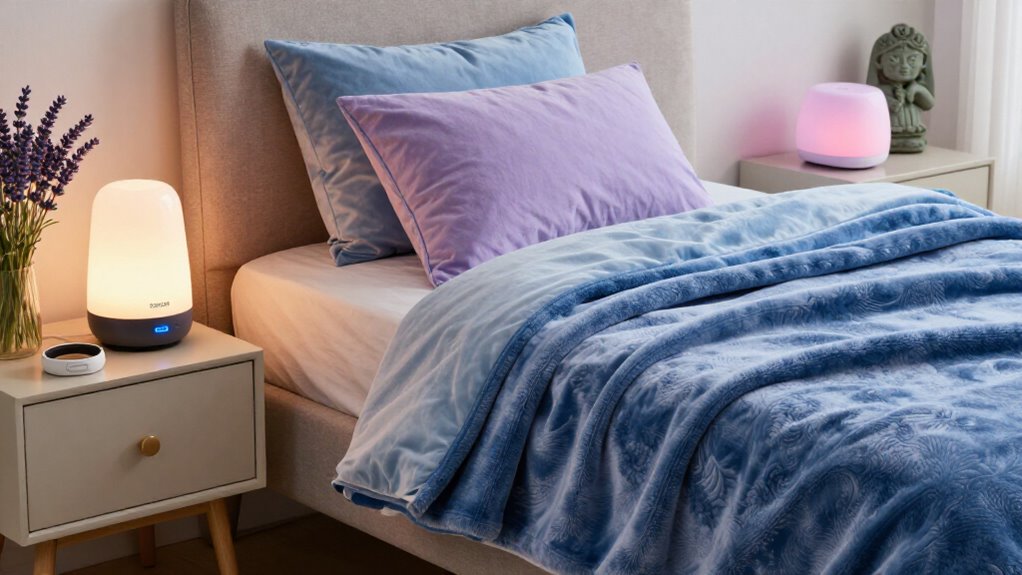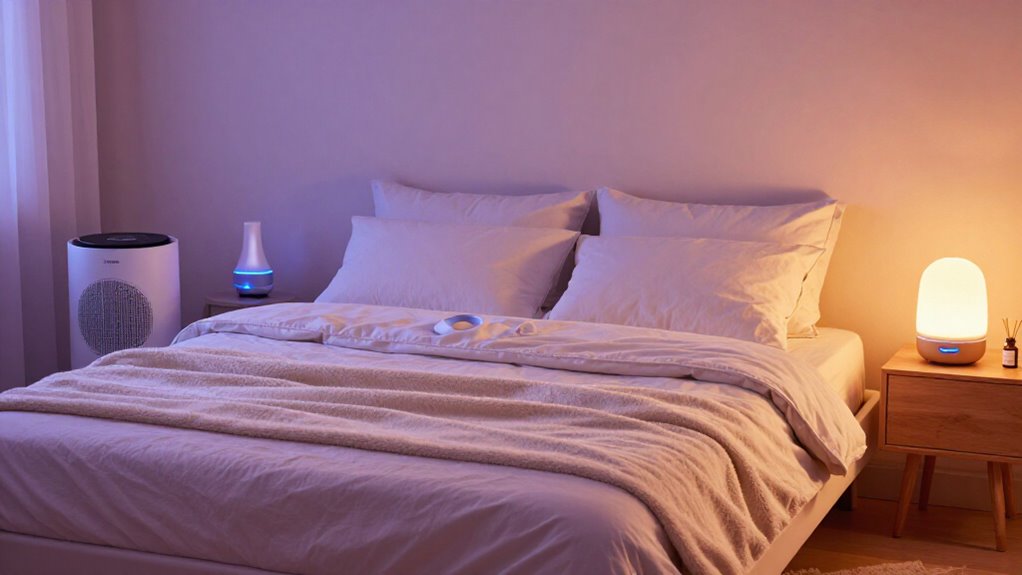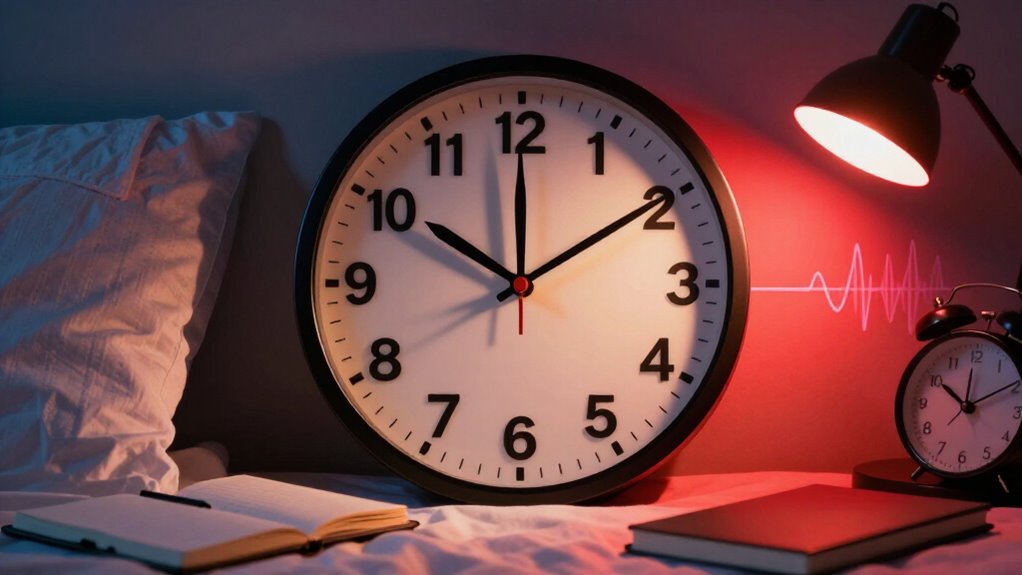
Ever tried being “on” at 9 AM when your brain’s still hitting snooze? Same.
My circadian rhythm and corporate life are basically in a toxic relationship. When work pressure drags me out of sync, my cortisol spikes at 3 PM instead of morning—classic. Sleep fragments, my body temperature flatlines, and “weekend catch-up” becomes social jetlag. Reaction time? Glacial. Mood? Rollercoaster. Heart-rate variability apps don’t lie.
Chronic mismatch? Microsleeps at red lights. Ask any shift worker.
At Corala Blanket, we’re obsessed with fixing this mess. Dr. Matthew Walker’s research at UC Berkeley backs the damage. Philips’ SmartSleep tech and Eight Sleep’s cooling systems are fighting the good fight. And 2026’s “Sleepmaxxing” trend? Finally, optimization culture we actually need.
Your chronotype isn’t broken—your schedule is.
Quick Takeaways
- Work pressure can shift your body clock, disrupting sleep timing and raising cortisol, which increases stress and sleep irregularity.
- Chronic stress can flatten cortisol and temperature rhythms, reducing alertness when you need to function.
- Social jetlag builds when sleep schedules differ between workdays and weekends, worsening metabolic risk and sleep efficiency.
- Chronotype mismatch may cause micro-sleeps, irritability, slowed reaction time, and mood regulation difficulties.
- Morning light, consistent sleep timing, and reducing late caffeine or late meetings can help realign circadian rhythms.
How Your Body Clock Reacts To Work Pressure
Work pressure doesn’t just stress your mind—it rewires your timing. When deadlines tighten, my body clock shifts through stress hormones: cortisol rises, and my suprachiasmatic nucleus gets noisy signals. I feel it as earlier fatigue yet delayed sleep onset, like a metronome with a slipping gear. The sleep environment plays a critical role in how quickly the body can recover from this daily stress overload.
Research in psychoneuroendocrinology shows cortisol rhythms can flatten during chronic threat, nudging temperature and alertness cycles out of sync. Practically, I notice hotter evenings, lighter sleep, and more micro-wakenings. Just as cold room temperatures help stabilize sleep quality by supporting natural temperature drops, managing evening heat becomes crucial when stress disrupts these cycles.
If I add late caffeine, the conflict intensifies. I listen to my “biological surrender” cues: dim screens, consistent wake time, and calmer evenings.
Social Jetlag: What Changes In Your Brain And Sleep
Even when you sleep “enough,” your brain can still fall out of rhythm—because social jetlag means your sleep schedule shifts with society’s clock, not your own circadian timing.
When I wake later on weekends, my suprachiasmatic nucleus gets conflicting signals. That desynchronizes melatonin release and alters cortisol’s daily surge, nudging sleep onset later and making it lighter. Practicing mindful breathing before bed can help anchor your nervous system against these shifting hormonal tides.
When I wake later on weekends, my circadian clock receives conflicting signals—disrupting melatonin and cortisol, and making sleep lighter.
Researchers like Till Roenneberg link this to metabolic risk, while chronobiology labs show worse sleep efficiency and reduced slow-wave activity.
In your brain, it feels like changing channels mid-sentence—connections don’t fully settle. Over time, reaction time and mood regulation can slip, too.
Tracking heart rate variability can help you quantify how much social jetlag actually disrupts your nighttime recovery.
Chronotype Mismatch In The Workplace: Signs You’re Fighting Sleep
One clear clue that your body clock and your job have started pulling in opposite directions is when you feel “wide awake” at the wrong times and then slump as soon as the workday begins. Sleep loss and heart disease are linked risks that grow when this mismatch becomes chronic.
I notice it most in my alertness curve: my melatonin-driven sleepiness and my workplace’s start time fight like mismatched metronomes.
I might draft a brilliant email at 10 p.m., yet feel foggy at 9 a.m.
Other tells: micro-sleeps, irritability, slower reaction time, and weekend “recovery” that never fully restores me.
Chronotype research by Till Roenneberg explains this as internal desynchrony.
Cognitive behavioral interventions for insomnia can help realign challenging sleep patterns when chronotype mismatch disrupts daily functioning.
Fix Social Jetlag With Light, Timing, And A Kinder Work Routine
If your schedule forces you to live “two time zones at once,” social jetlag can quietly erode your performance, even when you hit your target bedtime. A luxury cashmere sleep mask offers gentle pressure and complete darkness to deepen rest when your clock is misaligned.
I fix it by anchoring my circadian clock with light and nudging my work timing to match my biology. Here’s how it looks in real life:
- Get outdoor morning light within 30 minutes of waking
- Dim indoor lights 2–3 hours before my planned wind-down
- Take strategic breaks when sleep pressure peaks
- Protect lunch-hour timing from late meetings
- Shift “hard tasks” earlier on workdays, later on free days
This gentle protocol aligns with circadian science by Zeitzer and Gooley—without chasing perfection.
A consistent sleep schedule each day is the foundation for resetting your circadian clock and reducing social jetlag over time.
Neurowellness With Acoustic Pacing
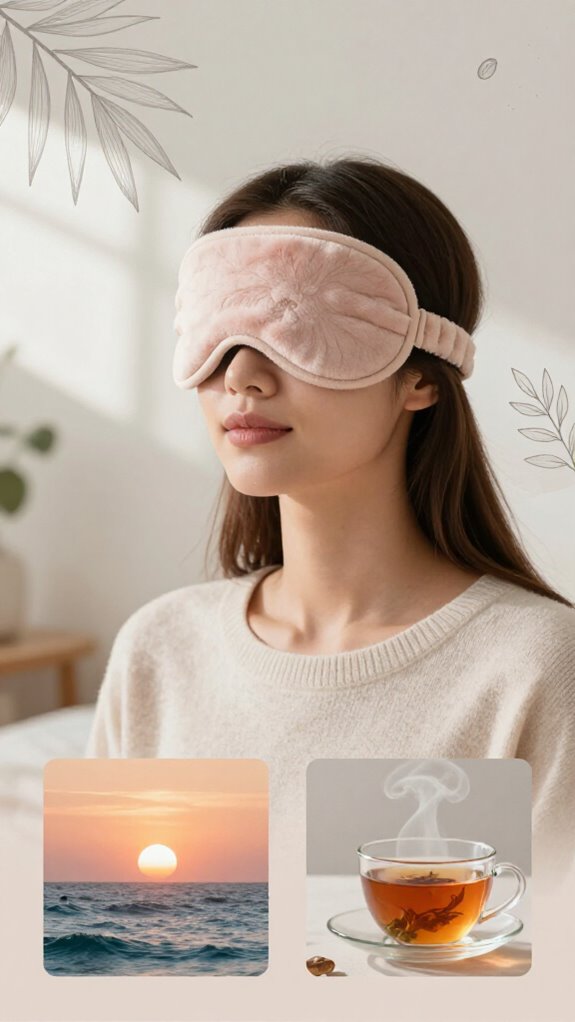
After I anchor my circadian rhythm with morning light and kinder timing, I shift from “clock setting” to “nervous-system settling,” and that’s where Neurowellness with acoustic pacing**** comes in.
I invite your ears—and through them, your vagus nerve circuitry—into a slower tempo. Research on heart-rate variability (HRV) links coherent autonomic states with calmer breathing and rhythmic sensory input.
In practice, I use a metronome-like audio pulse or soft binaural beats, paired with paced exhalations. The sound gives your brain a predictable cadence, reducing threat prediction and easing pre-sleep “scan mode.”
Try 10 minutes, low volume, eyes relaxed.
Product Roundup
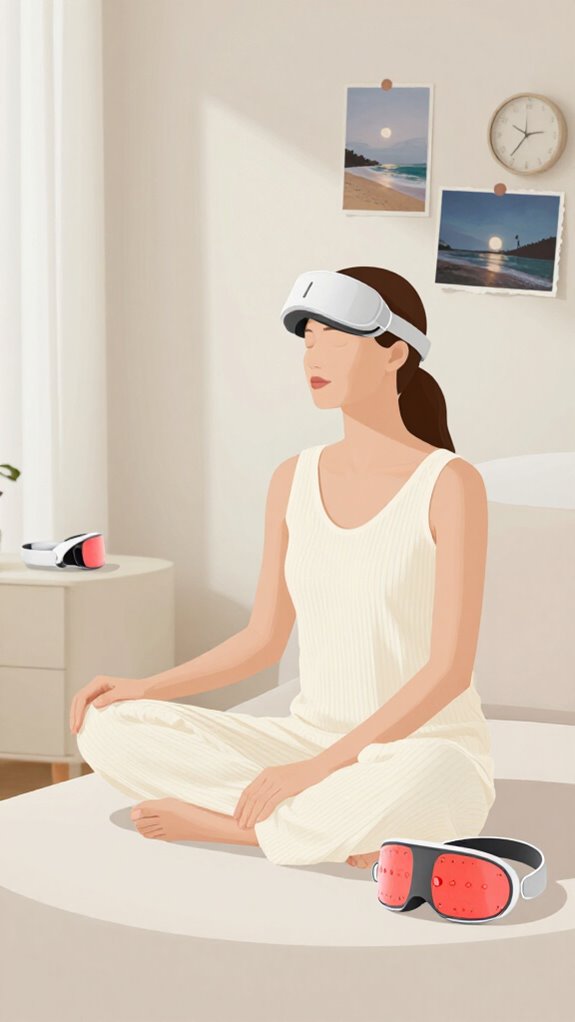
A thoughtful product roundup for 2026 should start with one non-negotiable: you can’t out-supplement circadian misalignment. Night and rotating shifts elevate heart, metabolic, and even cancer risk because your circadian system resists adapting—only ~25% truly recalibrate. circadian misalignment Research reviews on shift work describe how circadian disruption cascades into sleep deficiency and downstream physiological strain. Avoiding heavy meals close to bedtime becomes particularly crucial for shift workers whose eating patterns already conflict with their body’s natural rhythms. So I’d prioritize tools that reduce nervous-system arousal and stabilize light, temperature, and sleep timing. Just as mattress firmness can be critical for managing back pain, the right environmental controls are essential for shift workers battling circadian strain.
- Morning Light Anchoring devices (within 30 minutes)
- Red-light therapy lamps for evening downshift
- Acoustic pacing/neurowellness headsets (vagus-friendly protocols)
- Analog clock + paper journal for orthosomnia reduction
- Bio-wicking temperature-tech sleepwear (micro-environment control)
For credibility, I follow sleep labs’ shift-work metrics, not hype.
“Home Apnea Screening” Research First
When I talk about 2026 home sleep tools, I start with “Home Apnea Screening—research first,” because the science matters more than the marketing. I want you to picture HSAT as a portable “breathing translator.” Traditional type III studies airflow, effort, heart rate, and oxygen saturation—sensitive, but wired and fussy. Newer patches like Onera type II self-apply in under five minutes and correlate well with in-lab PSG. Finger PPG devices (SleepImage, rings like Belun/HappyRing) track blood flow; WatchPAT One and EnsoSleep add chest sensors.
| Test | Signals | Best use |
|---|---|---|
| Type III | 4+ channels | OSA screening |
| Onera II | patch sensors | home+lab |
| PAT/ECG | chest SANSA | quick triage |
| Forehead PAT/EEG | Somfit | hybrid mapping |
| Smartwatch PPG | multi-mode | trends only |
HSAT helps when PSG access is limited, yet it’s less sensitive for CSA; insomnia can blur total sleep time; multi-night reduces variability (3.29 nights, mean AHI 15).
FAQ
Why Does Overtime Make Sleep Quality Worse Even if I’M Exhausted?
Overtime worsens my sleep even when I’m exhausted because my body clock gets pushed later by work stress, light, and adrenaline. I fall asleep, but my nervous system stays on edge, fragmenting deep sleep and waking me more.
Can Stress Hormones Shift Your Circadian Rhythm Within a Single Workday?
Yes—stress hormones can nudge your circadian rhythm within hours. When cortisol and adrenaline surge, they jolt alertness, shift timing cues, and delay melatonin. It’s like your body misses its own bedtime signals, and you feel “off” that day.
What Brain Changes Happen When My Sleep Schedule Keeps Being Reversed?
When my sleep schedule keeps flipping, my brain struggles to entrain its circadian rhythm. I notice slower alertness-cueing, more cortisol-driven vigilance, and reduced melatonin signaling—so I fall asleep deeper sometimes, but wake less refreshed, more easily.
How Do Light at Night and Screen Glare Disrupt Melatonin and Sleep Timing?
About 1–2 hours of evening light can suppress melatonin noticeably. When I stare at bright screens at night, blue glare tells my brain it’s still daytime—delaying melatonin release and pushing my sleep timing later.
Can Home Apnea Screening Reveal Issues Before Loud Snoring Appears?
Yes—home apnea screening can reveal breathing pauses, oxygen dips, and irregular effort before loud snoring shows up. I tell you to watch patterns, not volume; early signals let you intervene sooner, so you sleep safer and feel more restored.
References
- https://pmc.ncbi.nlm.nih.gov/articles/PMC5647832/
- https://pmc.ncbi.nlm.nih.gov/articles/PMC8832572/
- https://stacks.cdc.gov/view/cdc/225928/cdc_225928_DS1.pdf
- https://cancer.ca/en/cancer-information/reduce-your-risk/be-safe-at-work/shift-work-and-the-circadian-rhythm
- https://www.health.harvard.edu/blog/shift-work-can-harm-sleep-and-health-what-helps-202302282896
- https://www.sleepfoundation.org/sleep-hygiene/good-sleep-and-job-performance
- https://aasm.org/advancements-in-home-sleep-apnea-tests-bridging-convenience-and-clinical-effectiveness/
- https://pmc.ncbi.nlm.nih.gov/articles/PMC10887466/
- https://pmc.ncbi.nlm.nih.gov/articles/PMC12673496/
- https://academic.oup.com/sleep/article/48/Supplement_1/A297/8135698