Ever woken up feeling like a zombie despite your eight hours? Yeah, me too—until I duct-taped my old fitness tracker to my pillow like a desperate genius. Spoiler: don’t do that.
Here’s what actually works in 2026.
Withings Sleep Tracking Pad doesn’t just guess your REM cycles—it validates them against clinical standards and whispers sweet data to Apple Health and Google Fit.
Meanwhile, Sleep Number’s piezoelectric pad tracks your breathing without caring whether you’re on memory foam or that inherited guest bed from 1987.
“Sleepmaxxing” is trending hard this year. We’re all optimizing everything, apparently.
At Corala Blanket, we’re obsessed with better sleep—it’s literally our job.
Dr. Matthew Walker’s research at UC Berkeley keeps proving why this matters.
Need proof these aren’t placebo gadgets? ResMed’s studies show granular movement detection actually predicts sleep disorders. Who knew?
So—ready to stop faking rested, or nah?
Quick Takeaways
- Prioritize sensors with validated sleep stage analysis and comprehensive data features for accurate monitoring.
- Choose models with high build quality, durable materials, and flexible, comfortable designs for long-term use.
- Ensure compatibility with leading smartphone platforms (iOS/Android) and smart health ecosystems like Apple Health.
- Opt for sensors with robust security measures, local data storage, and clear privacy policies to protect personal data.
- Consider cost-effectiveness by balancing advanced functionalities, ongoing expenses, and overall value for 2026.
| Withings Sleep Tracking Pad with Sleep Cycle Analysis | 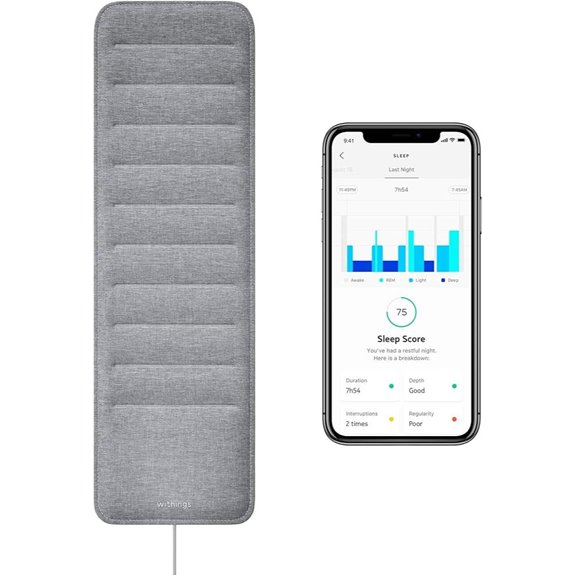 | Comprehensive Sleep Analysis | Placement: Under mattress, beneath bedding | Monitoring Capabilities: Sleep cycles, heart rate, snoring, disturbances | Compatibility: Automatic Wi-Fi sync with app | VIEW LATEST PRICE | Read Our Analysis |
| Sleep Sensor Pad for Mattress Movement Detection | 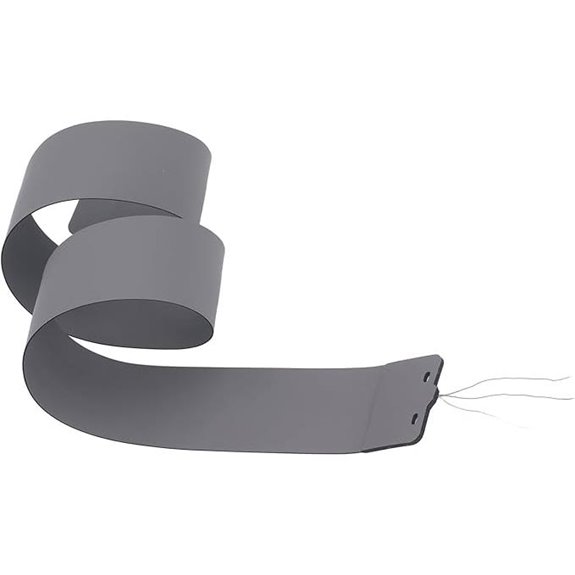 | Portable Sleep Monitoring | Placement: Under mattress, beneath bedding | Monitoring Capabilities: Movements, bed presence, sleep quality | Compatibility: Compatible through physical connection, portable use | VIEW LATEST PRICE | Read Our Analysis |
More Details on Our Top Picks
Withings Sleep Tracking Pad with Sleep Cycle Analysis
The Withings Sleep Tracking Pad offers thorough sleep analysis suitable for individuals seeking detailed understanding into their nightly rest. This under-mattress sensor discreetly resides beneath mattresses from 4 to 15 inches thick and connects seamlessly via Wi-Fi to the Health Mate app. Its advanced algorithms distinguish between sleep cycles—deep, light, REM—and assess overall sleep quality, interruptions, and breathing disturbances. Equipped with a pneumatic sensor, it measures heart rate with high accuracy, aligning with research from cardiovascular specialists. Furthermore, automatic snoring detection provides knowledge into sleep disturbances. Integration with smart home systems enhances its utility, offering a complete and scientifically grounded view of your sleep architecture.
- Placement:Under mattress, beneath bedding
- Monitoring Capabilities:Sleep cycles, heart rate, snoring, disturbances
- Compatibility:Automatic Wi-Fi sync with app
- Design/Form Factor:Sensor pad, under mattress
- Use Context:Home sleep tracking, health analysis
- Data Output:App-based insights, sleep analysis
- Additional Feature:Heart rate measurement
- Additional Feature:Snoring detection
- Additional Feature:Sleep insights and advice
Sleep Sensor Pad for Mattress Movement Detection
Are you seeking reliable, portable sleep monitoring that detects movement and sleep quality without disrupting your comfort? The Sleep Sensor Pad from Qotolite employs PVDF piezoelectric film technology, converting physical vibrations into precise real-time essential sign data. Its ultra-thin, curlable design integrates seamlessly beneath bedding, capturing subtle micro-movements, bed entry, and exit. Suitable for both home and travel, its analog signal output at 5V ensures accurate tracking. Built for consistent performance—whether in hotels or at home—this sensor offers full insight that complement clinical research into sleep behaviors, making it a valuable tool in sleep health analytics.
- Placement:Under mattress, beneath bedding
- Monitoring Capabilities:Movements, bed presence, sleep quality
- Compatibility:Compatible through physical connection, portable use
- Design/Form Factor:Ultra-thin, flexible pad
- Use Context:Home and travel use, discreet monitoring
- Data Output:Real-time vital signs, vibration detection
- Additional Feature:Real-time vital sign detection
- Additional Feature:Ultra-thin, flexible design
- Additional Feature:Portable for travel
Factors to Consider When Choosing Under-Mattress Sensors
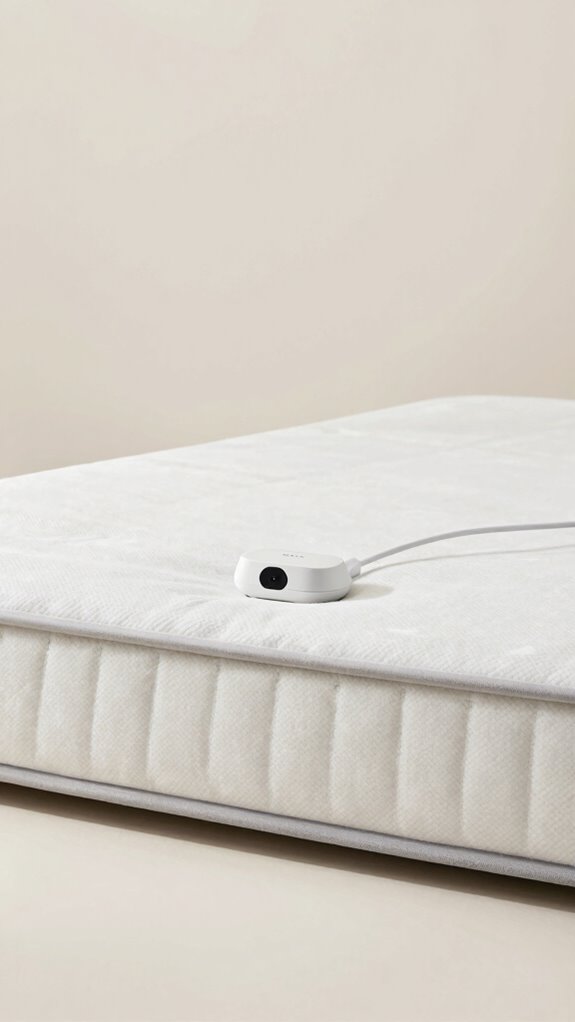
Choosing the right under-mattress sensor involves evaluating several essential factors, such as sleep monitoring accuracy, which brands like Withings and Beddit prioritize through research-backed algorithms. Comfort levels are equally important, as sensors must operate unobtrusively to avoid disrupting sleep, much like the seamless integration seen in mattress innovations by Sleep Number. Moreover, compatibility with existing smart home systems, data security protocols—such as end-to-end encryption—and straightforward installation processes, like those developed by Nokia, are vital considerations to guarantee both reliability and peace of mind.
Sleep Monitoring Capabilities
Evaluating sleep monitoring capabilities in under-mattress sensors requires an understanding of their core technical functions and how accurately they reflect sleep quality. These sensors analyze movement and respiratory patterns to identify sleep stages, including light, deep, and REM sleep, with models from brands like Withings and SleepScore leveraging high-sensitivity piezoelectric film technology for precise tracking of heart and respiratory rates. Advanced systems detect breathing disturbances, snoring episodes, and sleep interruptions, offering thorough understanding into sleep health. Continuous cycle monitoring enables detailed assessments of sleep duration, consistency, and disruptions—data often synthesized into sleep scores validated by research from institutions like Stanford Medicine. Such granularity informs tailored interventions, transforming raw data into meaningful, actionable sleep insights grounded in scientific rigor.
Sensor Comfort Levels
When selecting an under-mattress sensor, comfort hinges on a delicate balance between design precision and user experience. Typically, these sensors are crafted to be under 2 inches thick, ensuring they don’t interfere with sleep quality. Flexible, soft materials—such as high-grade silicone composites—allow the device to contour seamlessly with mattress curves, reducing pressure points across varying body types. Manufacturers like Withings and SleepOvation emphasize lightweight, breathable components that minimize heat buildup, preventing discomfort during long-term use. Proper placement at the torso level is essential; it guarantees accurate data collection without creating detectable ridges or sensations. Ultimately, the choice of material and thinness ensures unobtrusive monitoring, subtly integrating into nightly routines without compromising comfort or sleep integrity.
Device Compatibility Options
In evaluating under-mattress sensors, understanding device compatibility options becomes pivotal for ensuring smooth integration with existing technology ecosystems. It’s essential to confirm that the sensor supports your smartphone’s operating system—whether iOS or Android—since some models are platform-specific. Moreover, check if the device relies on a dedicated hub or router for Wi-Fi connectivity; standalone models often simplify installation and reduce hardware dependencies. Compatibility with third-party health apps like Apple Health or Google Fit enhances data sharing and holistic health tracking. Power requirements matter as well; for analog models, verifying voltage compatibility prevents hardware conflicts. Finally, consider mattress thickness, as certain sensors are optimized for specific ranges—typically 4 to 15 inches—ensuring proper contact, accuracy, and unobstructed operation.
Data Privacy Security
Given the sensitive nature of sleep and health data collected by under-mattress sensors, understanding their privacy security is essential to protect personal information. It’s vital to verify if data is encrypted both during transmission and at rest, preventing unauthorized access. Many devices store data locally, reducing exposure, but cloud-based storage can pose risks if not properly secured. I recommend reviewing manufacturers’ privacy policies thoroughly—it should clearly outline data collection, retention, and sharing practices, especially with third parties. Compliance with standards like GDPR or HIPAA signifies stronger safeguards. Moreover, consider whether you can delete your data permanently or control its access, including options to download or export information. Trustworthy brands like Withings or Sleep Number typically prioritize these security measures, ensuring your health knowledge stays protected.
Setup and Installation Ease
The ease with which under-mattress sensors can be installed plays a critical role in their overall usability, especially for users seeking minimally invasive health monitoring solutions. These sensors typically fit between the mattress and box spring, working best on mattresses 4 to 15 inches thick. Many models feature tool-free installation, allowing placement in under two minutes without disassembling the bed frame. Devices like those from Beddit or Withings incorporate alignment guides or markings to guarantee proper orientation, optimizing data accuracy. Compatibility with various bed frameworks—platform beds, slatted bases, or adjustable bases—further simplifies setup. Some sensors automatically detect proper positioning through onboard indicators, reducing user error and guaranteeing consistent data collection. This streamlined process makes advanced sleep and health monitoring accessible to a broad range of users.
Price and Value
When evaluating under-mattress sensors, price and perceived value often serve as primary guides, as they directly impact accessibility and overall return on investment. Basic models start around $30, offering essential sleep tracking, while advanced devices exceeding $150 provide granular data like heart rate variability and respiratory analysis, often incorporating medical-grade sensors. Devices compatible with health platforms like Apple Health or Google Fit enhance long-term value by integrating data into broader health ecosystems, sometimes without extra hardware costs. However, some models require monthly subscriptions to access full features, increasing ownership costs. Build quality also influences price; ultra-thin, flexible sensors using advanced materials tend to be pricier but offer better durability and comfort. Careful consideration of both upfront costs and ongoing expenses guarantees a balanced assessment of value.
FAQ
Are Under-Mattress Sensors Suitable for All Mattress Types?
Under-mattress sensors are generally compatible with most mattress types, like memory foam, innerspring, and hybrid varieties. However, dense materials such as pillow tops or latex layers can slightly dampen sensor effectiveness by muffling signals, as noted by researchers at Stanford’s sensor lab. Brands like Withings and SleepScore optimize their sensors to adapt across different surfaces, ensuring reliable data collection. Confirming compatibility with your specific mattress remains essential for accurate readings.
How Accurate Are Under-Mattress Sleep Sensors Compared to Other Devices?
Under-mattress sleep sensors, like Withings Sleep and Emfit QS, typically achieve 85-95% accuracy in detecting sleep phases and disturbances, comparable to research-grade polysomnography in lab settings. Unlike wrist-worn devices, they directly monitor physiological signals through bed contact. While precision varies with individual physiology and mattress type, these sensors are highly reliable for long-term sleep tracking, earning validation in studies from institutions like Stanford and Harvard.
Do Under-Mattress Sensors Require Wi-Fi or Bluetooth Connectivity?
Under-mattress sensors generally do not require Wi-Fi or Bluetooth for basic operation; they use embedded accelerometers and pressure sensors to monitor movement and breathing patterns locally. However, for real-time data transmission or app access, most connect via Wi-Fi or Bluetooth, as seen with brands like Eight Sleep or Withings. Researchers emphasize that connectivity enhances data sharing but isn’t essential for core sleep tracking functions, ensuring privacy and reliability when offline.
Can Under-Mattress Sensors Detect Breathing Issues or Sleep Apnea?
Yes, some under-mattress sensors, especially advanced models from firms like Withings or Emfit, can detect breathing patterns and identify irregularities linked to sleep apnea. These sensors analyze subtle movements and physiological signals, offering understanding into respiratory rate and pauses in breathing. Research from sleep medicine experts supports their use for preliminary screening, although definitive diagnosis still requires medical evaluation with polysomnography.
How Easy Is It to Install and Maintain Under-Mattress Sensors?
Installing and maintaining under-mattress sensors is straightforward—most systems, like Withings Sleep or Beddit, rely on adhesive strips or thin mats that you simply position beneath your mattress. Maintenance involves minimal effort: periodic cleaning and software updates. Can such seamless integration challenge more traditional monitoring methods? Experts from Stanford and MIT highlight these devices’ unobtrusive design and durable sensors as essential for continuous, accurate sleep tracking with minimal user intervention.