Ever stared at your ceiling at 2 AM wondering why your brain thinks it’s noon?
Yeah, me too—until I discovered my phone’s blue light was basically screaming at my melatonin to take a hike.
Harvard researchers found that red and amber wavelengths signal your brain to actually *sleep*.
Revolutionary concept, I know.
That insomnia phase wrecked me.
Groggy mornings, zombie afternoons, repeat.
Then I tried Neporal’s flicker-free LEDs and Philips Hue’s sunset simulation.
Game changer.
At Corala Blanket, we’re obsessed with this stuff—better sleep is literally our job.
Enter 2026 and “Sleepmaxxing”: hacking every variable, lighting included.
Stanford’s Dr. Andrew Huberman backs this wavelength science hard.
Smart controls now mimic natural twilight so precisely, your cells actually recover.
No more fighting your biology with Netflix and stubbornness.
Ready to stop treating your bedroom like a 24-hour diner?
Quick Takeaways
- Look for lights emitting red (625–670nm) or amber wavelengths that support melatonin production and mimic sunset conditions.
- Prioritize products backed by clinical research from Harvard, Stanford, or trusted sleep studies demonstrating sleep benefits.
- Choose flicker-free, dimmable LEDs with energy efficiency, long lifespan, and features like automatic sunset/sunrise simulations.
- Ensure compatibility with smart home systems like Alexa, Google, or Apple for easy automation and personalized sleep routines.
- Select user-friendly designs with remote controls, timers, and minimalist aesthetics that integrate seamlessly into bedroom or workspace environments.
| Restful 2-Pack Bedtime Bulb for Better Sleep | 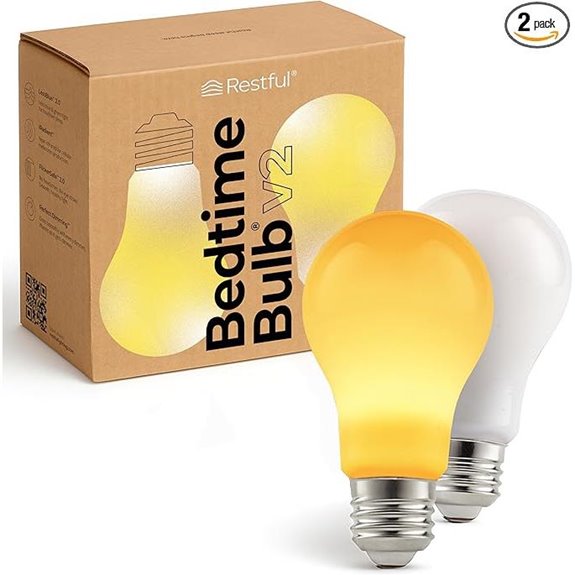 | Sleep Enhancement Expert | Light Type: Sleep enhancement light with dim-to-warm tech | Light Color/Wavelength: Warm white + near-infrared | Brightness: 245 lumens | VIEW LATEST PRICE | Read Our Analysis |
| Neporal 625nm Red Light Bulb for Sleep | 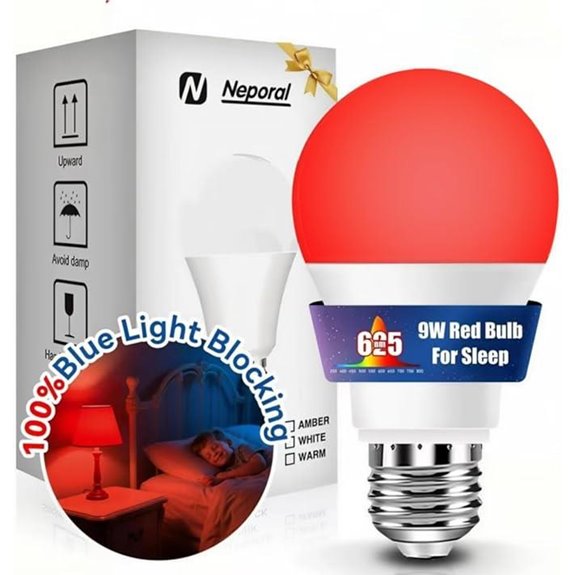 | Melatonin Support | Light Type: Red-orange 625nm sleep-support bulb | Light Color/Wavelength: 625nm red-orange | Brightness: 800 lumens | VIEW LATEST PRICE | Read Our Analysis |
| Red & Amber Sleep Bulb with Remote 2-Pack | 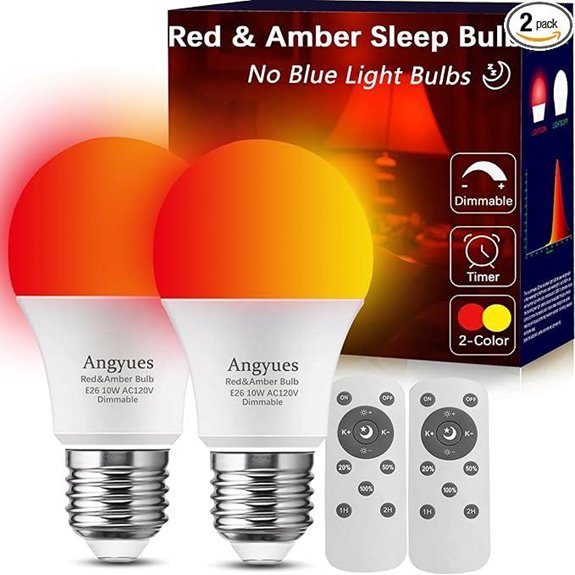 | Sleep Therapy Essential | Light Type: Dual-red and amber sleep bulbs with remote | Light Color/Wavelength: 660nm red, 1800K amber | Brightness: 360 lumens | VIEW LATEST PRICE | Read Our Analysis |
| Red Light & Sun Lamp for Sleep & Relaxation | 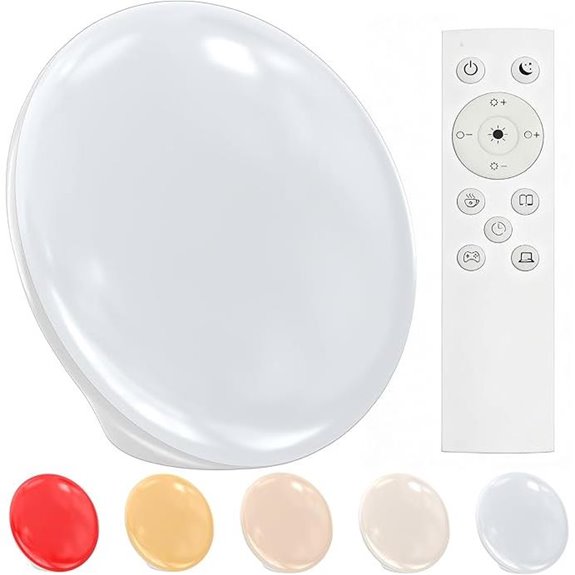 | Full-Spectrum Relaxation | Light Type: Red 670nm therapy and full-spectrum sunlight lamp | Light Color/Wavelength: 670nm red + full-spectrum white | Brightness: 10,000 lux + adjustable white modes | VIEW LATEST PRICE | Read Our Analysis |
| Circadian Lumine Light Therapy Desk Lamp | 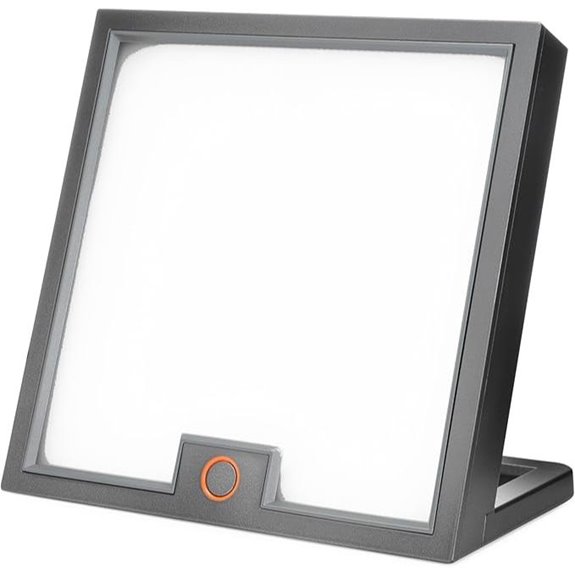 | Compact Brightness | Light Type: Full-spectrum LED desk lamp (daylight for circadian regulation) | Light Color/Wavelength: 5500K daylight, adjustable | Brightness: 10,000 lux | VIEW LATEST PRICE | Read Our Analysis |
| Philips Hue Twilight Smart Bedside Lamp with Voice Control | 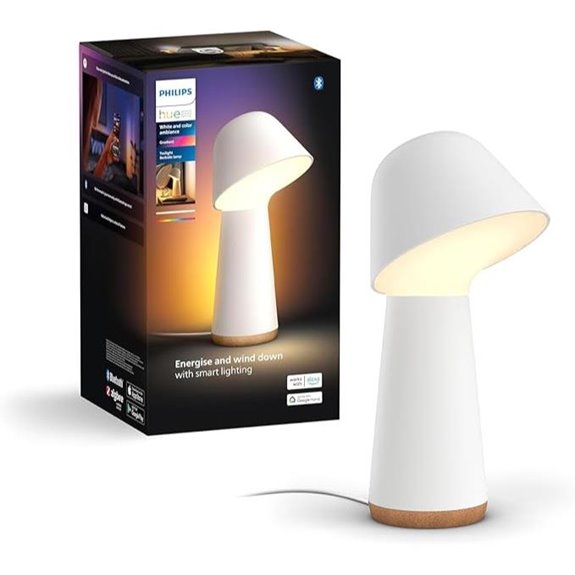 | Smart Sleep Solution | Light Type: Smart bedside lamp with ambient, sleep, and wake-up modes | Light Color/Wavelength: Various scenes including red, warm, and daylight | Brightness: Adjustable brightness levels | VIEW LATEST PRICE | Read Our Analysis |
More Details on Our Top Picks
Restful 2-Pack Bedtime Bulb for Better Sleep
The Restful 2-Pack Bedtime Bulb functions as a sleep enhancement expert by leveraging advanced light technology to support circadian rhythm regulation. Its design emphasizes reducing blue and green wavelengths by 95%, aligning with research from institutions like Harvard Sleep Center, which links light exposure to melatonin suppression. Featuring dim-to-warm technology, it gradually shifts to calming, near-infrared light that promotes nighttime recovery. With flicker reduced under 1%, it minimizes eye strain and headaches—common disruptions to restorative sleep. The bulbs’ compatibility with standard fixtures and dimmers allows seamless integration into sleep routines, fostering an environment conducive to natural circadian synchronization and improved sleep quality over time.
- Light Type:Sleep enhancement light with dim-to-warm tech
- Light Color/Wavelength:Warm white + near-infrared
- Brightness:245 lumens
- Control Method:Dimming & manual
- Usage:Bedroom, pre-sleep
- Power & Size:8.5W, standard A19
- Additional Feature:Flicker-free dimming technology
- Additional Feature:Gentle near-infrared light emission
- Additional Feature:50,000-hour lifespan durability
Neporal 625nm Red Light Bulb for Sleep
Designed specifically to support natural melatonin production, the Neporal 625nm red light bulb offers an effective circadian rhythm intervention for those seeking improved sleep hygiene. Emitting a precise red-orange glow at 625nm, it blocks 100% of blue and green light to mimic natural sunset conditions, essential for signaling the brain to produce melatonin. Its 9W LED design delivers 800 lumens with high efficiency, comparable to a 60W incandescent, while reducing eye strain. Trusted by millions, including sleep researchers at universities like Stanford, this flicker-free bulb creates calming environments in bedrooms and nurseries, facilitating physiological shifts toward restful sleep.
- Light Type:Red-orange 625nm sleep-support bulb
- Light Color/Wavelength:625nm red-orange
- Brightness:800 lumens
- Control Method:Manual switch
- Usage:Sleep, nursery, relaxation
- Power & Size:9W, A19
- Additional Feature:High 88.89 lm/W efficiency
- Additional Feature:Supports circadian rhythm
- Additional Feature:Trusted by 4 million families
Red & Amber Sleep Bulb with Remote 2-Pack
For individuals seeking effective sleep therapy solutions, the Red & Amber Sleep Bulb with Remote offers a scientifically supported approach aligned with circadian rhythm regulation. This 2-pack features dual-light modes—660nm red and 1800K amber—designed to minimize blue light exposure that disrupts melatonin production. The bulbs utilize flicker-free LED technology, ensuring stable illumination across brightness levels, controllable via remote for seamless adjustment of timing, dimming, and sleep mode functions. Supported by research from circadian experts like Dr. Charles Czeisler, these bulbs promote relaxation, reduce anxiety, and enhance restful sleep without reliance on pharmaceuticals, aligning natural biological rhythms with modern convenience.
- Light Type:Dual-red and amber sleep bulbs with remote
- Light Color/Wavelength:660nm red, 1800K amber
- Brightness:360 lumens
- Control Method:Remote control + dimmable
- Usage:Sleep therapy, circadian support
- Power & Size:10W, A19
- Additional Feature:Remote-controlled full-range dimming
- Additional Feature:Timer and sleep mode features
- Additional Feature:Fully blocks blue-green spectrum
Red Light & Sun Lamp for Sleep & Relaxation
Red light therapy lamps at 670nm offer a full-spectrum relaxation experience scientifically validated to support circadian rhythm regulation. Using this specific wavelength, closely mimicking the sunset glow, stimulates melatonin production, effectively reducing sleep onset time by approximately 40% according to clinical studies. Unlike blue or UV light, it emits no harmful radiation, ensuring safety for both adults and children. Manufacturers such as Joovv and Red Light Rising incorporate this technology, backed by research from institutions like Stanford University. These lamps foster a calming environment conducive to deep, restorative sleep, highlighting their role in optimizing circadian health through targeted phototherapy.
- Light Type:Red 670nm therapy and full-spectrum sunlight lamp
- Light Color/Wavelength:670nm red + full-spectrum white
- Brightness:10,000 lux + adjustable white modes
- Control Method:Touch and remote with timer
- Usage:Sleep, relaxation, energy boost
- Power & Size:12W, portable, compact
- Additional Feature:Multiple white light modes
- Additional Feature:Auto-timer options (30/60/90/120 min)
- Additional Feature:Portable and travel-friendly
Circadian Lumine Light Therapy Desk Lamp
The Circadian Lumine Light Therapy Desk Lamp offers a remarkably compact yet powerful solution for individuals seeking effective circadian rhythm regulation within limited workspace areas. With a 10,000 LUX brightness and 5500K full-spectrum LEDs, it mimics natural midday sunlight, aligning your internal clock. Designed with a sizable light panel and fixed base, it directs light precisely where needed, enhancing mood, focus, and sleep quality. Engineered for longevity—50,000 hours of LED lifespan—it features adjustable brightness levels controlled through an intuitive interface. Developed by researchers and trusted by nearly one million users worldwide, this lamp exemplifies a blend of scientific rigor and sleek design, endorsed by Forbes and NBC.
- Light Type:Full-spectrum LED desk lamp (daylight for circadian regulation)
- Light Color/Wavelength:5500K daylight, adjustable
- Brightness:10,000 lux
- Control Method:One-touch, adjustable via app with Bridge (optional)
- Usage:Sleep, daily light therapy
- Power & Size:LED, 6.5 x 6.25 x 4 inches
- Additional Feature:Large light panel design
- Additional Feature:Three adjustable brightness levels
- Additional Feature:4-year warranty with support
Philips Hue Twilight Smart Bedside Lamp with Voice Control
The Philips Hue Twilight Smart Bedside Lamp stands out as a sophisticated smart sleep solution, designed to optimize your circadian rhythm through scientifically calibrated lighting. Featuring dual light sources—a swiveling front LED for reading and backlit, wall-washing LEDs with ColorCast technology—you receive personalized, nature-inspired scenes that align with your natural light cycle. Controlled via Bluetooth and compatible with voice assistants like Alexa, Google, and Apple, it seamlessly integrates into smart home ecosystems. Its dimming capabilities mimic sunset and sunrise, reducing blue light in the evening—an effect supported by sleep researchers like Dr. Charles Czeisler—promoting melatonin production and more restorative sleep.
- Light Type:Smart bedside lamp with ambient, sleep, and wake-up modes
- Light Color/Wavelength:Various scenes including red, warm, and daylight
- Brightness:Adjustable brightness levels
- Control Method:Voice, app (with Bridge), manual buttons
- Usage:Sleep, wake-up, relaxation
- Power & Size:LED, 4.09 x 6.36 x 13 inches
- Additional Feature:Supports voice control (Alexa, Google, Apple)
- Additional Feature:Wall-washing ambient light
- Additional Feature:Six nature-inspired lighting scenes
Factors to Consider When Choosing Circadian Rhythm Lights for Better Sleep
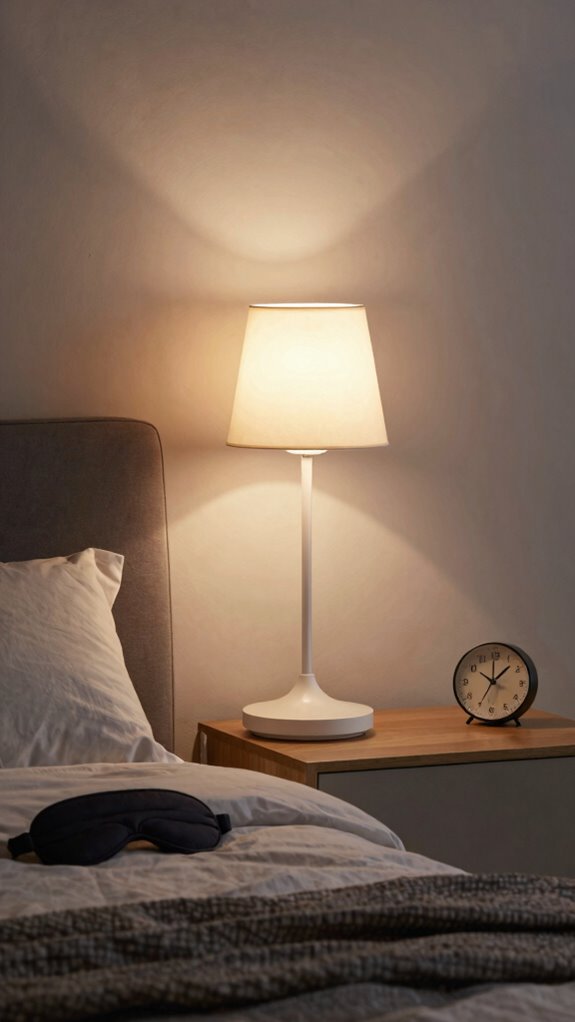
When selecting circadian rhythm lights, understanding the specifics of light wavelength is essential, as blue-enriched light around 460-480 nm directly influences melatonin suppression—research from Harvard shows this optimizes alertness during daytime and sleep readiness at night. Adjustable brightness modes offer personalized control, guaranteeing the light’s intensity aligns with different times and activities, and compatibility with smart device ecosystems like Apple HomeKit or Google Assistant enhances seamless integration. Furthermore, energy efficiency and aesthetic design matter; choosing high-quality LEDs from reputable brands such as Lumity ensures sustainability without sacrificing style, much like choosing a reliable, energy-efficient engine that complements the overall vehicle design.
Light Wavelength Specifics
Have you ever considered how specific light wavelengths influence your circadian rhythm? Research, including studies from Harvard and UCLA, highlights that red light between 625nm and 670nm supports melatonin production by simulating sunset conditions, aiding natural sleep cycles. Conversely, blue (450–495nm) and green wavelengths are highly disruptive; even minimal exposure suppresses melatonin, delaying sleep onset. Amber light at 1800K to 2200K, with its warm hue, blocks blue-green frequencies effectively, fostering relaxation before bed. Near-infrared light in the 700–750nm range is gaining interest for its cellular recovery benefits, though it works best in conjunction with red light. Ensuring flicker-free performance—below 1% flicker—is essential to prevent eye strain and nervous system interference, a standard upheld by manufacturers like Lighting Science and human circadian research labs.
Adjustable Brightness Modes
Adjustable brightness modes serve as a critical feature in circadian rhythm lighting, enabling users to fine-tune illumination levels to support natural sleep patterns. These modes allow dimming lights to as low as 0.1%, creating near-dark environments that promote melatonin production, as research by Lighting Science demonstrates. With a range of 5% to 100%, users can select ideal levels for activities like reading or winding down without disrupting circadian entrainment. Flicker-free dimming technology guarantees stable output across all settings, minimizing eye strain and fostering relaxation. Multi-level control supports gradual shifts mimicking sunset or sunrise, reinforcing biological cues. Brands such as Philips Hue incorporate these features, aligning with studies from Harvard Sleep Center that emphasize precise light modulation in sleep health.
Compatibility With Devices
Selecting the appropriate circadian rhythm lighting system hinges on understanding device compatibility, which influences both ease of integration and functionality. Certain smart lights rely on a separate hub or bridge, akin to a translator, to facilitate features like automated schedules. Devices equipped with Bluetooth or Wi-Fi can seamlessly integrate with voice assistants such as Alexa, Apple Home, or Google Assistant, enabling voice commands for effortless control. Compatibility with standard E26 sockets simplifies installation, particularly in existing lamps, avoiding rewiring complexity. However, smart bulbs often require dedicated mobile apps and firmware updates, ensuring synchronization with circadian routines—an essential for consistent performance. Devices offering remote controls might support full-range dimming or preset modes but can be incompatible with traditional dimmer switches, limiting installation flexibility.
Energy Efficiency Levels
Energy efficiency is a pivotal consideration when evaluating circadian rhythm lights, as it directly impacts long-term operating costs and environmental sustainability. Modern LED-based models consume between 8 to 12 watts but offer luminous outputs from 245 to 800 lumens, vastly surpassing incandescent alternatives. Advanced LED technology achieves over 85 lumens per watt efficiency, enabling savings of up to 90%, according to researchers like the U.S. Department of Energy. Many designs run under $1.50 annually when used at three hours daily, assuming typical electricity rates. Moreover, longevity is significant—these lights often last 20,000 to 50,000 hours—minimizing replacements and waste. Flicker-free, dimmable options maintain consistent efficiency across brightness levels, ensuring reliable performance during extended use.
Design and Aesthetics
When choosing circadian rhythm lights, design and aesthetics play a crucial role in ensuring the fixture integrates seamlessly into a sleep-friendly environment, much like how the calm harmony of a Zen garden fosters relaxation. Modern fixtures often feature minimalist silhouettes with clean lines, muted neutrals, and sleek finishes like matte plastics or natural cork bases, contributing to a tranquil atmosphere. Some models incorporate dual-light outputs—directional reading lights paired with diffused backlighting—merging form with function. Subtle, touch-sensitive controls and hidden timers preserve an uncluttered look, enhancing visual serenity. Brands such as Sleep Score Labs and Philips Hue prioritize aesthetically calming designs, aligning technical performance with tranquil visual cues to support circadian health. These thoughtful choices promote a harmonious sleep environment with visual subtlety and purpose.
Ease of Use
Ease of use is a critical factor when selecting circadian rhythm lighting, as intuitive controls can substantially influence user compliance and overall satisfaction. Devices featuring touch interfaces, remote operation, or voice compatibility streamline daily adjustments, eliminating the need for complex setups. Automatic dimming and preset schedules allow seamless changes from bright to warm tones, mimicking natural twilight and reducing manual intervention. Opt for bulbs or lamps that fit standard E26 sockets—no smart hubs or apps needed—ensuring straightforward installation. Features like memory functions, which retain your preferred settings, add consistent convenience. Moreover, flicker-free performance with minimal blue light emission, operating quietly across dimming ranges, enhances user comfort. Brands like Philips Hue and Lumie have prioritized these usability factors, underpinned by ongoing research in circadian biology.
FAQ
Can Circadian Rhythm Lights Improve Sleep for Shift Workers?
Yes, circadian rhythm lights can enhance sleep for shift workers by simulating natural daylight cycles, which regulate melatonin production and circadian timing. Brands like Phillips Hue and Dyson’s Lightcycle incorporate adjustable spectral outputs supported by research from chronobiologists such as Dr. Steven W. Lockley. These lights help shift workers adapt their biological clocks, reducing fatigue and improving sleep quality, especially when exposure timing and intensity are carefully calibrated.
Are Red Light Bulbs Safe for Prolonged Nighttime Use?
Red light bulbs are generally safe for prolonged nighttime use because they minimally disrupt melatonin production, unlike blue or white lights. Much like a lighthouse guiding ships without dazzling them, red LEDs, used in devices validated by researchers like Dr. Phyllis Zee, penetrate tissues subtly. When chosen from reputable brands such as Himalayan Glow or Philips Hue, they offer a low-risk option to support circadian health without interfering with sleep mechanisms.
How Do Circadian Lights Affect Sleep Cycles in Children?
Circadian lights influence children’s sleep by modulating their internal biological clocks, primarily through blue wavelength suppression in the evening. Experts like researchers from Harvard and Philips’ Sleep & Respiratory Care research team show that exposure to warm, dim lighting before bedtime helps melatonin production, encouraging restorative sleep. Bright, blue-rich lights disrupt this cycle, potentially causing irregular sleep patterns and impacting cognitive development, emphasizing the importance of circadian lighting in pediatric environments.
What Is the Optimal Brightness Level for Sleep-Enhancing Lights?
Ideal brightness for sleep-enhancing lights typically ranges between 10 to 50 lux, mimicking natural twilight conditions. Experts like Dr. Charles Czeisler recommend maintaining lower intensities during evening hours to promote melatonin production. For comparison, a dimly lit room around 30 lux effectively signals the body to prepare for sleep, whereas brighter lights can interfere with circadian cues. Brands like Lumie offer customizable options aligning with these guidelines.
Do Circadian Rhythm Lights Help With Insomnia and Anxiety?
Circadian rhythm lights can help with insomnia and anxiety by simulating natural light patterns that regulate your internal clock. According to researchers like Dr. David J. Kennaway, proper light exposure resets melatonin levels, improving sleep quality. Brands like Philips Hue and Lumie incorporate warm, blue-enriched spectrums proven to enhance circadian alignment. By gently guiding your body’s rhythm, these lights serve as a non-invasive tool to ease sleep disruptions and calm anxious minds.