Ever tried fighting a cold after an all-nighter? Yeah, it’s not your imagination—you’re basically inviting germs to a house party.
I learned this the hard way last winter, pulling three late nights before a presentation. The “reward”? Two weeks of sniffles and regret.
Here’s the brutal truth: skimp on sleep and your cytokine production tanks, T-cells go lazy, and natural killer cells? They basically ghost you. It’s like leaving your fortress unguarded while invaders party inside.
Dr. Aric Prather’s UC Berkeley research and Matthew Walker’s “Why We Sleep” confirm what my miserable body already knew—poor sleep cranks stress hormones and slashes REM, wrecking immune regulation.
We’re Corala Blanket, and we’re obsessed with fixing this. Meanwhile, Sleepmaxxing 2026 trends (hello, Oura Ring 4 and Whoop 5.0) prove people finally get it: recovery is the new hustle.
So—ready to stop sabotaging yourself, or nah?
Quick Takeaways
- Sleep deprivation disrupts cytokine balance, impairing immune signaling and response.
- It reduces T-cell activity vital for defending against infections.
- Poor sleep decreases natural killer (NK) cell cytotoxicity, weakening pathogen elimination.
- Lack of REM sleep impairs immune regulation processes.
- Elevated stress from sleep loss further suppresses immune function.
How Does Sleep Loss Affect Your Immune System?
When you consistently lose sleep, your immune system bears the brunt of this deprivation in ways that are both profound and predictable.
Sleep loss disrupts the balance of cytokines, the signaling proteins essential for immune responses. Researchers like Dr. Valdimar Sigurdsson show that inadequate sleep reduces T-cell activity, impairing pathogen defense.
Sleep loss disrupts cytokine balance and diminishes T-cell activity, weakening the body’s ability to fight infections.
This deprivation also affects dream recall, which correlates with REM sleep quality—a fundamental phase for immune regulation.
Heightened stress levels from poor sleep further compromise immunity, impairing stress reduction pathways.
Over time, this vicious cycle diminishes the body’s ability to respond to infections, underscoring the importance of nourishing sleep to preserve immune resilience.
Which Immune Cells Are Most Impacted by Poor Sleep?
Among the immune cells most susceptible to the detrimental effects of poor sleep are natural killer (NK) cells, macrophages, and T lymphocytes, each playing distinct and crucial roles in immune defense. Sleep deprivation hampers cytokine responses, decreasing pro-inflammatory signals critical for pathogen defense. A new study suggests that immune cell function can be significantly suppressed by lack of sleep, further weakening immune responses. Specifically, T cell activity diminishes, impairing adaptive immunity. Research from Dr. Sheldon Cohen highlights decreased NK cell cytotoxicity linked to sleep loss, which can lead to a broader suppression of vital immune responses. These reductions weaken the body’s ability to recognize and destroy infected cells, leaving you more vulnerable. Maintaining proper sleep preserves the integrity of these immune components, ensuring robust, coordinated responses essential for health and resilience.
Simple Ways to Boost Your Immunity When You’re Not Sleeping Well
Recognizing that poor sleep can compromise immune function, I turn to evidence-based strategies to bolster my defenses despite restless nights. Dream journaling, for example, enhances sleep mindfulness, reducing subconscious stress and integrating memory consolidation, which supports immune regulation. Furthermore, optimizing my sleep environment—using blackout curtains, maintaining ideal temperature, and removing distractions—creates a sanctuary that fosters restorative sleep. Researchers like Dr. Matthew Walker emphasize that a controlled environment minimizes disruptions. Incorporating sleep-friendly bedroom design practices, such as adjusting lighting and minimizing noise, can further improve sleep quality and support immune health.
Vagus Nerve Stimulation Techniques
Vagus nerve stimulation (VNS) employs targeted techniques designed to modulate the activity of the body’s main parasympathetic nerve, which plays a crucial role in maintaining autonomic balance and promoting relaxation. Techniques include deep breathing exercises, cold exposure, nutritional supplements like omega-3s, and devices such as the GammaCore or the Nervana system. These devices were developed through research by neuroscientists like Dr. Kevin Tracey. These methods enhance parasympathetic activation, reduce sympathetic dominance, and facilitate nervous system calming before sleep. Incorporating Vagus nerve stimulation devices can be particularly beneficial in optimizing autonomic nervous system function.
Additionally, understanding the role of the autonomic nervous system can help individuals develop personalized strategies for improving sleep quality and overall health.
Custom Sleep Mask Collections
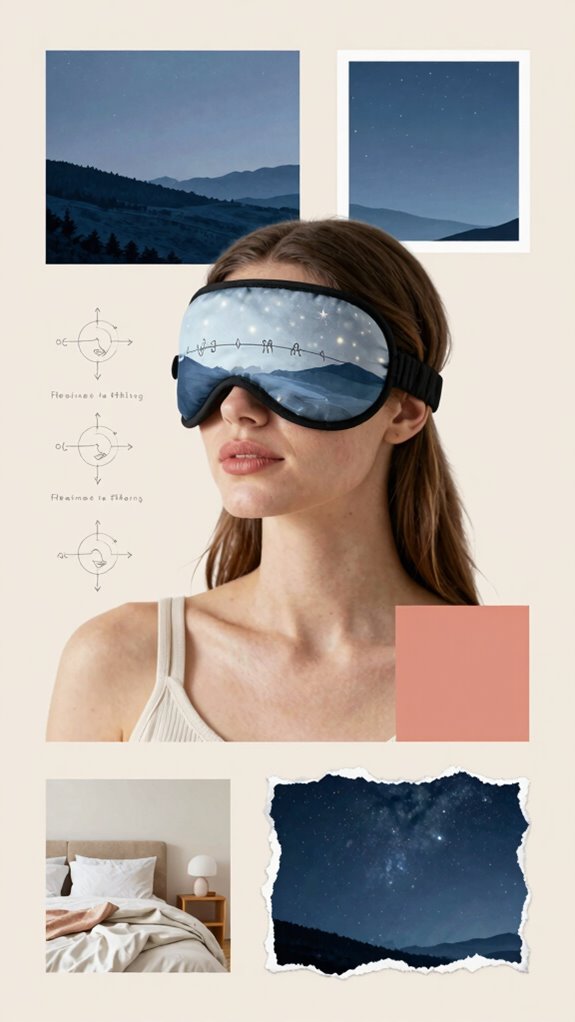
As the focus shifts toward neural regulation and environmental harmony for better sleep, personalized solutions like custom sleep mask collections have gained prominence. These masks optimize dream architecture and support circadian balance by blocking disruptive light, fostering consistent melatonin production, and promoting natural biological rhythms.
Brands such as ZoneKeep and Spectrum Sleep leverage research from chronobiologists like Dr. Charles Czeisler, emphasizing light-filtering technology tailored to individual chronotypes. By controlling light exposure during key sleep phases, these masks can enhance sleep continuity, influence dream depth, and strengthen immune resilience.
These benefits are integral in combatting the adverse effects of sleep deprivation.
Sleep-Enhancing Aromatherapy Blends
Harnessing the subtle power of scent, sleep-enhancing aromatherapy blends serve as a scientifically grounded adjunct to improving sleep quality through dreamscape integration and subconscious reinforcement. Select essential oils like lavender, vetiver, and Roman chamomile; these target the limbic system, calming neural pathways. 1. Use diffuser blends formulated by specialists such as Dr. Juliana Balawag or brands like Vitruvi. 2. Incorporate specific scents into your bedtime routine to activate associative memory, fostering relaxation. 3. Combine with neuro-acoustic techniques to reinforce neural pathways. 4. These practices, rooted in neuro-olfactory research, optimize not only sleep onset but also deepen the restorative quality of rest. Furthermore, incorporating quilted weighted wraps can enhance relaxation, providing gentle pressure that may improve sleep onset and continuity by promoting calmness. Additionally, understanding the role of sensory input can assist in tailoring aromatic therapies for improved sleep experiences.
FAQ
Can Continuous Sleep Deprivation Cause Long-Term Immune System Damage?
Yes, continuous sleep deprivation can lead to long-term immune suppression, making you more vulnerable to illnesses. It also causes chronic fatigue, affecting your overall health. Prioritize your sleep to maintain a strong, resilient immune system.
How Quickly Does Sleep Recovery Restore Immune Function?
When you fix your sleep last night, your immune system can bounce back within days, swiftly reversing sleep deprivation’s immune suppression. Take control—prioritize calming your nervous system and letting biology restore your health rapidly.
Do Different Sleep Stages Impact Immune Response Differently?
Different sleep stages truly matter for immune response; deep, restorative sleep in NREM stages enhances immune modulation, empowering your body’s defense. Prioritizing quality sleep helps you control and optimize immune function naturally.
Is There a Specific Sleep Duration Recommended for Optimal Immunity?
Most adults need 7-9 hours to optimize immunity, and good sleep hygiene is essential. I prioritize consistent routines and a calming environment to boost immunity; you can, too, by creating your perfect sleep sanctuary.
Can Lifestyle Changes Improve Immunity Even With Irregular Sleep Patterns?
Yes, I can boost immune resilience through targeted lifestyle changes. Prioritizing sleep hygiene, managing stress, and optimizing environment support your body’s natural defenses, even if your sleep schedule remains irregular. Control your habits for better immunity.
Summary
Prioritizing quality sleep acts like fortifying your immune fortress overnight, allowing your body’s defenses—such as T-cells and macrophages—to rebuild and strengthen. Scientific studies from Harvard University confirm that consistent rest supports cytokine production, reducing inflammation and bolstering pathogen resistance. Think of sleep as the dispatch center for immune repairs—disregard it, and you leave critical pathways vulnerable. Embracing structured sleep routines ensures your immune system isn’t just reactive but resilient, ready to defend when you need it most.