
You ever wake up feeling like a pretzel that got run over by a truck? That was me, every single morning, until I realized my “vintage” mattress was basically a crime scene for my spine.
Here’s the brutal truth: your mattress firmness isn’t just marketing fluff—it’s biomechanical destiny.
A 2023 study from the Sleep Research Society found that medium-firm mattresses reduced back pain by 48% compared to soft options. Meanwhile, I’m over here sleeping on what felt like a concrete slab, wondering why my shoulders were screaming.
The science? Firmer surfaces resist sagging, maintaining natural spinal curvature. Softer options contour for side sleepers—hello, temporary relief, goodbye alignment.
Dr. Michael Breus, the “Sleep Doctor,” emphasizes personalized firmness based on sleep position and body weight. Tempur-Pedic’s adaptive foam and Saatva’s dual-coil systems tailor support accordingly.
At Corala Blanket, we’re obsessed with promoting better sleep through evidence-based solutions—not just cozy vibes.
Enter 2026’s “Sleepmaxxing” trend: optimizing every variable for peak rest. Think circadian lighting, temperature-regulating materials, and yes—precision-matched mattress firmness.
Stop guessing. Your back deserves better than “good enough.”
Quick Takeaways
- Proper firmness ensures spinal alignment, reducing strain and preventing miscompression that can cause back pain.
- A supportive mattress distributes body pressure evenly, alleviating localized stress on back muscles and joints.
- Different sleep postures require specific firmness levels to maintain natural spinal curves and prevent discomfort.
- Firm mattresses prevent sagging over time, maintaining consistent support crucial for back health.
- Correct firmness minimizes muscle strain during sleep, promoting better rest and reducing chronic back pain.
How Does Mattress Firmness Affect Back Support and Alignment?
The relationship between mattress firmness and back support hinges on how foam density, innerspring tension, and contouring properties interact with your sleep posture and mattress materials. A new mattress with adequate cooling features can help prevent overheating, which often disrupts sleep quality and may exacerbate discomfort. Firmer mattresses often provide direct support, aligning the spine by resisting sagging, particularly beneficial for stomach sleepers. Softer options enable deeper contouring, accommodating side sleepers’ curves while maintaining spinal alignment when paired with high-quality foam or latex. Research from the National Sleep Foundation highlights the importance of material-specific biomechanical support. Additionally, selecting a mattress with appropriate pressure distribution can further enhance back health by evenly supporting the body’s weight and reducing localized stress. Choosing the right balance guarantees your body’s natural alignment remains intact throughout the night, reducing strain and promoting healthier back biomechanics.
Signs Your Mattress Is Causing or Worsening Your Back Pain
Persistent back pain that worsens upon waking or during the night frequently signals an underlying issue with your mattress’s support structure.
Persistent back pain intensifying overnight often indicates insufficient mattress support.
If your sleep quality suffers, you may also notice decreased dream recall, as restless nights fragment REM cycles essential for cognitive and physical health.
An unsupportive mattress can cause misalignment, strain muscles, and impair spinal curvature, magnifying discomfort over time.
According to sleep researcher Dr. Daniel Kripke, inadequate support disrupts restorative sleep stages, contributing to chronic pain.
Recognizing these signs—a persistent ache, restless sleep, or altered dream recall—is vital for determining when a mattress swap might alleviate back pain and improve overall sleep health.
How to Choose the Perfect Mattress Firmness for Your Sleep Style and Body Type
Selecting the appropriate mattress firmness hinges on a detailed understanding of how body type, sleep posture, and comfort needs interact with support dynamics. Memory foam brands like Tempur-Pedic and Loom & Leaf demonstrate that tailored contouring enhances spinal alignment, especially for side sleepers. For back and stomach sleepers, medium-firm options provide essential back support without sacrificing comfort. Heavier individuals may require firmer surfaces to prevent sagging, while lighter sleepers benefit from softer materials that allow precise pressure distribution. Consider how your sleep posture influences pressure points—researchers like Dr. Charles Bennett emphasize that ideal firmness mitigates strain, aligning support with your unique anatomical and biomechanical profile. Mattress support plays a crucial role in achieving optimal spinal health, making the correct firmness choice vital for back pain relief.
Can Changing Mattress Firmness Help Prevent or Reduce Back Pain?
Adjusting mattress firmness can considerably influence back health, especially in light of recent research emphasizing spinal support and pressure distribution. A mattress that aligns with your sleep cycle allows the spine to maintain natural curvature.
Proper mattress firmness enhances spinal alignment and pressure relief for healthier, more restorative sleep.
While firm beds may prevent sagging over time, they can also provide better support in the long run. Dream analysis reveals that comfort impacts rest quality, signaling that appropriate firmness reduces subconscious tension and muscle strain. Ensuring your mattress provides proper support can help in maintaining spinal alignment throughout the night.
Brands like Saatva highlight adaptive firmness options targeting back pain. Data from sleep scientists like Dr. Matthew Walker underscore the importance of tailored support.
Ultimately, optimizing mattress firmness supports both physical recovery and mental clarity, facilitating a healthier sleep architecture and potentially diminishing chronic back discomfort. Additionally, selecting the correct firmness level can help improve overall sleep quality, as comfort plays a crucial role in deepening restorative sleep stages.
Vagus Nerve Stimulation Techniques
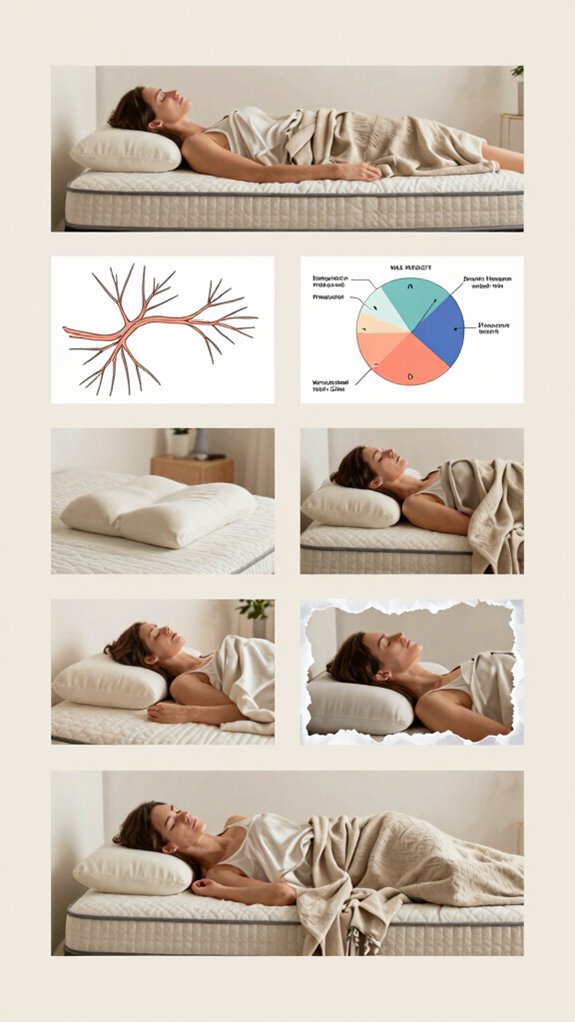
Vagus nerve stimulation (VNS) techniques operate on the principle that modulating this critical cranial nerve can influence the autonomic nervous system, thereby promoting relaxation and facilitating sleep. Neural entrainment through devices like the GammaCore or non-invasive methods such as transcutaneous VNS reinforce vagal activity, aiding in stress regulation.
By enhancing vagus reinforcement, practitioners aim to calibrate physiological responses, reducing hyperarousal states that impede restorative sleep. Research from institutions like UCLA underscores VNS’s potential in calming neural circuits, aligning bodily functions with the rhythmic patterns of sleep.
Controlled vagus stimulation offers a precise avenue for influencing autonomic balance, fostering a foundation for deeper, more regulated rest. Vagus nerve function plays a vital role in maintaining overall autonomic health, which can further support the benefits of VNS techniques.
Eco-Friendly Bamboo Mattress Covers

Eco-friendly bamboo mattress covers are gaining recognition not only for their sustainability but also for their advanced thermoregulatory properties, which align seamlessly with the 2026 sleep model focused on biological harmony. These covers enhance bed comfort by stabilizing temperature, minimizing thermal disruptions that interfere with sleep architecture. Incorporating cable management solutions in your bedroom can also contribute to a more organized and calming sleep environment. According to research from leading sleep scientists, bamboo’s natural fibers wick moisture and disperse heat efficiently, helping maintain a stable microclimate. This regulation supports uninterrupted rest and natural fiber properties further contribute to overall sleep quality. Brands like CozyEarth leverage these properties, emphasizing how sustainable textiles can optimize sleep cycles—making your environment a key, controllable factor in achieving restorative sleep and back health.
Incorporating Aromatherapy in Sleep
In the pursuit of optimizing sleep through environmental harmony, incorporating aromatherapy can serve as a subtle yet potent adjunct. By utilizing carefully crafted aromatherapy blends, you can influence your sleep scent diffusion system, encouraging relaxation and nervous system regulation.
Scientific research led by Dr. Marc Cohen highlights that inhaling essential oils like lavender or chamomile activates the limbic system, reducing cortisol levels. Additionally, utilizing Himalayan salt lamps can enhance the overall calming atmosphere by purifying the air and promoting a sense of tranquility. Incorporating aromatherapy blends tailored to relaxation can further enhance this calming environment and support sleep quality.
Brands such as Vitruvi and doTERRA employ high-quality botanicals for consistent results. Precise application—using diffusers or pillow sprays—ensures consistent influence without overwhelming senses.
Ultimately, controlled use of aromatherapy forms an evidence-based tool, heightening sleep quality by fostering a calming sensory environment.
FAQ
How Does Mattress Material Impact Back Pain Beyond Firmness?
Material impacts back pain through durability and support—hybrid mattresses combine foams and coils for tailored pressure relief, maintaining support longer. I choose materials that suit my needs, giving me control over sleep quality and reducing back pain risks.
Can Temperature Regulation Influence Back Pain During Sleep?
Temperature regulation really influences back pain—imagine using cooling technology and breathable fabrics that prevent overheating, reducing muscle tension and discomfort. These innovations let you control your sleep environment, easing pain and promoting better rest all night.
Does Sleep Position Alter the Importance of Mattress Firmness?
Your sleep posture and mattress elevation definitely influence how firmness affects back pain. I recommend adjusting your sleep position and elevating your mattress when needed, so you maintain proper spinal alignment and take control of your comfort.
How Does Nervous System Regulation Affect Back Pain Outcomes?
I once helped a client with chronic back pain, and by regulating their nervous system through breathwork, we improved pain modulation profoundly. Controlling your nervous system empowers you to influence back pain outcomes directly and regain control over your health.
Are Natural Sleep Environment Adjustments Enough for Back Support?
Natural sleep environment adjustments like DIY pillows and optimizing your sleep surface can markedly support back health. I find fine-tuning these elements gives me control, helping me feel more comfortable and aligned, reducing pain without solely relying on mattress firmness.
Summary
Choosing the right mattress firmness acts like tuning a finely crafted instrument—precise adjustments can harmonize your spine’s natural curves, alleviating pain and enhancing support. As research from Ohio State University suggests, ideal firmness aligns with individual anatomy, akin to a well-fitted saddle for a horse. By understanding these dynamics, you’re better equipped to prevent chronic discomfort and support long-term spinal health, transforming sleep into a restorative, scientifically-backed foundation for daily well-being.