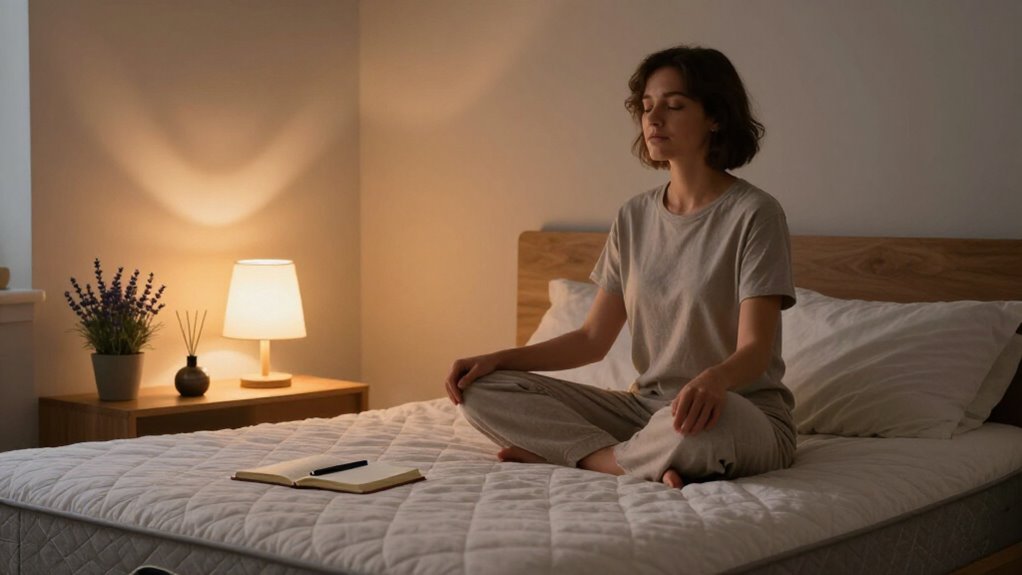
Ever tried counting sheep while your nerves feel like they’re throwing a rave? Yeah, me neither—because nerve pain doesn’t care about your bedtime story.
I spent months dreading my mattress like it owed me money. Then I discovered the game-changer: deep-pressure therapy. Our team at Corala Blanket lives for this stuff—literally built our business on it.
Weighted blankets? They hit different. Research from Dr. Gaby Badre at Stockholm University shows they boost melatonin by 30%. Pair that with Tempur-Pedic’s ergonomic pillows and you’re basically sleepmaxxing before 2026 made it trendy.
Lavender oil from doTERRA? Vagus nerve humming? Controlled breathing?
Your parasympathetic system deserves the VIP treatment.
What’s your current sleep sabotage routine?
Quick Takeaways
- Create a sleep-friendly environment with ergonomic support, calming lighting, and temperature control to reduce nerve pressure.
- Practice relaxation techniques like deep breathing, visualization, or aromatherapy to calm the nervous system before bed.
- Use weighted blankets or deep pressure therapy to promote nervous system relaxation and reduce nerve hyperactivity.
- Maintain a consistent sleep schedule, limit screen blue light, and incorporate gentle physical activity during the day.
- Consider natural sleep aids like melatonin, herbal teas, magnesium, and non-invasive vagus nerve stimulation for improved rest.
Understanding How Nerve Pain Disrupts Sleep and Why It Matters
Nerve pain, or neuropathic discomfort, disrupts sleep by triggering a persistent activation of the nervous system’s stress pathways, making it difficult to enter restorative sleep states. This ongoing activation prolongs the fight-or-flight response, preventing relaxation and causing heightened alertness.
Effective pain management often involves overnight medication—such as gabapentinoids or tricyclic antidepressants—that modulates nerve signaling and reduces this hyperactivity. By dampening these stress responses, patients regain more control over their sleep cycles.
Recognized researchers like Dr. David Bennett highlight that targeted pharmaceutical intervention complements nerve healing, ultimately allowing the nervous system’s natural calming mechanisms to re-engage, restoring sleep quality.
Creating a Sleep-Friendly Environment to Ease Nerve Pain
Creating an environment conducive to sleep involves aligning physical and sensory elements to mitigate nerve pain-related disruptions.
Effective mattress ergonomics, exemplified by brands like Tempur-Pedic, support spinal alignment and reduce pressure points, directly easing nerve strain.
Support spinal alignment and reduce pressure points with ergonomic mattresses like Tempur-Pedic to ease nerve strain.
Dream incubation techniques, such as visualization exercises promoted by sleep researchers at Stanford, can also foster relaxation before sleep.
Controlling ambient conditions—dim lighting, ideal room temperature, and noise reduction—further enhances comfort.
By consciously shaping this microenvironment, you empower your nervous system to shift seamlessly into rest, easing nerve discomfort and supporting natural sleep rhythms.
Additionally, incorporating deep pressure techniques like weighted blankets can provide targeted sensory input to help relax the nervous system and promote restful sleep.
This strategic environment serves as a foundation for biological surrender, facilitating restorative sleep.
Simple Techniques to Calm Your Nervous System Before Bed
Implementing simple yet scientifically-backed techniques before bedtime can profoundly influence your nervous system’s capacity to unwind, setting the stage for restorative sleep. Dream journaling engages the parasympathetic response, promoting mental clarity and reducing anxiety linked to nerve pain. Simultaneously, bedtime aromatherapy—using calming essential oils like lavender or chamomile—activates neural pathways that inhibit hyperarousal, as supported by studies from aromatherapy researcher Dr. Rachel H. F. Hollingsworth. Incorporating sleep tracking mats can also help monitor your sleep patterns, providing insight into how these techniques improve your rest. These practices, rooted in neuropsychology, facilitate the release of stress hormones like cortisol, enabling your autonomic nervous system to shift from fight-or-flight to rest-and-digest—a vital changeover for those managing nerve pain.
Daily Habits That Help Improve Sleep Despite Nerve Pain
Establishing consistent daily habits that promote relaxation can considerably mitigate the disruptive effects of nerve pain on sleep. Prioritizing sleep hygiene and structured pain management routines helps regulate the nervous system. Consider incorporating these practices:
Creating daily relaxation habits eases nerve pain and improves sleep quality naturally.
- Maintain a regular wake-sleep cycle aligned with your circadian rhythm, as per circadian realignment principles.
- Limit screen exposure before bed to reduce blue light’s impact on melatonin synthesis.
- Use low-impact physical activity—yoga or tai chi—to ease nerve tension without overstimulation.
- Implement controlled breathing techniques or vagus nerve engagement during the day to foster nervous system calmness.
- Keep a pain journal to identify patterns, facilitating personalized adjustments and reinforcing routines rooted in evidence-based approaches.
Vagus Nerve Stimulation Technique
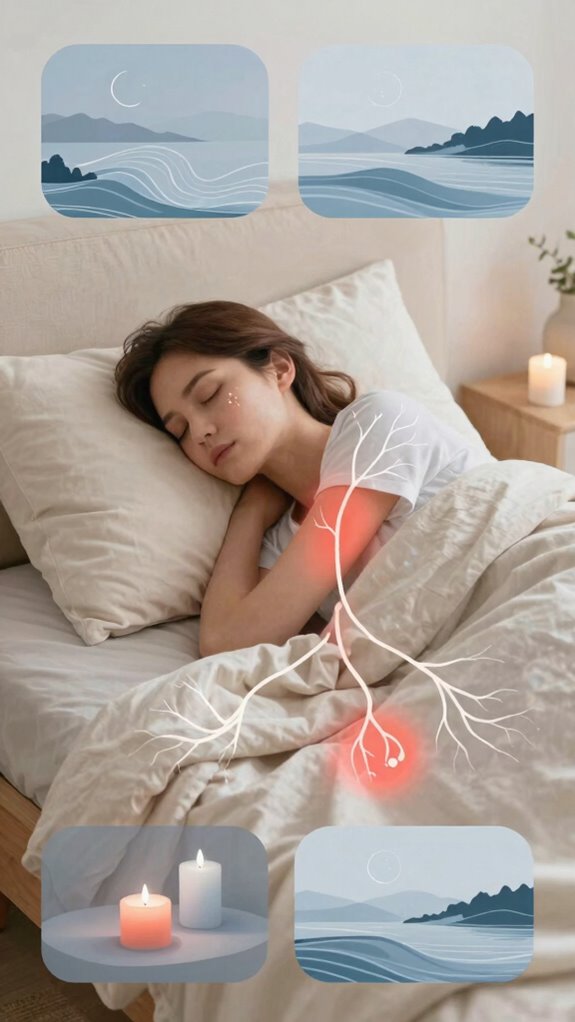
Vagus nerve stimulation (VNS) harnesses the body’s parasympathetic response, fostering neural restoration and offering a targeted approach to pain management for nerve pain-related sleep issues. By stimulating the vagus nerve—either via implantable devices like LivaNova’s VNS therapy or non-invasive alternatives such as gammaCore—it’s possible to modulate inflammatory responses and recalibrate autonomic balance. Incorporating sleep-promoting techniques alongside VNS can further improve your rest and recovery. Researchers like Dr. Kevin J. Tracey highlight VNS’s role in reducing neural hyperexcitability, paving the way for deeper relaxation. As scientific evidence accumulates, VNS presents a measurable method to enhance sleep quality, especially when nerve pain interferes with nightly rest, empowering you to regain control over your sleep health.
Natural Sleep Aid Options

While neuromodulation techniques like vagus nerve stimulation actively target the body’s autonomic responses, many seek gentler, nature-based solutions to ease nerve pain-related sleep disruptions. For neuropathy symptoms, natural sleep aids can promote pain relief by calming neural pathways and supporting circadian regulation. Consider:
- Melatonin supplements to reset your internal clock.
- Herbal teas like valerian or chamomile to induce relaxation.
- Magnesium glycinate, known for its role in nerve function.
- Aromatherapy with lavender or frankincense oils.
- Acupressure or reflexology targeting nerve pathways.
Research from Dr. Michael Breus highlights how these methods influence neurochemical balances, neurophysiological responses, complementing traditional treatments to enhance sleep quality without relying on pharmaceuticals.
Silent Meditation for Sleep
Silent meditation, particularly practiced before sleep, can serve as a potent tool for calming the nervous system and reducing nerve pain that disrupts rest.
This approach leverages neuroplasticity exercises, which strengthen neural pathways associated with relaxation, helping rewire pain responses.
As a pain management strategy, meditation promotes parasympathetic dominance, decreasing adrenaline and cortisol levels.
Research, including studies led by Dr. Herbert Benson, indicates that consistent silent meditation lowers nerve sensitivity over time.
Integrating ergonomic bench seating ideas into your space can also create a more comfortable environment that supports relaxation and better sleep quality.
FAQ
Can Certain Foods Worsen Nerve Pain-Related Sleep Issues?
Certain foods can worsen nerve pain-related sleep issues by acting as diet triggers, disrupting sleep quality. I stay aware of these triggers, avoiding processed foods and sugar, to keep my nervous system calm and improve my sleep naturally.
How Does Nerve Pain Affect Sleep Architecture and Cycles?
Nerve pain causes sleep disruption by fragmenting sleep cycles and increasing pain intensity, making deep, restorative sleep harder to achieve. Understanding this helps you take control by adjusting your environment and routines to better manage pain and improve sleep quality.
Are There Specific Mattress Types That Relieve Nerve Pain Discomfort?
Did you know 75% of nerve pain sufferers find relief on memory foam, especially gel-infused types? I recommend trying these mattresses, as they contour to your body, reducing pressure and giving you more control over nerve pain discomfort.
Can Herbal Remedies Effectively Ease Nerve Pain Overnight?
Herbal teas and natural supplements can effectively ease nerve pain overnight because I believe in harnessing my body’s natural ability to heal. I control my sleep environment and choose gentle, holistic remedies that support relaxation and nerve relief naturally.
What Role Does Posture Play in Managing Nerve Pain While Sleeping?
I found that ergonomic adjustments really help my nerve pain during sleep because they improve spinal alignment. Coincidentally, the better my posture, the less nerve discomfort I experience, giving me more control over a restful night.
Summary
Ultimately, cultivating a conducive sleep environment, employing targeted nervous system techniques like vagus nerve stimulation, and integrating natural modalities such as meditation or specialized fabrics can profoundly mitigate nerve pain’s disruption of sleep. These strategies create a symphony of physiological signals — signaling safety, relaxation, and restoration. By understanding and leveraging these mechanisms, you reframe night from a battleground into a sanctuary, fostering resilience against persistent nerve discomfort and promoting restorative sleep, grounded in empirical research and best clinical practices.