Ever tried to relax so hard you ended up more stressed? Yeah, me too.
Last Tuesday, I was running on fumes—deadlines everywhere, brain fried. I finally dimmed my lights, grabbed my weighted Corala Blanket (we live and breathe better sleep over here), and cued some pink noise through my Bose Sleepbuds II. Game changer.
Dr. Stephen Porges’ vagus nerve breathing? Actually works. Not woo-woo, just science.
Here’s the kicker: 2026’s “Sleepmaxxing” trend has everyone chasing eight-plus hours like it’s a flex. But honestly? Your circadian rhythm doesn’t care about your Oura ring scores.
What’s your wind-down actually look like—scroll first, calm later?
I block blue light by 9 PM sharp. Neuro feedback from Muse headband tracks my calm. Sounds extra? Maybe. But I’ll take groggy-free mornings over bragging rights any day.
Sleep isn’t a trend. It’s the foundation.
Quick Takeaways
- Engage in gentle stretches, slow yoga, or light movement to relax muscles and regulate circadian rhythms.
- Practice mindfulness techniques like journaling, breathing exercises, or guided meditation to calm the nervous system.
- Create a soothing environment with calming scents, dim lighting, and sound masking devices to promote relaxation.
- Incorporate calming essential oils and herbal infusions to activate the parasympathetic nervous system.
- Utilize relaxation devices or neural modulation technologies to enhance neural coherence and support transition into restful sleep.
Create a Calming Bedroom Environment for Better Sleep
Creating a calming bedroom environment is a foundational step in aligning with the 2026 model shift toward biologically optimized sleep. Ambient sounds, like soft white noise or nature recordings, help stabilize neural activity, reducing sympathetic dominance. Aromatherapy diffusers, utilizing essential oils such as lavender (known for its neurocalming effects), promote parasympathetic activation, enhancing relaxation. Experts like Dr. David Lötsch emphasize the importance of these sensory inputs in nervous system regulation. Incorporating subtle, consistent auditory and olfactory stimuli fosters a stable micro-environment, supporting acclimation of the body’s internal clock and facilitating rapid nervous system calming—central to the neuro-wellness approach defining 2026 sleep methodology. Additionally, biologically optimized sleep involves aligning your environment with natural biological rhythms to achieve deeper, more restorative rest. Considering the impact of evening screens on sleep hormones, reducing screen time before bed can significantly improve melatonin production and overall sleep quality.
Establish a Relaxing Evening Routine That Prepares Your Body
A well-structured evening routine acts as a pivotal bridge between wakefulness and restful sleep, signaling to your nervous system that it’s time to shift into restorative repose.
A calming evening routine signals your nervous system to transition smoothly into restful sleep.
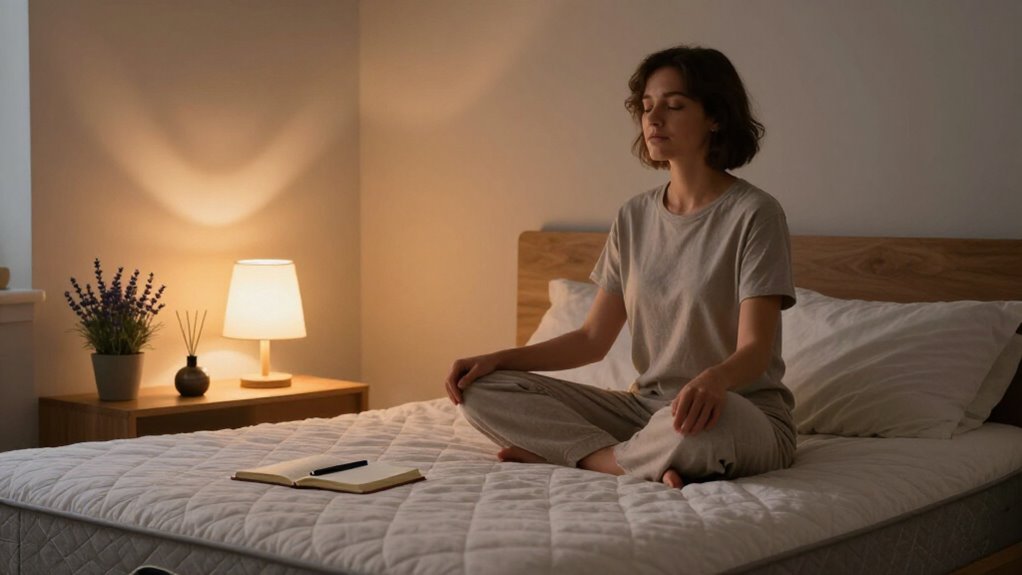
Incorporating practices like nighttime journaling helps externalize racing thoughts, decreasing sympathetic activation. Adding aromatherapy diffusion with calming essential oils—such as lavender or $Breezy$—can influence the parasympathetic nervous system via limbic pathways.
To reinforce relaxation, consider dimming lights gradually, disengaging from screens, and practicing light stretching. Research on Cognitive Behavioral Therapy for Insomnia highlights how establishing consistent pre-sleep habits can significantly improve sleep quality and support circadian rhythm regulation.
These habits leverage environmental cues and physiological responses to prime your body for sleep, aligning with the neurobiological principles outlined by Dr. Michael Breus and circadian rhythm research.
Practice Breathwork and Vagus Nerve Stimulation to Calm Your Nervous System
Engaging in intentional breathwork and vagus nerve stimulation can profoundly influence your nervous system, facilitating a shift from fight-or-flight to rest-and-digest states.
Techniques rooted in neural entrainment, like slow, diaphragmatic breathing, align your brainwaves with calming frequencies, supporting Polyvagal theory’s emphasis on vagus nerve pathways for social connection and safety.
Researchers such as Stephen Porges highlight these methods’ ability to dampen sympathetic activation. Incorporating this awareness of neural entrainment mechanisms can enhance your relaxation practices even further.
Adding practices like humming or singing can further stimulate the vagus nerve, reinforcing the calming response and promoting relaxation before sleep vagus nerve pathways.
Use Light Hygiene Strategies to Reset Your Internal Clock
Utilizing light hygiene strategies to reset your internal clock involves understanding the body’s innate responsiveness to natural light cues, as emphasized by researchers like Dr. Charles Czeisler. Light therapy, especially Photobiomodulation therapy, stimulates circadian pathways, influencing circadian gene editing to readjust sleep timing.
Morning light exposure within 30 minutes of waking reinforces wakefulness, while evening red light therapy calms melatonin suppression, aligning internal rhythms.
- Use daylight to anchor your circadian rhythm, not artificial light
- Incorporate red or near-infrared light in evenings for circadian gene modulation
- Limit blue light exposure after sunset
- Apply light therapy devices based on scientific parameters
- Consistently follow a light schedule to optimize biological synchronization
Incorporate Gentle Movement or Yoga to Release Tension
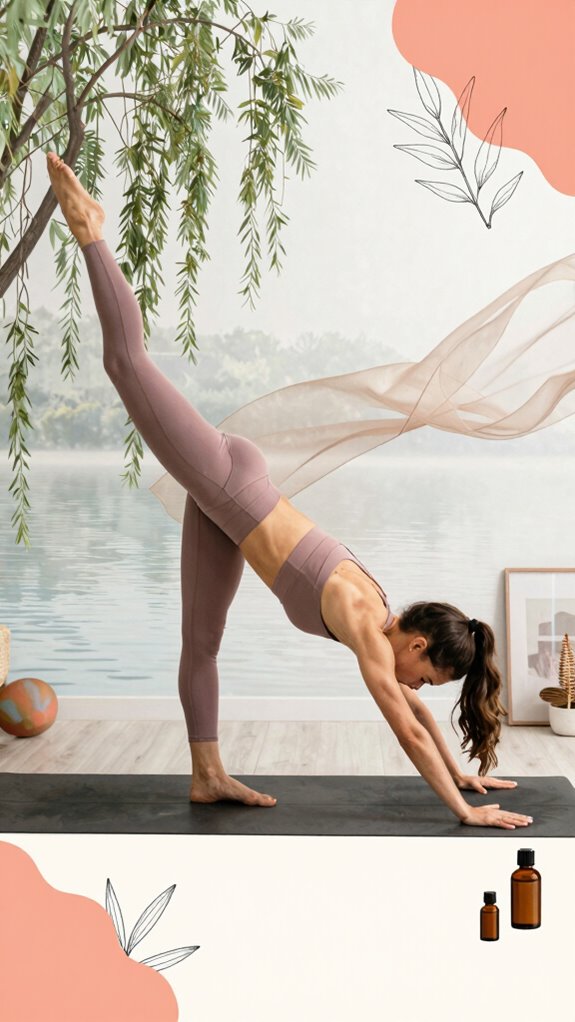
Incorporating gentle movement or yoga into your evening routine activates the parasympathetic nervous system, helping dismantle residual stress from the day.
Gentle stretches, such as forward bends or spinal twists, promote relaxation without overstimulation. Calming movement, like slow yoga flows rooted in Hatha or Yin styles, reduces cortisol levels and encourages vasodilation, which facilitates restorative rest. Studies from researchers like Dr. Craig Hassed suggest that deliberate, mindful movement modulates autonomic function, aiding nervous system regulation. Additionally, choosing organic bedding sets can enhance comfort, further supporting a peaceful transition into sleep and promoting overall relaxation techniques.
Engage in Mindfulness Activities for Stress Relief and Better Sleep
Practicing mindfulness activities before sleep creates a tangible calming effect on the nervous system, enabling the body to disengage from hyperarousal states that often hinder rest.
Mindful journaling helps process recent stress without rumination, fostering mental clarity.
Aromatherapy techniques, like lavender or chamomile, can activate limbic pathways associated with relaxation, easing shift into sleep.
Controlled breathing exercises stimulate vagus nerve engagement, promoting parasympathetic dominance.
Incorporating these methods into a pre-sleep routine enhances autonomic regulation.
- Use herbal infusions like valerian or lemon balm.
- Practice body scans with progressive muscle relaxation.
- Employ guided meditations for focused awareness.
- Utilize calming scents via diffusers.
- Write reflective journals to offload mental clutter.
Enhance Your Bedroom With the Perfect RGB Smart Bulbs to create a soothing environment that supports relaxation and better sleep.
Vagus Nerve Stimulation Techniques
Awakening the body’s natural relaxation pathways brings us to vagus nerve stimulation techniques, a scientifically supported method to downshift the nervous system.
Neural entrainment through devices like the NuCalm system or vagus stimulation via transcutaneous auricular devices directly enhances parasympathetic activity.
Researchers such as Porges emphasize vagal tone‘s role in stress regulation, showing that stimulating the vagus nerve reduces cortisol levels and improves heart rate variability.
These techniques refine the body’s ability to self-soothe, analogous to tuning a musical instrument to its ideal resonance. Faux fur throws can create a comforting environment that further promotes relaxation and restful sleep.
Additionally, incorporating vagus nerve stimulation devices into your relaxation routine can provide targeted support, helping to induce a calm state more rapidly.
Silent Sleep Aid Devices
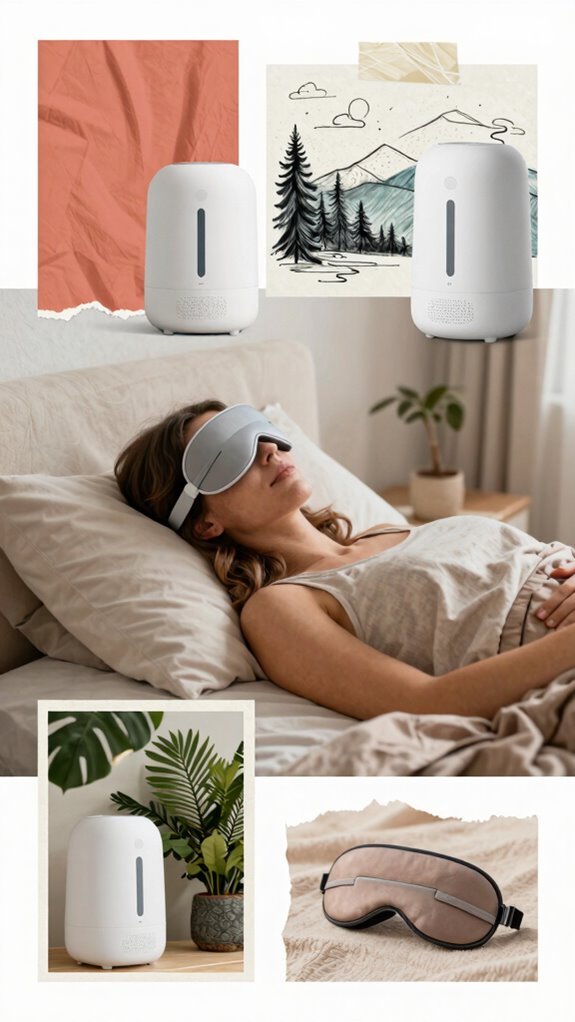
Silent sleep aid devices have emerged as a sophisticated solution aimed at optimizing the shift into restorative sleep by minimizing external disruptions.
These silent devices, like the Bose Sleepbuds II or Avocado’s white noise generators, utilize advanced sound masking technology designed to foster sleep harmony.
They produce non-intrusive, customizable sounds that buffer environmental noise, allowing the nervous system to relax without awakening.
Experts like Dr. Clifford Saper highlight the importance of consistent auditory cues in reducing arousal levels.
Techniques such as sound masking technology can also help in creating an environment conducive to deep sleep.
For control over your sleep environment, consider devices that adapt to your preferences, effectively creating an acoustically calm sanctuary—promoting uninterrupted, high-quality rest. white noise machines
Quantum Sleep Enhancement Tech
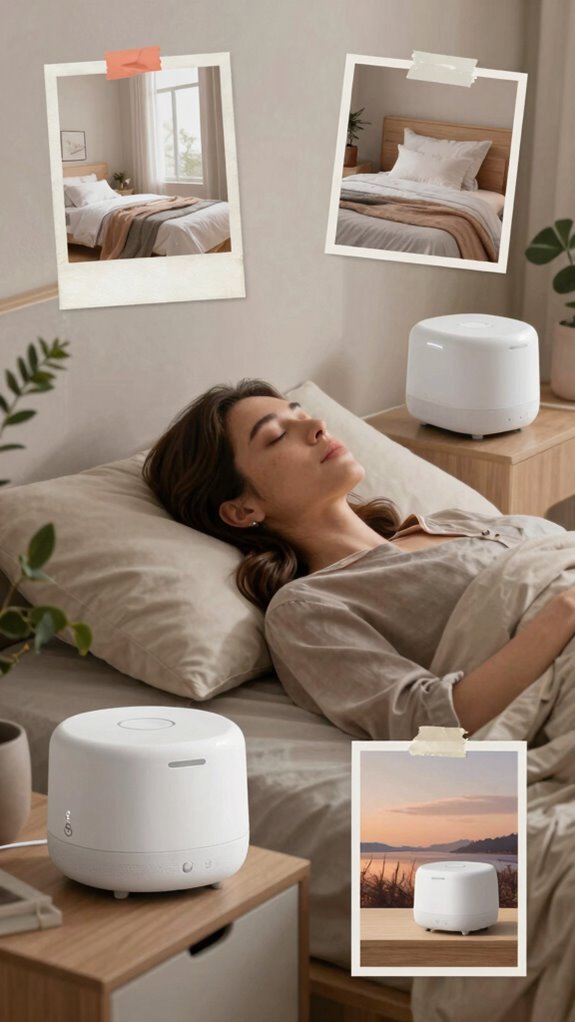
Emerging at the intersection of neuroscience and quantum physics, Quantum Sleep Enhancement Tech employs principles like coherence and entanglement to modulate brain activity directly. Devices utilize neural entrainment, aligning brainwave frequencies with targeted patterns, and biofeedback synchronization, allowing real-time nervous system calibration. Incorporating sound frequency generators rooted in quantum physics can further enhance the efficacy of these systems by precisely targeting specific brainwave states. Additionally, advancements in quantum oscillators are being utilized to reinforce natural sleep states and improve relaxation overall. Companies like BrainCo and researchers such as Dr. Anil Seth explore how quantum-inspired oscillators can reinforce natural sleep states. By fine-tuning neural circuits, this technology potentially accelerates relaxation, reducing stress-induced arousal. It’s an advanced method that invites users to take control—harnessing fundamental physics to synchronize mind and body, ultimately enabling more seamless progression into restorative sleep.
FAQ
How Can I Naturally Calibrate My Circadian Rhythm Without Supplements?
To naturally calibrate my circadian rhythm, I focus on consistent light exposure—morning sunlight boosts melatonin production, while minimizing blue light at night helps my body sync with natural cycles, giving me better sleep control and energy.
Are There Non-Electronic Methods to Improve Nervous System Regulation?
Visualize your nervous system as a calming river; I use breathing exercises and meditation practices to gently guide its flow, restoring balance and control. These non-electronic methods help me regulate stress and prepare my mind for restful sleep.
What Are the Best At-Home Diagnostics for Sleep Disorders?
I recommend using sleep tracking devices and at-home diagnostic tests like oxygen monitors and sleep questionnaires. They give you control over your sleep health, helping identify issues early and guiding personalized solutions without needing clinical visits.
Can Temperature-Regulating Fabrics Really Impact Sleep Quality?
Temperature-regulating fabrics truly transform sleep, creating a cozy, controlled environment. Their textile technology seamlessly switches from warm to cool, cultivating comfort and control, helping you drift into deep, undisturbed sleep effortlessly.
How Do Neuro-Acoustic Pacing Techniques Influence Brainwave States?
Neuro-acoustic pacing influences brainwave states by using acoustic therapy to promote brainwave entrainment, helping your brain shift smoothly into relaxation modes. This gives you control over calming your nervous system efficiently, making sleep easier and more restorative.
Summary
Ultimately, cultivating restful habits is akin to tending a delicate garden—each mindful action nurtures a harmonious soil, allowing serenity to bloom. By intentionally designing your environment, engaging in calming practices, and leveraging emerging technologies with scientific backing, you create an ecosystem of tranquility. This approach respects your body’s natural rhythms and empowers you to surrender to sleep rather than battle it, fostering resilience in the face of stressors. In doing so, restful nights become the natural harvest of well-tended habits.