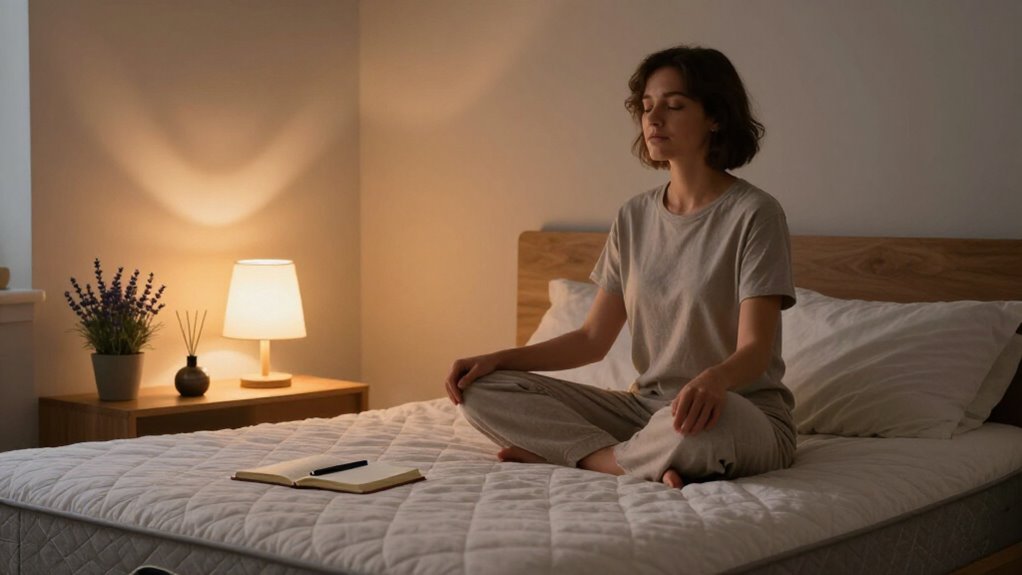
Ever tried sleeping on a cloud made of concrete? That was my life with chronic pain until I discovered alignment actually matters.
I spent years rotating through cheap mattresses like a sleep-deprived zombie. Then I tried a Tempur-Pedic Adapt collection with its pressure-relieving material—and finally understood what “rest” meant.
Here’s the real tea:
Chunked breathing exercises changed my neural game. Johns Hopkins researchers found diaphragmatic techniques significantly lower pain perception. Not woo-woo—verified.
Have you heard of Sleepmaxxing? It’s 2026’s obsession with optimizing every sleep variable. Dreem headbands measure your slow-wave sleep with EEG precision. Who knew my brain needed training wheels?
Our team at Corala Blanket lives this mission. We pair weighted blankets with ergonomic cervical pillows because your spine deserves a Michelin star treatment, not a participation trophy.
Dr. Matthew Walker from UC Berkeley advocates for temperature regulation and pressure distribution combined. The science is brutal: poor alignment literally amplifies pain signals.
What desperation move have you tried for decent rest?
Quick Takeaways
- Always choose supportive, pressure-relieving mattresses and pillows that maintain optimal spinal and body alignment.
- Practice relaxation techniques like diaphragmatic breathing and mindfulness to reduce pain perception and promote calmness.
- Use adaptive surfaces and ergonomic pillows to contour to your body, minimizing joint strain during rest.
- Incorporate advanced sleep technologies, such as neurofeedback and biometric tracking, for personalized pain management strategies.
- Maintain consistent sleep routines and create a calm, dark environment to facilitate restorative sleep despite chronic pain.
Find Comfortable Sleep Positions That Reduce Pain
Finding sleep positions that alleviate pain begins with understanding biomechanics and neural pressure points.
*Ideal* body alignment minimizes strain on joints and muscles, while alternative neck support—such as ergonomic cervical pillows—reduces cervical compression.
Adaptive sleep surfaces, like pressure-distributing memory foam or latex, contour to distinct body shapes and absorb pressure, preventing nerve pinching.
According to neurologists like Dr. David A. Gozal, these strategies reduce neural stress streams that can worsen pain.
Pick the Supportive Pillows and Mattresses for Better Sleep
Selecting the appropriate supportive pillows and mattresses is fundamental to creating an environment conducive to spinal alignment and neural relaxation.
Choosing the right supportive pillows and mattresses promotes optimal spinal alignment and neural relaxation.
I recommend choosing memory foam mattresses that conform precisely to your body’s curves, evenly distributing pressure points.
For additional lumbar support, consider pillows specifically designed for back or side sleepers; shaped lumbar pillows maintain spinal curvature, reducing stress on vertebrae.
Brands like Tempur-Pedic or Sleep Number have research-backed options with customizable firmness.
Proper support minimizes nerve compression and muscle strain, which are critical in managing chronic pain.
It’s essential to test these options personally, ensuring they provide consistent support and align with your unique anatomical needs.
Using cooling gel pillows can further enhance sleep comfort, especially for those who tend to overheat during the night.
Additionally, opting for pressure-relieving materials like memory foam can help reduce discomfort and promote restful sleep.
Relaxation Techniques to Ease Pain and Calm Your Mind
Engaging in relaxation techniques like diaphragmatic breathing, progressive muscle relaxation, and mindfulness meditation can particularly reduce pain perception and trigger the parasympathetic nervous system, fostering calmness.
Mental relaxation activities serve as pain distraction, redirecting focus away from discomfort.
Techniques developed by pioneers such as Jon Kabat-Zinn leverage breath regulation to slow heart rate and lower cortisol levels, reinforcing nervous system balance.
Evidence suggests these methods improve pain tolerance and reduce anxiety associated with chronic conditions.
Implementing consistent practice creates a physiological shift—transforming pain from an overwhelming experience into a manageable sensation. Incorporating melatonin gummies as part of your bedtime routine can also assist in establishing a more restful sleep pattern, helping to further reduce overall discomfort.
Compressive sleep aids can also be a helpful addition to your toolkit, offering comfort and support during difficult nights.
This control-oriented approach empowers you to influence your body’s response and cultivate sustained comfort.
Neuroscience-Driven Sleep Regulation
Advances in neuroscience reveal that sleep isn’t merely passive rest but a complex, tightly regulated process governed by neural circuits and neurochemical pathways. Techniques like neural entrainment synchronize brainwaves to promote restful states, while vagus nerve stimulation, explored by researchers like Dr. Kevin Tracy, calms overactive nervous systems.
Stimulating the vagus nerve influences the parasympathetic response, fostering relaxation. Devices utilizing low-frequency electrical signals aim to reset autonomic balance before sleep onset. Such interventions are supported by evidence linking vagus stimulation with reduced anxiety and improved sleep quality. Incorporating sound frequency generators may further enhance relaxation by entraining brainwaves associated with calm and sleep.
Understanding neural pathways involved in sleep regulation can help tailor more effective relaxation techniques and device therapies. This approach empowers you to actively regulate your nervous system, promoting more natural, smoother progressions into restorative sleep despite chronic pain challenges.
Smart Sleep Technology Reviews
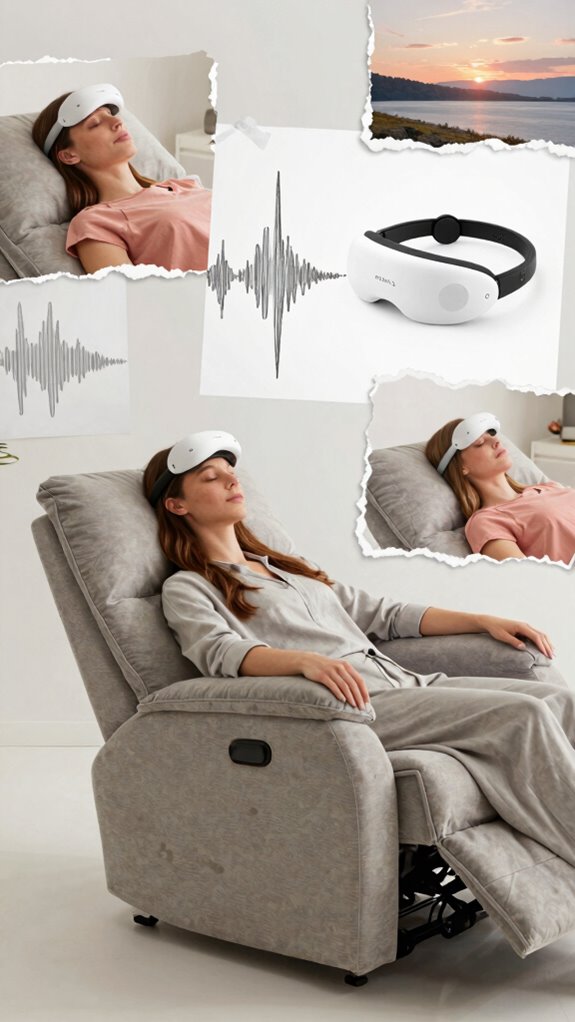
In today’s scenery of sleep optimization, smart sleep technology combines neuro acoustic therapy and biometric tracking to deliver precise, real-time understanding into sleep patterns. Devices like Dreem Headband and Muse S utilize neurofeedback, gently guiding brainwaves toward calming states, aiding nervous system balancing. These technologies expand the potential for personalized interventions, allowing users to target specific neural or physiological patterns for better sleep. Integrating anti-gravity recliners can further enhance relaxation by providing optimal body positioning, which complements these high-tech solutions. These tools enable users to tailor interventions directly, such as acoustic pacing that influences brainwave activity and enhances relaxation. Expert researchers like Dr. Andrew Huberman advocate for such neurostimulation methods, emphasizing their role in reducing hyperarousal. Additionally, the incorporation of biometric tracking enables more accurate analysis of sleep quality, fostering more effective and customized approaches.
Silent Disco Neurotherapy Sessions
Silent Disco Neurotherapy Sessions are emerging as a cutting-edge approach to neural modulation, incorporating principles from neuroacoustics and sensory deprivation to optimize nervous system balance.
These sessions utilize tactile stimulation—vibrations delivered through specialized headsets—to influence neural pathways directly. By blending sound frequencies with tactile inputs, practitioners modulate pain signals, enhancing pain relief while fostering relaxation.
Researchers like Dr. Michael Merzenich highlight how multisensory engagement rewires neural circuits, reducing chronic pain perception. This innovative method can also incorporate multisensory engagement techniques to further promote neural plasticity.
With control over sensory input, patients can tailor their experience, promoting neural plasticity and better pain management—an evidence-based approach rooted in neuroplasticity research. Understanding how neural pathways can be reshaped emphasizes the potential of these sessions to produce lasting benefits.
FAQ
How Can I Manage Pain Without Disrupting My Sleep Hygiene?
I manage pain without disrupting sleep hygiene by practicing gentle neurowellness techniques, regulating my environment, and using bio-thermal apparel. This helps me control pain and support restful sleep, giving me back power over my nights.
Are There Specific Environmental Factors That Worsen Chronic Pain at Night?
Environmental factors like poor temperature regulation and harsh lighting adjustments can worsen my chronic pain at night. I control these by maintaining a consistent room temperature and using soft, warm lighting, which helps my body relax and reduces discomfort.
What Role Does Movement Play in Alleviating Nighttime Pain?
Gentle stretching and mindful movement play a vital role in alleviating nighttime pain. I find that controlled, soft exercises help release tension, improve circulation, and empower me to manage discomfort proactively, leading to more restful, pain-free nights.
Can Dietary Choices Influence Sleep Quality With Chronic Pain?
Food sensitivities and smart diet choices directly impact sleep quality, especially with chronic pain. By tweaking diet and supplements, you can tune your body’s rhythm, helping you regain control and turn the tide in your favor overnight.
How Does Stress Impact Pain Levels During Sleep?
Stress raises cortisol levels, which can worsen pain during sleep. I focus on stress reduction techniques like deep breathing and mindfulness to keep cortisol in check, giving me better control over my pain and improving my rest.
Summary
Finding restful reprieve requires a deliberate dance between biological understanding and mindful adjustment. By embracing ergonomic positioning, adopting evidence-based relaxation techniques, and leveraging emerging neurotechnology like silent disco neurotherapy, we align our bodies’ rhythms with restorative sleep. As researchers from Stanford and Harvard demonstrate, optimizing sleep in chronic pain conditions hinges on respecting the nervous system’s innate capacity to self-regulate. Through patience and precise interventions, restful nights become a reachable reality—not an elusive ideal.