Ever tried sleeping with wires glued to your face? I have. Spoiler: it’s as awful as it sounds.
That’s why I switched to at-home sleep diagnostics. No labs, no strangers watching you drool.
Home Apnea Screening changed everything for me. Pulse oximetry and airflow sensors caught my breathing gaps without the circus act. ResMed and Philips make solid gear, but so does WatchPAT—clinically validated and way less medieval.
At Corala Blanket, we’re obsessed with better sleep. It’s literally our job.
Research from the Journal of Clinical Sleep Medicine backs this up: home results match lab studies. Wild, right?
2026’s all about Sleepmaxxing—optimizing every variable. This is your entry point.
Your sleep health matters. What are you waiting for?
Quick Takeaways
- Home Apnea Screening uses pulse oximetry and airflow sensors for accurate sleep health monitoring.
- Devices from ResMed and Philips offer clinically validated solutions with comparable results to in-lab tests.
- Look for FDA-cleared devices with oximetry, airflow measurement, and respiratory effort tracking for reliable results.
- Review screening results carefully and schedule follow-up appointments with healthcare professionals for treatment options.
- Consider emerging sleep trends like Circadian Realignment and Biological Surrender for enhanced sleep hygiene.
What Is Home Apnea Screening?
As I plunge into the nuances of At-Home Diagnostics, I find that Home Apnea Screening is becoming increasingly pivotal in revolutionizing sleep health monitoring.
By leveraging cutting-edge pulse oximetry and airflow sensors, Home Apnea Screening boasts high screening accuracy, often rivaling in-lab tests. I appreciate that these devices prioritize patient comfort, allowing me to sleep naturally in my own bed. Creating the right sleep environment with hygge bedding sets can further enhance this comfort and promote more restful sleep during screening.
Brands like ResMed and Philips are driving innovation, offering clinically validated solutions that provide actionable information about my sleep health. This empowers me to take control, making informed decisions about my care.
While these devices excel at detection, patients may also benefit from exploring natural remedies to ease symptoms while awaiting formal treatment.
How Does Home Apnea Screening Compare to Traditional Sleep Studies?
Remarkably, the efficacy of Home Apnea Screening is often gauged by comparing it to traditional sleep studies, sparking an essential question: can these at-home solutions truly rival the diagnostic accuracy of their in-lab counterparts?
Studies have shown that home diagnosis using devices like those from ResMed and Philips Respironics can yield comparable results to traditional sleep studies in diagnosing sleep apnea, a key factor in evaluating sleep quality.
Research published in the Journal of Clinical Sleep Medicine validates the accuracy of Home Apnea Screening, providing individuals with a convenient and reliable means to monitor their sleep health.
How to Choose a Home Apnea Screening Device
With home apnea screening validated by research, the next step is selecting a device that accurately diagnoses sleep apnea from the comfort of your bedroom.
I’ll guide you through key considerations. Look for devices with features like oximetry, airflow measurement, and respiratory effort tracking, as seen in products from companies like ResMed and Philips.
User reviews from reputable sources, such as the Journal of Clinical Sleep Medicine, can also inform your decision. Consider devices with FDA clearance and clinical validation, ensuring a reliable diagnosis.
What to Do After Receiving Your Home Apnea Screening Results?
Once you’ve obtained your home apnea screening results, understanding the data is essential for determining the next steps in managing your sleep health.
I’ll walk you through the process. Review your results, then schedule follow-up appointments with a healthcare professional to discuss treatment options, such as those recommended by the American Academy of Sleep Medicine.
Make lifestyle adjustments, like those suggested by sleep researchers, to alleviate symptoms.
Utilize patient education resources and support services to facilitate symptom management.
Sleep Trends for 2026 Ahead

Now that you’ve taken control of your sleep health by understanding your home apnea screening results, you’re likely curious about what’s on the horizon for sleep diagnostics and wellness.
I’m here to guide you through 2026’s sleep trends.
We’re witnessing a shift toward Biological Surrender, focusing on nervous system regulation and environmental harmony to facilitate natural sleep patterns.
Circadian Realignment is gaining traction, with experts like Dr. Andrew Huberman advocating for Light Hygiene practices, such as Morning Light Anchoring, to sync our internal clocks.
This enhances sleep hygiene, allowing for a more restful and rejuvenating sleep experience.
Best Sleep Tech for Wellness
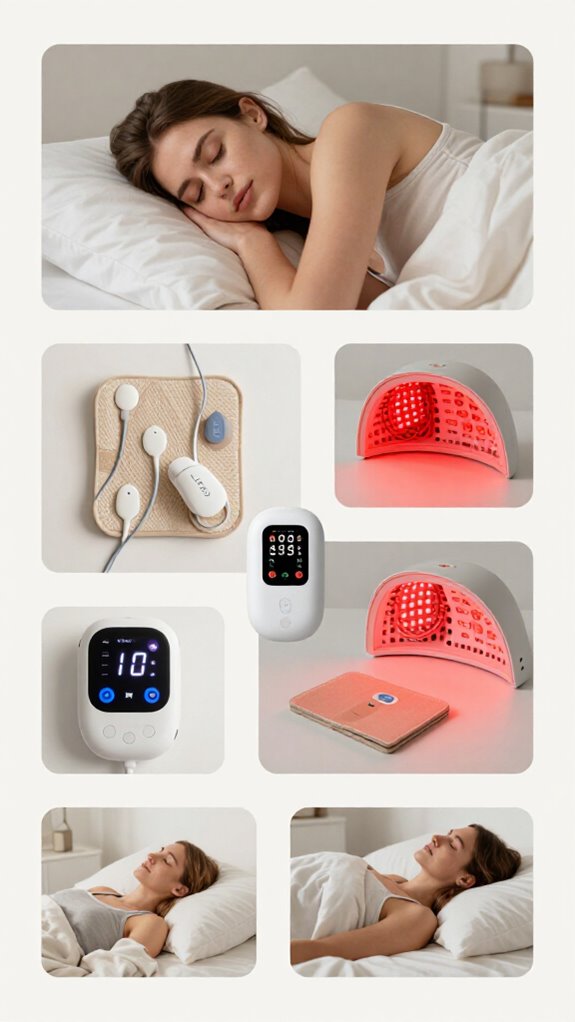
Several cutting-edge sleep technologies are redefining the wellness environment, and I’m excited to share my viewpoints on the most effective tools.
As we move beyond sleep tracking, wellness innovations now focus on regulating our nervous system and environment. Under-mattress sensors represent a particularly innovative approach to passive sleep monitoring that requires no wearables.
Key sleep gadgets include:
- Vagus Nerve Stimulation devices like Xen by Neurable
- Acoustic Pacing tools such as the Dreem Band
- Red Light Therapy lamps from brands like Joovv
- Bio-Wicking Textiles, such as bamboo and silver-infused fabrics from Ettitude.
These technologies facilitate Biological Surrender, allowing our bodies to naturally sync with the earth’s rhythm and optimize our sleep. For those seeking effective vagus nerve stimulation, exploring recommended devices can provide additional options beyond the Xen by Neurable for nervous system regulation.
Home Apnea Test Gains
As we continue to shift towards more personalized and accessible healthcare, at-home sleep diagnostics are revolutionizing the way we approach sleep disorders. One area that’s gaining significant traction is Home Apnea Testing.
I’ll guide you through the diagnostic benefits of home sleep apnea testing. By utilizing Type 3 tests, endorsed by the American Academy of Sleep Medicine (AASM), you’ll experience a more comfortable and convenient testing process.
Home sleep testing is usually significantly cheaper than clinic studies, offering a cost-effective solution.
Studies show comparable accuracy to in-lab polysomnography (PSG) for sleep apnea diagnosis, with cost savings and quicker results. This empowers you to take control of your sleep health.
FAQ
Is Home Apnea Screening Covered by My Health Insurance Provider?
I’m often asked if home apnea screening is covered by insurance, and my response is that it’s not a straightforward yes or no.
Like traversing a complex air traffic control system, insurance coverage varies depending on your provider and policy. For instance, some plans cover screening costs under sleep disorder diagnoses, while others don’t; I recommend checking with your insurer and reviewing guidelines from the American Academy of Sleep Medicine.
Can I Use Home Apnea Screening if I Have a Pacemaker or Other Implants?
I can use home apnea screening with certain pacemaker considerations and implant safety precautions.
Many modern pacemakers and implants, such as those from Medtronic and Boston Scientific, are designed to be compatible with external devices.
However, it’s essential to consult my device’s manufacturer guidelines and a healthcare professional, such as a cardiologist, to guarantee safe usage and avoid potential electromagnetic interference.
How Often Should I Perform Home Apnea Screening for Accurate Results?
I perform home apnea screening once every 3-6 months for ideal screening accuracy, as recommended by experts like Dr. Atul Malhotra, a leading researcher in sleep medicine.
Frequency recommendations vary depending on individual risk factors and sleep disorders; for instance, those with a history of sleep apnea may require more frequent screenings.
Utilizing devices from companies like ResMed or Philips, I can guarantee accurate results and stay on top of my sleep health.
Are Home Apnea Screening Devices Safe for Children to Use?
I’m delving into the crux of the matter: home apnea screening devices can be safe for children if used correctly.
Like a key fitting into a lock, the right device features must align with a child’s specific needs, considering factors such as age, size, and sensitivity.
Brands like ResMed and Philips offer pediatric-friendly options, with some devices incorporating child safety features, such as adjustable strap sizes and gentle sensors, as recommended by researchers like Dr. Carole Marcus.
Can I Travel With My Home Apnea Screening Device?
I travel with my home apnea screening device without issue by taking a few precautions.
When flying, I pack it in a protective case and declare it at security checkpoints to avoid any confusion.
I also check with my device’s manufacturer, such as ResMed or Philips, for specific travel tips and guidelines, like battery requirements and data storage protocols, to guarantee a seamless and stress-free journey with my device.
References
- https://aairsclinic.com/benefits-of-home-sleep-testing/
- https://health.mountsinai.org/blog/benefits-of-home-sleep-testing-for-obstructive-sleep-apnea-osa/
- https://bcbsm.mibluedaily.com/stories/health-and-wellness/should-i-do-an-at-home-sleep-study-pros-and-cons-of-home-sleep-apnea-tests
- https://www.michiganmedicine.org/health-lab/when-home-sleep-apnea-test-appropriate
- https://www.health.harvard.edu/blog/need-sleep-study-home-sweet-home-2017022311096
- https://www.specialtycareent.com/uncategorized/7-advantages-of-undergoing-a-home-sleep-study/
- https://www.lincare.com/resources/Lincare-Learning-Center/Home-Sleep-Testing
- https://www.hopkinsmedicine.org/health/wellness-and-prevention/what-to-know-about-an-at-home-sleep-test
- https://pmc.ncbi.nlm.nih.gov/articles/PMC5458525/