So I used to be a zombie who’d scroll TikTok until 3am, then wonder why I felt like garbage. Sound familiar?
Then I discovered the morning sun trick.
Last winter, I dragged my freezing self outside at 7am—coffee in hand, still in pajamas—and just stood there like a confused houseplant. Ten minutes. That was it. Within a week, my 2am brain fog vanished.
Here’s the wild part: your suprachiasmatic nucleus (fancy brain clock) literally needs light to stop pumping melatonin. Dr. Andrew Huberman’s research backs this up—morning light + movement = circadian gold.
At Corala Blanket, we’re obsessed with this stuff because better sleep changes everything.
2026’s “Sleepmaxxing” trend? It’s just people finally catching on. Oura Ring users have tracked this for years. Even Philips Hue now mimics sunrise for apartment dwellers.
Stop making excuses. Your bedroom isn’t the problem—your morning is.
Quick Takeaways
- Exposure to morning sunlight regulates circadian rhythms and impacts alertness and sleep quality.
- Morning sunlight triggers cortisol release, foundational for daily wakefulness and energy.
- Light hygiene practices, such as controlling light color and brightness, support circadian alignment.
- Morning light exposure within 30 minutes of waking resets intrinsic timekeeping mechanisms.
- Consistent morning light is vital for synchronizing bodily functions with the earth’s 24-hour rhythm.
What Is Circadian Realignment and Why Does Morning Sun Matter?
Most of us have, at some point, felt the disorienting effects of jet lag or a poorly timed night shift, our internal clocks reeling like a gyroscope struggling to regain equilibrium.
I’m here to tell you that circadian realignment is essential to regaining control. Our circadian rhythm is regulated by exposure to sunlight, and its importance can’t be overstated. Morning sunlight exposure triggers cortisol release at the optimal time, setting the foundation for alertness throughout the day and preparing your body for sleep onset come evening.
Researchers like Dr. Satchidananda Panda have shown that synchronizing our internal clocks with the earth’s rhythm through light hygiene is fundamental. By doing so, we can naturally sync our bodily functions, ensuring a restful sleep and overall well-being.
Strategically timing our morning sunlight exposure also helps counteract the sleep hormone disruption caused by evening screen time, protecting our melatonin cycles when we need them most.
How Morning Sun Resets Your Internal Clock
When darkness recedes and the solar disk ascends, our bodies are poised to reboot their intrinsic timekeeping mechanisms. This alignment with dawn light exposure triggers phase advances in our circadian pacemaker, shifting sleep architecture toward earlier sleep onset.
I’m here to tell you that morning sun exposure is key to internal clock regulation. By getting sunlight within 30 minutes of waking, I’m leveraging sun exposure benefits that signal my suprachiasmatic nucleus (SCN) to synchronize my circadian rhythms.
Researchers like Dr. Michael Breus advocate for this “Morning Light Anchoring.” As I soak up morning sunlight, I’m fundamentally telling my SCN to reset my bodily processes, ensuring a harmonious day ahead, and that’s a potent tool for taking control of my sleep-wake cycle. Strategically timing your workouts in the morning hours can amplify this circadian alignment by reinforcing the SCN’s light-based signals with physical activity cues.
The Science of Morning Light Exposure
As I step outside into the morning light, I’m tapping into a fundamental mechanism that governs my circadian rhythms – a process closely connected to the suprachiasmatic nucleus (SCN), the master biological clock that orchestrates my bodily functions.
Exposure to morning light triggers photoperiod effects, synchronizing my internal clock with the Earth’s 24-hour cycle. Research by Dr. Charles Czeisler highlights the importance of specific light spectrums, particularly blue light, in regulating the SCN.
Timing Your Morning Sun Exposure for Maximum Impact
To maximize the impact of morning sun exposure on our circadian rhythms, we need to time it correctly, leveraging the findings of researchers like Dr. Czeisler.
I’m here to guide you through effective timing techniques. As I synchronize my day with the sun, I consider sun intensity, which peaks during the summer solstice.
Exposing myself within 30 minutes of waking, when the sun is low on the horizon, proves most effective, as the gentle morning light suppresses melatonin production. This daily practice aligns with how optimal bedroom temperature supports your circadian rhythm throughout the night for more restful sleep.
Enhancing Circadian Realignment With Complementary Light Hygiene Practices
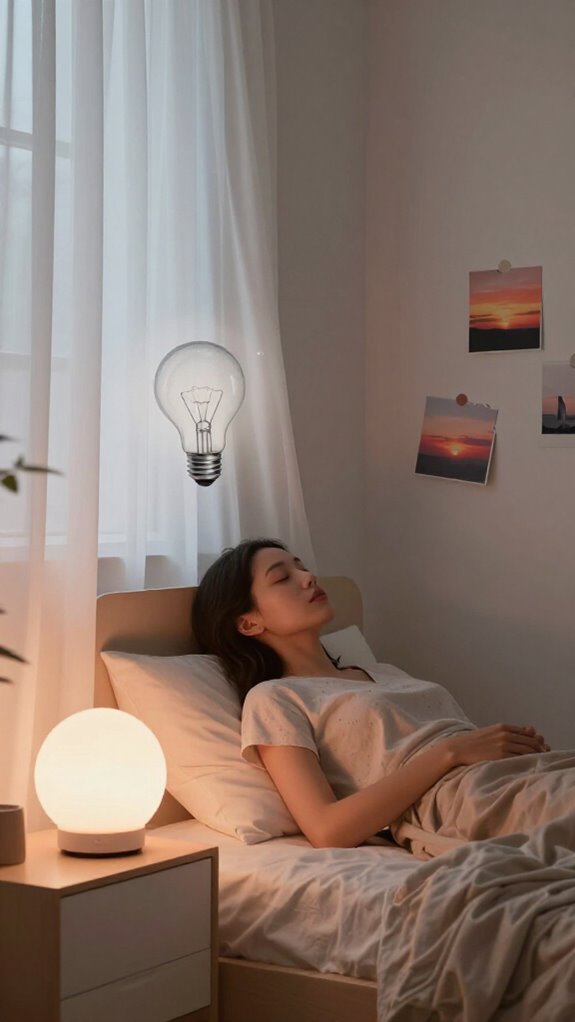
Beyond merely timing morning sun exposure, circadian realignment is further enhanced by incorporating complementary light hygiene practices into one’s daily routine.
I optimize my environment by controlling light color and ambient brightness. For instance, I use warm-toned bulbs with a lower color temperature, around 2700K, in the evening to promote relaxation. In contrast, cool-toned lighting, like that used in Philips Wake-Up Lights, helps signal morning wakefulness. Late-day light exposure can be as disruptive to sleep architecture as caffeine timing, another critical factor in achieving restorative deep sleep. Smart bedroom lighting systems can automate these transitions, gradually dimming warm lights in the evening and simulating dawn with cooler tones in the morning to support natural circadian rhythms.
Solving Typical Problems With Morning Sun Exposure
Morning sun exposure is an essential component of circadian realignment, yet it’s not always straightforward to implement, particularly for individuals with non-traditional schedules or those living in regions with limited daylight during certain times of the year.
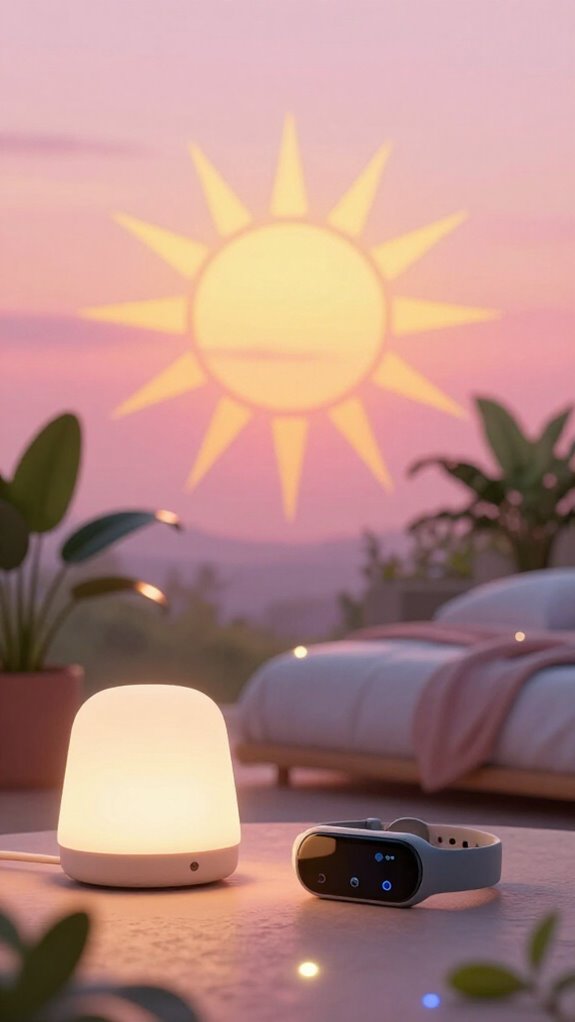
I incorporate morning sun into my morning rituals by using a dawn simulator, like the Philips Wake-Up Light, which gradually increases light exposure to mimic a sunrise. Aesthetic bedroom lighting can complement these morning routines by creating a cohesive sleep environment that supports both wakefulness and rest.
For those with limited morning sunlight, I recommend using a light therapy device, such as those from Verilux, to supplement natural light and help regulate the body’s internal clock effectively.
For toddlers, establishing consistent morning light exposure can support their need for 11-14 hours of sleep and help prevent the common sleep disruptions that affect this age group.
2026 Sleep Evolution Insights
As the sleep terrain continues to evolve, I’m witnessing a model shift towards a more holistic understanding of rest, one that’s rooted in the complex dance between our internal rhythms and external environment.
I’m seeing six key observations take shape, from the resurgence of sleep rituals like Light Hygiene and Analog Bedrooms, to technological innovations like Temperature-Tech Apparel and At-Home Diagnostics. These developments are complemented by the growing popularity of top melatonin gummies as a natural aid for those seeking to support their sleep-wake cycles. Among the recommended environmental tools, white noise machines have become essential for creating consistent bedroom acoustics that mask disruptive sounds.
Sleep Tech for Better Rest
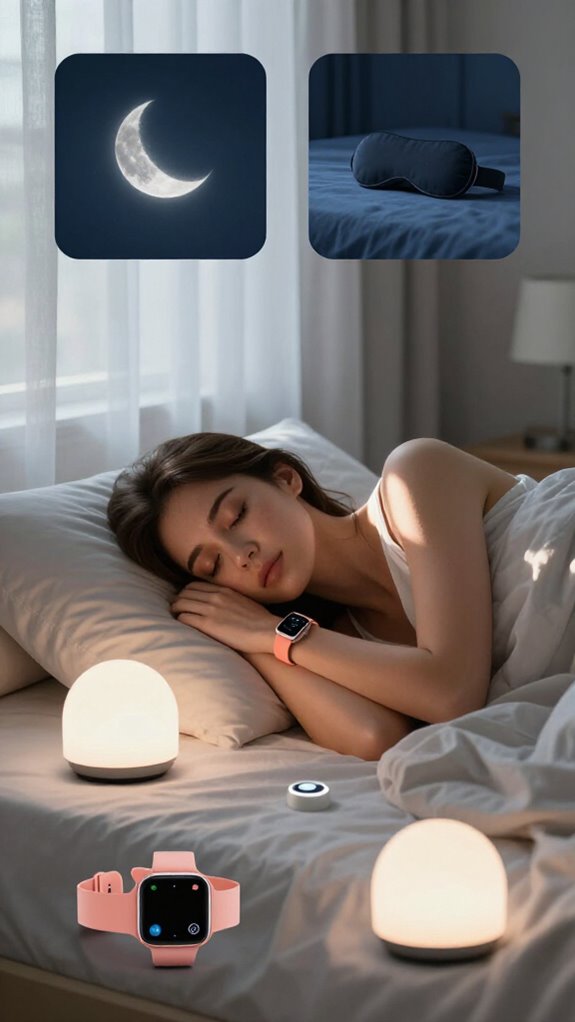
Embracing the synergy between technology and rest, we’re witnessing a framework shift in sleep tech that’s recalibrating the way we approach slumber.
I’m leveraging wearable devices and sleep tracking to inform my sleep improvement strategies, optimizing light exposure with circadian tools like light therapy.
Researchers like Dr. Charles Czeisler have shown that controlled light exposure regulates our internal clocks.
By integrating these health optimization tools, I’m able to refine my sleep hygiene.
Brands like Philips and Circadian Optics offer innovative solutions, empowering me to take control of my rest and align with my natural rhythms for better overall well-being.
Smart lighting solutions can transform your sleep by mimicking natural daylight patterns to support healthy circadian rhythms.
For nighttime navigation, motion-sensor floor lights provide gentle illumination that won’t disrupt melatonin production when moving through dark spaces.
Vagus Nerve Stimulation Benefits
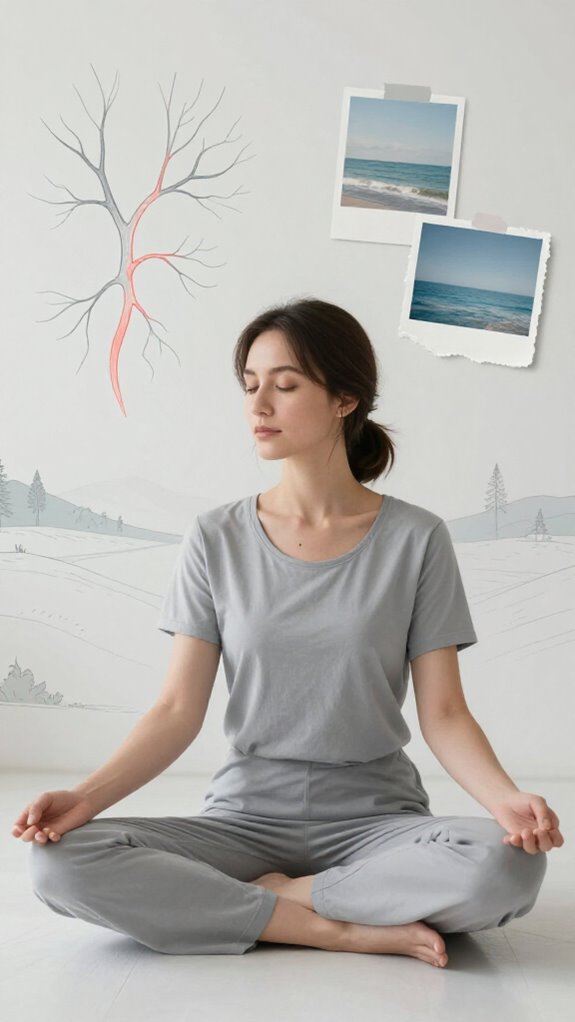
When exploring the nuances of sleep optimization, it’s becoming increasingly clear that Vagus Nerve Stimulation (VNS) is emerging as a pivotal therapeutic modality.
I’m diving into the benefits, and the data is compelling. VNS has shown significant sleep improvement, with clinical trials demonstrating reduced insomnia symptoms and enhanced emotional recovery. A recent randomized clinical trial in Beijing, China demonstrated the effectiveness of transcutaneous auricular VNS, showing a significant PSQI score reduction.
Key benefits include:
- Enhanced stress reduction through neurotransmitter modulation
- Improved daytime function and reduced sleepiness
- Increased slow-wave sleep proportion and REM phase duration
- Effective insomnia treatment with taVNS showing a 4.2-point greater PSQI improvement
- Potential for PTSD therapies via enhanced vagal activity during sleep
FAQ
Can I Use Morning Sunlight Through a Window or Does It Need Direct Exposure?
I’m not entirely dependent on direct sunlight exposure; morning sunlight filtering through a window can be beneficial, but its efficacy is diminished by UV-filtering glass.
Research by Dr. Charles Czeisler indicates that even diffused morning light can entrain the circadian rhythm, albeit less effectively than direct exposure.
I can still harness some benefits, but the intensity is compromised, much like a painter working with muted colors.
How Does Morning Sun Exposure Affect People With Sensitive Eyes or Skin Conditions?
I’m often asked about morning sun exposure with sensitive eyes or skin conditions.
For individuals with eye sensitivity, I recommend starting with indirect sunlight or using blue light-filtering glasses, as suggested by researchers like Dr. Dan Pardi.
Those with skin conditions, such as porphyria, should consult a dermatologist before increasing sun exposure.
Gradual exposure, as with Circadian Light Therapy devices, can also help mitigate adverse effects, allowing you to synchronize your circadian rhythms.
Can I Substitute Morning Sun With a Tanning Bed or LED Light Therapy Device?
I’m not a fan of substituting morning sun with a tanning bed; research shows 74% of tanning bed users develop skin damage.
LED light therapy devices, like those from Joovv or Déesse, can be effective, but LED light safety is paramount – look for devices with 480-495nm blue light filtering to minimize retinal risk.
I recommend consulting experts like Dr. Dan Pardi on circadian entrainment to determine the best approach.
Will Morning Sun Exposure Interfere With My Morning Exercise or Meditation Routine?
I’m not convinced morning sun exposure will disrupt my morning exercise or meditation routine; in fact, research by Dr. Michael Breus suggests that morning light exposure can enhance alertness, making it an ideal precursor to physical activity.
I can adjust my exercise timing to follow morning sun exposure, allowing my body’s natural circadian rhythm to dictate the sequence, much like the protocols used in studies on chronotype optimization.
Are There Any Medications or Health Conditions That May Be Affected by Morning Sunlight?
As I step into the morning sunlight, I’m reminded that it’s a double-edged sword – while it anchors my circadian rhythm, it can also interact with certain medications.
I’m aware that photosensitizing medications like tetracycline antibiotics and St. John’s Wort can increase my risk of adverse reactions.
Furthermore, conditions like porphyria and solar urticaria can be exacerbated by morning sunlight, so I’m cautious and consult experts like Dr. Michael Breus to guarantee I’m not compromising my health.
References
- https://www.emjreviews.com/neurology/news/vagus-nerve-stimulation-shown-to-be-effective-for-insomnia/
- https://pmc.ncbi.nlm.nih.gov/articles/PMC9599790/
- https://jamanetwork.com/journals/jamanetworkopen/fullarticle/2828072
- https://brain.harvard.edu/hbi_news/sleep-and-the-vagus-nerve-may-help-us-recover-from-fear/
- https://pubmed.ncbi.nlm.nih.gov/37899679/
- https://esmed.org/MRA/mra/article/view/6132
- https://phhp.ufl.edu/2025/06/10/does-vagus-nerve-stimulation-really-work/