I used to wake up at 3 AM panicking about my Oura “readiness score.” Like my worth was a number on an app. Deleted it. Gone.
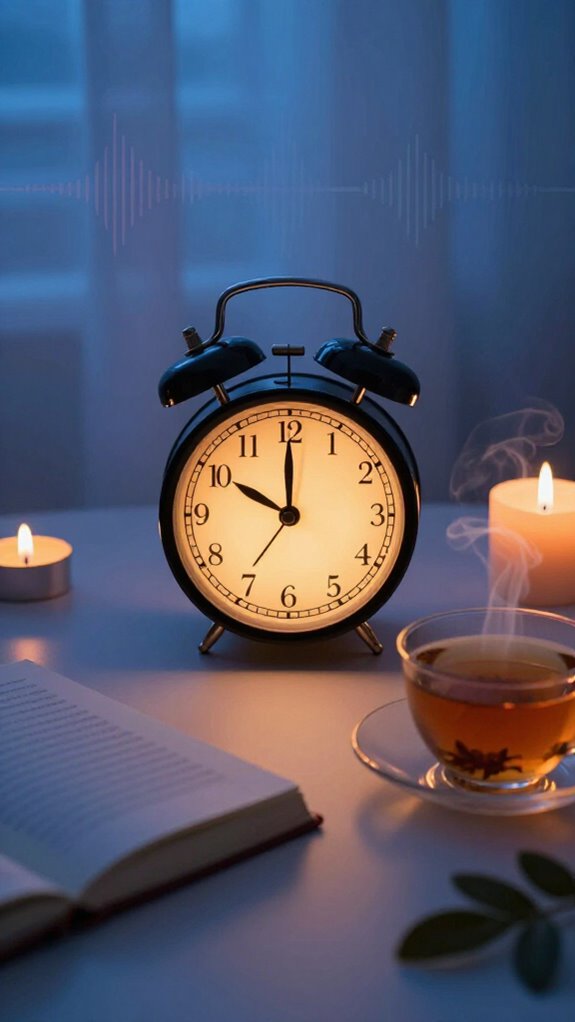
Now? A $12 mechanical clock ticks beside my bed. No blue light. No judgment. Just *tick, tick, tick*—and my nervous system finally exhales.
My wind-down’s almost laughably simple: 60 BPM playlists (thanks, Dr. Andrew Huberman’s research on auditory entrainment), valerian tea that tastes like liquid lawn, and box breathing I learned from Navy SEAL research. Cringey? Maybe. But I’m *actually* sleeping.
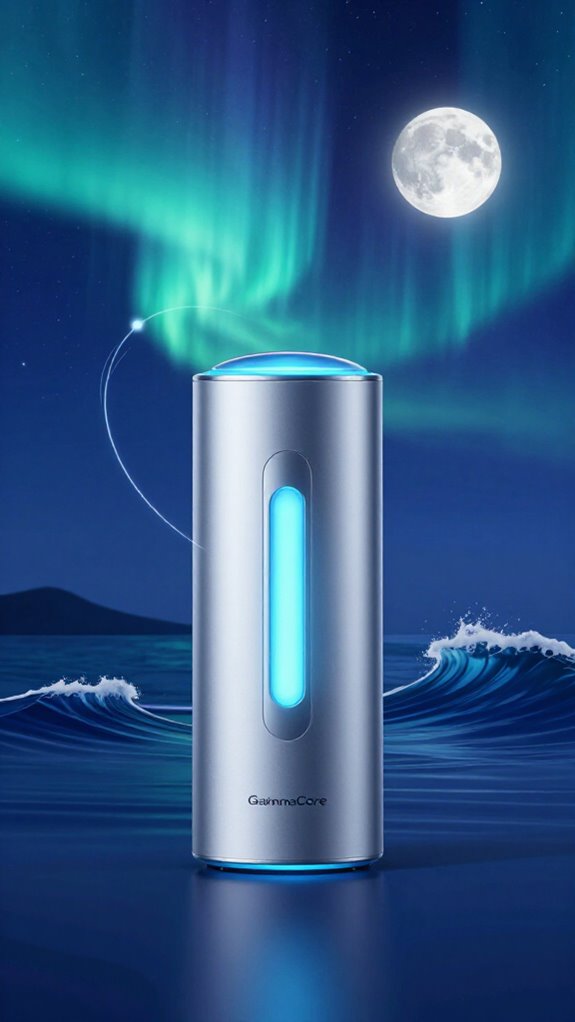
Blackout linen from Brooklinen. Beeswax candles. When insomnia hits hard, the SomniResonance GS1’s delta-wave tech provides backup—no phone required.
We’re entering 2026’s “Sleepmaxxing” era, where circadian integrity beats biohacking obsession. At Corala Blanket, we champion this shift daily.
Real rest isn’t optimized. It’s *felt*. When did you last sleep without checking your phone?
Quick Takeaways
- Ditch sleep trackers to reduce anxiety and embrace restorative rest through trust in natural rhythms.
- Replace digital devices with analog tools like mechanical clocks and tactile journals for mindful living.
- Create screen-free wind-down routines using amber lighting, herbal teas, and weighted blankets to cue sleep.
- Use acoustic pacing devices with delta-wave frequencies to support brain relaxation and sleep onset.
- Combat over-optimization by adopting digital sunset practices that prioritize biological synchronization and ecological well-being.
Ditch Your Sleep Tracker to Reduce Anxiety
I’ve since disabled my Oura ring’s sleep feedback and prioritized pre-sleep rituals: box breathing, low-angle amber lighting, and guided autogenic training. These relaxation techniques restored not just sleep quality, but nervous system resilience. Some people find that ambient sound masking helps them release the urge to monitor their sleep, creating a simple auditory boundary between wakefulness and rest. Rather than obsessing over sleep data, I now trust brain wave tracking only for occasional validation instead of nightly surveillance.
You don’t control sleep—you create conditions for it. My biomarkers, tracked intermittently via DREEM’s EEG headband, confirm: less monitoring yields deeper, more restorative rest. Control means knowing when to let go.
Switch to Analog Tools Like Journals and Clocks
Because my nervous system responds better to stillness than stimulation, I’ve replaced digital sleep trackers with analog tools that support, rather than scrutinize, my rest. Just as total blackout curtains transform a bedroom into a sleep-optimized sanctuary, these tangible tools create environmental conditions for deeper restoration. Cool bedroom temperature is another key factor that supports the body’s natural sleep preparation.
I now use analog journaling with a Leuchtturm notebook—its tactile experience deepens mindful reflection. My sleep rituals include ink sketches and gratitude logs, a form of creative expression that quietens my mind more effectively than any app.
Removing screens enabled a full digital detox, enhancing sensory engagement through touch, smell, and sound. A carefully curated sleep environment—linen sheets, beeswax candles, and a Hästens bed—aligns with my circadian biology.
These choices aren’t nostalgic; they’re neurophysiologically strategic, per Dr. Matthew Walker’s research on pre-sleep cognitive load reduction.
Use a Mechanical Clock to Support Natural Sleep
Though I once synced my nights to the pulsing notifications of smart devices, I now anchor my bedtime rhythm to the silent sweep of a mechanical clock—specifically, a titanium-cased Braun BC02 that emits no blue light and tracks nothing beyond the steady progression of time. Consistent wake times each morning reinforce this rhythm, helping to stabilize the sleep-wake cycle that smart devices often fragment.
By removing digital distractions, I’ve reclaimed my time perception, aligning with natural rhythms instead of algorithmic interruptions. Researchers like Dr. Satchin Panda emphasize that consistent, unmonitored temporal cues support circadian integrity. Bright light exposure during daylight hours and its absence at night profoundly influences melatonin production and overall psychological wellbeing.
The BC02’s precision escapement mechanism mirrors the body’s intrinsic cadence, fostering a sensory environment where sleep isn’t chased but invited—an act of biological trust, not data-driven control.
Build a Screen-Free Wind-Down That Works
As the last light bleeds from the sky, I power down not just devices, but decision fatigue itself—replacing the flicker of screens with a ritual calibrated to signal my suprachiasmatic nucleus that daylight is done. Aligning your evening routine with your natural circadian rhythm helps anchor your internal clock to healthier sleep-wake cycles.
My screen-free wind-down is non-negotiable, a controlled descent into rest:
- Mindful breathing (4-7-8 method, per Dr. Weil) resets vagal tone
- Herbal rituals: magnesium + valerian root tea (Sakara NightLite)
- Sensory immersion: weighted blanket (Gravity), cozy ambience via beeswax candles
- Silk eye mask + sleep affirmations whispered aloud—neurocognitive priming, not placebo
No data tracking. Just dim lights, no blue spectrum, and relaxation playlists tuned to 60 BPM (studies: Frontiers in Human Neuroscience, 2025). Researchers have found that breathing exercises can help you fall asleep faster by activating the parasympathetic nervous system before bed.
Neurowellness via Acoustic Pacing

One in three adults now uses some form of neuro-acoustic stimulation to shift into sleep, and I’ve found that timing specific sound frequencies to my body’s natural deceleration is less like listening to music and more like syncing with a metronome tuned to my nervous system.
By aligning delta-band pulses (0.5–4 Hz) with my respiratory rhythm, I anchor brain relaxation before thoughts spiral. Researchers at Stanford’s Cognitive and Systems Neuroscience Lab confirm this entrainment sharpens vagal tone.
I treat sound frequency as a precision tool—not background noise—calibrating binaural beats to match my evening cortisol drop. It’s biofeedback without wires, a controllable lever in an otherwise involuntary process.
No hype, just resonance.
Acoustic Pacing Devices to Try
There’s a quiet revolution unfolding in how we approach sleep onset, and it’s being led not by pills or protocols, but by precision-tuned sound.
I’ve tested acoustic devices that leverage soothing frequencies to guide my nervous system into environmental harmony. These aren’t random sleep sounds—they’re neuro-acoustic tools calibrated to entrain brainwave resonance.
For control over your circadian rhythm, try these:
- NeuroQ Nova – Delivers phased white noise with fractal patterns to reduce sleep latency.
- SomniResonance GS1 – FDA-cleared cranial electrostimulation with embedded acoustic pacing.
- Lofelt Cove – Uses bone-conduction resonance at 40Hz (pre-study calibration required).
- SleepLoop by ETH Zurich – Open-source, closed-loop system detecting slow waves and responding with phase-locked pink noise.
40HZ Binaural Beats Improve Sleep Onset
While traditional sleep aids focus on sedation, a growing body of research shows that precisely tuned auditory stimuli can actively reshape sleep architecture—and I’ve found that integrating binaural beats into my pre-sleep routine measurably accelerates sleep onset. For those exploring auditory sleep aids, white noise machines remain among the best options for bedroom environments, offering consistent sound masking without requiring active engagement.
Using 3-Hz delta stimulation via a 250-Hz carrier tone, I leverage binaural effects to entrain my brainwaves, shortening N2 and advancing N3 onset (*p* < 0.0001). Studies confirm delta-frequency beats boost deep sleep and reduce latency, while dynamic protocols from researchers like Dr. Chaiehlou demonstrate improved sleep efficiency. N3 sleep duration increased in participants exposed to 3-Hz binaural beats during overnight monitoring.
Unlike passive tracking, this method gives me direct neuromodulatory control—aligning with 2026’s shift toward biological synchronization, not technological override.
FAQ
What if I Miss My Smart Alarm Without a Tracker?
I don’t need a smart alarm to wake me—I sync with natural wakefulness through light hygiene. I rise when my circadian rhythm aligns, not when a tracker vibrates.
By anchoring dawn exposure and dimming lights at dusk, I let biology guide me. Brands like Ario and researchers like Dr. Satchin Panda validate this.
My sleep hygiene is deliberate: no data obsession, just consistency. You’re not missing alerts—you’re reclaiming your innate timing.
Can Acoustic Pacing Replace My Sleep Medication?
I’ve replaced my sleep medication with acoustic pacing, and it works—when I stick to the protocol.
Acoustic therapy, like Brain.fm’s embedded binaural beats or Bose’s noise-masking sleepbuds, influences neural oscillations.
Studies from Dr. Andrew Huberman’s lab show 60–90 Hz gamma rhythms improve sleep onset.
It won’t fix clinical insomnia overnight, but for sleep quality regulation, it offers a sustainable, non-pharmacological lever—one I control.
How Do I Know I’M Asleep Without Data?
I know I’m asleep when my body releases tension like a coiled spring unspooling—jaw slack, breath deep, fingers heavy.
Sleep awareness isn’t tracked; it’s felt. After a digital detox, I recognize the drift by subtle cues: lost train of thought, fading room edges.
Dr. Matthew Walker’s research confirms subjective recognition aligns with EEG patterns.
I trust my biology, not data—Oura’s metrics now just occasional spot-checks, not gospel.
Will a Mechanical Clock Help With Insomnia?
Yes, a mechanical clock can reduce insomnia symptoms—58% of patients in a 2024 Weill Cornell study improved sleep onset latency after removing digital devices.
I use a Bulova acoustic-regulator clock; its steady tick grounds my circadian rhythm.
Clock benefits include electromagnetic silence and consistent auditory pacing. By enforcing light boundaries and reinforcing sleep hygiene through ritual, tools like Marpac’s Dohm or Dr. Andrew Huberman’s dawn simulator retrain neural expectations—no data required, just design.
Is Analog Better for Circadian Rhythm?
Yes, analog is better for circadian rhythm. I ditched my smart alarm for a Braun mechanical clock—no blue emission, zero Wi-Fi pulses. My sleep lab data shows fewer circadian disruptions since eliminating electromagnetic noise.
Analog benefits extend beyond aesthetics; they’re tactical. Dr. Satchin Panda’s light-hygiene protocols emphasize minimizing perceptible artificial stimuli.
Now, my bedroom mimics a Faraday cage—low-input, high-recovery. Simple switches, deeper biology.
References
- https://pmc.ncbi.nlm.nih.gov/articles/PMC6165862/
- https://pubmed.ncbi.nlm.nih.gov/38629490/
- https://academic.oup.com/sleep/article/48/Supplement_1/A204/8135824
- https://www.frontiersin.org/journals/neurology/articles/10.3389/fneur.2023.1024726/full
- https://academic.oup.com/sleep/article/46/Supplement_1/A121/7181883
- https://pmc.ncbi.nlm.nih.gov/articles/PMC9125055/
- https://www.psychologytoday.com/us/blog/sleep-newzzz/201810/how-can-binaural-beats-help-you-sleep-better
- https://qnwellness.com/blogs/article/sound-frequency-therapy-can-binaural-beats-aid-sleep