Sleep used to feel like a boss battle I was doomed to lose. Every night, same story: lying there, cortisol raging, watching 2 AM become 3 AM.
Then I discovered my parasympathetic nervous system wasn’t broken—just ignored.
Box breathing? Game-changer. Four counts in, hold, out, hold. Huberman Lab’s research on vagal tone isn’t hype; it works. Cold exposure kicked my mammalian dive reflex into gear, heart rate plummeting like I’d actually mastered something.
Morning sunlight within 30 minutes? Non-negotiable. Dr. Andrew Weil’s breathing techniques paired with red light therapy after sunset—my circadian rhythm finally stopped ghosting me.
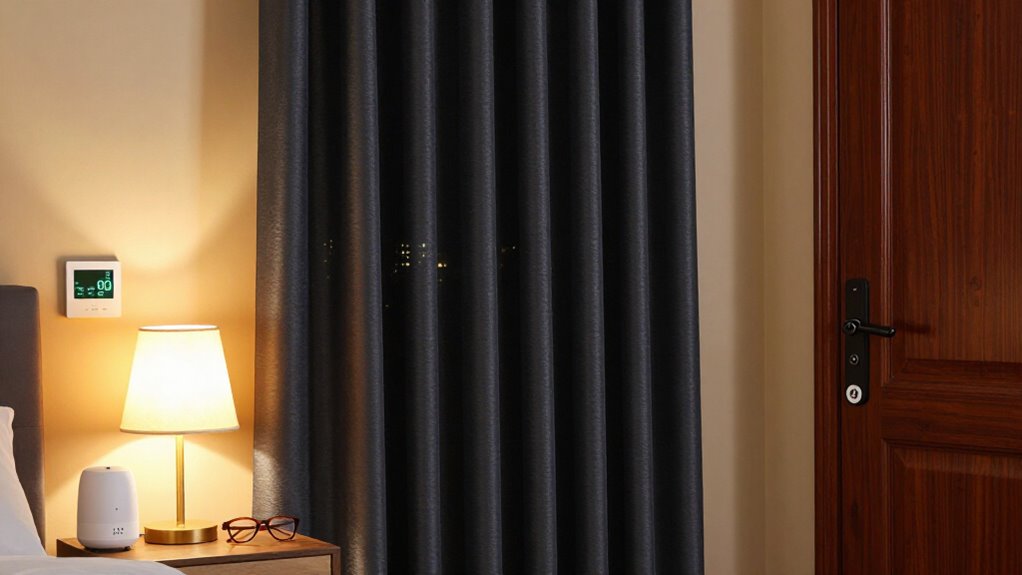
Sleepmaxxing in 2026 isn’t just a trend; it’s survival. 67°F bedroom, acoustic masking, deep pressure from weighted blankets that actually hug back.
That’s why we at Corala Blanket obsess over engineering better sleep. Because nothing hits different like waking up rested, right?
Quick Takeaways
- Practice box breathing (4-4-4-4 cycles) before bed to quickly activate vagal tone and parasympathetic response.
- Expose yourself to morning light within 30 minutes of waking to recalibrate your circadian rhythm.
- Maintain bedroom temperature between 60-67°F to promote parasympathetic engagement and optimal sleep conditions.
- Use cold exposure or ice water to trigger the mammalian dive reflex, lowering heart rate.
- Apply humming or gargling techniques to stimulate vagus nerve branches and improve heart rate variability.
The Sympathetic Trap: Why Adrenaline Sabotages Sleep
When you’re lying in bed rehearsing tomorrow’s presentation or scrolling through your phone at 11 p.m., your sympathetic nervous system—the body’s accelerator pedal—is firing on all cylinders, flooding your bloodstream with cortisol and adrenaline even though you’re physically stationary.
This hypervigilant state mirrors ancestral threat responses, yet modern triggers are psychological rather than predatory. Neuroscientist Andrew Huberman’s research demonstrates that sustained sympathetic activation suppresses melatonin production and fragments REM cycles.
Your amygdala fundamentally hijacks sleep onset. The irony: fighting this arousal intensifies it. You’re fundamentally wrestling your own nervous system. Cognitive behavioral techniques targeting anxiety-linked insomnia can interrupt this physiological standoff by reframing the mental habits that sustain sympathetic dominance.
This chronic circadian rhythm disruption creates a bidirectional pathway with mood disorders, where each condition amplifies the other.
Understanding this entrapment—recognizing adrenaline as the true adversary rather than insomnia itself—shifts the recovery strategy radically.
Three Vagal Techniques: Breathing, Cold, Humming-When to Use Each
Since your vagus nerve functions as your parasympathetic “off switch,” stimulating it directly bypasses the cognitive wrestling match entirely—you’re not convincing your amygdala to calm down, you’re neurologically forcing the issue through somatic pathways that don’t require conscious effort or willpower.
Box breathing (4-4-4-4 cycles) activates vagal tone within minutes, ideal pre-bed. Cold exposure—ice water on your face or a 30-second cold shower—triggers the mammalian dive reflex, instantly downregulating heart rate.
Humming and gargling engage the vagus nerve’s pharyngeal branches, producing measurable HRV improvements. Neuroscientist Bessel van der Kolk emphasizes sequencing: breathing first, then cold if needed, humming as maintenance.
Light Timing: Your Internal Clock’s Secret Reset
Your circadian rhythm—that 24-hour biological metronome governing everything from cortisol spikes to melatonin release—doesn’t actually run on a 24-hour cycle; it runs closer to 24.2 hours, which means you’re chronically drifting unless you deliberately anchor it to external time cues.
Light exposure represents the most potent of those cues, far outweighing temperature, meal timing, or social schedules. Morning light anchoring—exposing yourself to sunlight within 30 minutes of waking—recalibrates your master clock via intrinsically photosensitive retinal ganglion cells sensitive to blue wavelengths.
Evening red light therapy suppresses melatonin disruption. Researchers like Samer Hattar demonstrate this mechanism’s neurobiological precision, enabling parasympathetic dominance through synchronized circadian alignment rather than pharmaceutical intervention.
Optimize Your Micro-Environment: Temperature, Texture, Sound
Beyond circadian alignment lies a second battleground: the physical space where your body actually attempts sleep, and it’s here that most people inadvertently sabotage themselves through thermal dysregulation, tactile irritation, and acoustic interference.
Temperature precision—maintaining 60-67°F—directly suppresses core body heat, triggering parasympathetic engagement. Mattress cooling systems provide targeted heat dissipation that complements ambient temperature control, particularly for sleepers with elevated metabolic rates. Bio-wicking textiles infused with silver or bamboo prevent nocturnal sweating that fractures sleep architecture. Thermoregulation disruption can fragment REM cycles and reduce overall sleep quality.
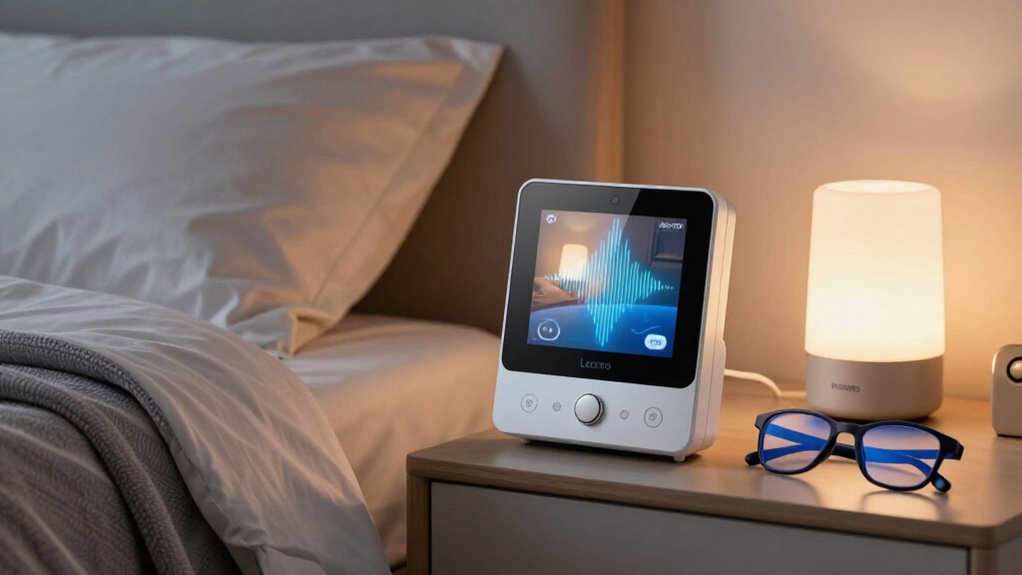
Simultaneously, ambient sound frequencies between 40-60 decibels paradoxically facilitate neurological settling; researchers like James Maas demonstrate white noise’s capacity to mask jarring stimuli.
Your bedroom’s micro-environment functions as parasympathetic infrastructure, not decoration—engineer it deliberately.
Vagus Nerve Stimulation Techniques
Activating your vagus nerve—the longest cranial nerve extending from your brainstem through your neck, chest, and abdomen—fundamentally flips the biological switch from sympathetic (fight-or-flight) dominance to parasympathetic (rest-and-digest) governance.
I’ve found the most reliable techniques exploit specific sensory pathways rather than relying on passive hope. Researchers like Stephen Porges demonstrate that deliberate vagal stimulation downregulates your amygdala’s threat-detection machinery within minutes. Sleep tracking clips provide objective data that can validate whether your vagal activation practices are actually improving sleep architecture and recovery metrics.
You’re fundamentally commanding your nervous system through proven neurobiological channels:
- Cold-water immersion triggers the dive response, instantly signaling safety
- Extended exhalation breathing (4-8 count) lengthens vagal tone mechanically
- Humming or gargling vibrates pharyngeal muscles connected to vagal fibers
- Transcutaneous VNS devices (like Neuropace) provide clinical-grade precision
These aren’t supplementary tactics—they’re foundational architecture.
For those seeking environmental support, ambient sound bars create consistent acoustic conditions that reinforce parasympathetic dominance through predictable auditory landscapes.
Product Roundups
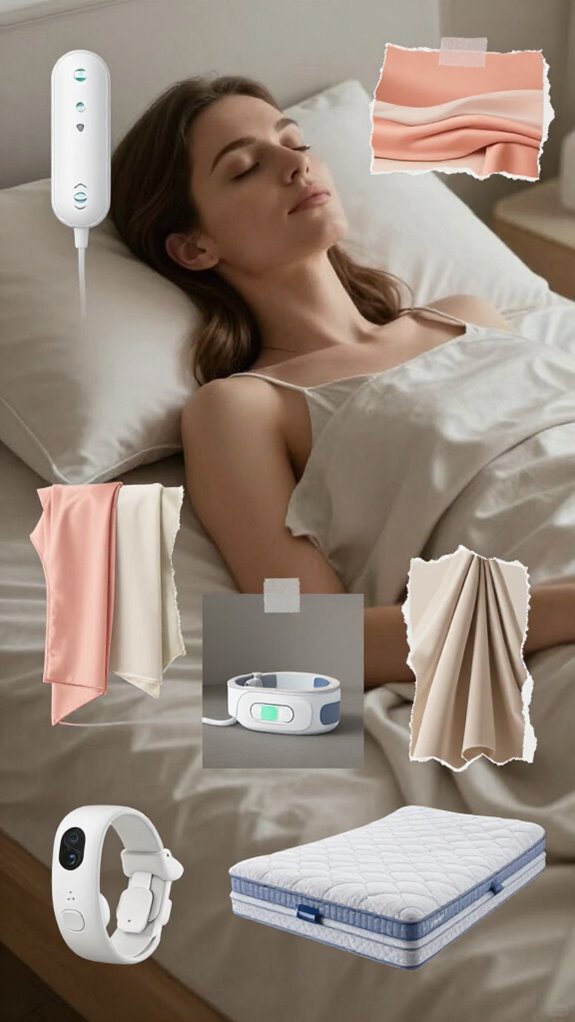
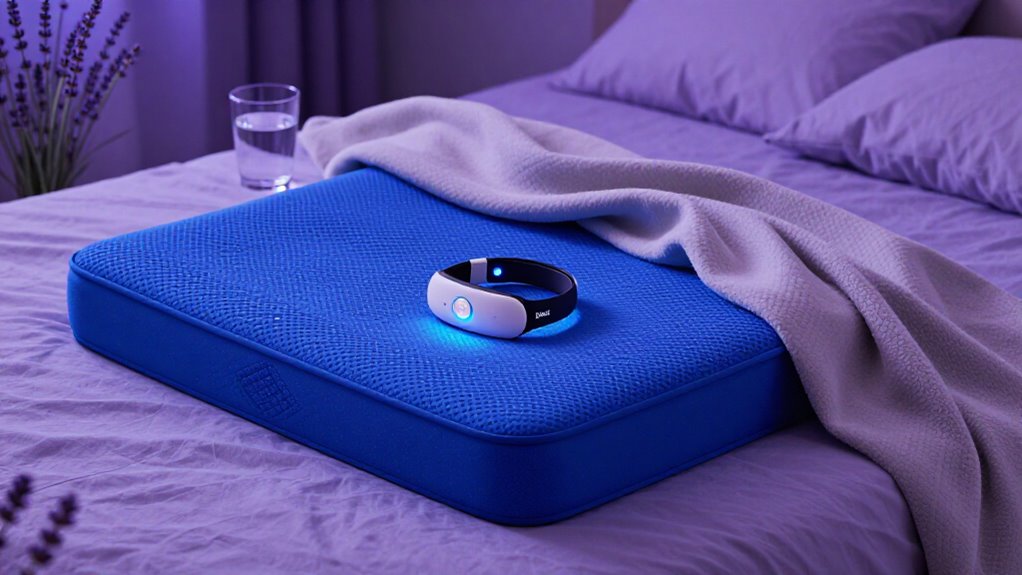
While manual vagal techniques like cold-water immersion and extended exhalation breathing can shift your nervous system toward parasympathetic dominance, the real innovation in 2026 centers on devices and sleep surfaces engineered to sustain that downregulation throughout the night—products that don’t require your active participation once you’ve settled into bed. These technologies work by activating the parasympathetic nervous system, which promotes rest and digest functions essential for restorative sleep.
| Product Category | Mechanism | Key Metric | Brand Example | Evidence |
|---|---|---|---|---|
| Transcutaneous VNS | Microcurrent vagal stimulation | 19% sleep score improvement | Nurosym | FDA-cleared, clinical trials |
| Wearable Haptics | Parasympathetic vibration therapy | 40% stress reduction | Apollo Neuro | Peer-reviewed nursing studies |
| Weighted Textiles | Deep pressure activation | Cortisol suppression | Clinical-grade blankets | Serotonin elevation confirmed |
| Pressure-Relief Mattresses | Autonomic rhythm normalization | 5x melatonin increase | AiR SI System | Vagal tone preservation documented |
| Bio-Wicking Surfaces | Thermal micro-environment regulation | Sustained parasympathetic state | Silver-infused fabrics | Prevention of thermal arousal |
Parasympathetic Activation Improves Sleep Quality
The nervous system’s parasympathetic branch—that cranial and sacral network governing rest and recovery—acts as the physiological counterbalance to wakefulness itself. Research now shows that robust parasympathetic signaling during sleep correlates directly with subjective sleep quality and restorative function.
When your heart rate variability‘s high-frequency power elevates during deep sleep stages, you experience genuinely rejuvenating rest rather than merely horizontal unconsciousness. This parasympathetic dominance reduces cortisol fluctuations, lowers blood pressure, and decreases vascular resistance—essentially shifting your body into authentic recovery mode rather than vigilant dysregulation. The best aromatherapy oils create an optimal bedroom environment that supports this physiological transition toward rest.
- Enhanced slow-wave activity increases parasympathetic tone by 25% via acoustic stimulation
- Poor sleepers exhibit depleted parasympathetic indices compared to controls
- Physical inactivity amplifies parasympathetic-sleep dysfunction correlations
- Chronic insomnia reflects sympathetic overactivity coupled with parasympathetic withdrawal
Topical application of aromatherapy face oils before bedtime can further enhance parasympathetic activation through olfactory-limbic pathways that promote deeper, more restorative sleep.
FAQ
Can Parasympathetic Activation Techniques Work if I’m Still Checking My Smartwatch Before Bed?
I’m honest with you: no, they won’t work effectively. Your smartwatch keeps you in cognitive vigilance—the exact opposite state you’re trying to escape. You’re sabotaging your own nervous system activation.
How Do I Know if My Chronotype Is Preventing My Partner From Sleeping Well?
I’ll cut to the chase: you’re barking up the wrong tree if you think your chronotype’s the culprit. Track their sleep disruptions separately—wake times, restlessness patterns—to pinpoint whether you’re actually causing their poor sleep or if it’s something else entirely.
What’s the Difference Between Vagus Nerve Stimulation and Traditional Meditation for Sleep?
I’ve found vagus nerve stimulation directly commands your nervous system’s off-switch through targeted physical intervention, while meditation requires you to mentally negotiate your way there. One’s neurobiological precision; the other’s psychological persuasion.
Should I Stop Taking Melatonin Supplements When Starting Vagal Breathing Techniques?
I’d consult your doctor before stopping melatonin, but vagal breathing activates your parasympathetic system naturally—you’re fundamentally training your body to do what the supplement forces. You’ll likely need less as your nervous system recalibrates.
Can Home Apnea Screening Reveal Why Parasympathetic Techniques Aren’t Working for Me?
I can use home apnea screening to identify if sleep apnea’s disrupting your parasympathetic response. You’ll get clinical-grade oxygen data that reveals whether your nervous system’s actually capable of calming down or if an underlying disorder’s sabotaging your efforts.
References
- https://www.parasym.co/parasym-device-transcutaneous-vagus-nerve-stimulation.html
- https://mattressmiracle.ca/blogs/mattress-miracle-blog/vagus-nerve-stimulation-sleep-canada
- https://www.scirp.org/journal/paperinformation?paperid=101602
- https://hullopillow.com/deep-pressure-stimulation-the-comfort-secret-in-sleep-products/
- https://www.thedeepsleepco.com/parasympathetic-nervous-system/
- https://pmc.ncbi.nlm.nih.gov/articles/PMC10382403/
- https://www.health.harvard.edu/blog/harvard-health-ad-watch-can-a-wearable-device-reduce-stress-202109222601
- https://apolloneuro.com/blogs/news/strengthen-and-calm-your-nervous-system-using-apollo
- https://pmc.ncbi.nlm.nih.gov/articles/PMC7053003/
- https://academic.oup.com/sleep/article/42/5/zsz036/5308336