I used to treat sleep like a Netflix binge—just one more episode until 3 AM, then wonder why I felt like a zombie. Turns out, my brain was staging a protest.
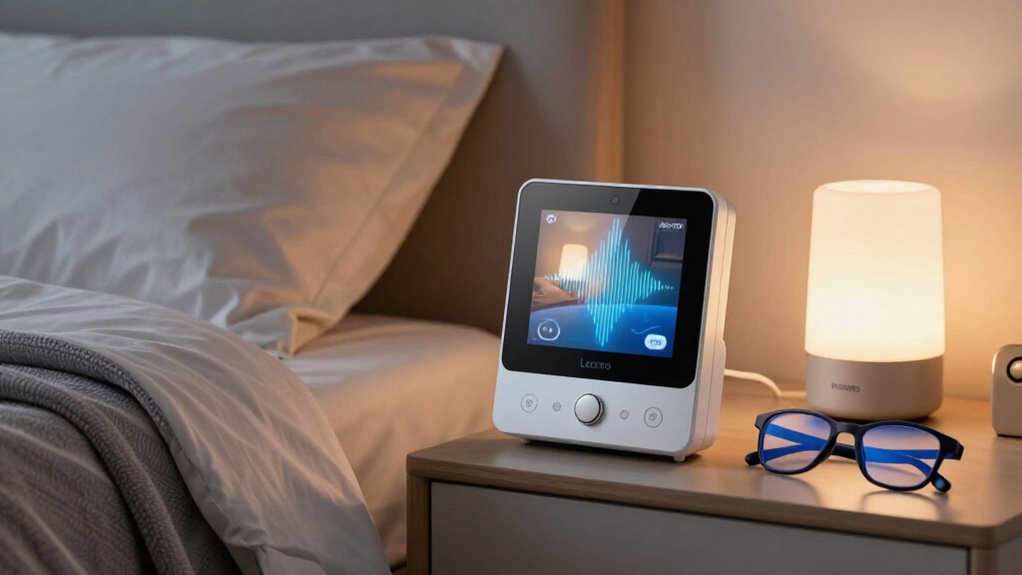
Now? I game the system. Fixed wake time, bedtime nudged 15–30 minutes earlier. I’m chasing those sweet N1-N2-N3 transitions like it’s 2026 and “sleepmaxxing” is my personality. Oura ring on, watching deep/REM trends for weeks—not obsessing over daily scores like some sleep-scored myself into anxiety.
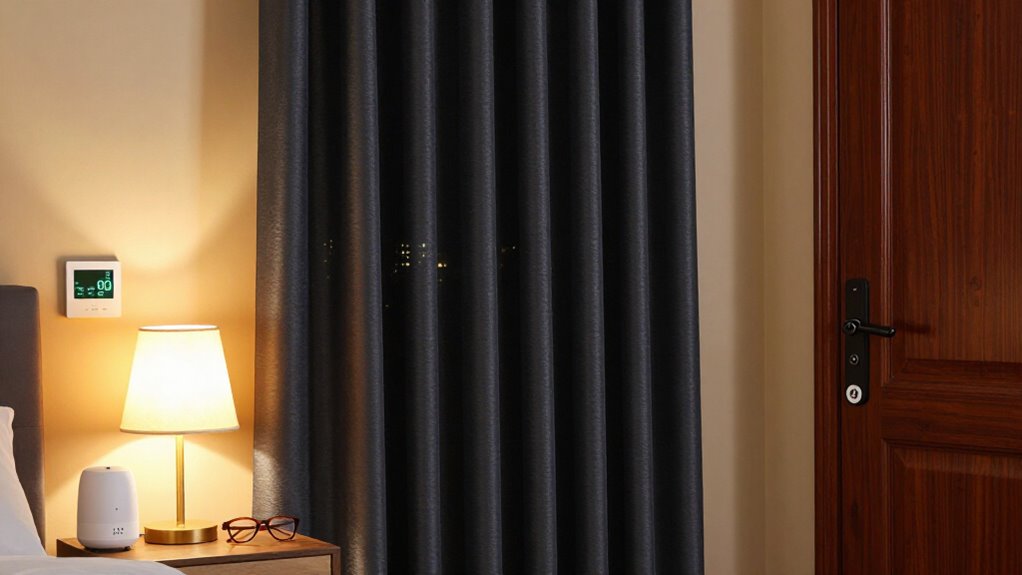
Cool, dark room. White noise cranked. Alcohol? Not after 7 PM unless I hate tomorrow.
SpO2 hits 95–100% or I’m investigating. Pillow alignment matters—learned that after waking with a neck that felt like I’d been in a car crash.
We at Corala Blanket live this stuff. Walker Matthew’s research on sleep pressure? Game-changer. Huberman’s light protocols? Stole them. Eight Sleep’s thermal tech? Jealous.
Your sleep architecture crumbles without intention. What’s your move?
Quick Takeaways
- Track sleep stages as trends using a simple notebook or Oura, focusing on stable deep/REM patterns over nightly scores.
- Keep consistent wake time, adjusting bedtime by 15–30 minutes to align light-to-deep and REM phases with your circadian rhythm.
- Optimize the room setup: cool, dark, and quiet with white noise to reduce awakenings and protect early deep sleep.
- Avoid alcohol and reinforce sleep pressure with dim lighting and slow breathing in the evening to support smoother REM transitions.
- If you use SpO2 monitoring, address frequent drops (≤92%) with healthcare support and improve airway alignment using proper pillow height.
Map Your Sleep Stages and Targets
You can map your sleep stages—and set practical targets—without turning your bedroom into a spreadsheet.
I start with sleep stage basics: light (N1–N2), deep (N3), and REM. I don’t chase perfect percentages; I watch patterns across a few nights.
Sleep cycle importance matters because these stages repeat every ~90 minutes, forming a scaffold for memory and recovery.
I use a simple notebook or reputable app like Oura, then translate data into targets: consistent bed/wake times, fewer late awakenings, and stable deep/REM trends. For those struggling with environmental disruptions, incorporating white noise tools can help maintain uninterrupted sleep cycles.
Applying reduced sleep latency techniques helps you reach those restorative stages faster and spend more time in quality sleep rather than tossing awake between cycles.
If a stage collapses repeatedly, I treat it as a nervous-system clue, not a personal failure.
Time Your 30-Day Sleepmaxxing Protocol for Each Stage
To time a 30-day “sleepmaxxing” protocol for each stage, I treat the brain like a train schedule: light, deep, and REM each arrive in repeating ~90-minute cycles, but their timing and stability depend on what I set up beforehand. This approach leverages chronobiology principles to align environmental cues with your body’s internal clock for more restorative sleep.
Over 30 days, I anchor sleep phase timing with consistent wake time, then adjust bedtime by 15–30 minutes.
Week 1 targets light-to-deep shift: cool room, no alcohol.
Week 2 lengthens deep sleep by protecting the first third.
Week 3–4 refine REM: dim lights, slow breathing, stable sleep duration strategies. Cortisol awakening response regulation through morning light exposure and consistent wake times further stabilizes your circadian foundation for optimal REM timing.
I use tools like Oura and Fitbit, but I trust physiology first.
Use Sleep Architecture Trackers Without Orthosomnia Anxiety
Use sleep-architecture trackers as a tool for trends, not a scoreboard, so the data can inform decisions without flipping your brain into “watch mode.” I treat devices like Oura, Fitbit, and Philips Respironics’ home pathways as quiet laboratory instruments: they estimate sleep stages (N1, N2, N3/slow-wave, and REM) using motion sensors plus photoplethysmography, then infer stage boundaries from patterns in heart rate and respiration. Circadian rhythm alignment through intentional bedroom design can amplify the consistency these devices measure. Simple breath-focused routines before bed can serve as natural ways to quiet a racing mind and help these trackers read a calmer entry into sleep. I protect sleep association by setting one weekly review, one change at a time, and stopping after you hit tracking balance.
| Metric | Best use | If it spikes |
|---|---|---|
| REM | Trend | Ignore single night |
| Slow-wave | Habit fit | Adjust bedtime cue |
| Wake bouts | Fragmentation | Check alcohol/caffeine |
“Vagus Nerve Calm Protocols”
As evening approaches, Vagus Nerve Calm Protocols aim to steer the body out of sympathetic “fight-or-flight” arousal and toward parasympathetic regulation—before the lights go out.
I start by dimming demands and practicing deep breathing: inhaling 4 seconds, exhaling 6–8, for 3–5 minutes.
Dim demands and breathe—inhaling 4 seconds, exhaling 6–8—for 3–5 minutes to shift away from fight-or-flight.
Then I add mindfulness practices, noticing throat sensations, chest expansion, and small sounds—this sensory modulation lowers threat signaling.
For vagus nerve stimulation, I use gentle humming or a brief cool-water splash to the face, evidence aligned with documented vagal pathways.
Finally, I invite emotional release through a short journaling spill, then silent relaxation techniques until my mind quiets.
Researchers like Stephen Porges inform this nervous-system lens.
Product Roundup
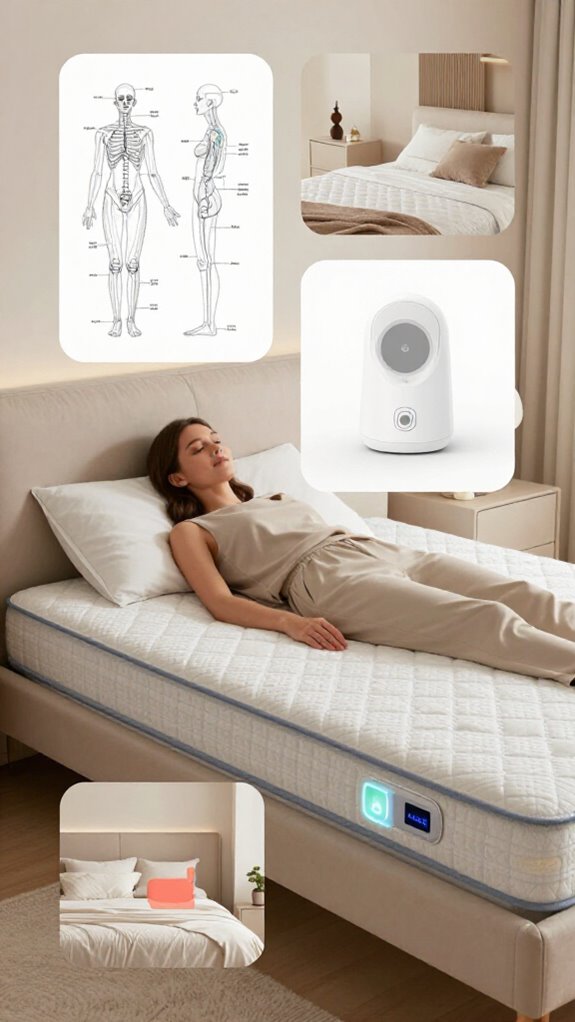
Let’s take a measured pass through the current Product Roundup—the sleep-tech category that’s shifted from “score chasing” toward measurable physiology.
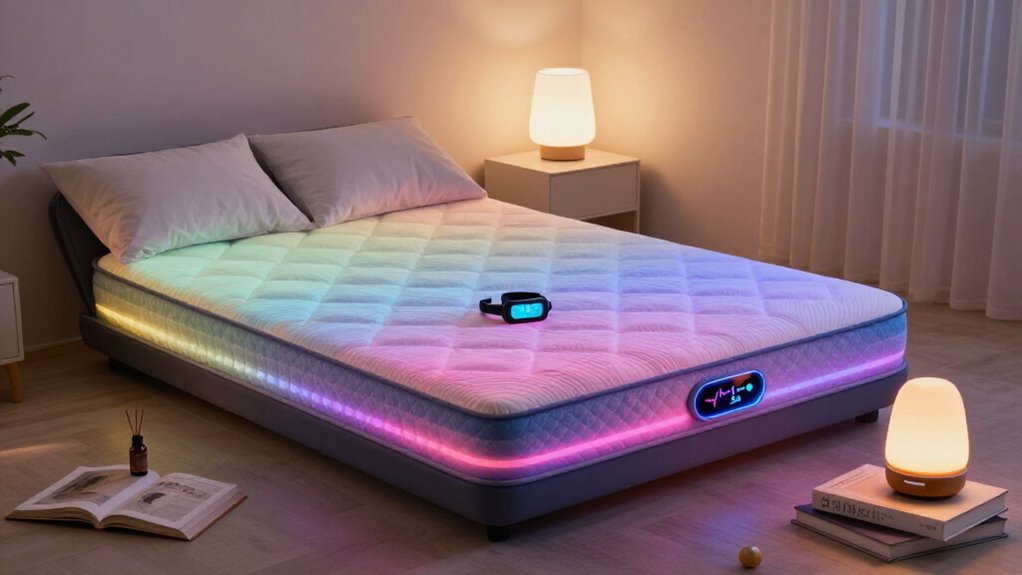
I’m watching smart mattress innovations and AI temperature control move into the “quietly instrumental” lane: Sleepme uses AI/ML with IoT to automate real-time bed temperature shifts, while Eight Sleep’s SleepOS Smart Temp Autopilot tunes changes using sleep history, weather, and feedback. Orion Smart Cover adds hydro-powered dual-zone cooling from 50–115°F, individualized per partner. For those prioritizing spinal alignment and pressure relief, orthopedic mattresses remain a foundational choice alongside these tech-forward solutions.
For understanding, contactless monitoring platforms pair well—Sleeptracker-AI targets PSG-matched stage identification, and Orion/EEG setups add actionable alerts.
- Sleepme: AI/IoT temperature adjustments
- Eight Sleep/Orion: autopilot + dual-zone cooling
- Sleeptracker-AI: PSG-aligned, clinician-facing perspectives
Home Oxygen Desaturation Insights
Once you’ve stabilized the bedroom environment, the next layer is figuring out what your lungs are doing minute-to-minute—because “sleep score” means little if oxygen exchange falters unnoticed. Healthy adults hold SpO2 95–100% during sleep; ≤92% can be concerning, ≤90% harmful, and 88% lasting ≥5 minutes meets desaturation criteria needing medical attention. In apnea, complete pauses or shallow breaths block exchange dozens to hundreds of times nightly, worsening ODI. I use desaturation monitoring at home to spot patterns like REM’s periodic 90–120 minute dips. Alcohol disrupts deep sleep cycles, which can mask or worsen oxygen desaturation events by increasing airway relaxation and fragmenting restorative sleep stages. Proper neck alignment through optimal pillow height may also reduce airway obstruction risk, supporting more stable breathing patterns during sleep.
| SpO2 | Pattern clue | Action |
|---|---|---|
| 95–100 | stable | monitor |
| ≤90 | harmful range | call clinician |
| ≤88 x≥5min | medically significant | urgent eval |
FAQ
Can Sleep Stages Shift if I Train or Lift Weights in the Evening?
Yes—your sleep cycles can shift with evening training. Heavy lifting may delay deep sleep and reduce REM for some, but if you cool down and wind down, workout timing won’t wreck it. I encourage you to notice trends.
What’s a Safe Way to Adjust Bedtime if My Chronotype Changes Seasonally?
About 30 minutes of earlier or later bedtime can shift your sleep timing noticeably; you’ll gently adjust by moving bedtime 15 minutes every few days. I track my chronotype adaptation with seasonal sleep, plus consistent wake time, so I feel safe.
How Do I Reduce Orthosomnia While Still Using a Sleep Tracker?
I reduce orthosomnia by treating my sleep tracker like feedback, not a verdict: I set ranges, ignore single-night scores, and review trends weekly. This respects sleep anxiety and tracker limitations, so I can relax into sleep.
Which Vagus Nerve Techniques Work Best if I’M Anxious Before Sleep?
I quiet my vagus nerve with slow exhale breathing techniques; I pair humming relaxation exercises with gentle stimulation methods, then do brief meditation practices nightly. You’ll notice anxiety relief as my evening routines and sleep hygiene cue safety.
When Should Home Oxygen Desaturation Results Trigger a Clinician Visit?
If my home monitoring shows oxygen saturation drops with real desaturation symptoms, I don’t wait—I book a clinician evaluation the same day. I follow medical guidelines, ask about oxygen therapy and sleep therapy, and discuss treatment options based on their findings.
References
- https://provectus.com/case-studies/revolutionizing-sleep-ai-temperature-recommendations/
- https://pinnacle-wellness.com/sleep-optimization-performance-enhancement/
- https://sleeptracker.com
- https://www.eightsleep.com/blog/introducing-sleepos/
- https://www.orionsleep.com
- https://vertu.com/lifestyle/top-sleep-tracking-innovations-2025/
- https://www.delveinsight.com/blog/rise-of-sleep-tech-devices
- https://ringconn.com/blogs/news/sleep-score-optimization-guide
- https://www.mypeaksleep.com/post/sleep-apnea-how-sleep-apnea-affects-oxygen-saturation-levels-in-the-body
- https://pmc.ncbi.nlm.nih.gov/articles/PMC8545634/