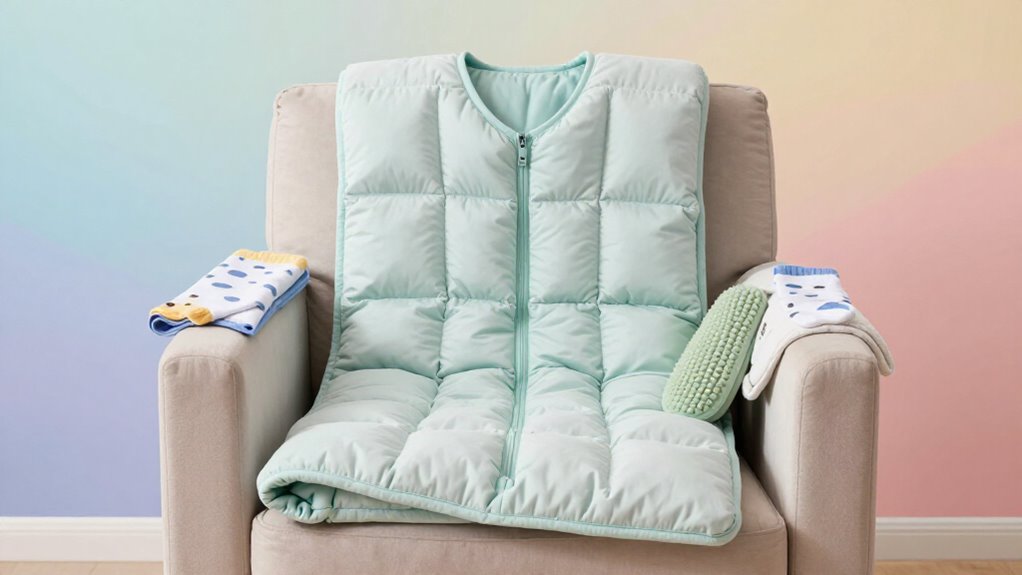
Ever tried hugging yourself and actually meaning it? I did—after a panic attack in a grocery store parking lot left me shaking like a leaf.
—
Deep pressure isn’t woo-woo. It’s biology. When I lie flat, breathe 4 in/6 out, and wrap my Corala Blanket weighted pad tight across my chest, my mechanoreceptters literally signal safety to my brainstem. Ten minutes of press-pause-release, and my jaw finally unclenches.
—
Heat or panic means stop. No hero complex here.
—
We’re Corala—we live to fix broken sleep. Researchers like Dr. Temple Grandin pioneered this; brands like Gravity Blanket and Compression+ refined it. Sleepmaxxing 2026? Deep pressure is *the* hack everyone’s chasing.
—
Your nervous system begging for a timeout too?
Quick Takeaways
- Lie down comfortably, then breathe with a 4-second inhale and 6-second exhale to cue down-regulation before pressure.
- Apply steady deep pressure over chest and arms using a weighted lap pad or compression wrap for 10–20 minutes.
- Add gentle proprioceptive “press, pause, release” holds to signal safety through consistent sensory input.
- Track arousal signs like jaw unclenching and smooth breathing; stop or reduce pressure if heat, tingling, or urgency occurs.
- Pair sessions with calming rhythmic sound or paced breathing to support nervous-system settling and promote sleep readiness.
How Somatic Deep Pressure Calms Your Nervous System
When my system runs hot—think “fight-or-flight” alarms, tightened jaw, shallow breathing—I use somatic deep pressure as a practical downshift, not a magic spell. You can feel it steady your inner weather. This grounding technique works by signaling safety to the brain through consistent, encompassing contact.
Deep, sustained touch or firm body contact activates mechanoreceptors in skin and muscle, which can reduce sympathetic arousal and support vagal tone. That’s one reason the pressure benefits show up as calmer heart rate patterns and less stress reactivity in studies on weighted blankets and tactile stimulation.
I lean on tried somatic techniques: slow self-hugs, pillow presses, or a therapist’s firm hold, staying in your comfort range.
These deep pressure techniques can be especially effective when incorporated into a bedtime routine to promote more restful sleep.
Step-By-Step Somatic Deep Pressure for Sleep Regulation
To regulate sleep with somatic deep pressure, I treat it like a nervous-system “landing gear” check: I choose a pressure method, apply it slowly, and then watch for measurable downshifts in arousal rather than chasing a sleepy feeling.
First, lie on your back and inhale 4 seconds, exhale 6.
Second, place a weighted lap pad or use a firm hug wrap for steady deep pressure over chest, then arms.
Third, do gentle proprioceptive holds—press, pause, release.
Fourth, scan: jaw unclenches, temperature evens out, breathing lengthens.
I repeat somatic techniques for 10–20 minutes, as recommended in somatic practice literature and by researchers like Stephen Porges.
Troubleshooting Deep Pressure Sessions and When To Stop
Once you start using somatic deep pressure, I treat each session like a controlled “nervous-system descent”: I apply pressure slowly, then I stop chasing drowsiness and instead watch for clear downshifts in arousal—typically softer facial tone, a slower breathing rhythm, and less body bracing.
If you feel urgency, tingling, or heat spike, I reduce pressure techniques, extend session duration cautiously, and adjust body awareness in real time. Studies suggest that deep touch pressure mimics the soothing effects of a hug, which can help regulate the autonomic nervous system during these sessions.
- Reassess session timing when your breathing patterns tighten
- Switch individualized approaches if emotional responses turn sharp or numb
- Check environmental factors: light, temperature, and noise floor
- Stop if pain, panic, or sustained dissociation appears
I keep it safe and deliberate. Research on weighted blanket therapy shows that calibrated deep pressure can enhance sleep quality through measurable reductions in physiological arousal.
Neurowellness & Neuro-Acoustics Trend
Neurowellness and neuro-acoustics treat sleep less like a performance metric and more like a regulated nervous-system state shift, and I use that idea to guide how I structure somatic deep pressure sessions in 2026.
Before I add pressure, I listen to your body’s tempo, then I lower stimulation with acoustic therapies—gentle, patterned sound or paced breathing rhythms. This aligns with neuroscience advancements showing brainstem and thalamic gating for sensory input, which can quiet sympathetic output.
Practically, I pair slow, sustained deep-pressure holds with consistent acoustic pacing, then I fade both, helping your system settle without chasing a score.
Research on deep pressure therapy suggests these techniques may specifically enhance slow-wave sleep phases, making the regulation work translate into restorative rest.
Product Roundup
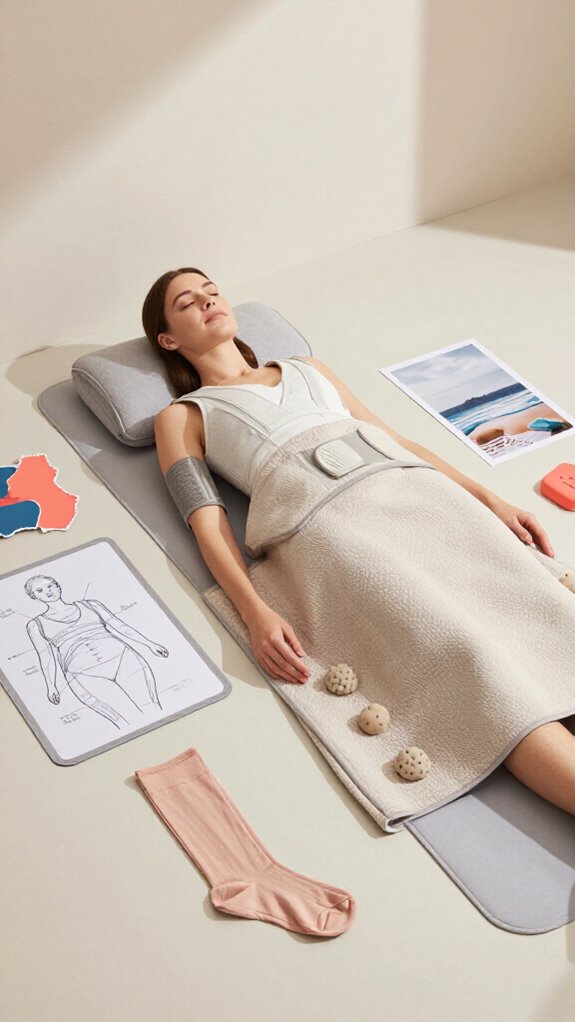
Here’s a practical product roundup of somatic deep-pressure tools I recommend when you want proprioceptive input without “thrashing” your nervous system—weighted blankets, compression vests, pea pods, and lap pads/sheets, plus body sox and rolling tools.
I pick items that deliver consistent pressure, help organize sensory input, and fit real routines. Research shows these tools can enhance sleep quality and REM cycles by promoting deeper rest through sustained proprioceptive feedback.
- Weighted blankets benefits: calm touch; sizes Junior–XL; therapist-curated.
- Compression vests features: adjustable hug via pump/Velcro; torso-focused; daily calm.
- Sensory pea pods: enveloping compression; Small 48″, Medium/Large 60″.
- Lap pads utility: wipe-clean focus weight; lead-safe; for meals/offices.
I also use body sox applications and rolling pins for brief regulation breaks, classroom-ready.
The right weighted blanket can elevate your sleep quality by providing steady, soothing pressure throughout the night.
First “sleep Microbiome” Study Link
Because the “sleep Microbiome” conversation is finally maturing from correlation to mechanism, a new line of research is worth your attention: the first study to link microbiome diversity and specific gut taxa to measurable sleep traits using Mendelian randomization. I want you to see how microbiome impact can map onto sleep quality: higher richness, Shannon, and inverse Simpson diversity associate with better sleep efficiency, while diversity tracks less wake after sleep onset. These findings suggest that gut microbial populations may influence sleep architecture changes across different circadian phases, offering a biological bridge between intestinal health and nightly restoration.
| What they tested | What they found |
|---|---|
| MR causal effects | 42 genera affect sleep traits |
| Reverse direction | 39 genera affect sleep traits |
| Key phyla | Bacteroidetes/Firmicutes relate to efficiency |
| WASO signal | Bacteroidetes reduce fragmentation |
| Mechanism hints | SCFAs, butyrate, muramyl peptides |
FAQ
How Long Should Deep Pressure Relief Last After a Session?
After a session, deep pressure relief usually lasts 20–60 minutes, sometimes longer. I notice your nervous system stays soothed, especially if you keep session frequency consistent—like a warm hand on your chest—then let it fade gently.
Can Somatic Deep Pressure Worsen Anxiety or Panic Symptoms?
Yes—somatic techniques can worsen anxiety or panic if pressure application feels unsafe, too intense, or triggers panic triggers. I start gentle, track your breath, and stop immediately if you feel alarmed; anxiety management matters more than “pushing through.”
Is Deep Pressure Safe With PTSD, Hypervigilance, or Trauma Triggers?
I answer: yes, deep pressure can be safe with PTSD/hypervigilance, but I start gently. I picture my body “holding” you like a steady blanket. I watch for trauma response, touch sensitivity, and stop if it spikes or feels unsafe.
What Pressure Sensations Indicate You Should Reduce Intensity Immediately?
If you feel pain, sharp tingling, numbness, panic, or a tightening spiral, I reduce intensity immediately. I also honor my physical boundaries and personal comfort—stop if my breathing clamps or my body asks for less.
Can Partners Use Deep Pressure Together Safely, and How?
Like a warm tide pressing your worries down, yes—partners can use deep pressure together safely. I guide gentle partner techniques, synchronize movements, and keep breaths slow. I check consent often, avoid pain, and stop immediately if anyone feels unsafe, tense.
References
- https://therapyshoppe.com/products/deep-pressure-sensory-seekers-top-picks
- https://sensorytoolhouse.com/collections/weighted-deep-pressure
- https://especialneeds.com/collections/deep-pressure
- https://www.appliedbehavioranalysisedu.org/5-best-off-the-shelf-deep-touch-stimulation-products/
- https://sensoryharbor.com/collections/deep-pressure-tools
- https://harkla.co/blogs/special-needs/sensory-products-adults
- https://select.schoolspecialty.com/special-needs-sensory-processing/proprioception/deep-pressure
- https://www.autism-products.com/product-category/sensory-products/touch-pressure/
- https://www.etsy.com/listing/1295779808/deep-pressure-sensory-tools-tactile
- https://developlearngrow.com/deep-pressure-activities-and-tools/