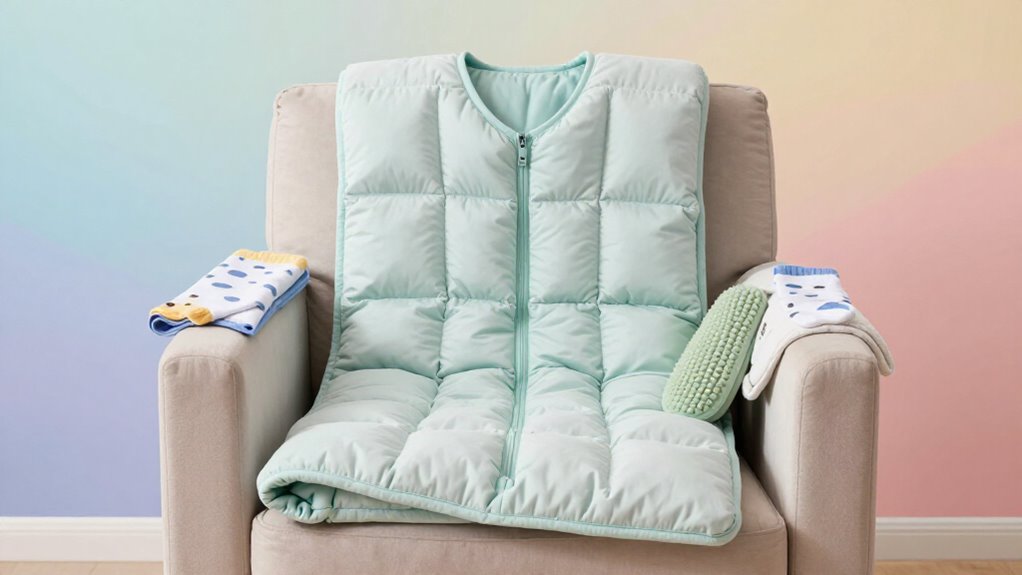
Ever tried hugging yourself in public and wondered if people think you’ve lost it? Same. But here’s the thing—that weird squeeze actually works.
I learned this the hard way during a 3 AM panic spiral last winter. Grabbed my 10% body-weight Corala Blanket (we’re obsessed with better sleep, obviously), and within 12 minutes my nervous system finally shut up. The proprioceptive input tricks your brainstem into thinking you’re safe. Wild, right?
Dr. Temple Grandin’s squeeze machine research backs this. So do studies on taVNS from companies like Pulvinar Neuro. For 2026, “Sleepmaxxing” trends are pushing weighted compression wear— brands like Bearaby and Nodpod are everywhere.
My go-to now? “Tuck and roll” pressure hugs, exhale first, then slow fascia strokes. Feels like a reset button for my actual soul.
What’s your weird calm-down move?
Quick Takeaways
- Deep pressure mimics containment, signaling safety and reducing threat response by calming brainstem arousal pathways.
- Use a weighted blanket at ~10% of body weight for gentle, steady full-body input; effects often begin within 5–15 minutes.
- Try compression garments or vests with a snug, hotspot-free fit to deliver proprioceptive pressure for quicker downshifting.
- Use swaddling-style cocoons or tuck-and-roll pressure hugs to contain sensation and rapidly reset the somatic nervous system.
- Support relaxation with slow, sustained massage/foam-rolling pressure and fascia-friendly strokes to promote parasympathetic calm.
Learn How Deep Pressure Signals Safety to the Brain
Deep pressure signals safety to your brain by mimicking a subtle “containment” pattern your nervous system recognizes from real life—think of the difference between wandering through a crowded room and stepping into a quiet, bounded space.
When I apply gentle, steady pressure, I’m activating pressure receptors in the skin and deeper tissue. Those signals travel along neural pathways to the brainstem, where safety signals dampen threat responses. This proprioceptive input helps regulate arousal levels and supports more stable sleep architecture, including improved REM cycles.
Gentle, steady pressure activates skin and deeper pressure receptors, sending safety signals along neural pathways to the brainstem.
Over time, repetition can reshape brain chemistry, nudging autonomic balance toward parasympathetic calm.
If you’ve ever noticed how a hug or weighted compression helps you “downshift,” that’s the same mechanism. Researchers like Temple Grandin describe this sensory mapping clearly.
Weighted blankets apply this deep touch pressure evenly across the body, making the calming effects accessible during sleep without another person present.
Try a Weighted Blanket for Steady Whole-Body Calming
I recommend you try a weighted blanket as a practical way to deliver steady whole-body input that your nervous system can interpret as “safe boundary,” similar to the calming effect people report from hugs or compression garments.
I use it when my body feels wired yet my mind won’t step back.
Here’s what to look for:
- Aim for 10% of your body weight
- Choose breathable, hypoallergenic fabric
- Expect slower, quieter breathing after 5–15 minutes
- Pair with dim light to deepen whole body calming
Research on tactile pressure and stress regulation aligns with these weighted blanket benefits; clinicians like Dr. Temple Grandin discuss predictable sensory input.
Brands such as Bearaby or Gravity offer baseline options.
Use Compression Wear or a Snug Wrap for Targeted Pressure
Compression wear or a snug wrap can deliver targeted proprioceptive pressure, and when you time it right, your nervous system often treats that consistent “boundary signal” as safety. I look for compression benefits from garments with snug fits—think medical-grade leggings or a pressure vest—using gentle pressure techniques to downshift arousal, not constrict breathing. Weighted blankets similarly leverage distributed deep touch pressure to promote physiological calming through somatic regulation. Elevating sleep quality with these tools requires attention to timing and intensity. Ergonomic designs matter: seam placement and stretch direction can reduce pressure hot spots during mindful wearing. For sensory integration, I start 20–30 minutes, then increase only if comfort wear stays steady. Brands like Theralym and research on deep touch pressure support this approach.
Practice “Tuck and Roll” Pressure Hugs for Quick Somatic Reset
After you’ve tried steady boundary pressure with a snug wrap or pressure vest, you can move into something faster and more mobile: “Tuck and Roll” pressure hugs.
I use this as a quick somatic reset when my system won’t downshift. With tactile mindfulness, I curl inward, then gently “tuck” my knees to my chest and “roll” side to side while applying firm, even contact through my arms and torso—pressure techniques that cue safety without constriction. Research suggests that deep pressure therapy can increase time spent in restorative sleep stages, making these physical practices particularly valuable for those seeking better rest.
- Exhale first, then fold inward
- 10–20 slow rolls, no strain
- Aim for steady contact, not pain
- Pause 30 seconds afterward to notice shifts
Clinicians cite proprioception and vagal tone in regulation; brands like The Bearhug Company mirror this logic. Unlike pharmaceutical interventions, which can disrupt restorative sleep architecture, deep pressure methods offer a non-chemical pathway to nervous system regulation.
Get Relief With Self-Massage and Slow Fascia-Stimulating Strokes
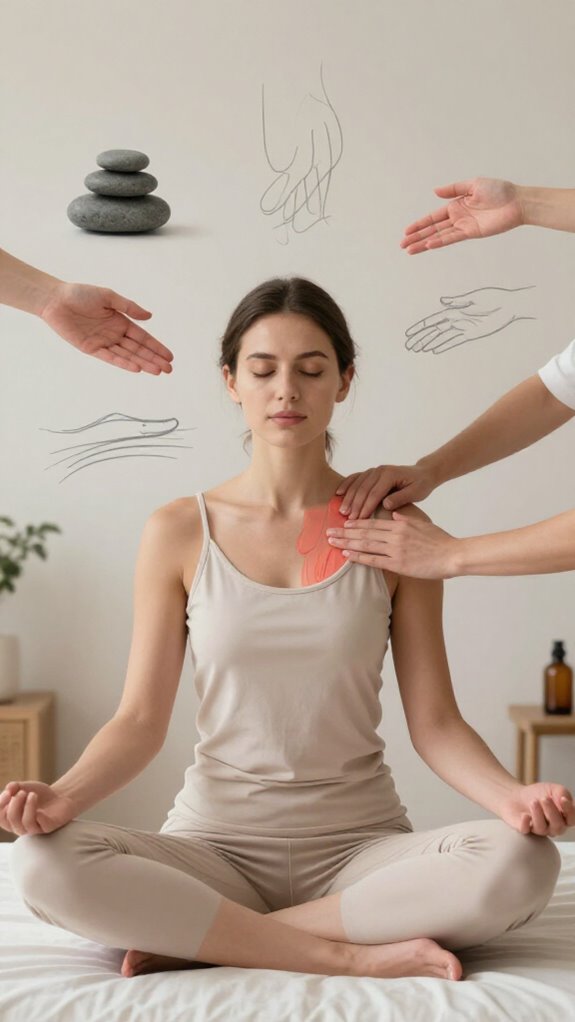
Once your nervous system already trusts firm, steady contact, self-massage becomes the next lever—because slow fascia-stimulating strokes help downshift local “threat” signals and restore mechanical glide in tissues that’ve gotten sticky from stress, posture, or overuse.
I guide you by warming the area, then using self massage techniques: slow effleurage along muscle bellies, gentle skin-to-fascia traction, and stationary pressure on tender bands.
Keep strokes 3–5 seconds per pass, 2–4 repetitions, never sharp pain. Research on touch-related parasympathetic shifts and Tom Myers’ myofascial lines supports the logic. These deep pressure somatic techniques have been shown to reduce cortisol and prepare the body for restful sleep, making them especially valuable for those struggling with insomnia. Circadian regulation—the alignment of your internal clock with light-dark cycles—can be supported by these evening practices that signal safety to the nervous system as natural melatonin production begins.
Try it at dusk, breathing out longer.
Consider Deep Pressure Tools Like TENS or VNS Paired With Pacing
Why not borrow the body’s own “safety cues” with deep-pressure input—then pair it with pacing—so your nervous system has a clear off-ramp from threat mode?
I treat TENS and VNS as calibrated signals, not fixes. TENS benefits include stimulating cutaneous afferents; gentle, patterned pulses can soften pressure effects like static in your body map. For VNS techniques, devices that target vagal pathways may nudge state-change when used consistently, under guidance.
Try calming rituals like slow walking and breath-led tempo:
- Set pulse intensity low, track skin comfort
- Time sessions with paced exhalations
- Move the body to “confirm” safety signals
- Keep a consistent routine, like Prescribed Sleep Labs’ protocols
Many people find that combining these approaches with deep pressure techniques before bed helps activate the body’s parasympathetic response for more restful sleep.
Use Deep Pressure With Pacing and Other Calming Strategies
I use deep pressure as a “state cue,” then I pace the whole session so your nervous system actually learns that cue instead of treating it like input with no meaning.
In my deep pressure therapy sessions, I apply steady pressure, pause, then repeat in slow cycles of about 2–5 minutes. While pressure holds, I guide you to breathe at a slightly longer exhale and keep your attention on body sensations, not thoughts.
Pacing means I match your response—if you soften, I stay; if you tense, I lighten briefly. This supports nervous system regulation, like setting a metronome for calm.
2026 Sleep Trends: Analog Clocks
- Embrace minimalist design to cut decision fatigue
- Pair with nature sounds for steadier arousal
- Use bedtime analog cues to practice mindful living
- Upgrade bedroom aesthetics around the clock face
Researchers on hyperarousal note fewer sleep disruptions.
I’ve felt it: steadier sleep benefits, calmer nervous system pacing, like a metronome without noise.
Product Roundup
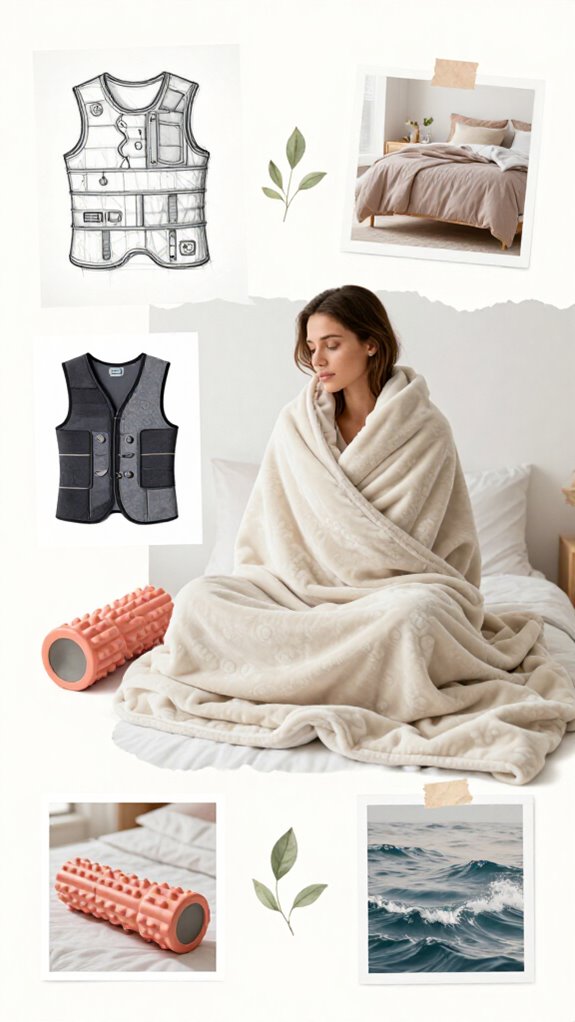
After you’ve leaned into analog bedroom routines, the next step is to give your nervous system a consistent “input signal” without turning sleep into a scoreboard—and that’s where deep pressure products earn their place.
I like weighted blankets up to 35 pounds: they spread pressure evenly, support proprioceptive strategies, and are linked to serotonin upshifts, cortisol downshifts, and better melatonin. In practice, deep pressure stimulation is used to help shift the body from stress-driven arousal toward a calmer, parasympathetic state. Research shows that weighted blankets regulate hormones by lowering cortisol and increasing melatonin production. A deep pressure vest applies targeted sensory input directly to the torso, making it ideal for situations where full-body compression isn’t practical.
For torso regulation, compression vests (like Snug Vest’s pump-adjusted fit) wrap tight for feedback at the shoulders. Adults swaddling-style cocoons/pea pods offer contained sensation and anxiety relief.
When you want solo calming techniques, TOGU Bantoo foam rollers or Actiball massage tools deliver slow, sustained touch for parasympathetic activation.
Auricular Vagus Stimulation Study
Auricular vagus nerve stimulation (taVNS) has moved from niche neurology into a more testable, at-home–adjacent research lane, and the recent body of trials gives it a concrete evidentiary footing.
In these studies, I see taVNS mechanisms that start with electrical stimulation to vagal afferents: electrodes sit below the tragus in the cymba concha (sometimes better than tragus), using a 0.2 ms pulse at 0.8–1.5 mA.
In a 20-week chronic insomnia trial, it cut PSQI by 4.2 points vs sham (d=1.2), sustained to follow-up.
In a 20-week chronic insomnia trial, taVNS reduced PSQI by 4.2 points versus sham (d=1.2), with benefits persisting at follow-up.
- Target cymba/concha vagus distribution
- Interval dosing often reduces dizziness
- EEG beta/gamma and ERPs shift over days
- Pooled 488-participant safety looks mild and transient
FAQ
How Quickly Should Deep Pressure Start Calming Your Nervous System?
You should feel deep pressure’s immediate effects within minutes—your breathing slows, your body softens. If you don’t notice calm after 10–15 minutes, adjust pressure or technique. With consistent use, long term benefits build deeper safety over weeks.
Is Deep Pressure Safe for Anxiety, PTSD, or Sensory Sensitivity?
Like a warm blanket settling your shoulders, I find deep pressure can offer anxiety relief and deep pressure benefits for many, but I recommend going gently: start light, avoid pain, and ask your clinician if you have PTSD or sensory sensitivity.
What Pressure Level Is Effective Without Causing Discomfort or Bruising?
I’d aim for a gentle, steady pressure you barely feel—about “light firm,” not painful—so your pressure sensitivity stays safe. Use an ideal technique: slow, circular, 5–10 minutes, then adjust lighter to avoid bruising.
Can Deep Pressure Replace Breathing or Should It Be Paired With It?
Yes, deep pressure can replace breathing sometimes, but I pair it with breathing exercises for best stress relief. I press slowly, then sync my inhales and exhales, so sensory integration settles us together.
How Do You Use Weighted Blankets if You Sleep on Your Side?
If you’re a side sleeper, I use weighted blanket techniques by tucking it under your top shoulder and arm, keeping it snug across your chest. For side sleeper adjustments, I avoid the face and let your hips settle naturally.
References
- https://sleepopolis.com/education/your-ultimate-guide-to-deep-pressure-therapy-deep-pressure-stimulation/
- https://www.appliedbehavioranalysisedu.org/5-best-off-the-shelf-deep-touch-stimulation-products/
- https://therapyshoppe.com/products/deep-pressure-sensory-seekers-top-picks
- https://especialneeds.com/collections/deep-pressure
- https://www.sensorydirect.com/wp/wp-content/uploads/2020/07/Weight-Therapy-Guide-Sensory-Direct-Ltd.-v2.pdf
- https://select.schoolspecialty.com/special-needs-sensory-processing/proprioception/deep-pressure
- https://skillbuilders.com.au/deep-pressure/
- https://harkla.co/blogs/special-needs/sensory-products-adults
- https://pmc.ncbi.nlm.nih.gov/articles/PMC12658592/
- https://napacenter.org/sensory-toys-ot/