Rotating shifts wrecked me until I stopped pretending I was a robot.
Here’s my reality: fixed anchor wake time, even on days off. Sounds obsessive? It saved my sanity.
Within 30 minutes, I’m chasing sunlight like my life depends on it—because biologically, it does. Roenneberg’s research on circadian phase timing isn’t just theory; it’s my morning drill.
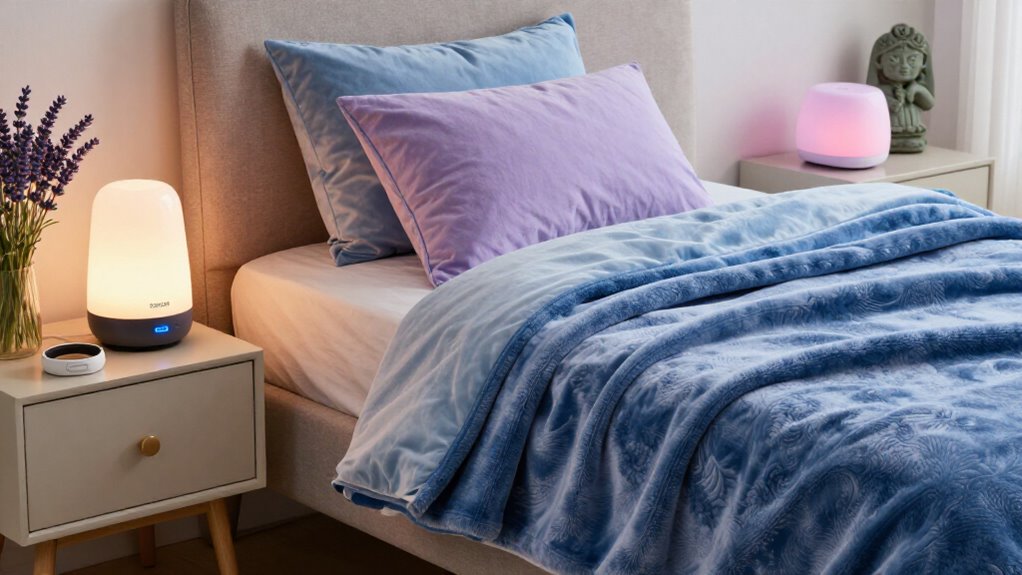
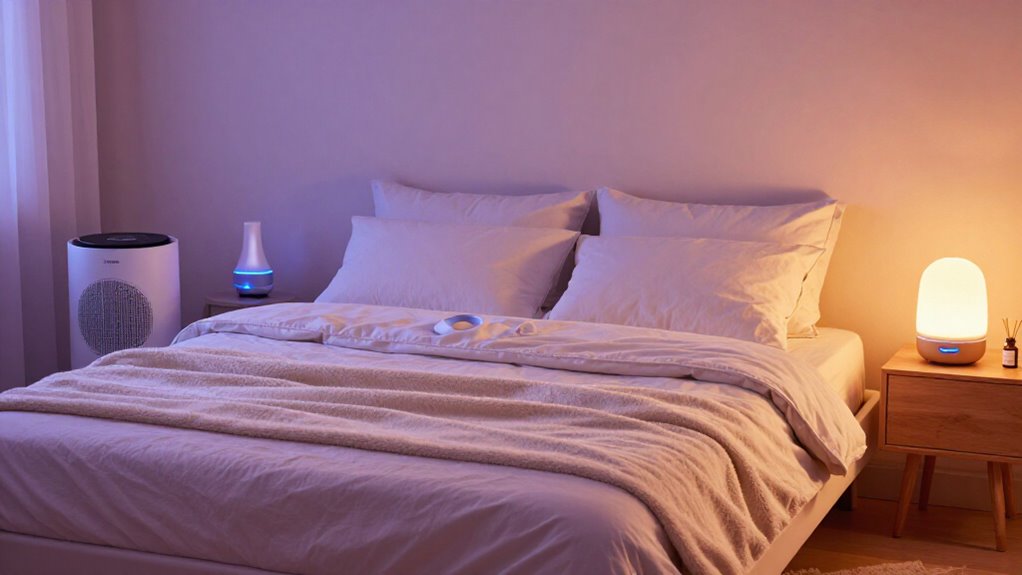
Evening? Blue light gets assassinated. Bedroom hits 65°F. I’ve microwaved more 10-minute naps than meals.
We at Corala Blanket obsess over this stuff—better sleep is literally our mission. And “Sleepmaxxing” isn’t just 2026 TikTok slang; it’s the science we’ve been screaming about.
Three game-changers backing this: Dr. Sara Mednick’s nap studies, Oura Ring data, and Matthew Walker’s “Why We Sleep.”
Ever felt jet-lagged in your own bed? That was me. Now? I’m finally winning.
Quick Takeaways
- Keep a fixed daily anchor wake time and bedtime to help your circadian rhythm realign after rotating shifts.
- Get bright light within 30 minutes of waking to time-stamp your biological clock and improve adaptation during schedule changes.
- Use light strategically: blue light during night work boosts alertness, while warmer dim lighting in the evening supports melatonin release.
- Schedule naps as 10–20 minutes, ideally early in your circadian “day,” to avoid deep NREM sleep inertia.
- Time meals and caffeine to your shift schedule to support metabolic and circadian timing, reducing sleep and performance disruptions.
Reset Your Sleep Clock After Every Shift
After a rotating shift, your circadian system doesn’t “update” like a phone app—it gets tugged off-axis, and then it has to re-align.
I reset my sleep clock after each shift by protecting a consistent anchor bedtime or wake time, even if the work hours wobble. That’s shift adaptation in practice: I treat the body like a metronome, not a stopwatch. Maintaining a consistent wake time each day anchors your circadian rhythm and improves overall sleep quality, regardless of when you go to bed.
I reset my sleep clock after each shift, protecting a consistent anchor bedtime or wake time—so my body stays a metronome.
I use sleep hygiene basics—dark, cool bedroom, no caffeine late, and a short wind-down—to reduce circadian “phase lag.”
Researchers like Till Roenneberg note that abrupt schedules fragment internal time, so I keep cues steady.
Rotating shift workers often need 1-2 weeks to fully adjust their sleep patterns when transitioning between day and night shifts, making consistent anchor times even more critical for long-term health.
Use Morning Light Anchoring to Lock Circadian Timing
Morning Light Anchoring is how I lock my circadian timing back into place when rotating shifts tug my body clock off-axis.
The trick is simple: I treat morning light as a time-stamp for my biological rhythms, which stabilizes circadian health despite shift effects. Within 30 minutes of waking, I get targeted light exposure—outdoors if possible—so my suprachiasmatic nucleus can re-sync. I keep it consistent even on tough adjustment days. If clouds hide the sun, I use a bright light box. Early morning sunlight triggers circadian realignment by signaling the brain to suppress melatonin and advance the sleep-wake cycle. Maintaining a regular sleep schedule helps reinforce this circadian reset across alternating work weeks.
- Step outside: 5–15 minutes
- Increase intensity gradually
- Track sleep only by outcomes
Nap Length and Timing for Fast Shift Recovery
I use nap timing like a dial: 10–20 minute power naps in the first half of my circadian “day” prevent deep NREM hangovers. For shift fatigue after an early shift, I take 15–25 minutes, then stop. Treatments for chronic sleep deprivation often emphasize strategic rest periods as a cornerstone of recovery.
This supports recovery strategies, reduces circadian disruption, and keeps sleep hygiene intact. Researchers at Harvard and Stanford back the window concept. The same deep pressure stimulation that makes gravity blankets effective for nighttime sleep can also help workers settle quickly into these strategic daytime naps.
Control Evening Light and Bedroom Temperature
Even when you nail your nap timing, evening light and bedroom temperature can still nudge your brain toward “day mode,” so I treat them like the two biggest knobs on your home circadian console.
I start dimming after dinner: aim for low light intensity and warm, long-wavelength bulbs, because melanopsin cells in your retina “read” that glow as daytime. Blue-light exposure suppresses melatonin production and signals wakefulness to your brain, so controlling it is essential for shift workers trying to wind down.
Then I tune temperature regulation: I keep my room cool, roughly 60–67°F (15–19°C), since core-body heat loss helps melatonin rise.
- Switch overheads off; use bedside lamps.
- Block blue light with amber glasses.
- Pre-cool or use a fan for steady regulation.
Investing in ideal bedroom lighting can significantly transform sleep quality for shift workers who struggle to maintain consistent rest schedules.
Build a Shift-Work Routine That Prevents Social Jet Lag

Once you’ve tightened evening light and bedroom temperature, you can stop fighting your calendar and start managing the mismatch that shift work creates—social jet lag. I build my routine around circadian rhythm “anchors” so shift work challenges don’t scatter my sleep hygiene. I treat sleep like a meeting: fixed start time, protected, even on days off. I plan energy management with timed caffeine, then dietary adjustments—carbs earlier on late shifts. I also protect social connections: one consistent call, not random. Circadian rhythm disruption heightens risk for mood disorders, so these anchors also safeguard mental health. Sleep timing research shows that maintaining consistent schedules across varying work hours significantly reduces psychological distress compared to erratic sleep patterns. Here’s my template:
| Anchor | Night Shift | Day Shift |
|---|---|---|
| Sleep start | fixed | fixed |
| Caffeine cutoff | mid-afternoon | late morning |
| Meal timing | lighter AM | heavier PM |
| Movement | 10-min walk | outdoor light |
| Wind-down | same cue | same cue |
It keeps mental well being steady.
Morning Light Anchoring Ritual
Morning Light Anchoring is the simplest circadian “handshake” I know: I step outside within about 30 minutes of waking and let bright outdoor light—often 10,000 lux or more—tell my suprachiasmatic nucleus (SCN) what time it is. This quick cue anchors my biological rhythms, making shift adaptation feel less like guesswork.
If I can’t get sun, I use a high-lux light box and keep my eyes uncovered. I also consider using white noise during my sleep period, as it can mask disruptive sounds and improve sleep depth after this light exposure routine.
- Step out: 10–20 minutes, face angled toward sky.
- Keep it consistent: same timing across rotations when possible.
- Add movement: a short walk to stabilize alertness.
Researchers like Czeisler link light timing to circadian phase shifts. Getting this light exposure right also makes it easier to maintain a cooler bedroom environment later, since a well-anchored rhythm supports the natural evening drop in core body temperature that promotes deeper sleep.
Product Roundup
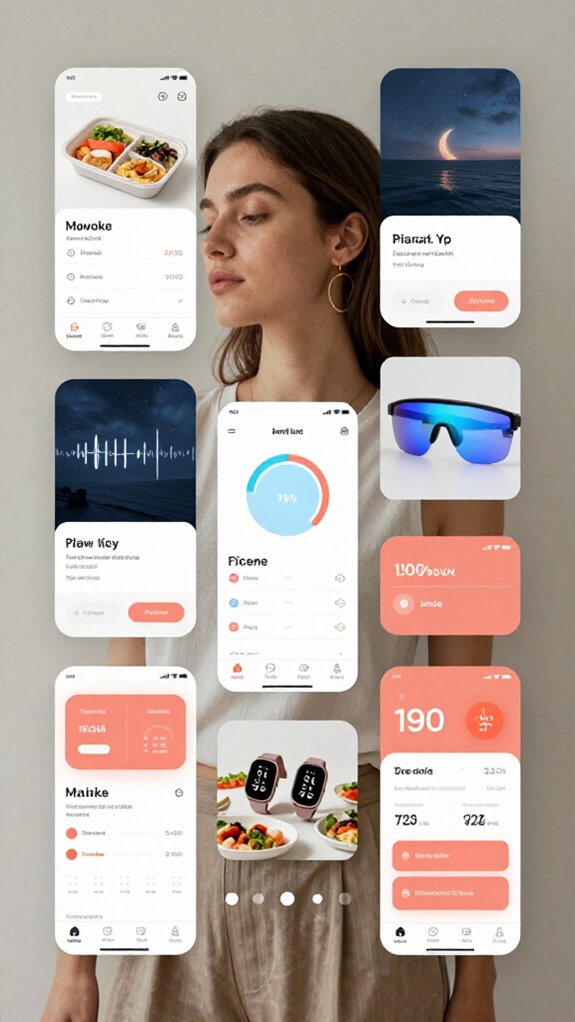
Here’s a practical Product Roundup I’d treat like an instrument panel, not a magic fix: the best tools for rotating shifts don’t “hack” your biology so much as they help you apply reliable zeitgebers—light, timing, temperature, and feeding cues—to the right clock layers. I lean on chronotype apps that match early/late types to shift blocks, plus phase shift monitors to reduce mistiming. Circadian dysregulation can occur when night and rotating shifts cause molecular-level phase shifts in circadian oscillators, so these tools should focus on improving timing accuracy rather than assuming instant adaptation. For supplement benefits, I focus on shift-facing muscle clock formulas aimed at protein turnover and rest-time breakdown. I pair that with exercise tracking wearables: cycling timers for 9-hour delays, and evening trackers for precise circadian postponement. Finally, timed meal kits synchronize peripheral clocks without guesswork. Blue light blockers can help elevate your nighttime aesthetic while protecting melatonin production during daylight-dominant shifts.
Related Research Results: Light Exposure Timing
When you rotate shifts, light doesn’t just “wake you up”—it rewires the timing signals your brain uses to schedule sleep depth, spindle activity, and melatonin release.
When you rotate shifts, light doesn’t just wake you—it rewires your brain’s timing signals for sleep depth, spindles, and melatonin.
In my review of EEG and melatonin studies in rotating nurses, dim daytime sleep under 30 lux cuts N2 spindles, while light during daytime sleep suppresses sigma power—your N2 architecture doesn’t fully bloom. The cortisol awakening response also becomes flattened and delayed when circadian disruption persists, further destabilizing sleep-wake transitions across shift rotations.
Nighttime light-on also lowers REM theta, and nighttime light reduces slow, delta, and spindle power in NREM. I picture your circadian timing like a metronome that slips when blue light hits.
- Blue light → melatonin suppression, alerting effect
- Red light → less circadian disruption, maintains alertness
- Bright light → adaptation and improved sleep quality
Strategic use of circadian-tunable bulbs in your bedroom can help anchor your shifting sleep schedule by delivering wavelength-appropriate illumination when you need it most.
FAQ
How Soon After Switching Shifts Should I Adjust My Sleep Schedule?
I think of your body like a lighthouse: adjust within 24–48 hours, but let it settle over a week. I shift my sleep hygiene by anchoring morning light and consistent bedtimes, even if nights feel messy. You’ll feel calmer sooner.
Can I Anchor Circadian Timing Without Visible Morning Sunlight?
Yes, I can still anchor my circadian rhythm without visible morning sunlight by using a bright indoor light exposure or dawn-simulating lamp, consistently, and pairing it with calm routines. I protect sleep quality and manage time tightly around it.
What’s the Safest Nap Duration to Avoid Nighttime Sleep Disruption?
Like a candle, keep it short: I’d aim for 10–20 minutes, using ideal timing early in your day. I’ll suggest avoiding late naps, and I’ll wake gently so you don’t disrupt nighttime sleep or your closeness rituals.
How Warm or Cool Should My Bedroom Be for Shift Recovery?
I keep my bedroom cool—around 60–67°F—for shift recovery; it helps me fall asleep fast. You’ll do best with your ideal temperature in line with your bedroom preferences: slightly cool, never sweaty, always cozy.
Should I Use Red Light Therapy After My Shift Ends?
Like a gentle dusk, I’d use red light therapy after your shift ends—about 1–2 hours before sleep—to lean into red light benefits and support post shift recovery. Keep it dim, short, and calming; avoid bright exposure. You’ll feel it.
References
- https://www.healthpartners.com/knowledgeexchange/display/document-rn18715
- https://www.sciencedaily.com/releases/2025/05/250505170657.htm
- https://www.frontiersin.org/journals/nutrition/articles/10.3389/fnut.2020.00116/full
- https://www.nsf.gov/news/researchers-uncover-importance-aligning-biological
- https://pmc.ncbi.nlm.nih.gov/articles/PMC8832572/
- https://today.ucsd.edu/story/researchers-uncover-importance-of-aligning-biological-clock-with-day-night-cycles
- https://pmc.ncbi.nlm.nih.gov/articles/PMC5828540/
- https://pubmed.ncbi.nlm.nih.gov/38957073/
- https://hms.harvard.edu/news-events/publications-archive/brain/circadian-rhythms-brain
- https://www.princeton.edu/~ota/disk1/1991/9108/910807.PDF